2219AFC051322 – To Do What Is Right
Read it online here, please. And please – when you visit there – use one of the social media links at the bottom of the page to share this post. Thank you! And remember, we now have a READER VIEW available, so share this link or this email often. Do you know someone who enjoys Bible study, or who might like to read this? Ask them to email us or to subscribe on our blog-site.
 John 13:34 – 34 I give you a new commandment, that you love* one another. Just as I have loved you, you also should love one another.
Isaiah 56:7c – … for my house shall be called a house of prayer for all peoples.
*Aloha pumehana, a me ke akua ho’omaika‘i ‘oe, ʻŌmea! Warmest Aloha, and may God bless you, Belovéd! You know how I love to go find our “What Does The Word REALLY SAY?” and so I pour over you the biblical language for that Scripture. That is the case today, and I’m going to pour it on thick because this is such an important word – and concept – to understand. What, then, as the Word used for Love in the Gospel of John (and throughout the New Testament)? Jesus commands – not suggests, not hopes, not hints at – that we Love one another. Here is the Greek insight into that. Please, instead of just glossing over it, actually read it so that you see how clear and concise this command truly is. I’ll have more to say about it at the end of this loaded paragraph:
“Love” in this verse is *agapate from agapaó love (primarily of Christian love); to show or to prove one’s love; to long for, to desire; to place first preferentially in one’s affections; referring to a preferred companion – see agapé 26 agápē – properly, love which centers in moral preference. So too in secular ancient Greek, 26 (agápē) focuses on preference; likewise the verb form (25 /agapáō) in antiquity meant “to prefer” by choice. In the NT, 26 (agápē) typically refers to divine love (therefore it refers to what God prefers). Consider the verb agapáō – properly, to prefer, to love; for the believer, preferring to “live through Christ” (See 1 John 4:9-10), in other words embracing God’s will (choosing HIS choices) and obeying them through HIS power. 25 (agapáō) preeminently refers to what God prefers because “HE IS LOVE” (See 1 John 4:8-16). This passage ends with this edifying statement: “God is love, and those who abide in love abide in God, and God abides in them.” (Read full chapter)
The word “as,” or “even as,” or “just as” does not refer to the extent of His love, but to the ubiquity of it – the way it is conferred on others. We could paraphrase it by changing “love one another” to “Prefer above all others” like this: 34 I give you a new commandment, that you prefer one another above all others. Just as I have preferred you above all others, you also should prefer one another above all others. Fulfilling this command would be to fulfill the Divine Command in Deuteronomy 6:5 – 5 You shall love the Lord your God with all your heart, and with all your soul, and with all your might. In the Greek translation of the Old Testament, the Septuagint, it is shown this way: καὶ ἀγαπήσεις κύριον τὸν θεόν translates as “and you shall love the Lord your God.” The verb form is indicative future tense (agapēseis).
I show this to you to make the point that NOTHING HAS CHANGED since Moses’ days on the mountain top! God is Love. He created us with, in, and for Love. That is why we read in 1 John 4:9-10 9 God’s love was revealed among us in this way: God sent his only Son into the world so that we might live through him. 10 In this is love, not that we loved God but that he loved us and sent his Son to be the atoning sacrifice for our sins. Who is God’s Son? Jesus, namely God The Son. Who are Jesus’ adopted siblings? We are HIS brothers and sisters so God is our Father, and we are to Love our Father the way HE Loves us, and He loves us the way WE must love one another – it’s a TWICE-ORDERED COMMANDMENT! Now comes that irritating question: ” Waddaya gonna do about that?
For more than 40 years I have been asking a similar question, “What do you want to do?” We taught our children to answer, “The right thing.” I’ve asked adults the same question in management training courses and RCIA (the Rite of Christian Initiation of Adults). How can we learn to Love as Jesus loved? The best answer I have is “We can’t … without Grace we would fail, but by his Grace we can Love in and through his Love.” The best part of this conundrum is that Grace is free – all we have to do is take it and use it. All of us know that. All of us also know that – at times, not always – a we forget that Grace is a two-part process: Receive it and use it. When we accept Grace, we confess that Jesus Christ is Lord. When we use Grace, we confess that God is Love.
Grace has an amazing effect when we can do some very simple things such as these:
James 4:17 – 17 Anyone, then, who knows the right thing to do and fails to do it, commits sin.
Hosea 10:12 – 12 Sow for yourselves righteousness; reap steadfast love; break up your fallow ground; for it is time to seek the Lord, that he may come and rain righteousness upon you.
 There it is. “Do the right thing.” We “hunger and thirst for righteousness” if we are doing the right thing – rather than oppress others – violently or passively, personally or institutionally, willingly or ignorantly – we are to uplift and care for others; ALL others, not just the ones who share our personal proclivities for evil, or personal preferences for Love. How does one find a list, or an instruction, or some guidelines or boundaries to at least get started on such a mission of mercy and peace with our fellow earthlings? Virtually the whole Bible gives us that instruction, but there are a few passages like those here in this post that help clarify our To-Do list.
Here’s one I find particularly clear; read the underlined part carefully: Isaiah 58:6-11 – 6 Is not this the fast that I choose: to loose the bonds of injustice, to undo the thongs of the yoke, to let the oppressed go free, and to break every yoke? 7 Is it not to share your bread with the hungry, and bring the homeless poor into your house; when you see the naked, to cover them, and not to hide yourself from your own kin? 8 Then your light shall break forth like the dawn, and your healing shall spring up quickly; your vindicator shall go before you, the glory of the Lord shall be your rearguard. 9 Then you shall call, and the Lord will answer; you shall cry for help, and he will say, Here I am. If you remove the yoke from among you, the pointing of the finger, the speaking of evil, 10 if you offer your food to the hungry and satisfy the needs of the afflicted, then your light shall rise in the darkness and your gloom be like the noonday. 11 The Lord will guide you continually, and satisfy your needs in parched places, and make your bones strong; and you shall be like a watered garden, like a spring of water, whose waters never fail. If I use that as my checklist, I still have a lot of work to do! I choose, therefore, to begin with blessings rather than curses, with understanding rather than resentment, and with the resolve to work even harder to do the right thing. I thank the Lord for his blessings on me (↔ Music Link) and counting them (↔ Music Link) is far better than worrying about what life would be like without them. There is something in the Book of Numbers that often comes to my mind. I have adapted it for use as my own personal blessing on some occasions. You’ll find it in Numbers 6:24-26, and it goes like this: 24 The Lord bless you and keep you; 25 the Lord make his face to shine upon you, and be gracious to you; 26 the Lord lift up his countenance upon you, and give you peace. To that I add, “May Almighty God bless you, and I bless you, in the name of the Father, the Son, and the Holy Spirit” as I trace a cross on a person’s forehead. It’s a small thing, but it also is a right thing. Let’s take a moment to look at the full text of our second Key Verse for additional guidance:
Isaiah 56:6-7 – The foreigners who join themselves to the LORD, ministering to him, loving the name of the LORD, and becoming his servants — all who keep the Sabbath free from profanation and hold to my covenant, them I will bring to my holy mountain and make joyful in my house of prayer; their burnt offerings and sacrifices will be acceptable on my altar, (for my house shall be called a house of prayer for all peoples.) In my heart and mind, I find I must confess that it is difficult for me to accept that “all peoples” belong in the house – the family – of God. What I have often failed to realize is that it is not I who gets to make that decision; I am not the one to discern between us and them, this and that, you and me. God’s Word alone is our judge, and he always judges with fairness and rules with equity. If I truly want to do justice, and to love kindness, and to walk humbly with … God, then I have to do the right thing. It’s what I want; it’s not always what I get; it is always what I need.
To Do What Is Right is sometimes difficult because we are sinners. Let us resolve then to live in his Grace by loving as he has loved. These words from the Apostle Paul to the Hebrews are always a great comfort even in these difficult times: Ephesians 2:4-10 – 4 But God, who is rich in mercy, out of the great love with which he loved us 5 even when we were dead through our trespasses, made us alive together with Christ — by grace you have been saved — 6 and raised us up with him and seated us with him in the heavenly places in Christ Jesus, 7 so that in the ages to come he might show the immeasurable riches of his grace in kindness toward us in Christ Jesus. 8 For by grace you have been saved through faith, and this is not your own doing; it is the gift of God — 9 not the result of works, so that no one may boast. 10 For we are what he has made us, created in Christ Jesus for good works, which God prepared beforehand to be our way of life.
That’s just how simple it is. It’s enough to keep us singing. (↔ Music Link [loads slowly]) We sometimes slip and fall, but God’s arms are for reaching out to us, to give us someone to lean on (↔ Music Link) when things are tough. It is then and there that we learn “To Do What Is Right.” We need only to recall what the Apostle Paul told us in 1 Thessalonians 5:15 – 15 See that none of you repays evil for evil, but always seek to do good to one another and to all. So many people these days – all around the world – go out of their way to curse, to violate, to denigrate, and to discriminate against everyone who doesn’t think like them. We ignore instructions such as those in 1 Peter 3:8 and 1 Corinthians 1:10 to have (as The Apostle Peter puts it) unity of spirit, sympathy, love for one another, a tender heart, and a humble mind. “Ah!” you say, “you forget, not everyone is Christian. Non-Christians will never accept that.” Actually, only the most evil persons cannot accept that. ALL major religions at their core preach and teach respect for each other and encourage peace as the preferred way of life. Even people who have nothing to do with any religion can be good and kind and generous. Hate is definitely a perversion of God’s intent for human nature. God wishes to bless everyone, even the unjust, and he does so in many ways (← Check it out!). That is because God is Infinitely Just which allows him to be Infinitely Merciful because he has Perfect Integrity. His Mercy endures forever – for those who who trust in his ways (↔ Music Link). For those who do not trust in his ways, his justice falls heavily on those who will not accept the Power of his Grace. Therein shall they learn with us To Do What Is Right.
Whatever, whenever, wherever, whoever, however, if ever, forever —
at your service, Belovéd!
Please pray with us here at Share-a-Prayer.
Unless otherwise indicated, all scripture passages are from the New Revised Standard Version Catholic Edition (NRSVCE) New Revised Standard Version Bible: Catholic Edition, copyright © 1989, 1993 the Division of Christian Education of the National Council of the Churches of Christ in the United States of America. Used by permission. All rights reserved.
Biblical languages inserts from Bible Hub (Bible Hub: Search, Read, Study the Bible in Many Languages) Visit at

Aloha Friday Messages by Charles O. Todd, III is licensed under a Creative Commons Attribution-ShareAlike 3.0 Unported License

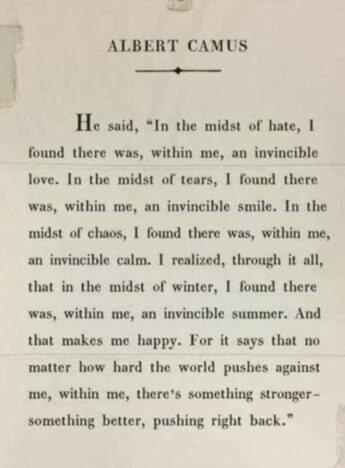 Jesus can, will, and does follow God’s instructions. If we are in him and he is in us, then we are in the Light and the Light is in us; we no longer belong to darkness. In this quote from Camus, where it says “within me,” substitute “in Jesus.” (You Biblicists out there will doubtless want to look at the First Letter of John especially
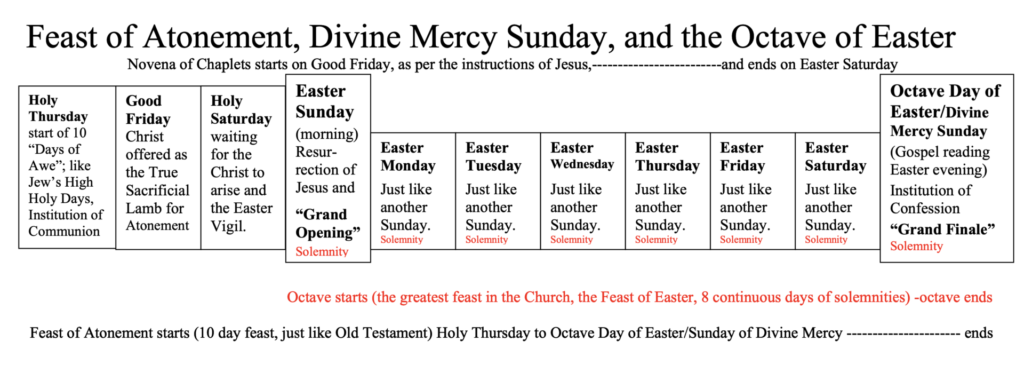

 This Sunday is
  with: “We have a baby boy for you to take home. Can you come pick him up tomorrow?” At that time we had no money (plenty Christmas presents though), no crib, no diapers or bottles, no baby food, nothing a baby needs. We really went shopping! We loaded up our little blue Matador Coupe with all of that (even an ironing board!) and set up a baby room. For us, in those circumstances it was The Beginning of The Beginning.
 The main feature of the park is the wide-open central lawn. It’s surrounded by a band of trees and has three structures. On the west is a small children’s playground, on the north is a rustic gazebo and on the east, the highest point in the park, is a large Neo-classical pavilion. The rest of the park is grass. In warm weather the slope down away from the pavilion, which you see pictured here, was a wonderful place to play, to picnic, to sunbathe, and to enjoy a quiet respite from the busy city. It also became a place of worship at least once a year. On the Saturday before Easter, the men of the church, particularly the deacons and elders, would go to the park and set up benches and chairs for the expected crowd which seemed to me to number in the thousands.It was a wonderful celebration and one which my dad thoroughly enjoyed. When I was invited to participate with him in getting the park ready for the service setting up sco0res of park benches; it was like a rite of passage and to this day is one of my most cherished memories. I particularly remember one Easter Sunday when we awoke to find about eight inches of snow had fallen and buried the park and all the seating we had worked so hard to set up the day before. The moment we knew, Dad and I sped off toward the park (we lived in University Hills about 20 miles away for downtown Denver), and joined a dozen or so other men who were rushing to clear the snow from the benches and chairs. I recall that this work was done cheerfully and with the expectation that the seats would be filled.
 Well, as you might expect, attendance that year was pretty low. Despite the weather, the cold, and the diminished crowd, the spirit of the day was led by The Spirit. Our traditional Easter Greeting was, “The Lord is risen!” and the response was, “He is risen indeed!” That declaration and affirmation really resonated that particular Easter. For years after that, until my dad passed away on the day on his eighty-first birthday in 1997, one of us would call the other on Easter morning and say, “The Lord is risen!” And in that instant two hearts, two minds, two souls, two Servants lifted hearts, minds, hands, and voices to affirm “He is risen indeed.”

 Read it online
  Year C New and improved, without any warranty restrictions.
 Today we recall the very crux of Infinity. I have said before that the place where the two loops cross is the Manger. I learned recently (thank you
 mentions 18 others who were killed when a tower fell down on top of them in
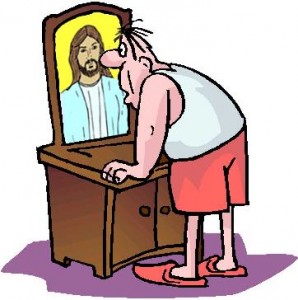
  that we can save ourselves from eternal separation from God. When stated so starkly, we will say, “It’s OK. I’ve got it covered. I know my limits, and I’m square with God.” Jesus is telling us, “Hold on sinner! Your repentance is incomplete.” I saw this little meme the other day, and it seemed to be perfect for today! I captioned it “Pride = Ooopsie.” I don’t really want to go into the “one and done” argument, but I will say that everyone – everyone – I know is in need of repentance more frequently than just once in a lifetime, once in a year, or once in a season (those “CEO Christians – Christmas-Easter only). In my faith-life, repentance is part of a