Aloha Friday Message – July 20, 2018 – Woe is us.

1829AFC072018 – Woe is us.

Read it online here, please. And please, when you visit there, use one of the social media links at the bottom of the page to share this post. Thank you! And remember, we now have a READER VIEW available, so share this link or this email often.

  Jeremiah 23:1 1 Woe to the shepherds who destroy and scatter the sheep of my pasture! says the Lord.

Aloha nui loa, ʻŌmea! Today we are looking at a small excerpt from the book of the prophet Jeremiah. The opening word in this key verse is Woe. We sometimes think of that as a kind of antiquated word, as in “Woe is me!” it’s not really used very often in today’s American English, but it sure was used often in the Bible. I believe it is used well over 100 times in the NABRE. Many of those usages are in the books of Isaiah and Jeremiah – two prophets who dealt with the period of Israel’s exile. Isaiah predicted its beginning and the intervention by Cyrus of Persia, and Jeremiah prophesies the destruction of Babylon and the restoration of Israel. These two fellows used the word “woe” a lot! Their prophecies – announcements of the LORD’s intent for humanity – are cited frequently in the New Testament as well. There was plenty of woe to go around, and these guys (and many others) pointed it out. I was surprised to see the man I most expected to use the word WOE – poor old Job – actually didn’t use it but once or twice (See Job 10:15 and Job 31:3 – the latter has destruction, punishment, and misfortune for the word woe). Let’s begin, then, with a close look at the word woe.

That would give us synonyms such as misery, sorrow, anguish, distress, sadness, unhappiness, despondency, despair, depression, regret, gloom, melancholy, and – in more modern terms – really bummed out. Another word that has a nearly equivalent connotation is alas. Alas for me, I am undone. Alas, all is lost! Alas, there is no more. Alas, our love has gone. In our Key Verse, we might have it read, “Alas for the shepherds destroying and scattering my sheep!” How unfortunate it will be for those who lead others astray. What sorrows await those who fail to see that goodness is done from all and in all!

As I read passages literally filled with woes, I realized there are woeful times for us, warnings of impending woe, in most of what I read. It isn’t just enough to say, “Woe is me!” It isn’t enough to say “Woe to us!” We must say, “Woe is us!”

I know a few of you use the links I give you to see the Scripture I recommend for your review. Please recall that this is the whole purpose of these essays – to get us to open up the Bible and actually hear it speaking to us in our hearts and minds. I’m going to give you a very short list of woes, and I encourage you to at least open the link and see how many different ways the calamities of disobedience and inattentiveness can fall upon us.

Isaiah 5:8-22
Matthew 23:13-26

Isaiah 45:9
Revelation 12:12

One passage in particular, and not in this list, is Jude 1:10-22. I’m going to share that with you in three parts because I think we can learn something there. In Jude 1:1-13, Jude states that he is writing to a certain Christians who were being infiltrated by teachers who claimed to have a different Gospel than the one preached by the Apostles. He compares them to predecessors who also taught errant doctrines, and then continues:

Jude 1:10-13 10 But these people slander whatever they do not understand, and they are destroyed by those things that, like irrational animals, they know by instinct. 11 Woe to them! For they go the way of Cain, and abandon themselves to Balaam’s error for the sake of gain, and perish in Korah’s rebellion.* 12 These are blemishes on your love-feasts, while they feast with you without fear, feeding themselves. They are waterless clouds carried along by the winds; autumn trees without fruit, twice dead, uprooted; 13 wild waves of the sea, casting up the foam of their own shame; wandering stars, for whom the deepest darkness has been reserved forever. *(See Numbers 16 Moses had urgently warned Korah and his supporters that these imposters should be shunned for they are about to die). The warning in Jude continues in the following:

Jude 1: 14-16 14 It was also about these that Enoch, in the seventh generation from Adam, prophesied, saying, “See, the Lord is coming with ten thousands of his holy ones, 15 to execute judgment on all, and to convict everyone of all the deeds of ungodliness that they have committed in such an ungodly way, and of all the harsh things that ungodly sinners have spoken against him.” 16 These are grumblers and malcontents; they indulge their own lusts; they are bombastic in speech, flattering people to their own advantage.

Here the author cites an apocryphal book (Enoch). We see that he states the Lord and his Saints (the Holy Ones) will come “to execute judgment on all, and to convict everyone of all the deeds of ungodliness that they have committed in such an ungodly way, and of all the harsh things that ungodly sinners have spoken against him.” I was struck by the phrase deeds of ungodliness. This certainly applies to our modern culture of death where everything is disposable, nothing is true, and the value of even life itself is “negotiable.” The World is increasingly sharply-divided on such issues as abortion, euthanasia, social and economic justice, and the whole concept of universal morality and ethics. Relativism rules in all things, though not in all persons.

He continues with, 16 These are grumblers and malcontents; they indulge their own lusts; they are bombastic in speech, flattering people to their own advantage.” Sadly – woefully – wherever division takes hold, both (or should I say all?) sides claim the absolute right to make their position supreme as bombastically as possible. They are critical of everything and everyone whose “world view” differs from their own. Yet, in our hearts we know that all those pretentious assertions for all quarters cannot possibly all be right because they are so contradictory – often even internally contradictory! There is ONLY one Supreme Behavior that we should espouse: Godliness. But who among us can claim that for ourselves? At the very most, the answer would be “not many.”

The author of this Epistle goes on to say in Jude 1:17-22 17 But you, beloved, must remember the predictions of the apostles of our Lord Jesus Christ; 18 for they said to you, “In the last time there will be scoffers, indulging their own ungodly lusts.” 19 It is these worldly people, devoid of the Spirit, who are causing divisions. 20 But you, beloved, build yourselves up on your most holy faith; pray in the Holy Spirit; 21 keep yourselves in the love of God; look forward to the mercy of our Lord Jesus Christ that leads to  eternal life. 22 And have mercy on some who are wavering>

What phrase in that passage caught your eye? For me it was 19 It is these worldly people, devoid of the Spirit, who are causing divisions. (See other translations of Jude 1:19) In my view, things are being stirred up by those who love evil in the World – and especially in their lives – so that they can make the claim “No one has the right to judge me.” Belovéd, as you well know, that is not true. God will evaluate our actions. Christ will atone for those actions in which we failed to be obedient. What we need to do is to discern what is good and what is not good, between what is godly and what is ungodly. Hypocritical judgment is to be avoided. Sensible discernment is to be embraced. It is true that we are warned “Judge not lest ye be judged.” (See Matthew 7:1) those who quote that to us argumentatively often miss what follows in Matthew 7:2-5. We need to clean up our own act before we trounce someone else’s. The Apostle Paul tells us to “test all things.” (See 1 Thessalonians 5:19-22 – especially verse 22). To “judge” means to separate, to distinguish, to make or come to a choice – to issue an opinion between what is right and what is wrong, and judgment is based on commonly held rules of law. If one throws out everyone else’s rules and insists on following one’s own, that is not judgment; that is folly. When we weigh events, people, and values in our own lives, do we judge what is right and wrong, or do we discern in our hearts what the Holy Spirit speaks? The difference is in being devoid of the Spirit for 19 It is these worldly people, devoid of the Spirit, who are causing divisions. Perhaps the worst, and potentially unforgivable, position is the self-righteous proclamation “You are utterly and unequivocally wrong and therefore worthless.” We don’t have the right to think like that.

You may recall the adage often attributed to Albert Einstein about judging a fish as incompetent because it cannot climb a tree. In the same way, we cannot condemn someone as utterly and unequivocally wrong and therefore worthless because they strongly support abortion, or believe people with different ethnicity, religion, or sexuality are an intolerable blight on humanity. We can however condemn those views, those tenets of their principles which we discern are not godly. Another version of that we often hear is, “Love the sinner, hate the sin.” Not entirely biblical, but certainly worth thinking about. To help you think about it, I’ll give you one other link and seriously implore you to read the whole passage: Romans 12. If you feel that’s too much to ask, just at least remember this from Romans 12:9 Let love be genuine; hate what is evil, hold fast to what is good. If we do that, it doesn’t have to be “Woe is us.” It can be “Blessed are they.” By doing so, we can avoid scattering the sheep of the LORD’s pasture. 20 But you, beloved, build yourselves up on your most holy faith; pray in the Holy Spirit; 21 keep yourselves in the love of God; look forward to the mercy of our Lord Jesus Christ that leads to  eternal life. 22 And have mercy on some who are wavering.

If any of us is convinced that it’s everyone else who is wrong, we may be among those wavering.

Whatever, whenever, wherever, whoever, however, if ever, forever — at your service, Belovéd!

Unless otherwise indicated, all scripture passages are from the New Revised Standard Version Catholic Edition (NRSVCE) New Revised Standard Version Bible: Catholic Edition, copyright © 1989, 1993 the Division of Christian Education of the National Council of the Churches of Christ in the United States of America. Used by permission. All rights reserved.

Creative Commons License
Aloha Friday Messages by Charles O. Todd, III is licensed under a Creative Commons Attribution-ShareAlike 3.0 Unported License

Share-A-Prayer

Please pray with us here.

Aloha Friday Message – July 13, 2018 – The Road that was Taken

1828AFC071318 – The Road that was Taken

  Read it online here, please. And please, when you visit there, use one of the social media links at the bottom of the page to share this post. Thank you! And remember, we now have a READER VIEW available, so share this link or this email often.

Mark 6:12-1312 So they went out and proclaimed that all should repent. 13 They cast out many demons, and anointed with oil many who were sick and cured them.

Aloha nui loa, ʻŌmea! Today I’m going to start out with 2 facts about Judas Iscariot. He was Jesus’ friend (see John 15:15), and he was instrumental in performing miracles (See Mark 6:7-13). Of course that was early in Jesus’ ministry, and many months before Judas surrendered to the promptings of the Devil. We know eventually he betrayed Jesus; that was the road he took. But, early on, he wasn’t like that.

As with the other Eleven, Judas was a participant in Jesus’ travels, his ministry, and even these “missionary Excursions” on which Jesus sent his followers. First, he sent out the 12 – the men we know as Apostles – ἀποστόλων (apostolōn) from ἀπόστολος (apostolos) {ap-os’-tol-os}. Judas may have been a follower of John the Baptist initially – along with Phillip, Andrew, and Simon – and perhaps went with them to follow Jesus. Judas was part of The Twelve as we read in Matthew 10:2-4 These are the names of the twelve apostles: first, Simon, also known as Peter, and his brother Andrew; James son of Zebedee, and his brother John; Philip and Bartholomew; Thomas and Matthew the tax collector; James son of Alphaeus, and Thaddaeus;  Simon the Cananaean, and Judas Iscariot, the one who betrayed him. At an early point in Jesus ministry, we know that Jesus already knew those who did not believe in him and even knew Judas would betray him as we read in John 6:64-71 (← Use this link to see the following in context) 70 Jesus answered them, “Did I not choose you, the twelve? Yet one of you is a devil*.” 71 He was speaking of Judas son of Simon Iscariot, for he, though one of the twelve, was going to betray him.
* διάβολός (diabolos) {dee-ab’-ol-os} – slanderer, false accuser, liar, maligner, one who condemns another with the malicious purpose of severing a relationship, back-biter, calumniator, a gossiping betrayer.

Jesus knew Judas’ nature. Jesus knew Judas would stay true to that nature. Jesus still kept him in his ministry and allowed him to share in it up to the point where Judas gave way to the promptings of the Devil. (See Acts 1:17 for he was numbered among us and was allotted his share in this ministry.) What we don’t think about often is whether or not Judas understood, or even knew, the true nature of Jesus. I believe there were two incidents in Judas’ life during which Satan himself filled and controlled Judas’ heart. The first was when Judas went to the Chief  Priests (See Matthew 26:14-16 and Mark 14:10-11). We see that Judas continued to look for opportunities to betray him – in other words, he had time to reflect on his decision, but chose not to change his mind. The second is when Judas entered the Garden of Gethsemane with the armed guards. (See Matthew 26:47, Mark 14:43, and John 18:3) Later on, we know of course that Judas didn’t survive his treachery (I won’t get into the discussion of whether or not he hung himself or split open – See Matthew 27:5 and  Acts 1:16-18) BEFORE Judas chose to be the enlisted servant of Satan, he was an Apostle of Jesus. He went out with the Twelve to actively apply the authority, given by Jesus to all the Apostles, to cast out demons and to heal the sick. He may also have been among the 70 (or 72) that went out to cities and towns surrounding Capernaum – all the places Jesus planned on visiting before making his final trek to Jerusalem to die. The primary purpose of that commission was evangelization – spreading the Gospel – but they too had authority to cast out demons and heal the sick.

Someone in the employ of Satan, someone possessed by the Devil, could not do these miraculous deeds because they could not have exercised the Authority given to them by Jesus.

At some point the road that Judas took led him away from Jesus and the other Apostles. Instead of The Road not Taken, Judas took the same road Adam and Eve and Ahab and Jezebel and Herod all took (and many of us as well) – the road most traveled by – the Road to Sin and Eternal Separation from God – Perdition. That wide, meandering, attractive highway has such a strong appeal to all of us because all of us have the fatal flaw of Original Sin that makes us susceptible to the “Wiles of the Devil.” Satan, that oldest of Liars, is so very successful at making the pleasures of sin sound more attractive than the wages of sin; but before Judas detoured to Satan’s road, he walked with Jesus and shared in that ministry of healing the sick and casting out demons – many demons. There’s a term that needs a little more light shed on it these days. Too many people believe the age of demons has ended. Nope. Not even close!

So what is a demon? (You guessed it! We’re going Greek again!) A demon – δαιμόνιον (daimonion) {dahee-mon’-ee-on} is an evil-spirit or a heathen deity. Also daímōn (daimón) {dah’-ee-mown} is a diminutive form of the word used to demonstrate how powerless the demons are (as fallen angels) against the plan and action of Christ and his followers (some given to be Apostles, most given to be Disciples). Every demon is a spirit, a being inferior to God, however superior to men (a little less than the angels ← See Hebrews 2:7-9 and Psalm 8:3-5). They are said to have the power to enter into the body of earthlings to aggravate and torment us with diseases, irrational desires (sinful thoughts), and fears. But that’s old hat, isn’t it? Are there modern demons and do they come after us in the same way as ancient demons?

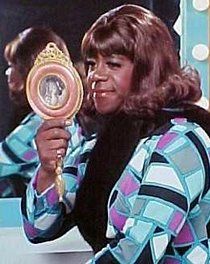
  The answers are Yes and Yes. Modern demons mimic the power of absolution. They themselves vigorously oppose us when we are inclined to do the right thing; they are able to influence our exercise of our free will. They make us harm ourselves and others, but “it’s not our fault.” Like Geraldine Jones, the famous comic character created by Flip Wilson, we proclaim “THE DEVIL MADE ME DO IT!” We feel absolved, vindicated, and exonerated from all guilt because whatever it was that happened, we didn’t mean to do it. “I just snapped.” “I was drunk / high / enraged.” “I couldn’t resist the temptation.” “It’s a disease. I can’t do anything about it.” “Yeah, I’m demon possessed. So what?!”  “Can’t you tell I’m insane?” “Frankly, I don’t give a damn. It happened. Deal with it.” “I’m not the liar! S/he – they are lying!”

Another way this “absolution” works is by making us believe that not only are our actions attributable to someone or something outside our control, but also everything is relative and noting is absolute. There is no “Truth.” Without Truth, there is no accountability. I cannot be condemned by any other earthling for something over which I had no control and for which there is no suitable agreed-upon standard by which to judge me – or anyone else for that matter. We’ve dealt with this many times in these lessons. God gave us everything we need to be like him, to be empowered to defy the Devil and make him flee. James 4:7 Submit yourselves therefore to God. Resist the devil, and he will flee from you. Belovéd, the Devil is NOT able to “make” us do anything; but, he can sure make disobedience look alluring! Moreover, the Devil’s subordinates, those real-and-present minions we call demons, have even less power over us than their master. That is unless, of course, we give them that power over us by claiming we don’t know right from wrong.

  Here’s the thing I keep trying to remind myself and my Belovéd: God loves us and provides with everything we need to properly love him in return. Because I know there are Angels Watching Over Me (↔ Music Link), I know also that there are demons plotting over me. That’s a biblical truth which we can take to the bank where our treasures are laid up somewhere beyond the blue. Why is it that “The hard part is doing it?” Let’s go back to our key verse:

Mark 6:12-1312 So they went out and proclaimed that all should repent. If Judas could cast out demons (and we know they can’t be cast out in the name of Beelzebub), why didn’t Judas resist the Devil and his demons? I believe it was because he could not bring himself to repent. Repentance was what John preached. At the beginning of his ministry, Jesus preached repentance. At the beginning of the Church, Peter preached repentance (See Acts 2:38; check the CJB version of that one). As Screwtape said to Wormwood when describing the uneasiness we feel when we’re not living righteously, “If such a feeling is allowed to live, but not allowed to become irresistible and flower into real repentance, it has one invaluable tendency. It increases the patient’s reluctance to think about the Enemy.” For the Devil and his demons, “The Enemy” is God. Why was Judas unable to repent? He chose to be unable to believe the Gospel. He utterly rejected the Truth that was right in front of him. Don’t be like Judas. Don’t take that road. Repent, believe, make the demons flee, and be whole.

______________
1 The Complete C.S. Lewis Signature Classics The Screwtape Letters Zondervan/Harper-Collins Publishers, 2002; Page 149

Unless otherwise indicated, all scripture passages are from the New Revised Standard Version Catholic Edition (NRSVCE) New Revised Standard Version Bible: Catholic Edition, copyright © 1989, 1993 the Division of Christian Education of the National Council of the Churches of Christ in the United States of America. Used by permission. All rights reserved.

Creative Commons License
Aloha Friday Messages by Charles O. Todd, III is licensed under a Creative Commons Attribution-ShareAlike 3.0 Unported License

Biblical languages inserts from Bible Hub (Bible Hub: Search, Read, Study the Bible in Many Languages) Visit at http://biblehub.com

Share-A-Prayer

Please pray with us here.


Aloha Friday Message – July 6, 2018 – When Will They Ever Learn?

1827AFC070618 – When Will They Ever Learn?

Read it online here, please. And please, when you visit there, use one of the social media links at the bottom of the page to share this post. Thank you! And remember, we now have a READER VIEW available, so share this link or this email often.

   Mark 6:2 On the Sabbath he began to teach in the synagogue, and many who heard him were astounded. They said, “Where did this man get all this? What is this wisdom that has been given to him? What deeds of power are being done by his hands!

Mark 6:6 And he was amazed at their unbelief.

Aloha nui loa, ʻŌmea! I hope your Holiday was celebrated well and safely. It’s always a special day for us because my brothers – Dan and Dave – were born on July 4th. I remember my dad saying he’d be bringing home his little firecrackers. They came to our family just a bit over a year after my first brother, Ken, was born. Dad was an accountant in the Air Force and so the progression of his family’s growth was interesting. First to be born, had the house to myself for the first four years. Then along came Ken, and the number of kids doubled. Then a year later, along came the twins, and the number of kids doubled again. So, a couple of years after that when mom got pregnant again …. Well, fortunately the trend stopped there with our sister, Merilee. It took another seven years for our youngest brother, John Edward Todd to show up. The six of us made quite a scene traveling in our station wagon every Sunday – and several other days during the week – to go to church at Corona Presbyterian. We were a Faith-Based Family, and living our faith as a family with our parents was the foundation of everything we later became. It was wise of our mom and dad to teach us their faith-based wisdom. I can attest that it definitely stayed with me even to this day. Last week, we looked into the concept of wisdom and read from the Book of Wisdom. Today we will see that wisdom and faith are akin to each other – much like our siblings are.

Faith is Wisdom because Faith surpasses and overcomes fear. If you need more faith, ask for it – along with the wisdom to use it – for he will generously bless you with more of ALL his gifts. After all, he is omnipotent and omniscient; he knows everything you need for your life, and faith is one of his most abundant gifts. You’ve heard that saying “waste not, want not.” Here is an even better adage that is true and well worth remembering: “Fear not, lack not.” We should never be afraid to lose what we have or to ask for more of what we need. “Fear not. Just have faith.” (See Luke 8:50 and Mark 5:36 in the story about Jairus’ daughter.) You have already heard it does not take much faith to move mountains. A life lived in faith is a life lived in wisdom; it is wise to love and serve our Creator. How marvelous if all of us were immersed in the Wisdom of Faith.

Wisdom seems to have fled the World in so many ways these days! So many go to the streets – especially if the action on the streets is being broadcast over major media outlets. We are inundated almost hourly with this group protesting that group and that group protesting just as loudly that this group is WRONG! Wisdom gets drowned out in that cacophonous flood of anger and vitriolic cursing. If we could hear Wisdom about all of that, she might be saying (as found in Proverbs 1:20-22)

20 Wisdom cries out in the street;
in the squares she raises her voice.
21 At the busiest corner she cries out;
at the entrance of the city gates she speaks:
22 “How long, O simple ones, will you love being simple?
How long will scoffers delight in their scoffing
and fools hate knowledge?

Many in these shouting forays claim to be “People of Faith.” As you know, one of my favorite adages is “What we do says who we are. Actions speak louder than words.” If hating your neighbor for being unlike you is the proof of faith, then it’s not the Faith of our Fathers upon which our Republic stands. That is not the Faith that leads to Salvation; indeed, it leads instead to condemnation. The Faith and Wisdom that lead to Salvation come when the message of the Gospel is preached, then believed, and then affirmed by any earthling called by God to receive the Gift of Faith. (See Romans 10:17). Salvation is something for which I ardently hope, a state of being that I believe is completely possible because God said it is ours for the taking. Salvation, the Grace that makes us wholly holy, is from God and the Salvation we hope for in Faith is the defeat for Death brought into this world through the devil’s envy death entered the world, and those who belong to his company experience it. (See Wisdom 2:21-24). In the ancient World, before God called his people out of Egypt, there was no Law. God gave them the Law so that they might find Hope in obedience. However, we read in Romans 5:20-21 20 But law came in, with the result that the trespass multiplied; but where sin increased, grace abounded all the more, 21 so that, just as sin exercised dominion in death, so grace might also exercise dominion through justification leading to eternal life through Jesus Christ our Lord. (Check the CJB version at that link.) the Law implied Hope, but did not confer hope.

I have hope only in those things which I perceive to be beyond my comprehension – in the things I cannot see, for – as the Apostle Paul says – what hope is there in things we can see? (See Romans 8:24-25 and Hebrews 11:1). We can be, and should be, deeply grateful for this astonishing gift of Hope. It’s right here, within our reach. Just as Moses said, it is in your mouth and in your heart for you to observe. (See Deuteronomy 30:11-14). Moses was speaking about the accessibility of the Law, but Christ – for our sakes – fulfilled that Law so that if we are in Christ, we are secure in the Grace of God so that grace might also exercise dominion through justification leading to eternal life through Jesus Christ our Lord. Here is where we are reminded of the importance of that “attitude of gratitude.” Giving thanks is – believe it or else – a sacrifice which God thoroughly enjoys: Psalm 50:14-15, 22-23 14 Offer to God a sacrifice of thanksgiving, and pay your vows to the Most High. 15 Call on me in the day of trouble; I will deliver you, and you shall glorify me.” 22 “Mark this, then, you who forget God, or I will tear you apart, and there will be no one to deliver. 23 Those who bring thanksgiving as their sacrifice honor me; to those who go the right way I will show the salvation of God.”


Many times in the Gospels, Jesus tells us our faith is too little, too weak, too flimsy to do even the simplest things like hurl a mountain into the Sea of Galilee. When Jesus was in the boat crossing that Sea of Galilee, he rebuked the storm disturbing the Sea. The disciples who were there didn’t grasp what they had seen – the Son of God speaking “louder than words.” He looked at them “Where is your faith?” They were afraid and amazed, and said to one another, “Who then is this, that he commands even the winds and the water, and they obey him?” (See Luke 8:25) Something, it seems, blocks our faith. Something makes us miss out of the certainty which come by believing in the power of prayer. Many times I have been speaking with persons who have complaints that they just can’t get past a certain point in their lives. I always ask, “What’s stopping you?” Often the reply is “I don’t know.” My response will always be, “If you did know, what would you say?” often this question breaks whatever is blocking their path forward (I call it a “Block Buster” question), and progress ensues. Sometimes though we need to look deeper and find the Spiritual obstacles that hold us back and defeat our Faith in Hope. It usually turns out we are not acting wisely, but instead acting sinfully. Here’s what James had to say about that in James 3:14-18 14 But if you have bitter envy and selfish ambition in your hearts, do not be boastful and false to the truth. 15 Such wisdom does not come down from above, but is earthly, unspiritual, devilish.* 16 For where there is envy and selfish ambition, there will also be disorder and wickedness of every kind. 17 But the wisdom from above is first pure, then peaceable, gentle, willing to yield, full of mercy and good fruits, without a trace of partiality or hypocrisy. 18 And a harvest of righteousness is sown in peace for those who make peace. *This word is δαιμονιώδης·(daimoniōdēs) {dahee-mon-ee-o’-dace} which means demonic, demon-like, or as demons have and do.

  This is the point the Apostle Paul was making when he said in 1 Corinthians 2:4-8 My speech and my proclamation were not with plausible words of wisdom, but with a demonstration of the Spirit and of power, so that your faith might rest not on human wisdom but on the power of God. Belovéd, when we take over God’s job and say, like a spoiled three-year-old, “I do it myself!” then we are unwise; we are lacking Wisdom. Some of you will doubtless be thinking, “Isn’t there something like that in the Bible?” Yes, and here it is: James 1:5-8 If any of you is lacking in wisdom, ask God, who gives to all generously and ungrudgingly, and it will be given you. But ask in faith, never doubting, for the one who doubts is like a wave of the sea, driven and tossed by the wind; 7, 8 for the doubter, being double-minded and unstable in every way, must not expect to receive anything from the Lord.

What???? If we ask wrongly we get nothing? Yes. “WHY?” you ask? Simplest answer: Because God said it over and over and over. How then do we ask? With faith, with hope, and with thanksgiving we may have the Wisdom to ask for that which will please him most – according to his will. Does that always end our suffering? Again, just look at the Apostle Paul. He led thousands to Christ, but got beat up for it – literally – dozens of times. He willingly accepted weakness: 2 Corinthians 12:10 10 Therefore I am content with weaknesses, insults, hardships, persecutions, and calamities for the sake of Christ; for whenever I am weak, then I am strong.

That was wise. It was the Wisdom of Faith. I pray to God that all of us might learn such wisdom so that Jesus will never look to us and be amazed at our lack of faith. How can we deal with all this dissension, hatred, violence, selfishness, and all the grief and sorrow that come with all that? Romans 12:21 21 Do not be overcome by evil, but overcome evil with good. Just remember, the one who is wise will know s/he is the one who is weak and perfectly capable of being and staying evil. Give thanks to the LORD for he is good. His love and mercy are everlasting. God alone is Wise, but those who live as the LORD commands are also those who share, through Faith, in the Gifts of his Wisdom. Learn this. Live this. It’s not “live and learn.” It’s “learn and live.” Do it now.

Whatever, whenever, wherever, whoever, however, if ever, forever — at your service, Belovéd!

Unless otherwise indicated, all scripture passages are from the New Revised Standard Version Catholic Edition (NRSVCE) New Revised Standard Version Bible: Catholic Edition, copyright © 1989, 1993 the Division of Christian Education of the National Council of the Churches of Christ in the United States of America. Used by permission. All rights reserved.


Creative Commons License
Aloha Friday Messages by Charles O. Todd, III is licensed under a Creative Commons Attribution-ShareAlike 3.0 Unported License


Biblical languages inserts from Bible Hub (Bible Hub: Search, Read, Study the Bible in Many Languages) Visit at http://biblehub.com

Share-A-Prayer

Please pray with us here.

Aloha Friday Message – June 29, 2018 – It’s not over yet.

1826AFC062918 – It’s not over yet.

Read it online here, please. And please, when you visit there, use one of the social media links at the bottom of the page to share this post. Thank you! And remember, we now have a READER VIEW available, so share this link or this email often.

  Wisdom 1:12-16 12 Do not invite death by the error of your life,
or bring on destruction by the works of your hands;
13 because God did not make death,
and he does not delight in the death of the living.
14 For he created all things so that they might exist;
the generative forces of the world are wholesome,
and there is no destructive poison in them,
and the dominion of Hades is not on earth.
15 For righteousness is immortal.

16 But the ungodly by their words and deeds summoned death;
considering him a friend, they pined away
and made a covenant with him,
because they are fit to belong to his company.

Aloha pumehana ʻŌmea! Aloha ʽoe! Today marks a bit of a departure from my usual choices for scripture. Today’s passage is from the Book of Wisdom. You won’t find it in your Bible if you use anything based on the Authorized King James Version. It is part of what some Christians call “The Apocrypha.” They do not believe the Book of Wisdom, and six other books, meet the “canonical standard” as being the inspired Word of God. The Catholic Church accepts the books a canonical. These seven books are included in the Catholic Bible: 1 and 2 Maccabees, Sirach (Ecclesiasticus), Wisdom (Wisdom of Solomon), Baruch, Tobit, Judith, and additions to Daniel and Esther. You can find out more about that here. I do not intend to debate that issue here as that is outside the purpose of this message.

The passage starts with a wise warning to all earthlings: Don’t be stupid. It could kill you. We know this well enough; it’s what our parents told us over and over while we were growing up – and then we preached the same thing to our kids. “Use your head. Think it over. Don’t do something that you know can hurt you or others. LOOK BEFORE YOU LEAP!” This certainly is wisdom, and common wisdom at that; in fact, it falls into the category of what we usually call “common sense.” What comes next, though, is a little surprising.

The passage goes on to say, “God did not make death, and he does not delight in the death of the living.” This seems a little counterintuitive. Death is such an integral part of our “world-view” that we seem sometimes to worship Death. We have been reminded in the past couple of decades that we live in a Culture of Death. Our movie heroes tell us it’s just part of the journey, a way of living in a different set of circumstances. We are often reminded not to fear death, and yet we seem never to take that advice and instead worry about dying. Death is the ultimate chaos, the dissolution of everything we gain through living to the fullest. We fear it so much that we say “Rest in Peace,” and “s/he’s in a better place now.” We are afraid of death, but somehow hold the irrational belief that it is better than being alive.

Christians believe there is life – LIFE – after death. Our spirit or soul lives on and will eventually (or in some cases immediately) be reunited with God and then – later according to God’s Will – we will be given a resurrected, glorified body, too. We believe this principally because God told us so – over and over and over. In fact, in our passage for today, the writer goes on to explain why death came to be and what God did about it: 14 For he created all things so that they might exist; the generative forces of the world are wholesome, and there is no destructive poison in them, and the dominion of Hades is not on earth. 15 For righteousness is immortal. God did not make things and people for the purpose of death corruption. God did not make junk.

God gave earthlings a perfect world with perfect Peace and then let them choose to accept or decline that gift. Part of the Gift of Life was the Paradise in which grew the Tree of Life and the Tree of the Knowledge of Good and Evil. The fruit of that second tree is what changed Paradise. The fruit of the Tree of the Knowledge of Good and Evil (or the Tree of All Knowledge) made them aware of a “dualism.” There is good and there is evil; once they realized there was a difference, they had to make another – a second – choice. Their first choice was to disobey. Their second choice was deciding what to do about their first choice. You know the rest of the story; they hid, they tried to blame each other, and then they blamed the serpent. Adam, Eve, and the serpent each received a curse for the choices they made, but only Adam and Eve also received a covenant blessing.

So how did Death get into the world and why is it such a frightening thing? The writer of Wisdom continues: God created us for incorruption, and made us in the image of his own eternity, 24 but through the devil’s envy death entered the world, and those who belong to his company experience it. (See Wisdom 2:21-24)

God started Creation with the intent of sharing eternal unity with everything he created; nonetheless, he did not impose that intent on humankind. He gave us a choice – Free Will is what we call it. From God’s point of view it’s more like Common Sense; pretty basic stuff really – you can have paradise forever with me or opt out at any time and lose it all. Who wouldn’t chose “paradise forever?” Well, Adam and Eve, for starters, and all of us traipse right along in their footsteps every time we make the selfish decision to be our own god. But why is it through the devil’s envy? HE – Satan – wanted to be God and learned it was impossible, so – out of envy and spite – he did (and continues to do) everything he can to spoil God’s handiwork. Part of the dualistic reality that came with Free Will was the end of eternal life with God – death. “You are dust, and to dust you shall return.” (Genesis 3:19)

There certainly are days when it seems that life is nothing but dust. The dust – death – we experience flits into every nook and cranny, every passing second, and every waking thought of our day-to-day lives. In this passage, death is the word Θάνατον (than’-a-ton) from Θάνατος (thanatos) {than’-at-os} in the Septuagint. Death is the wage we earn by sinning. We are eternally invited to accept the freely given Gift of Eternal Life. In this Book of Wisdom, God tells us not to seek death by the error of your life, or bring on destruction by the works of your hands because he does not delight in the death of the living. 14 For he created all things so that they might exist; the generative forces of the world are wholesome, and there is no destructive poison in them, and the dominion of Hades is not on earth. 15 For righteousness is immortal. We are immortal when we are righteous. Righteousness is a big part of being “created in the image and likeness of God.”

What, then, is righteousness?

In Proverbs 21:21 we read 21 Whoever pursues righteousness and kindness will find life and honor. Pursuing righteousness, therefore, is not to pursue Death; it is to pursue life and honor. In this verse, another word for “kindness” is “mercy.” Righteousness is thought of virtue, unfailing love, blamelessness, morality, decency, honest, and – yes – justice. The Greek word in the Septuagint is δικαιοσύνης (dikaiosuné) {dik-ah-yos-oo’-nay}, a word which refers to fulfillment of the law, divine righteousness, or the business of a judge. In Hebrew, the word used here is צְדָקָה (tsedaqah) {tse-da-kaw}, and refers to justice and righteousness in government, in a case or cause, and of salvation (among others). Righteousness could be thought of as “always doing the right thing because it is the right thing.” God is always righteous (See Isaiah 54:10), and he provides endless ways for us to be like him in righteousness; yet, we utterly fail to use them.

In Romans 3:10 the Apostle Paul writes, 10 as it is written: “There is no one who is righteous, not even one. This is a reference to Psalm 14:1-3 – 1 The fool has said in his heart, There is no God. They have corrupted themselves, and become abominable in their devices; there is none that does goodness, there is not even so much as one. 2 The Lord looked down from heaven upon the sons of men, to see if there were any that understood, or sought after god. 3 They are all gone out of the way, they are together become good for nothing, there is none that does good, no not one. Their throat is an open sepulcher; with their tongues they have used deceit; the poison of asps is under their lips: whose mouth is full of cursing and bitterness; their feet are swift to shed blood: destruction and misery are in their ways; and the way of peace they have not known: there is no fear of God before their eyes. The Psalmist and the Apostle both make a universal declaration that “there is not one that is righteous.” What, then, shall we do? Indeed, what can we do?

How can we possibly do what Jesus asks us to do in Matthew 5:48? 48 Be perfect, therefore, as your heavenly Father is perfect. The word used for “perfect” here is a word we’ve had some experience with before; it means to be complete, to be consistent, to be virtuous in all seasons for all persons on all occasions; in other words, be like God. This is the meaning in Matthew. Don’t just be pious by loving just your friends and neighbors, but live out your piety by loving your enemies; imitate God; let your piety be complete, in proportion, and uniform. Every Christian has the capacity to do this. How? We can do this in the Word and in the Spirit:

2 Timothy 3:16-17 16 All scripture is inspired by God and is useful for teaching, for reproof, for correction, and for training in righteousness, 17 so that everyone who belongs to God may be proficient, equipped for every good work.

1 Thessalonians 5:19 19 Do not quench the Spirit.

Ephesians 4:30 30 And do not bring sorrow to God’s Holy Spirit by the way you live. Remember, he has identified you as his own, guaranteeing that you will be saved on the day of redemption. New Living Translation (NLT) Holy Bible, New Living Translation, copyright © 1996, 2004, 2015 by Tyndale House Foundation. Used by permission of Tyndale House Publishers, Inc., Carol Stream, Illinois 60188. All rights reserved.

Belovéd, it’s not over yet – For righteousness is immortal. Be complete, be consistent, be virtuous in all seasons for all persons on all occasions. Do it in the Word by Spirit and by Truth.

Unless otherwise indicated, all scripture passages are from the New Revised Standard Version Catholic Edition (NRSVCE) New Revised Standard Version Bible: Catholic Edition, copyright © 1989, 1993 the Division of Christian Education of the National Council of the Churches of Christ in the United States of America. Used by permission. All rights reserved.

Creative Commons License
Aloha Friday Messages by Charles O. Todd, III is licensed under a Creative Commons Attribution-ShareAlike 3.0 Unported License

Biblical languages inserts from Bible Hub (Bible Hub: Search, Read, Study the Bible in Many Languages) Visit at http://biblehub.com


Aloha Friday Message – June 22, 2018 – His name is John

1825AFC062218 – His name is John

Read it online here, please. And please, when you visit there, use one of the social media links at the bottom of the page to share this post. Thank you! And remember, we now have a READER VIEW available, so share this link or this email often.

 Luke 1:59-60 59 On the eighth day they came to circumcise the child, and they were going to name him Zechariah after his father. 60 But his mother said, “No; he is to be called John.”  61 They said to her, “None of your relatives has this name.” 62 Then they began motioning to his father to find out what name he wanted to give him. 63 He asked for a writing tablet and wrote, “His name is John.” And all of them were amazed.

Aloha nui loa, ʻŌmea! It’s already getting toward the end of June! The Summer Solstice has arrived and passed! How did that happen so quickly? It was just a day or so ago when we passed out Valentine Cards, wasn’t it? It’s always surprising when something you’ve looked forward to for a long while suddenly arrives at your doorstep, and then >>¡POOF!<< it’s over!

This coming Sunday would customarily be the eleventh Sunday in Ordinary Time. However it is one of those rare occasions when June 24th occurs on a Sunday. The most recent previous time was in 2012. It will happen again in 2029, 2035, 2040 and 2046 (the year I turn 100!) June 24th is the day many Christians celebrate the birth of John the Baptist. It is given the rank of a Solemnity, a festival day of the highest rank in the Roman Catholic calendar. Solemnities have additional Masses associated with them – a Vigil Mass the preceding evening, a Mass at Dawn, and a Mass during the Day. As with certain Christian feasts, the event is not intended to celebrate a specific date, but rather to commemorate a significant occurrence. The Nativity of John the Baptist is linked to the Nativity of Jesus on December 25th and is set 6 months in advance because when Gabriel announced to Mary she would bear the Messiah, he told her “… your relative Elizabeth in her old age has also conceived a son; and this is the sixth month for her who was said to be barren.” (See Luke 1:36-37) John plays a essential role in the early days of Jesus’ ministry. He is referred to as “The Forerunner” in some cultures because of two very specific prophecies in Isaiah and Malachi:

Isaiah 40:3A voice cries out:
“In the wilderness prepare the way of the Lord,
make straight in the desert a highway for our God.

Malachi 3:1 1 See, I am sending my messenger to prepare the way before me, and the Lord whom you seek will suddenly come to his temple. The messenger of the covenant in whom you delight—indeed, he is coming, says the Lord of hosts.

The Apostle Matthew in his Gospel first states Matthew 3:3 This is the one of whom the prophet Isaiah spoke when he said,
“The voice of one crying out in the wilderness:
‘Prepare the way of the Lord,
make his paths straight.’”

Later Jesus himself says of John Matthew 11:10 *– 10 This is the one about whom it is written,
‘See, I am sending my messenger ahead of you,
who will prepare your way before you.’

(*I strongly encourage you to read Matthew 11. It won’t even take 2 minutes. The link provided will display the entire quotation of what Jesus said about John.)

In the Gospel of Mark, the author states in Mark 1:1-3 1 The beginning of the good news of Jesus Christ, the Son of God.

As it is written in the prophet Isaiah,
“See, I am sending my messenger ahead of you,
who will prepare your way;
the voice of one crying out in the wilderness:
‘Prepare the way of the Lord,
make his paths straight,’”

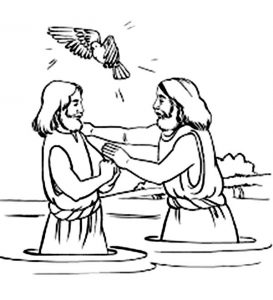
John the Baptist even makes a statement about this himself. (See John 1:19-34.) He denied that he was the Messiah, or Elijah. He declared that he did not know who the Messiah was – yet – but knew that his arrival was imminent. He said “‘After me comes a man who ranks ahead of me because he was before me.’ 31 I myself did not know him; but I came baptizing with water for this reason, that he might be revealed to Israel. (Use the link to see this in context.) He grew up in the wilderness, and was probably about 30 years old when he started baptizing people “for repentance.”

He was named by “an angel of the Lord” – Gabriel – who appeared to John’s father, Zechariah. Zechariah was told to give him the name John: Luke 1:13-15 13 But the angel said to him, “Do not be afraid, Zechariah, for your prayer has been heard. Your wife Elizabeth will bear you a son, and you will name him John. 14 You will have joy and gladness, and many will rejoice at his birth, 15 for he will be great in the sight of the Lord. He must never drink wine or strong drink; even before his birth he will be filled with the Holy Spirit. In Hebrew he would have been John son of Zechariah (Yokhanan ben Zkaryah) In Luke the Greek name is Ἰωάννης (Ioannes) {ee-o-an’-nace} a name of Hebrew origin: יוֹחָנָן (Yochanan) {yo-khaw-nawn’}.

The name Yokhanan means “Jehovah is a gracious giver.” Certainly to his parents, who were well beyond childbearing years and had no children because Zechariah’s wife, Elisabeth was barren, the gift of a child was indeed a very gracious gift! His parents knew the purpose of this wonderful gift – remember that Elisabeth knew Mary was pregnant with Jesus the Messiah and when Mary greeted her, Yokhanan recognized the presence of the Messiah and Elisabeth said, “For as soon as I heard the sound of your greeting, the child in my womb leaped for joy.” (See Luke 1:41-45) We might deduce that the two boys grew up separately – Jesus spent some time in Egypt as a child and went to Nazareth in his youth and John apparently stayed in Judea in the hill country and desert.

John continued baptizing even after Jesus had selected at least some of his Disciples. There are some indications that Jesus’ Disciples were also baptizing (See John 3:23 and Mark 4:1-3) eventually, though, John began to realize that his assigned role was coming to an end; he had announced the coming of the Messiah, and angered King Herod by condemning him for an unlawful marriage. Here’s what he said about his career as The Forerunner:

John 3:30-36* 30 He must increase, but I must decrease.” 31 The one who comes from above is above all; the one who is of the earth belongs to the earth and speaks about earthly things. The one who comes from heaven is above all. 32 He testifies to what he has seen and heard, yet no one accepts his testimony. 33 Whoever has accepted his testimony has certified this, that God is true. 34 He whom God has sent speaks the words of God, for he gives the Spirit without measure. 35 The Father loves the Son and has placed all things in his hands. 36 Whoever believes in the Son has eternal life; whoever disobeys the Son will not see life, but must endure God’s wrath. (*The link provided opens the Gospel at verse 22 to show the whole dialogue of John’s statement.)

John was indeed the herald of God’s greatest plan – the coming of the Messiah. The world had been waiting for uncountable years for that to happen, then >>¡POOF!<< there he was and just a short while later >>¡POOF!<< he was gone. John left this life a little sooner than Jesus, but not before seeing that the prophecies about him and is cousin were true. There are other men named John in the Bible. There is the Apostle John – the son of Zebedee and Salome, and brother of James the Elder –  who wrote the fourth Gospel and was known as the Belovéd Disciple. He is also quite possibly the author of three of the catholic letters. There is also John Mark – Mark is his surname – who was a colleague of the Apostle Paul and Barnabas. Lastly there is another man about whom little is known other than the fact that he was in the Sanhedrin (See Acts 4:1-6); he may have been known as Jonathan. Yokhanan ben Zkaryah, however, is still most famous for his role in pointing out the Messiah – “The Lamb of God who takes away the sins of the World.” John is still with Jesus. They are both alive and calling us to meet them soon. As the Ages roll on, many are still expecting their Messiah to arrive; many more have entirely given up on that. As for me and my house, we await the Lord’s return with boundless hope because we know if we don’t see him here today, we will see him soon there. What a Blesséd Assurance (↔ Music Link) we have in that!

Belovéd, his name is, not was, John. And because it is John, we know him for who he is.

Whatever, whenever, wherever, whoever, however, if ever, forever — at your service, Belovéd!

Unless otherwise indicated, all scripture passages are from the New Revised Standard Version Catholic Edition (NRSVCE) New Revised Standard Version Bible: Catholic Edition, copyright © 1989, 1993 the Division of Christian Education of the National Council of the Churches of Christ in the United States of America. Used by permission. All rights reserved.


Creative Commons License
Aloha Friday Messages by Charles O. Todd, III is licensed under a Creative Commons Attribution-ShareAlike 3.0 Unported License

Biblical languages inserts from Bible Hub (Bible Hub: Search, Read, Study the Bible in Many Languages) Visit at http://biblehub.com


Aloha Friday Message – June 15, 2018 – DEEP-SEE diving

1824AFC061518 – DEEP-SEE Diving

Read it online here, please. And please, when you visit there, use one of the social media links at the bottom of the page to share this post. Thank you! And remember, we now have a READER VIEW available, so share this link or this email often.

Mark 4:30-32 30 He also said, “With what can we compare the kingdom of God, or what parable will we use for it? 31 It is like a mustard seed, which, when sown upon the ground, is the smallest of all the seeds on earth; 32 yet when it is sown it grows up and becomes the greatest of all shrubs, and puts forth large branches, so that the birds of the air can make nests in its shade.”

Aloha nui loa, ʻŌmea! Today we will look more deeply into this idea of “faith the size of a mustard seed.”

Before we begin, I need to ask if you are using the links-to-Scripture I provide. The purpose of these articles is to get us into the Word. I want you to be able to see what Scripture actually says. That’s why there always are at least 3 “translations” – three versions in different language styles – of ever passage I list. I also always use the full name of every Bible book so that there’s no question about the location of the reference. For example, many writers would denote today’s Key Verse as Mk 4:30ff. I’ll always give you the full reference and provide you with a link so you can look at it more than one way. Do you do that? I hope so; I don’t plan to change that approach in the foreseeable future.

Often I will also give you hints about what the passage(s) say(s) in the original language – as much as is possible – so you can see the Hebrew and/or Greek words that impact the connotative and denotative meanings of the Scripture we’re looking into. Again, the intent is to give you a more “in-depth” look into the Word. That’s why we have that punny title DEEP-SEE Diving. We want to see deeply into Scripture and fish-up the meaning. Then, the next time you see it or hear it, you might be able to remember, “Oh, yeah! That was when Jesus was talking about …!” So what do mustard seeds have to do with fishing (or diving), anyway? Let’s take a deep-see dive. Where else in Scripture does Jesus use the mustard seed as the basis for a parable?

Matthew 13:31-32 31 He put before them another parable: “The kingdom of heaven is like a mustard seed that someone took and sowed in his field; 32 it is the smallest of all the seeds, but when it has grown it is the greatest of shrubs and becomes a tree, so that the birds of the air come and make nests in its branches.”

Luke 13:18-19 18 He said therefore, “What is the kingdom of God like? And to what should I compare it? 19 It is like a mustard seed that someone took and sowed in the garden; it grew and became a tree, and the birds of the air made nests in its branches.”

In addition, we have these passages:

Matthew 17:20 20 He said to them, “Because of your little faith. For truly I tell you, if you have faith the size of a mustard seed, you will say to this mountain, ‘Move from here to there,’ and it will move; and nothing will be impossible for you.”

Luke 17:6 The Lord replied, “If you had faith the size of a mustard seed, you could say to this mulberry tree, ‘Be uprooted and planted in the sea,’ and it would obey you.

If we “combine” the messages in these parables, we see that a mustard seed starts off really small and grows into a shrub or bush so large that birds can nest in it. This tells us a little bit of faith nurtured well yields a large volume of blessings that benefit many others. We also see that if our faith were “even as large as” a mustard seed, we could accomplish amazing things. We can toss around mountains or mulberry trees on just the strength of faith if only it is “even as large as” a mustard seed. Have you tried that? Me, neither; but I’d like to. How big is “even as large as” a mustard seed? Take a look at this comparison:


Celery Seed – 1.5 – 2 mm
Mustard Seed – 1 – 2 mm
Poppy Seed – 0.7 – 1.0 mm
Amaranth Seed – 0.9 – 1.4 mm
Some orchid seeds (check that out) are only 1/300 of an inch long!

So how large does a “mustard bush grow?” here’s an example from a post back in 2011:

Mustard Seed Tree

Yep, that’s ONE plant! They can be somewhere between 6 to 20 feet tall and have a ground footprint of about 20 square feet. That is pretty amazing for one really small seed. Maybe this will help you see it more clearly:

Jesus told his Disciples in Matthew 5:20 20 For I tell you, unless your righteousness exceeds that of the scribes and Pharisees, you will never enter the kingdom of heaven. Righteousness and faith go hand in hand, so if the most righteous people you know are not faith-filled enough that their righteousness will not gain the Heaven, where does that leave the rest of us?

The impact of that parable would have been immense to Jesus’ audience! It should have that same impact on us as well. You probably remember that other parable about seeds, the Parable of the Sower. That can be found in Matthew 13:1-23, Mark 4:1-20, and Luke 8:4-15.

We still depend on the people who feed us with crops produced from seeds. In the Parable of the Sower in Matthew 13:37-39, Jesus says “The one who sows the good seed is the Son of Man; 38 the field is the world, and the good seed are the children of the kingdom; the weeds are the children of the evil one, 39 and the enemy who sowed them is the devil; the harvest is the end of the age, and the reapers are angels.” Throughout the Bible, especially in the Old Testament, “seed” means “descendant.” The seed of Abraham means all of his descendants – more numerous than all the stars or grains of sand in the desert. Those “seeds” must be tended to as much as one tends to herds (See “The Good Shepherd“). We also know that we plant “seed verses” in our hearts, passages from Scripture that grow within us when we nurture them with love. Those seeds of faith produce a crop “some a hundredfold, some sixty, some thirty.” (See Matthew 13:8).

Beloved, where is our crop? Where is our mustard-seed bush, our acres of wheat, our vineyard of grapes, and our orchard of the Fruit of the Spirit? We cannot expect a harvest if we do not commit to the stewardship of planting. In Matthew 25:14-30 we hear about a greedy king who harvested where he had not sown and gathered where he had not scattered seed. He coerced others to do these things on his behalf. Good stewards saw that opportunity and profited by it. If our harvest is small, unsatisfying, and unsustaining, did we plant enough seeds? When we plant the Word in the “good soil” of our hearts, we have to plant more than one seed to get a harvest. We must also add to the stewardship of planting the stewardship of nurturing. And if we nurture the seeds, the crop they bear will require us to add the stewardship of harvest. It is from the harvest that the sower gets seed for the next crop and grain for the bread to feed himself and others.

The verses and Scripture passages we have looked at today are like seeds planted in our hearts. I call them “Seed Verses.” Seed verses are passages of Scripture that we have pondered over, ruminated upon, perhaps memorized, and when we “harvest” them by bringing them out to feed ourselves and others, we have “seed for the sower and bread for food” (See 2 Corinthians 9:10) so that we will multiply your seed for sowing and increase the harvest of your righteousness. We get better seeds when we store seeds. Do you have any Seed Verses? Here are a few of mine:

See if you feel a seed-like response when you read the first few words of these Seeds:

“The Lord is my shepherd…” Psalm 23:1
“For God so loved …”  John 3:16-18
“I was glad when they said…”  Psalm 122:1
“Some men brought him a paralytic…” Matthew 9:2
“We live by faith, not by sight …” 2 Corinthians 5:7
“… everyone born of God overcomes …”  1 John 5:3-4
“Thy Word have I hid in my heart …”  Psalm 119:11-16
“Let us fix our eyes on Jesus, the author and perfecter of our faith …” Hebrews 12:1-2
“anyone who hears my word and believes him who sent me …”  John 5:24
“I am the resurrection and the life …”  John 11:25
“There is salvation in no one else …”  Acts 4:12
“Jesus Christ–he is Lord of all.”  Acts 10:36
” … every tongue should confess … ” Philippians 2:9-11
“If you confess with your mouth that Jesus is Lord…”  Romans 10:8-9
“For I know the plans I have for you…”  Jeremiah 29:11
“… so that being justified by his grace we might become heirsTitus 3:4-8
(See also 1209AFC030212 – Titus The Evangelist – Catholic Letter Series
“… if we hope for what we do not see, we wait for it with patience.”  Romans 8:25
“Rejoice in hope, be patient in tribulation, be constant in prayer.”  Romans 12:12
“Do your best to present yourself to God as one approved, a workman who does not need to be ashamed and who correctly handles the word of truth.”  2 Timothy 2:15
” … be steadfast, immovable, always excelling in the work of the Lord …” 1 Corinthians 15:58

“Settle for nothing less than God in Christ Jesus.” That’s not a Seed Verse from the Bible. It is a seed from my mustard tree. In fact, this whole series of messages that stretch back to the early years of last decade are harvested seeds from those original seeds planted by my parents, pastors, Sunday School teachers, friends, and hours of deep-see diving in God’s word (no, that is not misspelled. It is DEEP-SEE – Look Deeper).

Whatever, whenever, wherever, whoever, however, if ever, forever — at your service, Belovéd!


PLEASE USE THE INTERCESSORY PRAYER LIST. PEOPLE ARE COUNTING ON US.


Unless otherwise indicated, all scripture passages are from the New Revised Standard Version Catholic Edition (NRSVCE) New Revised Standard Version Bible: Catholic Edition, copyright © 1989, 1993 the Division of Christian Education of the National Council of the Churches of Christ in the United States of America. Used by permission. All rights reserved.

Creative Commons License
Aloha Friday Messages by Charles O. Todd, III is licensed under a Creative Commons Attribution-ShareAlike 3.0 Unported License


This is a mustard seed charm similar to the one my mom

had when I was about 5. It travels with me on my rosary.

The round Medal directly below it was the first one I got on my own.

Aloha Friday Message – June 8, 2018 – Site Unseen

1823AFC060818 – Site Unseen (↔ Music Link)

Read it online here, please. And please, when you visit there, use one of the social media links at the bottom of the page to share this post. Thank you! And remember, we now have a READER VIEW available, so share this link or this email often.

Mark 3:35 35 Whoever does the will of God is my brother and sister and mother.

Psalm 116:10 10 I kept my faith, even when I said, “I am greatly afflicted”


E pili mau na pomaika‘i ia ‘oe a me ke akua ho’omaika‘i ‘oe, ʻŌmea! (May blessing always be with you and may God bless you, Beloved!) Did you try it already? If you did, then you know something about where we’re going this morning. If you didn’t try it, why not? Go ahead and try it now. ( the ↔ Music Link  up there in the title )

Yes, that is the “site unseen.” We don’t know what it looks like, we don’t know its location, but we know how to get there – at least we think we do. Today we’re going to do some probing around in the Apostle Paul’s second letter to the Corinthians. There are gobs and gobs of golden gems in that letter – like “we have this treasure in earthen vessels.” (See 2 Corinthians 4:7) and “the Lord is the Spirit, and where the Spirit of the Lord is, there is freedom.” (See 2 Corinthians 3:17). You’ll also find a heavy dose of Music Links; all of them are really great!

Let’s begin with the quote from the Gospel of Mark. In this passage, Jesus has been teaching a crowd of folks in his home town. Some Pharisees have come up from Jerusalem to check out this new street-preacher. His family and friends hear that he’s talking about things people don’t understand. He told the crowds to repent and believe the Gospel. He had driven out demons and healed the illnesses of many persons. He healed a paralyzed man whose friends had lowered him through the roof, and – in the process – told him “Young man, your sins are forgiven.” That got the crowd stirred up! They asked “By whose authority do you forgive sins?” Jesus challenged them, “Which is easier, to say ‘your sins are forgiven’ or ‘get up, take you mat, and walk’? Then he turned to the young man and directed him to do just that – get up and walk away.

In the Capernaum synagogue, he healed a man with a withered arm on the Sabbath. He appointed twelve Apostles – men who would share in his ministry and be his representatives as they traveled together. He and the Apostles were traveling extensively through the region of Galilee, and they had become that region’s “Fast Breaking News.” Word of his activities reached his home town of Nazareth, and his mom and some of his family went down to see what was going on. They were thinking maybe he was behaving irrationally because of what he was saying and doing; the reports they got “back home” were alarming. “Maybe he’s gone off the deep end with all this attention! He himself may have an unclean spirit!” The place where he was teaching was so crowded they couldn’t get near him, so they sent word that they wanted to talk to him. Perhaps his reply only confirmed their fears: “Who are my mother and my brothers?” then he pointed to the crowd and said, “Whoever does the will of God is my brother and sister and mother.” As he was teaching, he was also relieving the afflictions of others – and in his day, that allowed them to reenter society and family. The Psalmist said he kept his faith even in times of affliction. Jesus was establishing faith where faith seemed impossible – in the shunned and marginalized members of the community.

Very early on in his ministry, then, Jesus laid the foundation for the community of Family in God. We become members of that family by doing the will of God, and who better to show us the will of God than the Son of God? What did he show us?

Jesus showed us, through his teaching and actions, that the will of God is to love God and neighbor; we are to love God so much that knowing God intimately as Family is as easy as knowing our brothers and sisters and parents. Why? Why is that important? Why does God want us in his family? Answer: God ALWAYS wants us in his family. That’s why he gave us a way to rejoin his family in the perfection of his Presence. We’re supposed to be as intimately present with him as were Adam and Eve before that darn serpent showed up! And where are we supposed to rejoin that family circle which will eventually be unbroken again? Yes! There! In that site unseen, Heaven! This world is not our destination or our home. And yes, that is why that super big hint is at the top of the message. This world is not our home.
My Home is Heaven. I don’t know where it is, but I know I’m getting closer. I was born a long way from Home, but that doesn’t matter – I’m on my way, and as I go, my way is made clearer and easier every time I remember how to be Family: Whoever does the will of God. God’s will is that I serve him by serving others. It’s so simple that it sounds crazy, but not the kind of crazy the folks in Capernaum were thinking – crazy like demon-possessed. It’s crazy like un-worldly. In these crazy times, we do best in life when we shun The World. It’s time for us to act crazy – as The World sees it. ‘Ain’t it great to be crazy? (↔ Music Link)

And now it’s time for even more music! Please, please, please – play these songs!

The Servant Song “Will you let me be your servant? (↔ Music Link)

Servant Song (McGargill) “I am Your song and servant.” (↔ Music Link)

Normally, instead of “site unseen,” we say “sight unseen” as if we haven’t seen it but know it as if blind but somehow sighted. We can be blinded by the World. In fact, the World cannot perceive the Gospel because it remains hidden to them – behind a veil as it were – and when we share the Gospel people say of us “S/he must be out of her/his mind!” BUT we have such a humongous hope, the hope of rejoining that unbroken circle on the Family of God! Here are some additional thoughts from 2 Corinthians:

2 Corinthians 3:12-18 12 Since, then, we have such a hope, we act with great boldness, 13 not like Moses, who put a veil over his face to keep the people of Israel from gazing at the end of the glory that was being set aside. 14 But their minds were hardened. Indeed, to this very day, when they hear the reading of the old covenant, that same veil is still there, since only in Christ is it set aside. 15 Indeed, to this very day whenever Moses is read, a veil lies over their minds; 16 but when one turns to the Lord, the veil is removed. 17 Now, the Lord is the Spirit, and where the Spirit of the Lord is, there is freedom. 18 And all of us, with unveiled faces, seeing the glory of the Lord as though reflected in a mirror, are being transformed into the same image from one degree of glory to another; for this comes from the Lord, the Spirit.

2 Corinthians 4:3-4 And even if our gospel is veiled, it is veiled to those who are perishing. In their case the god of this world has blinded the minds of the unbelievers, to keep them from seeing the light of the gospel of the glory of Christ, who is the image of God.

Oh, how I long to see the light of the gospel of the glory of Christ, who is the image of God! Like the blind man at Jericho, my prayer is, “Lord, I want to see!” I want to see with the Eyes of my Heart (↔ Music LinkS) and so I pray – in songOpen My Eyes, Lord (↔ Music Link) “Help me to love like you.” If I could just love like HIM as I serve him by serving the Gospel, ahhhhhhhh, that site-I-cannot-see will be within sight. I will see it in you, Belovéd, even though I’m “just a-passing through.” The angels beckon us through Heaven’s open door, and I can’t feel at home in this World any more.

Thank you for your prayers this week! Our three-year-old little sister in Christ is recovering quickly and well! Please continue to support others in prayer by using this link.

Whatever, whenever, wherever, whoever, however, if ever, forever — at your service, Belovéd!

Unless otherwise indicated, all scripture passages are from the New Revised Standard Version Catholic Edition (NRSVCE) New Revised Standard Version Bible: Catholic Edition, copyright © 1989, 1993 the Division of Christian Education of the National Council of the Churches of Christ in the United States of America. Used by permission. All rights reserved.

Creative Commons License
Aloha Friday Messages by Charles O. Todd, III is licensed under a Creative Commons Attribution-ShareAlike 3.0 Unported License

Aloha Friday Message – June 3, 2018 – On the Offense

1822AFC060118 – On the Offense

Read it online here, please. And please, when you visit there, use one of the social media links at the bottom of the page to share this post. Thank you! And remember, we now have a READER VIEW available, so share this link or this email often.

John 6:61 61 But Jesus, being aware that his disciples were complaining about it, said to them, “Does this offend you?” (offend: Scandalize, scare you off, make you doubt?)

Matthew 24:10-11 10 Then many will fall away,* and they will betray one another and hate one another. 11 And many false prophets will arise and lead many astray.

*Stumble, be scandalized, disapprove of what we see in another, be offended, prejudiced against another; to cause to sin (“backslide,” fall away, give up stumble). σκανδαλισθήσονται skandalisthēsontai from σκανδαλίζω skandalizo {skan-dal-id’-zo} (“scandalize”)

Luke 7:23 23 And blessed is anyone who takes no offense at me.

Matthew 11:6 And blessed is anyone who takes no offense at me.

Matthew 26:31-34 31 Then Jesus said to them, “You will all become deserters** because of me this night; for it is written, ‘I will strike the shepherd, and the sheep of the flock will be scattered.’ 32 But after I am raised up, I will go ahead of you to Galilee.” 33 Peter said to him, “Though all become deserters because of you, I will never desert you.” 34 Jesus said to him, “Truly I tell you, this very night, before the cock crows, you will deny me three times.”

** σκανδαλισθήσεσθε skandalisthēsesthe = stumble, fall away, leave, fall away beside, “back-slide,” betray

Aloha nui loa, ʻŌmea! I begin with helping you read the title. It says “On the Offense.” Most of us would read that as On the OFFense. What I will look into today is On the Offense. You might think that should be Offence but both spellings – offense and offence – are correct and the definitions are identical. When we think of Offense, we maybe think “sports,” and taking it to the competition offensively. When we think of Offense, we think of a “wrong,” a gaffe, a faux pas, or an insult. That’s the meaning I’m after today, and I do sincerely hope that by the time you finish this (if you finish this), you will not feel offended. Now that that’s out of the way, let’s get goin!

This coming Sunday, June 3, 2018, is called The Solemnity of the Most Holy Body and Blood of Christ. It is also referred to my many as The Feast of Corpus Christi. It is a day when Catholics recall the institution of the Eucharist – Holy Communion – and what it means when we hear the words “Take, eat; this is my body.” Here is that phrase in context:

Matthew 26:26-28 26 While they were eating, Jesus took a loaf of bread, and after blessing it he broke it, gave it to the disciples, and said, “Take, eat; this is my body.” 27 Then he took a cup, and after giving thanks he gave it to them, saying, “Drink from it, all of you; 28 for this is my blood of the [new] covenant, which is poured out for many for the forgiveness of sins.

26 While they were eating, Yeshua took a piece of matzah, made the b’rakhah, broke it, gave it to the talmidim and said, “Take! Eat! This is my body!” 27 Also he took a cup of wine, made the b’rakhah, and gave it to them, saying, “All of you, drink from it! 28 For this is my blood, which ratifies the New Covenant, my blood shed on behalf of many, so that they may have their sins forgiven.  ~~ Complete Jewish Bible (CJB) Copyright © 1998 by David H. Stern. All rights reserved.

It is Catholic Tradition, and Dogma, that the bread and wine used during the Mass become the True Presence of Christ on the Altar. The process is known as TRANSUBSTANTIATION. This is one of several “Mysteries of Faith” that we cherish and believe. Similar baffling, inexpressible Mysteries include the Divine Trinity, Jesus’ birth to the Virgin Mary, and the Resurrection of Jesus. These are things that are public knowledge but are effectively impossible to explain because only God can adequately explain it; it is a fact of Creation known only to and by God and is therefore beyond human comprehension. The word used in the New Testament is μυστήριον (mystērion) {moos-tay’-ree-on}. This word is not quite like our accepted connotation of “mystery” but more along the line of “mystical.” Mysterion is not something beyond understanding. Notably, it can only be known through revelation, and in matters of Faith for Christians, it becomes known  only when God reveals it. It is a secret to all who have not been informed by God. A prime example of this usage can be found in Mark 4:11 11 And he said to them, “To you has been given the secret of the kingdom of God, but for those outside, everything comes in parables; This mystery was revealed to the Apostles, and they passed that revelation down to us.

For non-Catholics, this is a sticky subject. For Christians who are not Catholics, it is very difficult to accept that Holy Communion is Christian Fellowship in the Holy Spirit with the Real Presence (Body, Blood, Soul, and Divinity) of Jesus. (See last year’s discussion of κοινωνία in 1724AFC060917 – Koinonia ) Even if one professes that the Bible alone is the sole authority for knowledge of and faith in Jesus the Christ of God (“Sola Scriptura“), the prevailing interpretation of Matthew 26:26 is that the unleavened bread Jesus blessed, broke, and shared represents his body while the wine Jesus blessed, tasted, and shared represents his Blood. As a Catholic, I look at those words “Take, eat; this is my body” as being mystically but literally True. It is not a representation of the Body and Blood. It is the actual, mystical, literal, and eternal Divine Presence of Christ that I consume in the Eucharist (Greek eukharistia ‘thanksgiving’). I become what I eat.

For nonChristians, this idea is absurd, even bizarre and disgusting. Even among the early Disciples of Jesus, this teaching offended many and they just said, “That’s enough! I’m outta here.” I took some time to discern whether or not to add this passage – rather than just a link to it – and I believe it’s important to plant it firmly here (another mystery). One of the Key Verses for today is from Matthew 6. Here is that passage in context:

John 6:50-65 50 This is the bread that comes down from heaven, so that one may eat of it and not die. 51 I am the living bread that came down from heaven. Whoever eats of this bread will live forever; and the bread that I will give for the life of the world is my flesh.”

52 The Jews then disputed among themselves, saying, “How can this man give us his flesh to eat?” 53 So Jesus said to them, “Very truly, I tell you, unless you eat the flesh of the Son of Man and drink his blood, you have no life in you. 54 Those who eat my flesh and drink my blood have eternal life, and I will raise them up on the last day; 55 for my flesh is true food and my blood is true drink. 56 Those who eat my flesh and drink my blood abide in me, and I in them. 57 Just as the living Father sent me, and I live because of the Father, so whoever eats me will live because of me. 58 This is the bread that came down from heaven, not like that which your ancestors ate, and they died. But the one who eats this bread will live forever.” 59 He said these things while he was teaching in the synagogue at Capernaum.

60 When many of his disciples heard it, they said, “This teaching is difficult; who can accept it?” 61 But Jesus, being aware that his disciples were complaining about it, said to them, “Does this offend you? 62 Then what if you were to see the Son of Man ascending to where he was before? 63 It is the spirit that gives life; the flesh is useless. The words that I have spoken to you are spirit and life. 64 But among you there are some who do not believe.” For Jesus knew from the first who were the ones that did not believe, and who was the one that would betray him. 65 And he said, “For this reason I have told you that no one can come to me unless it is granted by the Father.”

This is the revelation of the Mystery of the Most Holy Body and Blood of Christ. We can believe it, or not. In my case, it’s sort of like “believe it or else.” The “or else” for me would be to contradict what I see in Scripture:

τοῦτό ἐστιν τὸ σῶμά μου
touto estin  tosōma mou
this     is     the body  of me
* “omnitemporal” was, is, will be

That is in my mind whenever I receive the Precious Body and Precious Blood (↔ Music Link). It is neither my goal nor my desire to convince you, dear reader, that this and this only is correct. I believe it is TRUE. IF you believe as I do, what I have written here should not offend you. IF you do not believe as I do, what I have written here might, perchance, offend you – scandalize you – but my purpose here is only to state my negligible understanding of a Great Mystery (mystērion) of Faith. I give it to you in Love. I hope you accept in the same way.

Whatever, whenever, wherever, whoever, however, if ever, forever — at your service, Belovéd!

Share-A-Prayer

Please help us out by clicking here and spending a few moments in prayer “for everyone who prays for us and everyone who asks for our prayers.” We especially pray for 3 year-old MCQ hospitalized with Hemolytic Uremic Syndrome – a serious form of kidney failure. She’s on dialysis 24/7, receiving blood transfusions, and potent antibiotics. That’s a lot for a toddler! Pray for a fast recovery and for strength for her parents and hospital caregivers.

Unless otherwise indicated, all scripture passages are from the New Revised Standard Version Catholic Edition (NRSVCE) New Revised Standard Version Bible: Catholic Edition, copyright © 1989, 1993 the Division of Christian Education of the National Council of the Churches of Christ in the United States of America. Used by permission. All rights reserved.

Creative Commons License
Aloha Friday Messages by Charles O. Todd, III is licensed under a Creative Commons Attribution-ShareAlike 3.0 Unported License

Biblical languages inserts from Bible Hub (Bible Hub: Search, Read, Study the Bible in Many Languages) Visit at http://biblehub.com

Here is a little table of places in the New Testament where the verse(s) speak about “stumbling,” or being offended, or an offense.

New Testament Matthew 5:29 Matthew 5:30 Matthew 11:6
Matthew 13:21 Matthew 13:41 Matthew 13:57 Matthew 15:12
Matthew 16:23 Matthew 17:27 Matthew 18:6 Matthew 18:7
Matthew 18:8 Matthew 18:9 Matthew 24:10 Matthew 26:31
Matthew 26:33 Mark 4:17 Mark 6:3 Mark 9:42
Mark 9:43 Mark 9:45 Mark 9:47 Mark 14:27
Mark 14:29 Luke 7:23 Luke 17:1 Luke 17:2
John 6:61 John 16:1 Acts 24:16 Acts 25:8
Acts 25:11 Romans 4:25 Romans 5:15 Romans 5:16
Romans 5:17 Romans 5:18 Romans 5:20 Romans 9:33
Romans 14:20 Romans 14:21 Romans 16:17 1 Corinthians 8:13
1 Corinthians 10:32 2 Corinthians 6:3 2 Corinthians 11:7 2 Corinthians 11:29
Galatians 5:11 Philippians 1:10 James 2:10 James 3:2
1 Peter 2:8

Aloha Friday Message – May 25, 2018 – All in One Family

Read it online here, please. And please, when you visit there, use one of the social media links at the bottom of the page to share this post. Thank you! And remember, we now have a READER VIEW available, so share this link or this email often.

Romans 8:15 15 For you did not receive a spirit of slavery to fall back into fear, but you have received a spirit of adoption. When we cry, “Abba! Father!”

Deuteronomy 4:39 39 So acknowledge today and take to heart that the Lord is God in heaven above and on the earth beneath; there is no other.

Matthew 28:20b And remember, I am with you always, to the end of the age.

Aloha nui loa, ʻŌmea! This Sunday is Trinity Sunday – a day when we acknowledge the very powerful concept that God himself is community. God is Three Persons, yet One Being, Eternal and Almighty. God is Family, and God chose to make Family the format for life on Earth. We are Children of the Father, Siblings of The Son, and Heirs to The Holy Spirit.

Belovéd, those are some powerful words. If I did not believe them, they would be incredible –  unbelievable, implausible, barely credible, inconceivable, far-fetched, and – by Worldly standards – absurd! I’m going to put them here again. Let’s read them together, slowly:

GOD HIMSELF IS COMMUNITY. GOD IS THREE PERSONS YET, ONE BEING, ETERNAL AND ALMIGHTY. GOD IS FAMILY, AND GOD CHOSE TO MAKE FAMILY THE FORMAT FOR LIFE ON EARTH. WE ARE CHILDREN OF THE FATHER, SIBLINGS OF THE SON, AND HEIRS TO THE HOLY SPIRIT.

We have received a spirit of adoption by whose power we SHOUT “Abba! Father!” In the passage from Deuteronomy this Sunday, Moses says in Deuteronomy 4:34-38 34 Or has any god ever attempted to go and take a nation for himself from the midst of another nation, by trials, by signs and wonders, by war, by a mighty hand and an outstretched arm, and by terrifying displays of power, as the Lord your God did for you in Egypt before your very eyes? 35 To you it was shown so that you would acknowledge that the Lord is God; there is no other besides him. 36 From heaven he made you hear his voice to discipline you. On earth he showed you his great fire, while you heard his words coming out of the fire. 37 And because he loved your ancestors, he chose their descendants after them. He brought you out of Egypt with his own presence, by his great power, 38 driving out before you nations greater and mightier than yourselves, to bring you in, giving you their land for a possession, as it is still today.

God is Family. God created Family – in the beasts of the fields, the birds of the air, the fish of the deeps, and in the people he set in Eden. God’s Plan is for us to live in family, to work the earth in family, and to walk with him as family. He chose a specific group to be HIS Family, and through them – in his ineffable wisdom – ordained that every living Soul would be part of that Family if only each could accept the call of adoption as his sons and daughters through the Spirit.

In the verses immediately preceding today’s Gospel Key Verse (Matthew 28:18-19) we read, “18 And Jesus came and said to them, “All authority* in heaven and on earth has been given to me. 19 Go therefore and make disciples of all nations, baptizing them in the name of the Father and of the Son and of the Holy Spirit …

* ἐξουσία (exousia) {ex-oo-see’-ah} – universal power through universal authority. Jesus’ Crown of Glory is the reward for his universal obedience and represents his authorization to rule over all of Creation for all of Time. Since Jesus has Universal Authority, he gives the Apostles – as well as we who are Disciples – a Universal Mission to Go therefore and make disciples of all nations, baptizing them in the name of the Father and of the Son and of the Holy Spirit. This is possible only because the Lord is God in heaven above and on the earth beneath; there is no other. This is the Family to which we are called, the Family ordained in God’s Eternal Plan.

At Jesus’ Baptism, the whole Trinity was there. We interact daily with the whole Trinity, for whenever we pray to God we pray to God-in-Three-Persons. Even if we pray, “Loving Heavenly Father,” or “Jesus my Lord and my God,” or “Spirit of the Living God,” we pray to God-in-Three-Persons. God is the Whole of Divinity in One Being – he’s not “the force,” he’s not “the guy upstairs,” he’s not “the intelligent designer.” He is GOD – known by many names to be sure (see 818AFC050208), but still just GOD-in-Three-Persons – Blesséd Trinity. The God of Abraham, Isaac, and Jacob is the God of our Salvation. That salvation comes from Jesus who is the only begotten Son of God (John 3:16-17) and who is one with and in God (See John 14:10-20)

In revealing to us the Truth about the Trinity, God – El Shaddai-Olam, Almighty Everliving God in Three Persons – has given us another glimpse into the majestic mystery of his power and grace; he is that eager to have us know him intimately, personally, and mysteriously simply because We are Family (↔ Music Link and Lyrics).

You can also find more information about the Holy Trinity here. I will give you the last paragraph of the central theme which was based on the popular British nursery rhyme and cumulative tale “This is the House that Jack built.” You may find it fun to go to that post called “Whole in One” from May 29, 2015 to read what precedes this paragraph:

  • This is your Eternal and Complete Joy in discovering that your Salvation through Jesus Christ is clearly explained to you by encountering God through His Word, the Bible, which is entirely the story and revelation of Jesus The Christ, the Son of God, who exposed the hypocrisy of the Scribes and Pharisees who were servants to the Kings and Priests who ruled the Kingdoms that persecuted the Prophets, that proclaimed the Law that Guided Israel, the House built by the Eternal Triune God.

Belovéd, we have that House – The House of David, of Abraham, Isaac, and Jacob, the House of Many Mansions – as our permanent address if only we believe in our hearts and confess with our lips that Jesus Christ is Lord (See Romans 10:9) and that we are all in One Family to the end of the age and to Eternity beyond!

Whatever, whenever, wherever, whoever, however, if ever, forever — at your service, Belovéd!

Share-A-Prayer

Please, dear family, help me with the prayer list! I know many of you have your own prayer lists (and I am deeply grateful for those of you who have put me on one of those lists!), so perhaps you could just use the MBN Prayer or just when you pray say, “Heavenly Father, remember all the requests in the current MBN Prayer List, and in your Wisdom and Grace, grant each in accordance with your Will.”

Unless otherwise indicated, all scripture passages are from the New Revised Standard Version Catholic Edition (NRSVCE) New Revised Standard Version Bible: Catholic Edition, copyright © 1989, 1993 the Division of Christian Education of the National Council of the Churches of Christ in the United States of America. Used by permission. All rights reserved.

Creative Commons License
Aloha Friday Messages by Charles O. Todd, III is licensed under a Creative Commons Attribution-ShareAlike 3.0 Unported License

Biblical languages inserts from Bible Hub (Bible Hub: Search, Read, Study the Bible in Many Languages) Visit at http://biblehub.com

Aloha Friday Message – May 18, 2018 – Double Birthday!

1820AFC051818 – Double Birthday!

Read it online here, please. And please, when you visit there, use one of the social media links at the bottom of the page to share this post. Thank you! And remember, we now have a READER VIEW available, so share this link or this email often.

Acts 2:1-41 When the day of Pentecost had come, they were all together in one place. And suddenly from heaven there came a sound like the rush of a violent wind, and it filled the entire house where they were sitting. Divided tongues, as of fire, appeared among them, and a tongue rested on each of them. All of them were filled with the Holy Spirit and began to speak in other languages, as the Spirit gave them ability.
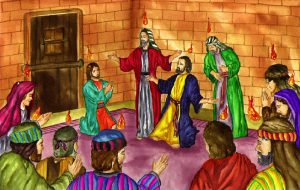
Aloha nui loa, ʻŌmea! This is a BIG weekend for our house. Today, May 18th, is Crucita’s birthday. In a little twist on a popular saying, “She’s old enough to know better – and so she does better.”She is the zenith of integrity, super-smart, and the love of my life. We are preparing to celebrate our 50th Anniversary next year. This weekend is also the Birthday of the Church. This coming Sunday is the Feast of Pentecost. I want to spend a little time with you today talking about what Pentecost means, how and why the Feast originated, and why it is very important to understand it in the same context as the Early Church knew it. So, I wish a very happy birthday to my Dearest, Darling Wife, Crucita, and happy birthday Church. Now, what is Pentecost and why is it important to The Church today?

As Christians we think of it mostly in terms of the Second Chapter of Acts – the first four verses, the strong, driving wind, “cloven tongues as of fire,” speaking and prophesying in many languages (some of them possibly angelic languages), and Peter’s amazing proclamation of the Gospel. But what does it mean “… when the day of Pentecost was fully come?” Let’s look a little into what Pentecost is all about.

We begin by turning to Leviticus 23 where God is telling Moses about the feast days – Festivals – he wants celebrated. Leviticus is the third book of the Bible after Genesis and Exodus and the middle book of the Pentateuch, the first five books of the Hebrew Bible. The name Leviticus refers to the fact that most of the content of this book is the “Policy and Procedure Manual” for the Tribe of Levi, the Priestly Tribe. There are 27 chapters of rules, advice, and information on topics like sacrificial offerings, purity, holiness, the prescribed conduct and values for priesthood, rules for the sanctuary, and definitions and procedures for all of the feast days. In chapter 23, there are several feasts listed. They are given in the order in which they are to be observed and there is information on preparations for each and in some cases the reasons for the feasts and the rules that go with them.

Here are the feasts described in chapter 23, the section of Leviticus devoted to “Holiness Laws.” The Sabbath is described and then come other annual memorials. First comes Passover. Next is the Feast of Unleavened Bread which begins the day after Passover and lasts one week. During that time, Israelites ate unleavened bread. Then comes the Feast of Firstfruits, the day after Passover’s Sabbath, a Festival of Harvest and thanksgiving to God for the blessings of food. This was an offering made in hopes of further blessings from God. Usually this would be barley as it is one of the first grains to ripen.

Then there is the Festival of Trumpets, Rosh Hashanah which commemorates the creation of the world. No work was to be done on that day and all of Israel was to bring offerings to the temple when they heard the blast from the trumpets. This is the fifth of the Seven Feasts. The Feast of Trumpets begins on the first day of the seventh month. It is the opening Festival of the “High Holy Days.” These three feasts (Feast of the Trumpets, the Feast of Atonement – Yom Kippur, and the Feast of Tabernacles – Succoth) bring to a close the Liturgical Year of Israel and together foreshadow the Plan of Redemption made manifest in Jesus. So, the Seven Festivals are:

  1. Passover (Pesach)
    2. Unleavened Bread (Chag Hamotzi)
    3. Firstfruits (Yom Habikkurim)
    4. Pentecost (Shavu’ot) The Feast of Weeks or Festival of Harvest
    5. Trumpets (Yom Teru’ah)
    6. Atonement (Yom Kippur)
    7. Tablenacles (Succoth)

Pentecost is described in Leviticus 23:15-22. There was a period of seven weeks – a week of Sabbaths – that were measured off. On the day after the end of the seven weeks – the fiftieth day, a celebration was prescribed by God. The name “Pentecost” comes from the Greek term for the celebration, Day of Pentecost Πεντηκοστή ἡμέρα (pentekoste hemera) {pent-tay-cohs-tay ee-air-ah} – Πεντηκοστῆς = “of Pentecost,” which means fiftieth day. The offering for that day consisted of two loaves of finest yeast bread made from the finest flour, seven one-year-old lambs, one bull, and two rams offered as burnt offerings. Verse 19 says, 19 You shall also offer one male goat for a sin offering, and two male lambs a year old as a sacrifice of well-being. It is also in this passage that the directive to allow for gleaning. It was the law of gleaning that brought Ruth and Boaz together and Ruth became part of Jesus’ genealogy. That’s for another lesson, though.

Jesus was crucified during the Feast of the Lord’s Passover, and he ascended 40 days after his resurrection. The Holy Spirit came 50 days after the Resurrection, which was of course, 10 days after the Ascension. Because of the importance of this feast, which God said, “This is a statute forever in all your settlements throughout your generations.” (See Verse 21) Jews of many nations would be gathered in Jerusalem in pilgrimage for this festival. When Peter, therefore – with the Holy Spirit rushing upon him and the other Apostles – stood up and addressed the crowd that had gathered around the place where the disciples were staying, persons of many languages and cultures were attracted to these curious events. The sound of the rush of a violent wind harks back to Genesis 1:1-2 where a wind from God swept over the face of the waters. The “tongues as of fire” are a fulfillment of John the Baptist’s prophecy of Jesus in Luke 3:16: He will baptize you with the Holy Spirit and fire. The parallel here is that God validated the Law given on Mount Sinai to Moses with fire (See Exodus 19:16-18), and in the New Covenant, validated the arrival of the Paraclete with fire as well. Whereas in the First Covenant the fire was only in one place, in the New Covenant it was in many, many people – every believer!

The Feast of Firstfruits stands as a foreshadowing of the Resurrection of Christ as the first fruits of those who have died (1 Corinthians 15:20) in the expectation of further blessings from God – an even greater harvest. Pentecost foreshadows the coming of the Spirit, and the resultant harvest as the beginning of the “High Holy Days” of the Church.

Rosh Hashanah prefigures the Resurrection, the sounding of the trumpets and the dead being raised as Paul described in 1 Corinthians 15:51-58. This is one of my favorite Bible passages because it is one of my favorite solos in Handel’s Messiah – #’s 47 & 48 (↔ Music Link). I’m getting the shivers just thinking about it right now! Give it a listen!

Yom Kippur was the singularly-unique Festival of the year in which the Most Sacred space in the Temple, the Holy of Holies (or “the Most Holy Place”), was entered. You may recall from a previous Aloha Friday Message that it was where the Ark of the Covenant was the location for the Sh’khinah Glory of God to reside. God’s presence literally inhabited the area above the Ark, and no one was permitted into the Most Holy Place except on Yom Kippur and only in the precise manner which God had established. It was on this day that the sins of the whole nation were considered atoned – expiated, wiped out, redressed – for the preceding year. With Jesus’ Atonement, the sins of all time are wiped out forever. How’s that for a change?

So, now we know a bit more about why Pentecost is called Pentecost, why everyone was in Jerusalem at the time, why it is 50 days after Easter and 10 days after Ascension. We also know why and how it relates to the Seven Great Feasts God told Moses and the Levites to establish forever for the people of Israel. As we are the adopted children of Moses, Abraham, Isaac, and Jacob through the Life, Passion, and Resurrection of Jesus the Christ, we really should know how these feasts came about and why they are important to us.

And now, Belovéd, in closing I ask you to reflect on what you have read as you consider what God has planned for the Second Covenant Feast of Tabernacles. “The Spirit is a-movin’!” Go stand in the Wind and catch FIRE!

Whatever, whenever, wherever, whoever, however, if ever, forever — at your service, Belovéd!

Share-A-Prayer

We have another long-term prayer request. This one is from AT and it’s for CM: CM has just been diagnosed with liver bile duct cancer…a 1/200,000 chance of such a thing!  She had her port placed Friday and will begin chemotherapy Monday 5/14/18.  The tumor is already 3½ inches.  She will see the liver transplant team on Tuesday.  We are praying hard for a miracle, as we know they happen with God’s help.

Please pray that CM’s treatments will proceed well with a good outcome. In a similar way, we continue to remember NAS who is also on the waiting list for a liver transplant.

Remember, anyone can ask the MBN to pray for any need. We are a group dedicated to intercessory prayer. I sent you an updated list on Tuesday, May 15th. Thank you and God bless you!

Spread the fire!

Nicole Amorette Southern

February 22, 1975

To

May 17, 2018

Rest in Peace Little Sister

100% HEALED

and in Jesus’ arms


Pages Email Newsletter Categories Archives Connect
  • Connct to us here