Aloha Friday Message – March 31, 2017 – Fifth Friday of Lent

1713AFC033117 – Stones – Fifth Friday of Lent

Read it online here, please. And please, when you visit there, use one of the social media links at the bottom of the page to share this post. Thank you!

Isaiah 25:7-8 And he will destroy on this mountain {Zion} the shroud that is cast over all peoples, the sheet that is spread over all nations; 8 he will swallow up death forever. Then the Lord God will wipe away the tears from all faces, and the disgrace of his people he will take away from all the earth, for the Lord has spoken.

Romans 8:11 11 If the Spirit of him who raised Jesus from the dead dwells in you, he who raised Christ from the dead will give life to your mortal bodies also through his Spirit that dwells in you.

Happy Aloha Friday, Beloved. We are already at the fifth Friday of Lent, and this coming Sunday the Gospel is about Lazarus, the brother of Mary and Martha. The account of Lazarus’ death and resuscitation is powerful both emotionally and spiritually. This family was one of Jesus’ favorites. You can tell by the intimacy he enjoyed there that Jesus loved this trio of believers. It was Mary who anointed Jesus feet with fragrant spikenard ointment and dried his feet with her hair just six days before his Passion and Crucifixion, and this act prefigured his donning a towel and washing the feet of the apostles on that holy might. Jesus was at their house often, and perhaps they had known each other since before he began his ministry. We can imagine how these three people lived in their home in Bethany. There is no mention of other family or parents. Bethany was close to the Mount of Olives. Jesus passed through there on his way to Jerusalem more than once. It was near Bethany that the Disciples witnessed his Ascension. These three, then, were people Jesus really, really cared about. He loved them in a very special way.

Around the time of this event in Jesus’ life, there was a strong movement among some of the people to capture him and kill him. His Apostles, Disciples, and other friends were very concerned about these constant threats on his life. Jesus knew about the threats, and he also knew how it would all turn out, he knew what would ultimately happen to him near Bethany, in the Garden of Olivet. He knew what had happened to Lazarus, too; despite knowing all the pain associated with that knowledge – Lazarus was dead and Jesus would soon be crucified – Jesus stayed with his mission of teaching and healing. When someone tracked him down to tell him about Lazarus, Jesus told them, “He is only sleeping.” They took that to mean Lazarus was resting and getting better; then he told them point-blank that Lazarus had died, but his death would not be the end of the story or his life. Finally he says he will go to his friends’ house so that he can demonstrate God’s power and will. That’s when one of my favorite Bible characters pops into view again. Here’s the passage.

John 11:16 16 Then Thomas (also known as Didymus) said to the rest of the disciples, “Let us also go, that we may die with him.” Thomas fascinates me! He always seems to be a beat behind, or maybe he was just a strong pessimist, or even an incredibly brave hero, “Oh, well, if we’re going to Bethany, we’re all gonna die!” Then again, he might have been the bravest one in the bunch, ready to die with his Master and friend. Later on (John 14:5), Jesus is telling them, “Don’t worry. Everything will be alright. You know where I’m going. I’ll come back and get you.” Thomas pops up again and says, “How can we know where you are going? We don’t know where you are going so how can we know the way?” And of course Thomas is most famous for saying, “I won’t believe he’s back until I see him for myself.” Thomas wasn’t in the Cenacle – the Upper Room – when Jesus first appeared to the 11 after his resurrection, and so he got stuck with the moniker “Doubting Thomas.” Odd that he should doubt Jesus was resurrected because he had been a witness to the restoration of Lazarus’ life. He stood there with Jesus, Mary and Martha, and all the other mourners as Jesus, his heart stirred emotion and tears in his eyes, and he shocked them all with what he said in John 11:38-3938 Then Jesus, again greatly disturbed, came to the tomb. It was a cave, and a stone was lying against it. 39 Jesus said, “Take away the stone.” Martha, the sister of the dead man, said to him, “Lord, already there is a stench because he has been dead four days.”

Everybody there went, “What?!?! It is not a good idea to move that stone. It’s going to smell really bad, and … you don’t really want to do that now. You should have come a week ago when he got sick and you could have healed him, but now, it’s too late. He’s rotting away in his grave.” Jesus must have given them quite a look before he turned toward the tomb where Lazarus had been placed. He told Martha straight out in John 11:4040 Jesus said to her, “Did I not tell you that if you believed, you would see the glory of God?” Somebody, maybe several people, maybe even Thomas (although there’s no way to know for sure who moved the stone) had the courage to lift that stone out of the way. Then came The Moment:
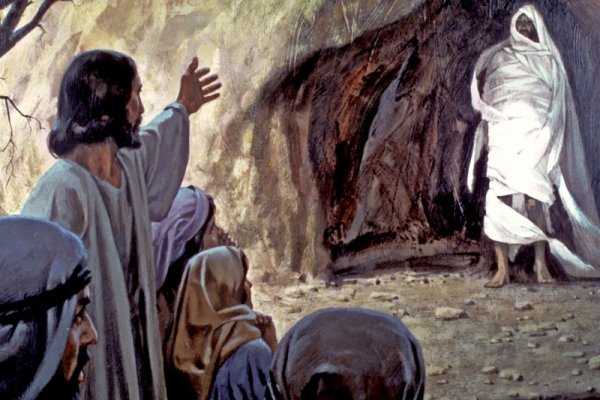
John 11:41-43 41 So they took away the stone. And Jesus looked upward and said, “Father, I thank you for having heard me. 42 I knew that you always hear me, but I have said this for the sake of the crowd standing here, so that they may believe that you sent me.” 43 When he had said this, he cried with a loud voice, “Lazarus, come out!”

Lazarus came out of the tomb all wrapped up in the trappings of death. He came out to new life. He came out to fresh air, sunshine, solid ground, and within a short time – a few days later, perhaps more – he and Jesus were reclining at the table enjoying a feast prepared by Martha and enjoying the fragrance of the ointment Mary was lovingly massaging into his feet.

Jesus’ tender sympathy for these friends shows us the very human side of his person. His heart is deeply moved, and he groans inwardly because of their pain. He joins them in shedding tears, but he is also hearing the cries of the mourners and sees the impact the loss of Lazarus has on this tiny community of Bethany. Together they had shared in the joys of life, in the happiness of Jesus’ visits, and now they shared in the mourning, weeping, and immense sorrow of these two sisters who had lost their beloved brother, a brother who had entertained Jesus in his home. In fact, these sisters hoped and prayed that they would be reunited with their brother. They just did not expect it to happen that day!

Some of the bystanders had insinuated that if Jesus could make the blind see, he could surely have gotten there in time to save Lazarus’ life. Jesus actions deliberately counter that idea. He gave them something much more powerful that a healing to talk about. He gave them a life-restored in broad daylight in front of many witnesses. They were amazed and told the story of moving that stone over and over.

There are other pretty amazing stories about moving stones in the Bible. I want to give you links to just two of them that involve Jacob – that man who wrestled an Angel of God and earned the blessing of the name יִשְׂרָאֵ֑ל (yiś-rā-’êl) {yis-raw-ale’} – which carries the meaning “Triumphant with God”, “who prevails with God.” The first is when Jacob (not yet Isra-El) is at “a certain place” and he uses a stone for a pillow. This is the beautiful story of his dream and “Jacob’s Ladder” found in Genesis 28:10-18. Another fascinating story that has a slight connection to the story of Lazarus is in Genesis 29:1-3. Here Jacob is in or near Haran וַיֹּ֣אמְר֔וּ (ḥā-rān) {kaw-rawn’}. He comes to a well covered by a stone. The stone must be removed to access the life-giving water in the well that belongs to Terah who is the father of Abram, Haran, and Nahor. It is there that Jacob meets and falls in love with Rachael. In both of these stories a stone is connected with bringing glory to God and the beginning of new life.

So let’s get to the point. For whatever reason we have to doubt God’s love or Jesus saving power, he is always ready and able to exceed all our expectations. Whether we go to our death with him is from bravery or loyalty or from a sincere fatalism that recognizes our frailty, if we die with him we shall rise with him. And when we rise with him he will take us where has prepared a place for us. But we need to respond when he calls.

God promised us would destroy the veil of death that separated us from him. He would destroy it on Mount Zion, the Temple Mount in Jerusalem. It was there, outside the city on a wretched place called Golgotha, that God fulfilled his promise as he himself in human form willingly laid down his life and conquered death. He was placed n a tomb behind an immense stone, and that stone moved and the entire world was set free through Jesus’ resurrection. Jesus’ stone had to be moved for that to happen. It is the same for yours.

Take away the stone. The stone that is laid against the front of your tomb, or even covers your well. Move it! Yes. Take away whatever it is you are hiding behind, whatever it is that keeps you in your tomb of death, or shut off from the life-giving river of the Spirit, and step out to meet your Lord in the Light of his Word. He calls you to come away from the death of flesh to be alive in Spirit, alive in your Creator, your King, your Savior, or as Thomas put it so well in John 20:28 “My Lord and my God!” Come away from the death of sin and come alive, renewed in new life watered by The Spirit, revived, and resuscitated from your former self. Shed the wrappings of death, and the stench of decay. Listen with your ears and hear with your heart. Strip away the things that bind you to your death. Loose the things that stop you from walking into his Light, his Everlasting Life, and the fresh air of a New Creation in you. Be freed of the trappings of death and the thirst for righteousness. Take away the stone! He is calling you:

“Beloved, come forth!”

Rise up. Go to him. Live. He will give life to your mortal bodies also through his Spirit that dwells in you. Blesséd be God forever!

Whatever, whenever, wherever, whoever, however, if ever, forever — at your service, Beloved!

Unless otherwise indicated, all scripture passages are from the New Revised Standard Version Catholic Edition (NRSVCE) New Revised Standard Version Bible: Catholic Edition, copyright © 1989, 1993 the Division of Christian Education of the National Council of the Churches of Christ in the United States of America. Used by permission. All rights reserved.

Creative Commons License
Aloha Friday Messages by Charles O. Todd, III is licensed under a Creative Commons Attribution-ShareAlike 3.0 Unported License

Biblical languages inserts from Bible Hub (Bible Hub: Search, Read, Study the Bible in Many Languages) Visit at http://biblehub.com

 

Aloha Friday Message, March 24, 2017 – Fourth Friday of Lent

1712AFC032417 – See Here

Read it online here, please. And please, when you visit there, use one of the social media links at the bottom of the page to share this post. Thank you!  There are quite a few music links here (for the purpose of REJOICING) so look for the (↔ Music Link) signs and use them.

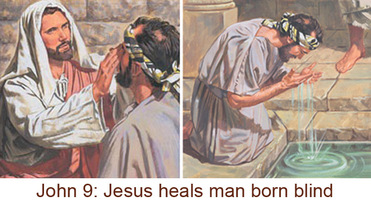
John 9:5-7 [Jesus said,] 5 “As long as I am in the world, I am the light of the world.” When he had said this, he spat on the ground and made mud with the saliva and spread the mud on the man’s eyes, saying to him, “Go, wash in the pool of Siloam” (which means Sent). Then he went and washed and came back able to see.

John9.6Me ke aloha pumehana, ʻŌmea! Already we are past the half-way point this Season of Lent. Sunday is Laetare Sunday so named because of the introit (entrance antiphon) which in Latin begins with  “Laetare Jerusalem: et conventum facite omnes qui diligitis eam: gaudete cum laetitia, …” which means “Rejoice, O Jerusalem: and come together all you that love her: rejoice with joy, …” For this special Sunday, the vestments and church appointments are rose-colored (“pink”) to remind us that we are looking forward now to Jesus’ continuing final journey from Capernaum, through the Samaritan town of Ginae, on through Jericho, Bethany, Bethphage, and then his triumphal entry into Jerusalem. That is of course followed by his Passion, Crucifixion, Death, and Resurrection. For our St. Catherine of Alexandria Parish on Kauaʻi, it is also the Sunday for the Second Scrutiny when the Elect who are preparing for the Sacraments of Initiation – Baptism, Confirmation, and First Holy Eucharist – will testify with their godparents that they are ready to proceed on their final journey to these Blesséd Sacraments. On this Sunday, we hear the story of “the man born blind,”  or blind from birth. There are several such stories in the gospels. Here is a summary of sorts:


Passage Content Summary
Mark 8:22-26 A single blind man in Bethsaida [a] – Βηθσαϊδά (Béthsaida) { bayth-sahee-dah’} “House of Fish” – is brought by others. Jesus spits on his eyes, touches him once, and the man sees but indistinctly. Jesus then touches him a second time and looks at him intently and heals him.
Mark 10: 46-52 A single blind man called Bartimaeus cried out “Son of David, have mercy on me.” Jesus tells others to bring the man to him. Cloak is thrown aside. [b] Requested to see. Spoken word healed him.
Matthew 9:27-31 Two unnamed blind men – “Have mercy on us, Son of David!” “Do you believe I can do this?” Healed through spoken word without touch. Occurred at “the house”, probably in Capernaum
Matthew 12:22 A blind and mute man who is demon-possessed (“a demoniac”), probably in Capernaum just after leaving Jairus’ house, is brought to Jesus and he casts out the demon. The man can see and speak.
Matthew 20:29-34 Two unnamed blind men by the roadside as Jesus was leaving Jericho. “Lord, have mercy on us, Son of David!” Moved with compassion, Jesus touched their eyes.
Matthew 21:14 14 The blind and the lame came to him in the temple, and he cured them.
Luke 7:21 Possibly in Nain where he raised the widow’s only son: 21 Jesus had just then cured many people of diseases, plagues, and evil spirits, and had given sight to many who were blind.
Luke 18:35-43 As Jesus is going toward Jericho, a blind man sitting by the road calls out “Jesus, Son of David, have mercy on me!” Jesus asks, “What do you want me to do for you?” the man replies, “Lord, let me see again.” Jesus says, “Receive your sight; your faith has saved you.”
John 9:1-41

The Gospel for March 26, 2017

Second Scrutiny

Jesus seems to be in Jerusalem where saw an unnamed man, blind from birth. It may be that Jesus, who was a frequent visitor to Jerusalem, had seen him there previously and knew of his condition; the scripture does not describe how Jesus and his Disciples knew his condition was congenital. He makes clay with his saliva which he smears on the man’s eyes, and sends him to the Pool at Siloam. The man is able to see. He returns to his neighborhood and people wonder about how he can see. The Pharisees investigate, and the man testifies “32 Never since the world began has it been heard that anyone opened the eyes of a person born blind.” Jesus upbraids them for their spiritual blindness.


[a] A small fishing village on the western shore of Lake Gennesaret, home of Andrew, Peter, Philip and John or a village in lower Gaulanitis on the eastern shore of Lake Gennesaret, not far from where the Jordan empties into it.
[b] There is a very important lesson here about evangelization. Follow the link to learn more about it.

Jesus uses this healing to make a point about the spiritual blindness of the Pharisees. In the Gospel of Matthew he chides them eight times for their obstinate and persistent duplicity. As we study these passages, we are also cautioned about being blind to the Love and the Power of God. Your surely remember this first verse from the hymn Amazing Grace: (NOT ↔ Music Link)

Amazing grace! How sweet the sound (↔ Music Link)
That saved a wretch like me!
I once was lost, but now am found;
Was blind, but now I see.

Blindness is a human condition that has been around since Old Testament days – at least! Not being able to see is a serious condition for almost any animal. We know there are some animals that do not have eyes; but, of those that have eyes, when the eyes do not function, there are other compensatory behaviors that develop. These include everything from increased sensitivity of other senses to physical assistance from a sighted person – a person who can see – or from a “seeing-eye” service animal. We find ways to adapt to the evident limitation caused by blindness. Rarely would one become intentionally blind – at least physically. We know that blinding a person was a form or tortuous punishment – thinking here of Samson – but one would not do that to one’s self.

However, spiritual blindness is abundant, and those who are spiritually blind often cling to their blindness with tenacious defiance. When we call attention to their refusal to “see the point,” we sometimes say something like “What! Are you blind? Can’t you see what you’re doing?” This kind of intentional spiritual blindness is usually associated with arrogance and self-righteousness; other words for that combination are hypocrisy, duplicity, insincerity. We describe people like that as being two-faced, liars, pretentious, and having double standards. That’s what Jesus chastised the  Pharisees about in the Gospel of Matthew. Matthew 23:13-29. In this passage, Jesus refers to the Pharisees as “blind guides” and “blind fools.” Eight times he says “Woe to you …” Jesus is slamming them for their hypocrisy; the Pharisees are deeply angered, and the crowd is stunned by Jesus’ tone. The Disciples are trying to understand how Jesus – whom they now know to be the Messiah – can speak i such a disparaging way to the men considered the most-righteous among the Jews. Naturally, the Pharisees were pretty upset to be publically upbraided like that. And – as we earthlings with big-headed pride often do – they tried to argue their way out of the doghouse. Of course, that backfires, and they slink off scene smoldering with anger and hatred.

We find the idea of “making the blind to see” throughout Scripture, and it is usually expressed as a physical recovery of sight. Here are a couple of examples from the Old Testament.

Psalm 146:7b-87b The Lord sets the prisoners free; the Lord opens the eyes of the blind. The Lord lifts up those who are bowed down; the Lord loves the righteous.

Isaiah 42:1-9 I have given you as a covenant to the people; a light to the nations, to open the eyes that are blind, to bring out the prisoners from the dungeon, from the prison those who sit in darkness.

In the Gospel of John we find a curious saying from Jesus” John 9:39-41 – 39 Jesus said, “I came into this world for judgment [c] so that those who do not see may see, and those who do see may become blind.”

[c] Κρίμα (krima) { kree’-mah} This word signifies a judgment, a verdict; sometimes implying an adverse verdict, a condemnation. These verses describe for us a spiritually symbolic meaning of the restoration of sight; the Pharisees are not the innocent blind, willing to accept the testimony – guidance – of others. They are intentionally blind, preferring their own reason and wisdom about their careful observance of The Law to the plain truth of Jesus’ message of redemption through Christ’s Law of Love. Those who surrender to The Law of Love gain sight while those who cling to only The Law and The Prophets remain intentionally blind to the salvific grace of God’s redeeming love. The Pharisees are offended by The Truth from Jesus, but at the beginning of Jesus’ ministry, Jesus has this to say about them in Matthew 11:4-6 Jesus answered them, “Go and tell John what you hear and see: the blind receive their sight, the lame walk, the lepers are cleansed, the deaf hear, the dead are raised, and the poor have good news brought to them. And blessed is anyone who takes no offense at me.”

When Jesus went to Nazareth at the beginning of his ministry, he read from the scroll of Isaiah, sat down, and then told everyone in the synagogue that “Today this scripture has been fulfilled in your hearing.” To compare what he read with what he said, check out these two links: Isaiah 61Luke 4:16-21 (Go ahead. It won’t take long, and you’ll be enriched by seeing how the passages fit together so well.) Jesus is, as we see in our topic-verse for today, the Light of the World.” (↔ Music Link) After he sent us his Spirit, the Holy Spirit, We are the Light of the World. (↔ Music Link)

Here’s something the Apostle Paul wrote to the church in Corinth. See 2 Corinthians 4:2-4 We have renounced the shameful things that one hides; we refuse to practice cunning or to falsify God’s word; but by the open statement of the truth we commend ourselves to the conscience of everyone in the sight of God. And even if our gospel is veiled, it is veiled to those who are perishing. In their case the god of this world has blinded the minds of the unbelievers, to keep them from seeing the light of the gospel of the glory of Christ, who is the image of God.

This is precisely what Isaiah was talking about in Isaiah 29:9-11 9 Stupefy yourselves and be in a stupor,
blind yourselves and be blind!
Be drunk, but not from wine;
stagger, but not from strong drink!
10 For the Lord has poured out upon you
a spirit of deep sleep;
he has closed your eyes, you prophets,
and covered your heads, you seers.

11 The vision of all this has become for you like the words of a sealed document. If it is given to those who can read, with the command, “Read this,” they say, “We cannot, for it is sealed.” How is it sealed? It is sealed to those who are unworthy to open the seal. Who is unworthy? The unworthy are those who will not see the Goodness of God in his Mercy and Love.

Belovéd, are we blind to the Goodness of God in his Mercy and Love? Jesus resolutely set his face toward Jerusalem. You can follow that journey beginning at Luke 9:51-53 and continuing on through Luke 19:44. Pretty much 11 of the 24 chapters in Luke’s Gospel detail this journey. Jesus and his Disciples made that journey. Will you walk it with him, or must he walk it alone (↔ Music Link) – without you? Maybe we can catch a ride on that chariot (↔ Music Link)  God sends for the Saints! Or perhaps we can just open our eyes and see Jesus’ Glory beyond the agony of Good Friday. That will be our glory as well for “we shall see him as he is.” (See 1 John 3:2) In keeping with our running theme of repentance this Lent, perhaps we need to go and wash, and then come back able to see. If we can see here, we shall certainly be ready to see there.

Share-A-Prayer

  • AD – second surgery for breast cancer coming up. That will be followed by radiation and chemo. Four great kids and one amazing hubby. Help her out, please.
  • MS – Had a small stroke, maybe a TIA. Short time later, there came a much more serious stroke resulting in aphasia and left hemiparalysis. Not long after that, major heart attack. That’s a lot more than just a bad day in Slippery Rock (not where he lives, though), so help Marty out. He’s making progress!
  • RB – Bronchitis turned out to be Influenza B. Chest X-ray didn’t show pneumonia, but did not a nodule. Scheduled for surgery 4/29; cancelled because of new illness. Chiari and skeletal problems complicate all of this. Check out Psalm 86:6-7
  • BP and RP – Peaceful hospice for the whole family.

Unless otherwise indicated, all scripture passages are from the New Revised Standard Version Catholic Edition (NRSVCE) New Revised Standard Version Bible: Catholic Edition, copyright © 1989, 1993 the Division of Christian Education of the National Council of the Churches of Christ in the United States of America. Used by permission. All rights reserved.

Creative Commons License
Aloha Friday Messages by Charles O. Todd, III is licensed under a Creative Commons Attribution-ShareAlike 3.0 Unported License

Biblical languages inserts from Bible Hub (Bible Hub: Search, Read, Study the Bible in Many Languages) Visit at http://biblehub.com
 

LightOfTheWorld


Aloha Friday Message – March 17, 2017 – Third Friday of Lent

1711AFC031717 – Who will testify?

Read it online here, please. And please, when you visit there, use one of the social media links at the bottom of the page to share this post. Thank you!

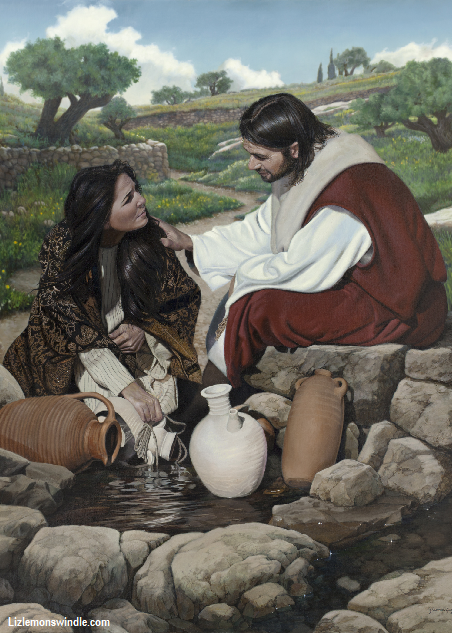
By Liz Lemon Swindle

By Liz Lemon Swindle

John 4:41-42 41 And many more believed because of his word. 42 They said to the woman, “It is no longer because of what you said that we believe, for we have heard for ourselves, and we know that this is truly the Savior of the world.” This was the result of the testimony of the Woman of Sychar at the well of Jacob.

Aloha nui loa, ʻŌmea! May grace and peace be yours in abundance in the knowledge of God and of Jesus our Lord. Once again, we are going to have a guest author today. I am led to give you the Testimony of the Word. My comments will be interspersed here and there, but mostly you will feed on The Word of the LORD. In this season of Lent, we call to mind the wonderful gift of repentance. The most amazing thing about repentance of sin is that it is always, always, always coupled with remission of sin. Let’s get into the Word and – one after the other – let’s see with our eye, hear with our hearts, and learn with our mind what God has prepared for those who love him.

Psalm 51:17 17 The sacrifice acceptable to God is a broken spirit;
a broken and contrite heart, O God, you will not despise.

Contrite: sorry; remorseful; repentant; regretful; apologetic; penitent; ashamed. Contrition is the a priori condition for repentance. If we only recognize our sin, we are aware we are sinful, but if we recognize and regret our sin – when we feel remorse for what we have done – we have achieved contrition. You may recall The 7 R’s. The first 3 are Recognition, Remorse, and Repentance. Contrition leads to repentance – or at least it should. This leads to extraordinary graces. You can read about those here: Psalm 103:1-5.

We offer our contrition because it opens our hearts and lives to God’s forgiving and forgetfulness:

Isaiah 43:25 25 I, I am He
who blots out your transgressions for my own sake,
and I will not remember your sins.

Paul reminds us that this is God’s plan instituted the day Adam and Eve turned against him.

Acts 3:19-21 19 Repent therefore, and turn to God so that your sins may be wiped out, 20 so that times of refreshing may come from the presence of the Lord, and that he may send the Messiah appointed for you, that is, Jesus, 21 who must remain in heaven until the time of universal restoration that God announced long ago through his holy prophets.

Recognition, Remorse, and Repentance are gifts from God. We achieve them in, through, and for God. If we accept these gifts, they are permanently part of us and of our past. See Romans 11:29 29 … the gifts and the calling of God are irrevocable. We are called to love and serve God and when we do, we receive his gifts. Even if we sin or relapse into sin, he is always there with forgiveness for the humble and contrite of heart.

1 John 1:9 If we confess our sins, he who is faithful and just will forgive us our sins and cleanse us from all unrighteousness.

We’ve presented the idea that repentance is a turning-around, a metanoia, in which we resolved to stop sinning and to live a life more in tune with God. Sometimes this means we must abandon those who tempt us or direct us into temptation. Jude 1:20-23 20 But you, beloved, build yourselves up on your most holy faith; pray in the Holy Spirit; 21 keep yourselves in the love of God; look forward to the mercy of our Lord Jesus Christ that leads to eternal life. 22 And have mercy on some who are wavering; 23 save others by snatching them out of the fire; and have mercy on still others with fear, hating even the tunic defiled by their bodies.

It is our faith, bolstered by the Holy Spirit, which gives us the strength to turn away from sin and the circumstances that make sin attractive – the near occasion of sin or the desire to be tempted.

Because we know in our hearts what sin is, we know when we have sinned. That old malarkey about “what’s true for you may not be true for me,” is the Original Lie that led to the Original Sin. We’re not ignorant of the difference between right and wrong. It’s right there in front of us even if we deny there is such a thing. Acts 17:30-31 30 While God has overlooked the times of human ignorance, now he commands all people everywhere to repent, 31 because he has fixed a day on which he will have the world judged in righteousness by a man whom he has appointed, and of this he has given assurance to all by raising him from the dead.

There is a Day of Reward coming. Every living soul will receive her/his reward. For some, the reward is Eternal Life in the Presence of God. For others it is Eternal Life in the Absence of God. I’ve said this many times recently – YOLO and it’s forever. So how do we make sure we spend that forever with God? Here’s what the Apostle Peter said:

Acts 2:38 38 Peter said to them, “Repent, and be baptized every one of you in the name of Jesus Christ so that your sins may be forgiven; and you will receive the gift of the Holy Spirit. Why does God even care if we repent? Because he is CRAZY in LOVE with us! He doesn’t want the sinner to die. Look what Ezekiel repeatedly tells Israel (and therefore us):

Ezekiel 18:23 23 Have I any pleasure in the death of the wicked, says the Lord God, and not rather that they should turn from their ways and live?

Ezekiel 18:32 32 For I have no pleasure in the death of anyone, says the Lord God. Turn, then, and live.

Ezekiel 33:11 11 Say to them, As I live, says the Lord God, I have no pleasure in the death of the wicked, but that the wicked turn from their ways and live; turn back, turn back from your evil ways; for why will you die, O house of Israel?

Jesus himself told us that repentance brings rejoicing to God and all the angels.

Luke 15:7 Just so, I tell you, there will be more joy in heaven over one sinner who repents than over ninety-nine righteous persons who need no repentance. Can you imagine that? When we repent, HEAVEN REJOICES?!? Luke 15:10 10 Just so, I tell you, there is joy in the presence of the angels of God over one sinner who repents.

And what is the outcome of that repentance? Eternal life with God. How do we get there? Belovéd, you know that answer! It’s in John 1:1-17  (see especially John 1:12) and John 3:16-17. (Go ahead and read those passages. Jesus is telling you The Truth.) How and why were Jesus’ passion, death, and resurrection  which brought salvation and eternal life made known to us? It came through his Apostles.

Luke 24:46-47 46 … and he said to them, “Thus it is written, that the Messiah is to suffer and to rise from the dead on the third day, 47 and that repentance and forgiveness of sins is to be proclaimed in his name to all nations, beginning from Jerusalem.”

How can this be? How can God forgive me, forgive you, forgive us who have sinned and will doubtless continue to sin? Romans 5:5b-8 5b … because God’s love has been poured into our hearts through the Holy Spirit that has been given to us. For while we were still weak, at the right time Christ died for the ungodly. Indeed, rarely will anyone die for a righteous person—though perhaps for a good person someone might actually dare to die. But God proves his love for us in that while we still were sinners Christ died for us.

How often will he do that? Let’s look for an answer. Do you ever pray The Lord’s Prayer? When you do, are you certain you are praying it and not reciting it? We hear it, say it, pray it, and display it so often it sort of gets camouflaged in our sense of the passage of time. Now, it doesn’t matter much if you say “trespasses,” or “debts,” or “sins.” We all understand what that means, and of course we understand the meanings of the corresponding terms – those who trespass, debtors, those who sin – as the persons outside of us who may have wronged us in some way. Not a problem. The problem is in the “forgive.”

Do we recite The Lord’s Prayer, or do we pray it? What do we mean, what is our intention, when we say, as in Matthew 6:12-1412 And forgive us our debts, as we also have forgiven our debtors. 13 And do not bring us to the time of trial, but rescue us from the evil one. 14 For if you forgive others their trespasses, your heavenly Father will also forgive you. That little word “as” is so powerful! Do we want God to forgive us precisely the way we forgive others? How often do we have to forgive? The Pharisees in Jesus’ day said three times was enough. Peter was showing off in front of the others and tried to show that he would be more generous than the Pharisees in his forgiveness: Matthew 18:21-22 21 Then Peter came and said to him, “Lord, if another member of the church sins against me, how often should I forgive? As many as seven times?” 22 Jesus said to him, “Not seven times, but, I tell you, seventy-seven [or seventy times seven] times.”

That term in Greek is ἑβδομηκοντάκις ἑπτά (hebdomēkontakis hepta’) { heb-dom-ay-kon-tak-is hep-tah’} and it means 70 X 7. Four-hundred-ninety times. I’ve heard some scholars say it means 77 X 7; that’s 539 times! Seriously, who among us is going to keep track that long? And if so, how could keeping track for that long possibly be forgiveness as God intends? Jesus shows Peter – and us – that God never runs out of forgiveness. Remember, even if a mother could forget the child in her womb, God will not forget us; but he does forget our sins!

What about those who are not members of the Church? How often do we forgive them? They are our neighbors, and we are to love them as we love ourselves and each other, so 490 sounds about right for them, too. We need to stop revolting against God. How can he forgive our treason if we continue to fight against him? We need to repent and believe the Gospel. Do not think of you repentance as the cause of your forgiveness, but rather understand that forgiveness is the companion of repentance.

Having done so, you will be like the woman of Sychar who testified to the presence of the Messiah and you will truly know joy like this:

Joyous Testimony

Whatever, whenever, wherever, whoever, however, if ever, forever — at your service, Belovéd!

Unless otherwise indicated, all scripture passages are from the New Revised Standard Version Catholic Edition (NRSVCE) New Revised Standard Version Bible: Catholic Edition, copyright © 1989, 1993 the Division of Christian Education of the National Council of the Churches of Christ in the United States of America. Used by permission. All rights reserved.

Creative Commons License
Aloha Friday Messages by Charles O. Todd, III is licensed under a Creative Commons Attribution-ShareAlike 3.0 Unported License

Biblical languages inserts from Bible Hub (Bible Hub: Search, Read, Study the Bible in Many Languages) Visit at http://biblehub.com


Aloha Friday Message – March 10, 2017 – Second Friday of Lent 2017

1710AFC031017 – Belovéd – Second Friday of Lent

SMLPRead it online here, please. And please, when you visit there, use one of the social media links at the bottom of the page to share this post. Thank you!

Matthew 17:5 While he was still speaking, suddenly a bright cloud overshadowed them, and from the cloud a voice said, “This is my Son, the Beloved; with him I am well pleased; listen to him!”

Me kealoha pumehana! You are aware by now that I always address you as Belovéd. You are precisely that! Today we will take a look at this extra-special word. You probably remember that we saw it earlier in the Gospel of Matthew.

Matthew 3:17 17 And a voice from heaven said, “This is my Son, the Beloved, with whom I am well pleased.”

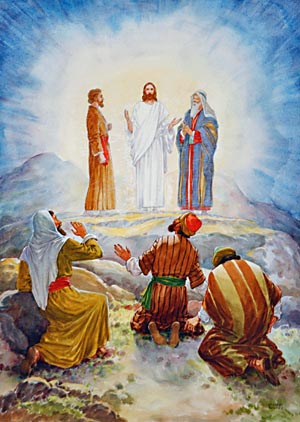
TransfigurationHere, the word “Belovéd” in Greek is ἀγαπητός (agapētos) {ag-ap-ay-tos’} is a verbal adjective, derived from agápē, “love” – properly, divinely-loved; beloved (“loved by God”), i.e. personally experiencing God’sagapē-love.” Loved, beloved, with two distinctly special meanings: [1] the Belovéd, a title of the Messiah (Christ), as so greatly loved beyond all others by the God the Father who sent him. It is also used when speaking to or of Christians, who certainly also are beloved by God, by Christ, and by one another. Recall the recently-studied passage in John 13:34-35 – 34 I give you a new commandment, that you love one another. Just as I have loved you, you also should love one another. 35 By this everyone will know that you are my disciples, if you have love for one another. That is how you have become Belovéd by God and by me and by each other. You are Belovéd in all these ways.

Another place we see this word Belovéd is in Matthew 12:17-18 17 This was to fulfill what had been spoken through the prophet Isaiah:

18 “Here is my servant, whom I have chosen*,
my beloved*, with whom my soul is well pleased.
I will put my Spirit upon him,
and he will proclaim justice to the Gentiles.

This is a reference to Isaiah 42:1 1 Here is my servant, whom I uphold,
my chosen*, in whom my soul delights;
I have put my spirit upon him;
he will bring forth justice to the nations.

*Chosen as in the Elect, the One who is the Belovéd and only begotten Son in whom the LORD delights above all others, chosen by God before the formation of the World for the expiation of sin. Jesus, of course, is the Belovéd. And in him, by him, and through him we are also Belovéd. Later, as the early Church was getting established, the Apostle John told us in 1 John 4:7 Beloved, let us love one another, because love is from God; everyone who loves is born of God and knows God.

Isn’t it true that “all you need is love?” (↔ NOT a Music Link! Heh-heh-heh-heh-heeeeeeehhhhh!)

The word Belovéd is used dozens of times in the Old Testament – especially in the Song of Solomon – but also in several other places where God speaks of his love for his People. For example we have Deuteronomy 33:12 – 12 Of Benjamin he said:

The beloved* of the Lord rests in safety—
the High God surrounds him all day long—
the beloved rests between his shoulders.

*Another Hebrew word meaning Belovéd is יְדִיד (yadid) {yed-eed’} beloved, lovely, well-beloved – and in Song of Songs דוֹדִי֙ (dode) {ḏō-w-ḏî} Beloved

In the daily news we hear so much about the lack of love. This can be distressing, but it is not unexpected. Consider this advice from the Letter of Jude: Jude 17-21 17 But you, beloved, must remember the predictions of the apostles of our Lord Jesus Christ; 18 for they said to you, “In the last time there will be scoffers, indulging their own ungodly lusts.” 19 It is these worldly people, devoid of the Spirit, who are causing divisions. 20 But you, beloved, build yourselves up on your most holy faith; pray in the Holy Spirit; 21 keep yourselves in the love of God; look forward to the mercy of our Lord Jesus Christ that leads to eternal life.

The transfiguration demonstrates to the Apostles gathered with him – Peter, James, and John – that he is the Christ of God, the fulfillment of The Law, and the realization of The Prophets instruction. Appearing on the mountain top with him are Moses and Elijah. It is indeed the one of the greatest miracles in the Gospel of Christ and unique in that it happens to Jesus rather than by Jesus. The cloud which appeared is described as “overshadowing them” seems to indicate that the dazzling brilliance of the vision of Jesus with Elijah and Moses was brighter than the cloud. From the cloud they heard a Voice proclaiming, “This is my Son, the Beloved; with him I am well pleased; listen to him!”

More often than not, I limit my realization of the power of these words by confining my thoughts to the three Disciples. However, since it is clear that God is stating unequivocally that all that has preceded this moment must be secondary to the presence of the Belovéd, the Messiah, the LORD, Jesus Christ, all of creation and all of history is to “listen to him!” Let that sink in. Jesus has revealed himself, and God has spoken again of him with the delight only a father knows when speaking of his son. How much more the Son will love the Father for speaking thus! Now, add one more known fact from John 1:12-13 12 But to all who received him, who believed in his name, he gave power to become children of God, 13 who were born, not of blood or of the will of the flesh or of the will of man, but of God. You, son of the Father, you daughter of the Father, you brother and sister of the Son: You are also The Belovéd. But you, beloved, build yourselves up on your most holy faith; pray in the Holy Spirit; keep yourselves in the love of God; look forward to the mercy of our Lord Jesus Christ that leads to eternal life. Blesséd be God forever!

Unless otherwise indicated, all scripture passages are from the New Revised Standard Version Catholic Edition (NRSVCE) New Revised Standard Version Bible: Catholic Edition, copyright © 1989, 1993 the Division of Christian Education of the National Council of the Churches of Christ in the United States of America. Used by permission. All rights reserved.


Aloha Friday Messages by
Charles O. Todd, III is licensed under a Creative Commons Attribution-ShareAlike 3.0 Unported License

Biblical languages inserts from Bible Hub (Bible Hub: Search, Read, Study the Bible in Many Languages) Visit at http://biblehub.com

 

Aloha Friday Message – March 3, 2017 – First Friday of Lent 2017

1709AFC030417 – Up Popped the Devil

Read it online here, please. And please, when you visit there, use one of the social media links at the bottom of the page to share this post. Thank you!

Matthew 4:1 1 Then Jesus was led up by the Spirit into the wilderness to be tempted by the devil.

¡Que la bendición esté siempre con ustedes y que Dios los bendiga, Amados! (May blessing always be with you and may God bless you, Belovéd!) Good morning and welcome to the first Friday of Lent. I don’t know yet if there will be a Lenten series this year. I’m going to leave that up to the Lord and we will just wait and see what he has in mind. My heart tells me it would be presumptuous to rely on my own designs for what will come out in the Aloha Friday Messages this season. That is why, I believe, this is the topic I received for today. For those who say, “I don’t believe in the Devil,” I hope you will begin to reconsider that position.

Let’s begin with that entity we call The Devil, or Satan. We first hear of Satan in 1 Chronicles 21:1 – he “stood up against Israel, and incited David to count the people of Israel.” He is first referred to as the devil in the New Testament. The terms are roughly equivalent. Satan is a devil and a devil, like Satan, is one who “stands against” – opposes, accuses, contends – against us, the earthlings. Satan, also referred to by his angelic name Lucifer, the “Angel of Light,” is that angel which rebelled against God by desiring to be “greater-than-or-equal-to” God. When he was cast out of heaven (See Isaiah 14:12-15), he took many of his followers with him. He is the prosecutor who charges us with sin and attempts to bend us to his will by twisting the truth; he is a liar. Satan looks like this in Hebrew: שָּׂטָן‎‎ (Satan) {saw-tawn’}, meaning “enemy” or “adversary,” who is always opposed to God’s will, constantly plotting against God and all of humanity. In the Greek version of the Old Testament, he is referred to as διάβολος diabolos {dee-ab’-ol-os}, a slanderer who throws misrepresentation of Truth into our path. He is the Prince of Demons, the Old Serpent, Old Scratch, and Prince of the Air. He gained Adam’s right to God’s Garden when Adam gave the Serpent a higher level of trust than he gave God.  Satan’s minions (which are not at all like the cute little yellow creatures so popular these days) are called Fallen Angels – δαιμόνιον (daimonion) {dahee-mon’-ee-on} – evil spirits who are the messengers and ministers of the devil. They serve him by plaguing us with lies and more lies attempting to get us to trust ourselves rather than God; in short, they try to get us to commit their sin of opposing God in all things. Jesus saw Satan fall and I sincerely believe he was expecting him to show up when he went into the desert to fast and pray. That is shown in the first phrase of today’s topic verse: Then Jesus was led up by the Spirit into the wilderness.

Jesus submitted to God first, last, and always in all things – even death. Just before this episode of Jesus’ life, he was baptized by John and God declared (See Matthew 3:16-17) “This is my Son, the Beloved, with whom I am well pleased.” Now he is led into the desert by The Spirit of God and the first thing Satan says is, “IF you are the Son of God…” As he did in Eden, Satan is saying, “Use your own power to take care of yourself. You can do it! You’ve got the power.” I am reminded of Zechariah 4:6 He said to me, “This is the word of the Lord to Zerubbabel: Not by might, nor by power, but by my spirit, says the Lord of hosts. Just as Jesus was tempted to pull a little DIY stunt in the desert to take the edge off his hunger, we are often tempted to go it alone and “get’r done” rather than wait upon the Lord. There’s quite a contrast here.

Adam had everything he needed in a beautiful garden. Jesus had nothing he needed in a desert. Adam brought us condemnation. Jesus brought us justification. Through Adam came Death. Through Christ came eternal Life. Adam, like all other humans, chose to give in to temptation. Jesus, unlike all other humans, chose to resist temptation. Which is true? Jesus was not able to sin or Jesus was able not to sin. It doesn’t matter. What does matter is that he chose not to sin, not through divine intervention, but by human will. Jesus was tempted in all things by which we are tempted, yet without sin (See Hebrews 4:15) Why would Jesus do this without Divine Intervention? After all, he is God, right? God his Father is watching him, and the Spirit of God led him into the desert; why not prove he is God and get the devil out of his space? Take a look at this familiar passage: Philippians 2:5-8 Let the same mind be in you that was in Christ Jesus, who, though he was in the form of God, did not regard equality with God as something to be exploited, but emptied himself, taking the form of a slave, being born in human likeness. And being found in human form, he humbled himself and became obedient to the point of death – even death on a cross. Jesus had plenty of human history to consider when going up against this tempter. Here’s just one example – Sarah and Abraham.

Remember Deuteronomy 6:16? 16 Do not put the Lord your God to the test, as you tested him at Massah. Yet we so often try to hurry-up God. Recall Sarah who was vain enough to believe she could fulfill God’s promise to Abraham to become a great nation by “giving him a child” through her servant, Hagar. Although she believed she was motivated by love for her husband, and that the child born of her handmaid would fulfill God’s promise to Abraham, instead she gave way to temptation and ended up helping bring into the world a man who was “a wild ass of a man, with his hand against everyone, and everyone’s hand against him; and he shall live at odds with all his kin.” (See Genesis 16:12) We can’t be bigger-and-better than God by choosing to do things on our own and following human precepts and indulging human needs. That is what Satan uses to try to tempt us away from FROG – Fully Relying On God. Here’s one example from Jesus temptation in the desert.

ChristTemptaationGod said, “This is my Belovéd Son in whom I am well pleased.” Satan leads with “IF you are the Son of God, turn these stones into bread.” Satan tells us as well, “Don’t just stand there! Do something!” This is the same lie he told Eve: “Don’t wait for God to make life better. You can do it yourself.” In this Gospel passage, Satan quotes – or rather misquotes – Scripture. We often hear of folks who decide to “test their faith” by testing God. How do we test God? By taking risks with sinful things we know will hurt us – everything from addictions to misplaced piety. Our holiness does not come from within us – it comes from God and returns to God when we choose to be righteous.

Jesus used that perspective during his ministry when his self-righteous opponents questioned his Gospel. He said to them, in John 8:4444 You are from your father the devil, and you choose to do your father’s desires. He was a murderer from the beginning and does not stand in the truth, because there is no truth in him. When he lies, he speaks according to his own nature, for he is a liar and the father of lies. Jesus knew Satan is a liar. We know that too, but he still catches us in his lies, right? Why!? We owe him no allegiance. He has no power over us unless we give it to him. Why do we do that? And how do we stop doing that?

We follow his lies because we are human, and we often – not always – choose to accept and believe the lie rather than The Truth. How can we stop that? Well, how did Jesus stop Satan’s lies? He relied on Scripture. As we saw above, Satan misquotes Scripture and tricks us into believing he’s actually got it right. We call that “just enough truth to make it seem OK.”  Some of these may sound familiar:

* Everyone else is doing it. * Society’s changed now. * It’s OK to just try it. What have you got to lose? * It’s only a little bit. I can handle it. * S/he won’t ever know what I’ve been up to. * They’ll never miss it. * I’m a very spiritual person and my god can hear me anywhere. * I can’t put my faith in a God who would do that. * God – if he’s really God – will eventually forgive everyone. * I identify as _____. You have to let me be that. * You can’t miss the #1 Comedy in America (or the playoffs, or the awards, etc.), so skip church. * Use this one weird trick to … * Just one more, and then I’ll quit. * They can’t talk to me that way! I’ll show them! * Inside we are all gods. * I don’t need no stinking religion! * If I just had money like he does, I’d be set. * Bible? Who cares? It’s all fairy-tales anyway. * Devil? There’s no such thing.

Lies; these are all lies. And the biggest one of all is that there is no devil. We can know he exists because he and his demons are always waging war against us.

One “convenient” way to explain why the devil shows up so often is that we created him. Does that sound familiar? Allegedly penned by Voltaire: “In the beginning God created man in His own image, and man has been trying to repay the favor ever since.” There is 20th century scholar named Elaine Pagels who wrote a book called The Origin of Satan (1995) in which she claims that the concept of Satan originated in ancient times to describe an oppositional character and then, during the early Christian era, was expanded to give Christians a definable enemy so they could distinguish themselves from others. Closer to the truth is this observation: As the ages roll by, we learn more and more about God, his creation, and his plan. In the same way, we learn more and more about Satan and how he seeks to disrupt God’s plan. We understand his lies better, including the lie that we created him.

Don’t fall for the lies or the liar. David learned the hard way the devil is real. Job dealt with the devil’s interference by remaining humble and trusting God. Jesus knew the devil in a very human way, and yet chose to resist him. You cannot resist what is not real. Heaven is real. Hell is real. God is real. Jesus is real. Satan is real. Our struggle against him is real. To resist, we must put on the whole armor of God (See Ephesians 6:11-18) because our struggle is not against enemies of blood and flesh but against the rulers, against the authorities, against the cosmic powers of this present darkness, against the spiritual forces of evil in the heavenly places. This war is waged in our flesh, but is won in the Spirit. Choose the Spirit of Life over the Spirit of Darkness. Both are real, but only one is Truth.

Next time the devil pops up, whack him a good one!

Unless otherwise indicated, all scripture passages are from the New Revised Standard Version Catholic Edition (NRSVCE) New Revised Standard Version Bible: Catholic Edition, copyright © 1989, 1993 the Division of Christian Education of the National Council of the Churches of Christ in the United States of America. Used by permission. All rights reserved.

Creative Commons License
Aloha Friday Messages by Charles O. Todd, III is licensed under a Creative Commons Attribution-ShareAlike 3.0 Unported License

Biblical languages inserts from Bible Hub (Bible Hub: Search, Read, Study the Bible in Many Languages) Visit at http://biblehub.com
 

Aloha Friday Message – February 24, 2017 – Unforgettable

1708AFC022417 – Unforgettable

Read it online here, please. And please, when you visit there, use one of the social media links at the bottom of the page to share this post. Thank you!

Isaiah 49:14-15 14 But Zion said, “The Lord has forsaken me,
my Lord has forgotten me.”
15 Can a woman forget her nursing child,
or show no compassion for the child of her womb?
Even these may forget,
yet I will not forget you.

1 Corinthians 4:5 Therefore do not pronounce judgment before the time, before the Lord comes, who will bring to light the things now hidden in darkness and will disclose the purposes of the heart. Then each one will receive commendation from God.

Matthew 6:33 33 But strive first for the kingdom of God and his righteousness, and all these things will be given to you as well.

Aloha pumehana ʻŌmea. Grace to you and peace from God our Father and the Lord Jesus Christ through the ministry of the Holy Spirit. I encourage you to use the links again today so that you can see in context the scriptures presented. All of the links listed above come from the readings for the Eighth Sunday in Ordinary Time. And so we begin.

In the passage from Isaiah, the prophet writes that Zion claims to be forgotten and deserted by God. Who and/or what is Zion? Zion is a specific mountain in Israel – it refers to Mount Zion, also called The Temple Mount. It is also often used in the Bible as a synonym for the nation of Israel – both its physical location and its people. In this passage, then, Isaiah personifies the nation and characterizes them as complaining that God has abandoned them. Isaiah uses this long poem to show that God has prepared a Servant who will set right all the persecution and injury done to Zion. You probably can recall other images from this beautiful prophecy contained in Isaiah 49 – I will make you a light to the nations; I have engraved you on the palms of my hands; and today’s passage, I will not forget you. The Servant whom God sends will undo everything the enemy has done. It will be cause for rejoicing and praise. God’s purpose for his chosen one will be fulfilled. There are four of these “Servant Songs,” and although the name of the Servant is not revealed, these passages are applied to the mission and ministry of Jesus. In this particular song, the Servant is called upon to restore not only Israel, but also to make God known to the entire world – the gentiles included. Israel will be a light to the nations. The Servant conquers all but not through war or political maneuvering, but rather through showing all of humanity that God is powerful, just, merciful, and loving. Israel was chosen by God to show “the nations” the goodness and glory of God; they failed in that mission repeatedly, and – while they suffered the consequences of those failures – they were always reminded that God would protect them, rescue them, and restore them.

In the midst of their oppression by Assyria, the Israelites felt they were no longer God’s chosen People. Isaiah reminded them that the Lord was calling them to repentance on their own volition; he wanted them to choose obedience. He assures them of God’s unfailing love and forgiveness by calling on the image of a mother’s tender love for her own child. Can a mother truly forget the child she has carried in her womb, or ignore the child she holds in her arms for feeding? The Lord says through Isaiah that yes, even a mother might forget; nonetheless, he will never forget his children. His love for his people is stronger than a mother’s love. He will forget their sins, but he will not forget them. There will be a time for judgment, but before that time comes, there will be a time for deliverance through the actions of God’s Servant. The joy of that deliverance will be universal.

This time of judgment is reserved for “the Day of The Lord.” It is the end of every place and time. It is the day when justice comes and mercy is called to testify. Everything that has been obscured in error and sin, every dark moment and place, all that is hidden will be revealed in the Light. The Apostle Paul counsels the Corinthians that they – and by extension we – do not have the wisdom required for that judgment. It is better to wait for the Lord to reveal what is true, just, and deserved. We often see something along those lines on the Internet – don’t judge others because you don’t know what kind of struggles they are going through. This does not mean, however, that we simply ignore evil. I’m going to use two passages from Paul’s letters to illustrate what kinds of things we are to guard against when we are dealing with others.

Romans 1:28-32 28 And since they did not see fit to acknowledge God, God gave them up to a debased mind and to things that should not be done. 29 They were filled with every kind of wickedness, evil, covetousness, malice. Full of envy, murder, strife, deceit, craftiness, they are gossips, 30 slanderers, God-haters, insolent, haughty, boastful, inventors of evil, rebellious toward parents, 31 foolish, faithless, heartless, ruthless. 32 They know God’s decree, that those who practice such things deserve to die – yet they not only do them but even applaud others who practice them.

2 Timothy 3:1-9 1 You must understand this, that in the last days distressing times will come. For people will be lovers of themselves, lovers of money, boasters, arrogant, abusive, disobedient to their parents, ungrateful, unholy, inhuman, implacable, slanderers, profligates, brutes, haters of good, treacherous, reckless, swollen with conceit, lovers of pleasure rather than lovers of God, holding to the outward form of godliness but denying its power. Avoid them! For among them are those who make their way into households and captivate silly women, overwhelmed by their sins and swayed by all kinds of desires, who are always being instructed and can never arrive at a knowledge of the truth. As Jannes and Jambres opposed Moses, so these people, of corrupt mind and counterfeit faith, also oppose the truth. But they will not make much progress, because, as in the case of those two men, their folly will become plain to everyone.

As we were taught in Ecclesiastes 1:9, this list is nothing new – not then, not now – and we see this kind of sinful rebellion against God everywhere all the time. Those who promote and perform such actions do so by choice and are unrepentant about their choices. Can a mother forget her child? Yes, even to the point of contempt for the child’s life. Will God forget that child or that mother? No, he will not; however, he can and will forget the slaying of the child when those who permitted and performed the deed repent. I am convinced that there are billions of souls racing each other toward eternal separation from God in the hope of gaining for themselves some advantage of pleasure by denying it to another in that race. “You only live once” is the excuse for pointless self-indulgence and self-imposed ignorance. Paul mentions Jannes and Jambres whose folly was exposed to all when they lost everything – including their lives. These two men, who are not named in the Bible, are believed to be the infamous court magicians to Pharaoh whose illusions appeared to match the miracles of Moses’ actions. They offered disobedience and obstruction when confronted with evidence of the power of God. I fear that many such choices are made in these times, and the consequences will be the same as for Jannes and Jambres. Why do we earthlings so often choose whatever is opposite of God’s will? Why do we desire anything that is not what God provides for us?

Does God really give us the desires of our heart? If our heart’s desire is God, then yes, he does. I invite you to reread Psalm 37, particularly verses 4 and 16. We want attention, affection affiliation, approval, satisfaction for all our hungers, advantage over others, recognition, food, clothing, “stuff.” We spend our lives pursuing these things. We spend what we have been given trying to obtain what we don’t need but absolutely want. There is a more excellent way. In 1 Corinthians 12, Paul describes the spiritual gifts God provides for his faithful. Immediately following his teaching on these gifts, he directs us to “still more excellent way.” God provides everything we need for happiness. We can chose his Gifts or ignore them. If we accept the Gifts, we honor the Giver of all good things. As Jesus himself said, But strive first for the kingdom of God and his righteousness, and all these things will be given to you as well. God has not forgotten us, but he has allowed some of the consequences of our disobedience to be felt here and now; we can choose to acknowledge those consequences and to repent of the evil we have done. We can examine our own hearts to see if we desire God above all else. If that examination is carried out in the Light of the Word, then we can embrace the Light and abhor the darkness. As we love the Lord more and more, the desires of our hearts change to the actions of our wills. Remember the power in these words: Thy Kingdom come. Thy will be done. Do not forget the Lord your God who made heaven and earth, and even you and me.

Whatever, whenever, wherever, whoever, however, if ever, forever — at your service, Belovéd!

Unless otherwise indicated, all scripture passages are from the New Revised Standard Version Catholic Edition (NRSVCE) New Revised Standard Version Bible: Catholic Edition, copyright © 1989, 1993 the Division of Christian Education of the National Council of the Churches of Christ in the United States of America. Used by permission. All rights reserved.

Creative Commons License
Aloha Friday Messages by Charles O. Todd, III is licensed under a Creative Commons Attribution-ShareAlike 3.0 Unported License


Aloha Friday Message – February 17, 2017 – What’s Love Got to do With It?

1707AFC021717 – What’s Love Got to do With It?

Read it online here, please. And please, when you visit there, use one of the social media links at the bottom of the page to share this post. Thank you!

Leviticus 19:18 – 18 You shall not take vengeance or bear a grudge against any of your people, but you shall love your neighbor as yourself: I am the Lord.

1 John 3:7-11 Little children, let no one deceive you. Everyone who does what is right is righteous, just as he is righteous. Everyone who commits sin is a child of the devil; for the devil has been sinning from the beginning. The Son of God was revealed for this purpose, to destroy the works of the devil. Those who have been born of God do not sin, because God’s seed abides in them; they cannot sin, because they have been born of God. 10 The children of God and the children of the devil are revealed in this way: all who do not do what is right are not from God, nor are those who do not love their brothers and sisters.11 For this is the message you have heard from the beginning, that we should love one another.

Deuteronomy 7:9 Know therefore that the Lord your God is God, the faithful God who maintains covenant loyalty with those who love him and keep his commandments, to a thousand generations

E pili mau na pomaika‘i ia ‘oe a me ke akua ho’omaika‘i ‘oe, ʻŌmea! (May blessing always be with you and may God bless you, Beloved!) Aloha Friday is back – already. Life does seem to be moving so much faster. As we go careening through time, we bang into and bump off of all kinds of obstacles – sort of like one of those pinball machines; it just gets crazy sometimes. One of the things that is a big help in dealing with that craziness is a crazy little thing called love. You know what they say about love. Love changes everything. Love makes the world go ’round. Love never dies. Love never gives up. Love is everything. And best of all, God is Love. Those who love God love one another, and those who love one another love God. Love is the answer. All you need is love. (↔ NOT a Music Link! Heh-heh-heh-heh-heeeeeeehhhhh!)

There are at least 300 occurrences of the word love in the Bible. God’s love coupled with our privilege to return that love is one of the most common themes in scripture. God gave us his life-breath as an act of love. God loves us completely – perfectly, wholly, unconditionally. There is nothing we can do to stop that from happening. He will always, always, always love us. We love him because he loved us before we even knew him. (See 1 John 4:19) He wants us to love him, and he helps us love him because he IS LOVE. That means that whenever we love one another, we are doing what The Father has commanded, what Jesus has commanded, and what the Holy Spirit fulfills in us. There is something, though, that can interfere with all the LOVE.

There is this other crazy little thing called sin – the antithesis of Love – and that is something about which he warns many, many times. You know how that turns out. When we fail at loving each other, love each other wrongly, or love ourselves gracelessly, Love is distorted and we mistakenly cling to the distortion rather than the True Image of Love. Last year in our Lenten Series, we looked at the cardinal sins that pose barriers to loving God and the cardinal virtues that defeat those barriers. I chose that passage from Leviticus because it speaks of taking vengeance and bearing a grudge. (“Grudges are heavy, difficult to carry because they have no handles, and dangerous because they can suddenly grow teeth and claws and tear us to shreds. They are the most fearsome and deadly form of self-awareness and the cause of much suffering.” See 834AFC082208)

That’s no way to live; in fact, that’s no way to die either, even though carrying a grudge and seeking vengeance can indeed kill us or get us killed. That kind of negativity in our lives is deadly because it is sin. A grudge is a disappointment we nurture so that it becomes greater than and more important than the disappointment. It is one of the devils’ favorite tools (yes that’s a plural form). Satan and his demons are constantly prodding us to snap at those who love us most. Why is that? I believe it is because when we hurt someone we really love because they really love us – really-really, we see how that hurt we inflict wounds them and our guilt is intensified. If hurting someone close to us whose love we desire is a terrible thing, how much more terrible is failing to love God who loves us perfectly? Shouldn’t we feel even guiltier for hurting him through our lack of love?

And !!SNAP!! The trap closes!

metal-bear-trap-3d-model-max-fbx

God never, never, never, never, ever stops loving us! Even when we consort with people who revel in doing evil, we are still Loved by God. Did you know there is a book in the Bible that has Love on practically every page? While it is written to combat some very false ideas about the true nature of the Christ of God – True God and True Man – it expresses so much about God’s love. I’m going to put a few selections from this beautiful letter, the First Letter of John.

1 John 3:7-11 Little children, let no one deceive you. Everyone who does what is right is righteous, just as he is righteous. Everyone who commits sin is a child of the devil; for the devil has been sinning from the beginning. The Son of God was revealed for this purpose, to destroy the works of the devil. Those who have been born of God do not sin, because God’s seed abides in them; they cannot sin, because they have been born of God. 10 The children of God and the children of the devil are revealed in this way: all who do not do what is right are not from God, nor are those who do not love their brothers and sisters.11 For this is the message you have heard from the beginning, that we should love one another.

1 John 4:12 12 No one has ever seen God; if we love one another, God lives in us, and his love is perfected in us.

Please also take a moment to read these two great passages: 1 John 2:1-6 and 1 John 5:1-5


Loving God helps us do what is right because loving God well means we love others as we love ourselves. But what about people who don’t want that kind of love, the sort of folks that lurk at the edge of the Darkness?

Here are some insights into how to keep our Love for God strong.

Ephesians 5:3-11 But fornication and impurity of any kind, or greed, must not even be mentioned among you, as is proper among saints. Entirely out of place is obscene, silly, and vulgar talk; but instead, let there be thanksgiving. Be sure of this, that no fornicator or impure person, or one who is greedy (that is, an idolater), has any inheritance in the kingdom of Christ and of God. Let no one deceive you with empty words, for because of these things the wrath of God comes on those who are disobedient. Therefore do not be associated with them. For once you were darkness, but now in the Lord you are light. Live as children of light— for the fruit of the light is found in all that is good and right and true. 10 Try to find out what is pleasing to the Lord. 11 Take no part in the unfruitful works of darkness, but instead expose them.

1 Corinthians 5:11 I wrote to you in my letter not to associate with sexually immoral persons— 10 not at all meaning the immoral of this world, or the greedy and robbers, or idolaters, since you would then need to go out of the world. 11 But now I am writing to you not to associate with anyone who bears the name of brother or sister who is sexually immoral or greedy, or is an idolater, reviler, drunkard, or robber. Do not even eat with such a one. 12 For what have I to do with judging those outside? Is it not those who are inside that you are to judge? 13 God will judge those outside. “Drive out the wicked person from among you.”

Note in this one that the Apostle Paul is talking about Christians who are immoral, idolaters, thieves, greedy, or who disparage others. That is not the Love of God at work. He also said in 1 Corinthians 3:36 16 Do you not know that you are God’s temple and that God’s Spirit dwells in you? How could we be the temple of the Holy Spirit if our heart is filled with corruption? God himself calls for us to love him: Deuteronomy 6:4-5 4 Hear, O Israel: The Lord is our God, the Lord alone. You shall love the Lord your God with all your heart, and with all your soul, and with all your might. Tie that to Leviticus 19:18 – 18 You shall not take vengeance or bear a grudge against any of your people, but you shall love your neighbor as yourself: I am the Lord.

That is what LOVE has to do with it! That is how God orders the universe – in Love. Every good thing in our lives comes from LOVE. Here are some other Scripture passages you can look at to help settle the idea in your heart:

Matthew 22:36-39; Matthew 5:43-45; Mathew 19:19; Mark 12:28-31; Romans 13:9; Galatians 5:14; James 2:8-13; 1 John 3:14; John 15:12;

GOD ≡ LIGHT ≡ LOVE ≡ TRUTH ≡ WAY ≡ LIFE ≡ ETERNAL ≡ MERCY ≡ GOD (↔ Music Link – really!)

Whatever, whenever, wherever, whoever, however, if ever, forever — at your service, Belovéd!

PS: I love you! ~ God (Hey! me, too!)

Share-A-Prayer _______

votive_candleA wonderful friend, AD, just received confirmation of breast cancer. As she begins this battle, please cover her on every side with your loving prayers. We also deeply appreciate your prayers for R&BP as B continues in hospice. Our love and prayers really do make a difference.

Unless otherwise indicated, all scripture passages are from the New Revised Standard Version Catholic Edition (NRSVCE) New Revised Standard Version Bible: Catholic Edition, copyright © 1989, 1993 the Division of Christian Education of the National Council of the Churches of Christ in the United States of America. Used by permission. All rights reserved.

Creative Commons License
Aloha Friday Messages by Charles O. Todd, III is licensed under a Creative Commons Attribution-ShareAlike 3.0 Unported License


Aloha Friday Message – February 10, 2017 – The Law and Then Some

1706AFC021017 – The Law and Then Some

Isaiah 64:4 From ages past no one has heard,
no ear has perceived,
no eye has seen any God besides you,those who
who works for those who wait for him.

1 Corinthians 2:9-11 But, as it is written,
“What no eye has seen, nor ear heard,
nor the human heart conceived,
what God has prepared for those who love him”—

10 these things God has revealed to us through the Spirit; for the Spirit searches everything, even the depths of God. 11 For what human being knows what is truly human except the human spirit that is within? So also no one comprehends what is truly God’s except the Spirit of God.

Read it online here, please. And please, when you visit there, use one of the social media links at the bottom of the page to share this post. Thank you!

Before I start this one off, I want to share with you an excellent insight passed on from a longtime friend, brother, mentor, and Bible coach – Rev. John K: John pointed out something I omitted in my discussion of repentance in previous messages. I stated, “In previous posts we have looked at the word repentance. You may recall it means “to turn around.” Jesus and John the Baptist used the word μετάνοια, – metanoia {met-an’-oy-ah}. It is a change of heart, a change of mind, or a change of direction as in a one-eighty turn. A closely-related word is μετανοέω – metanoéō {met-an-o-eh’-o}. John pointed out – quite rightly – that μετάνοια, – metanoia is a change not only in heart and mind but also (and most importantly) a change in actions and behavior. Thanks, John. That’s in important point, and I am happy you shared it with me. Now, onwards to today’s post.

Aloha pumehana, ʻŌmea. May the Peace of God in our Lord, Jesus Christ, be with you through the actions of the Holy Spirit. Do you want to be a saint, just an ordinary servant of God in his Heavenly kingdom? Are you ready? Do you want to go to Heaven? Are you prepared to die? How’s that “good and faithful servant” kind of life going for you?

Yeah, me too.

I plan to go to Heaven pretty soon – comparatively speaking. I’m not trying to rush it, you know, but I do contemplate what I might expect. Isaiah’s statement is from that amazing chapter in that book of the Bible that speaks of the potter and the clay, and laments that all our righteous deeds are like an unclean rag – worthless and filled with defilement. Isaiah – and with him Israel – expresses grief for failing to listen to and obey God. The chapter begins with an expressed hope that God would return to the world at large and Israel in particular and set things aright with mighty deeds and awesome power. At that time, indeed no one had any clear idea of what God had in store for their future. It was beyond human understanding. The Apostle Paul takes the wrapping off that mystery. Look again at verse 10. He says that the things God has prepared for those who love him are revealed to us through the Spirit; for the Spirit searches everything, even the depths of God. Mere human knowledge won’t get us the information, nor will it get us to heaven, either.

Just how does one get to heaven? If we had asked Moses, or David, or many of the other prophets, they would have pointed to fulfilling the Law. Time and again Israel heard that if they would only obey the Law, God would make them great, God would save them, and eventually – with Isaiah, Amos, Hosea – the prophets began to describe a better future than just the shadowy depths of Sheol. The idea of an afterlife has been around for a long, long time. In Judeo-Christian traditions it flowered into something along the line of a new or renewed Eden. Nonetheless, the path that led to that better life was the Law. That is, until Jesus showed us what the Kingdom is really like. Israel strove to “keep the Law,” but still recognized that sin just didn’t go away despite constant sacrifices, prayers, ablutions, and rituals. Sin was always there because the Law was always there. So what changed – or what didn’t change?

Well, for one thing, what didn’t change was the Law. It’s still there even now. God told Israel that he wanted them to be Holy in Leviticus 11:45 45 For I am the Lord who brought you up from the land of Egypt, to be your God; you shall be holy, for I am holy. Jesus’ carried that forward to his Disciples as well when he said in Matthew 5:48 48 Be perfect, therefore, as your heavenly Father is perfect.  Here we see a word we’ve come across before: teleioi – from teleios – the consummated goal of completion and fulfillment of every goal and requirement of every form of integrity and virtue. Previously we looked at this root word as associated with “Paid In Full,” tetelestai. (← Check it out!) Easier said than done, eh? I’m a sinner. I can’t be perfect! Oh, really?

What about Romans 6:23? Remember what Paul said? He told us that the free gift of God is eternal life in Christ Jesus our Lord. Since Eternal Life happens in Jesus Christ, and Jesus Christ is in Heaven, and in Heaven “nothing unclean will enter it” (Revelation 21:27), we’re going to have to be perfect to get there, right? Yes, that is right! By now, we have probably realized that we cannot do that on our own; perfection will always elude every effort we put towards achieving it. But “nothing is impossible with God.” The Apostle Peter had some pretty wise words about how to achieve this perfection: 1 Peter 1:13-16 13 Therefore prepare your minds for action; discipline yourselves; set all your hope on the grace that Jesus Christ will bring you when he is revealed. 14 Like obedient children, do not be conformed to the desires that you formerly had in ignorance. 15 Instead, as he who called you is holy, be holy yourselves in all your conduct; 16 for it is written, “You shall be holy, for I am holy.” In and through Christ, then, we can approach the Law with confidence. Gather up your Bible and open it to Matthew, chapter 5 (← Check it out!). That’s where the Beatitudes (or “Be-Attitudes”) can be found. Go ahead; I’ll wait until you find it. Now, look for verse 17. Ready?

YOUhaveHearItSaid


Jesus says he’s not going to abolish the law, so it’s still there – all of it – right down to the smallest part of the smallest word of the law. If you break the Law or teach others to do that, you get demoted to the lowest place in the Kingdom. Then he starts with the “You have heard it said” quotes. He lists several of the commandments – don’t kill each other, don’t commit adultery, don’t divorce your spouse, don’t bear false witness (take a false oath) – and then he makes each of those even more difficult! If you call your brother or sister a fool or stay angry with them, you are liable for great punishment, even the fires of Gehenna. As for adultery, just a lusting look at another human is equivalent to following through on that intent. Divorce gets similar escalation because Jesus asserts it is a Divinely-fashioned foundation for family, community, nation, and worship. As for oaths, there is no point in “strengthening” one’s assertions with name-dropping. Our “yes” or “no” is sufficient. He commands us not to retaliate, but rather to go beyond what human emotion evokes when we are persecuted. He continues in Matthew 6 with an admonition against creating a false impression of piety, and seeking public recognition for your “prayerful nature and deep spirituality.” When we fast, he wants us to keep it secret instead of making a big show of it. In all things – whether with God or other earthlings – we are to be humble, generous, just and – yep – holy. We just have to remember that God is Holy and we are too when we are in Christ. We get tempted constantly to be “unholy,” but we can also make that one-eighty change in behavior over and over. Why would we do that? We would do that because we love God and want to spend our eternity with him in heaven. Why do we have such a strong desire for that place in Heaven? Because God loved us first and loved us so much that he first built that desire to love him into us, and then provided the one and only way to achieve that love – Jesus. But he still wasn’t done with giving us the Graces to be complete as he is complete. Jesus had something more for us.

Besides fulfilling the Law, besides giving us his Saving Grace, he also gave us a Comforter who will help and guide us, who will be our Advocate who will stand with us against our adversary the Devil, a Paraclete who will testify to our innocence before God. We have the Law and then some to live up to, but we also have the fulfillment of the Law and then some to live on through all the way to Eternal Life. Not all of you will be able to look this one up in your Bibles (but go ahead and read all of Matthew 5 & 6 anyway), but it says a little something about how God looks after us: Sirach 15:20 He has not commanded anyone to be wicked, and he has not given anyone permission to sin. That isn’t a very popular point of view anywhere in the world these days. So many, many people believe that they are not accountable to anyone, especially to rules, or laws, or persons, or even deities they cannot see or understand much less accept. Because of that, they have the right to destroy whatever they choose – property, liberty, and even the lives they cannot value because they have no values. Others believe their zealous accountability makes them capable of judging and eliminating anyone or anything they consider to be a nonbeliever or anything that is inessential to their views. That which is sin and disobedience is knowable as sin and that is why sin can be chosen. That which is perfection and obedience is knowable as righteousness and that is why righteousness can be chosen.

We have Life and Death, blessing and curse, obedience and disobedience, perfection and imperfection laid out before us. Choose Life and these things God has revealed to us through the Spirit. Repent and believe the Good News. We can ask the Spirit to help us choose how to act, then how to act on that choice and then know what God has prepared for those who love him.

Whatever, whenever, wherever, whoever, however, if ever, forever — at your service, Belovéd!

Share-A-Prayer________________ †
Thank you for your prayers for RP and his wife BP.  She is still in hospice. Her family is gathering together there. Cover them all with your Peace, please.

Unless otherwise indicated, all scripture passages are from the New Revised Standard Version Catholic Edition (NRSVCE) New Revised Standard Version Bible: Catholic Edition, copyright © 1989, 1993 the Division of Christian Education of the National Council of the Churches of Christ in the United States of America. Used by permission. All rights reserved.

Creative Commons License
Aloha Friday Messages by Charles O. Todd, III is licensed under a Creative Commons Attribution-ShareAlike 3.0 Unported License

Biblical languages inserts from Bible Hub (Bible Hub: Search, Read, Study the Bible in Many Languages) Visit at http://biblehub.com
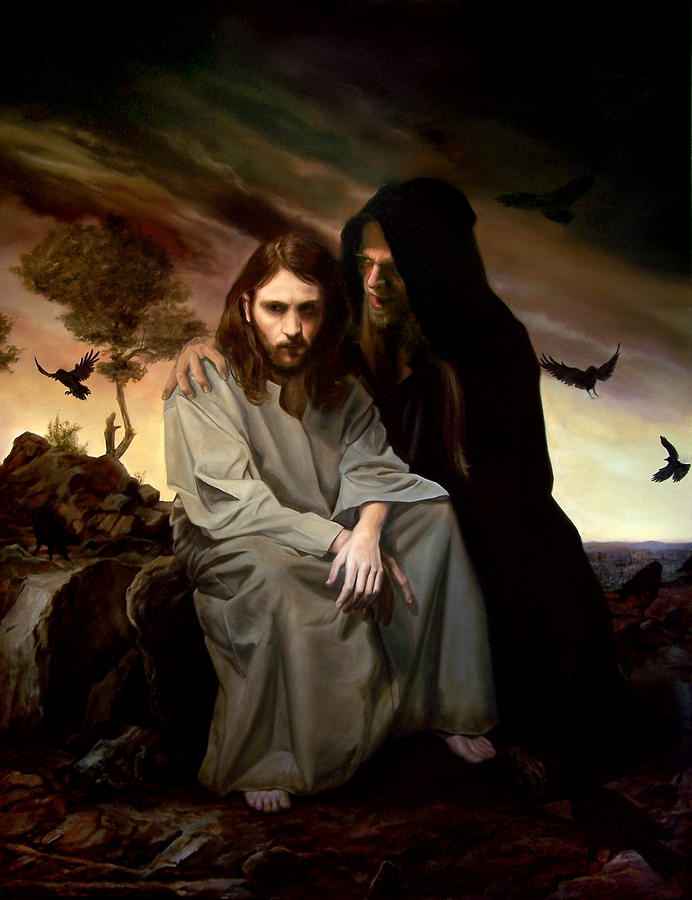
 

Aloha Friday Message – February 3, 2017 – Salt and Light

1705AFC020317 – Salt and Light

Read it online here, please. And please, when you visit there, use one of the social media links at the bottom of the page to share this post. Thank you!

Matthew 5:14-16 14 “You are the light of the world. A city built on a hill cannot be hid. 15 No one after lighting a lamp puts it under the bushel basket, but on the lampstand, and it gives light to all in the house. 16 In the same way, let your light shine before others, so that they may see your good works and give glory to your Father in heaven.”

¡Que la bendición esté siempre con ustedes y que Dios los bendiga, Amados! (May blessing always be with you and may God bless you, Belovéd!)

Matthew 5:1313 “You are the salt of the earth; but if salt has lost its taste, how can its saltiness be restored? It is no longer good for anything, but is thrown out and trampled underfoot.”

Salt is essential for life. Many of you know that our bodies are around 60% water – salt-water at that. The water in our bodies is similar to sea water. We have about 0.4% of that water as NaCl – Sodium Chloride: Salt. Salt is used for seasoning – to make many foods taste better. It is used as a preservative – it keeps food from spoiling because basically it “pulls” the water out of it. Salt has been used in many cultures as currency. The word salary comes from the Latin word salarium – “salt money.” Salt was used to purify sacrifices; God referred to this as “a Covenant of Salt.” (See Leviticus 2:13, Numbers 18:19, and 2 Chronicles 13:5). Putting salt in their offerings also signified their reliance on God to provide all things. That is why he calls it a covenant – it is an agreement between God and his People that HE will provide their needs. If we forget that God will provide, we are like salt that is spoilt. We improve nothing, we preserve nothing, we are not worth our salt.

Isaiah 49:6 “It is too light a thing that you should be my servant
to raise up the tribes of Jacob
and to restore the survivors of Israel;
I will give you as a light to the nations,
that my salvation may reach to the end of the earth.”

(See also Isaiah 42:1-4, 49:1-7, 50:4-11, and 52:13-53:12 – the Servant Songs)

The Servant in these poems of Salvation is a prefiguring of Christ, who is the Light of the world. Through Christ not only will Israel be restored, but even the gentiles will have a share in the Light of Christ (↔ Music Link). Where there is Light there can be no darkness. (See 1 John 1:5-7) How then does Jesus say to us, “You are the light of the world?” (Matthew 5:14 above) We see something that points us in the right direction in Philippians 2:14-15; we will shine like stars in this world – light from Light. Jesus spoke these words to his Apostles and Disciples, and their light was passed on to us through Christ’s People in all ministries of instruction and example. We are these lesser lights imbued with The Light of The World and – as Disciples – we are to carry that Light to illuminate the World and show the conditions wrought by sin. We are charged with the duty to be Servants and Stewards of Word and Sacrament. We are to be the Peacemakers, the Children of God (See John 1:12-13), as part of the Covenant of Salt and Communion – κοινωνία (koinónia) {koy-nohn-ee’-ah} – of the Light (1 John 1:6). We contribute to the sharing of the Light in the World.

Now that we are 40 days past Christmas, we recall the event when Joseph and Mary took the infant Jesus to the Temple. He was revealed to Simeon, and man waiting in holiness for the coming of the Messiah. You will recall this scene in Luke 2:28-32 28 Simeon took him in his arms and praised God, saying,
29 “Master, now you are dismissing your servant in peace,
according to your word;
30 for my eyes have seen your salvation,
31     which you have prepared in the presence of all peoples,
32 a light for revelation to the Gentiles
and for glory to your people Israel.”

God has chosen us in Christ to bring light to the Nations. We are anointed Priest, Prophet, and King. Peter tell us (See 1 Peter 2:9) But you are a chosen race, a royal priesthood, a holy nation, God’s own people, in order that you may proclaim the mighty acts of him who called you out of darkness into his marvelous light. 10  Once you were not a people,
but now you are God’s people;
once you had not received mercy,
but now you have received mercy.

This echoes the prophesy in Hosea 2:23 23 I will plant her for myself in the land;
I will show my love to the one I called ‘Not my loved one.’
I will say to those called ‘Not my people,’ ‘You are my people’;
and they will say, ‘You are my God.’”

New International Version (NIV) Holy Bible, New International Version®, NIV® Copyright ©1973, 1978, 1984, 2011 by Biblica, Inc.® Used by permission. All rights reserved worldwide.

The apostles, Christian ministers, and all Christians, are lights of the world, because they, by their instructions and example, show what God requires, what is the condition of man, what is the way of duty, peace, and happiness –  the way that leads to heaven. That is a way of service, of prayer and fasting, a way of alms and love; the way of Light is the Sacrifice of Adoration, Thanksgiving, and Praise with a humble and contrite heart (See Psalm 51:17) God heals the brokenhearted because it is in those fragile hearts that we carry Salt and Light (See Clay Pots here.) We are called to fast during this coming Lenten Season. Let us choose the Fast of Brotherly Love described here by Isaiah:

Isaiah 58:6-10 Is not this the fast that I choose:
to loose the bonds of injustice,
to undo the thongs of the yoke,
to let the oppressed go free,
and to break every yoke?
Is it not to share your bread with the hungry,
and bring the homeless poor into your house;
when you see the naked, to cover them,
and not to hide yourself from your own kin?
Then your light shall break forth like the dawn,
and your healing shall spring up quickly;
your vindicator[a] shall go before you,
the glory of the Lord shall be your rear guard.
Then you shall call, and the Lord will answer;
you shall cry for help, and he will say, Here I am.

If you remove the yoke from among you,
the pointing of the finger, the speaking of evil,
10 if you offer your food to the hungry
and satisfy the needs of the afflicted,
then your light shall rise in the darkness
and your gloom be like the noonday.

(I strongly encourage you to read ALL of Isaiah 58.)

SaltLight2And for you Biblicists who love to feed on the word, I offer you this little smorgasbord of Scripture: 2 Corinthians 4:4-6, 2 Peter 1:19, Acts 26:18, Exodus 13:21, Isaiah 60:1, Job 24:12 ff, John 1:5, John 8:12, Psalm 119:130, Psalm 27:1, Revelation 21:23

And I close with this from Numbers 6:24-26 –
24 The Lord bless you and keep you;
25 the Lord make his face to shine upon you, and be gracious to you;
26 the Lord lift up his countenance upon you, and give you peace.

May El Shaddai-Olam bless you and I bless you. Whatever, whenever, wherever, whoever, however, if ever, forever — at your service, Belovéd!

Share-A-Prayer – We ask for urgent prayer for husband and wife RV and BV. B’s health took a drastic turn Thursday and her doctor sent her straight to Hospice. Please pray for B and her family and in-laws.

Unless otherwise indicated, all scripture passages are from the New Revised Standard Version Catholic Edition (NRSVCE) New Revised Standard Version Bible: Catholic Edition, copyright © 1989, 1993 the Division of Christian Education of the National Council of the Churches of Christ in the United States of America. Used by permission. All rights reserved.

Creative Commons License
Aloha Friday Messages by Charles O. Todd, III is licensed under a Creative Commons Attribution-ShareAlike 3.0 Unported License

Biblical languages inserts from Bible Hub (Bible Hub: Search, Read, Study the Bible in Many Languages) Visit at http://biblehub.com

Aloha Friday Message – January 27, 2017 – Blesséd are you

1704AFC012717 – Blesséd are you

Read it online here, please. And please, when you visit there, use one of the social media links at the bottom of the page to share this post. Thank you!

Matthew 5:1 1 When Jesus saw the crowds, he went up the mountain; and after he sat down, his disciples came to him.

Aloha nui loa, ʻŌmea! Yes, you are Belovéd, greatly loved by God – El Shaddai Olam – the Holy Trinity. Jehovah the Father Loves you. Jesus the Son loves you. Ruach Elohim, אֱלֹהִ֔ים ר֫וּחַ, the Spirit of The Living God loves you. And I love you, too.

Today we want to follow Jesus up the mountain and, as his disciples did then, we will go to him and listen to what he says about “Living the Good Life.” First, though, I want to direct your attention to the Gospel reading for this coming Sunday: Matthew 5:1-12 (← Check it out!). Every Christian is familiar with this passage from the Gospel of Matthew. It is usually referred to as The Beatitudes. Let’s start with that word – beatitude. Just what is a beatitude?

the beatitudesA beatitude is a declaration of blessedness. It is a guidepost to supreme happiness. It refers to a state of happiness that is unshakable and cannot be negated. It is the harmonious bliss that arises from Grace – the unmerited favor of God – and remains with us eternally.

The list of “The Beatitudes” is – in a way – a prescription for living in Peace and Harmony with God, with Neighbor, and with self. It is a way to find Peace in body, mind, and spirit. It is a gift from God that is not available to us through mechanical meditations or spiritual exercises or chants or trances or any other human act. It is very simply a true and lasting happiness we become aware of when we realize the God loves us. Period. When we know, when we really, really know that God loves us, that is indeed a declaration of blessedness. I have heard others speak of this list of blessings in the Gospel of Matthew as the “Be-Attitudes.” If you want to be happy, then be humble, be repentant, be generous and just, be thirsty and hungry for righteousness; be blessed because God has blessed you and when you accept his blessing …you bless God. (← Check it out!) We give God GLORY by accepting his gifts of many blessings. (↔ Music Link) We might ask, though, how we can bless God, and how can anything we do give GLORY to God?

Q: What can my puny existence add to his Glory?
A: 
Nothing.
Q: What does God need from me?
A:  Nothing.
Q: Then what can I give to God?
A:  Everything.

Huh?

 Q: If he’s got everything and he created everything and he is everything and he’s in everything, and everything I have comes from him … how can I give him everything?!?  
A: 
By extolling, praising, exalting, applauding, revering, lauding, glorifying, and thanking God. That is how we bless God.

In the fifth chapter of Matthew, where we find the Beatitudes, Jesus talks about the way to blessedness. It is the way of humility and compassion. It is not the rigid justice imposed by the law. It is the flowing compassion given through love. It is to go beyond that which is required by doing more than is expected and doing so out of humble love and obedience. It is doing good things by exceeding the expectations of others, and exceeding even our own expectations for kindness. It is called being righteous.

In Matthew 5:6, we read, “Blessed are those who hunger and thirst for righteousness, for they will be filled.” So, let me ask you: Are the Beatitudes found in Matthew 5 more about personal virtue and morality, or more about social justice? Of course you know I am going to take the middle road and say, “Both.” Here’s why. Take a look at Matthew 22:36-40: 36 “Teacher, which commandment in the law is the greatest?” 37 He said to him, “‘You shall love the Lord your God with all your heart, and with all your soul, and with all your mind.’ 38 This is the greatest and first commandment. 39 And a second is like it: ‘You shall love your neighbor as yourself.’ 40 On these two commandments hang all the law and the prophets.”

Today we know that the Spiritual Thirst Isaiah spoke of and to which Jesus responded by saying he could give a spring of water gushing up to eternal life is the Holy Spirit. The image occurs more than once in Jesus’ words, as in John 7:37 where we read On the last day of the festival, the great day, while Jesus was standing there, he cried out, “Let anyone who is thirsty come to me, and let the one who believes in me drink. As the scripture has said, ‘Out of the believer’s heart shall flow rivers of living water.'”

There are a number of different ideas in the Old Testament to which Jesus referred (See Cross References here), and the one among those that speaks most to me is Isaiah 44:3For I will pour water on the thirsty land, and streams on the dry ground; I will pour out my Spirit on your offspring, and my blessing on your descendants. In the poetically-phrased prophecies of Isaiah, I think this probably resonated with Israel in exile very strongly. It is a message of hope – water for the People dying of thirst in the desert. As I look around the world today, I see there is still a lot of desert surrounding God’s People; not just the People called Israel, but all the people who are called by God in every way that he calls them. He calls them and us to quench their thirst and hunger for righteousness – justice. And he even tells everyone who will listen where to find that which quenches this thirst and satisfies this hunger, which gives us rest and solace in the desert: My soul rests in God alone. My salvation is from him. (Psalm 62:1)

Resting in God alone is extraordinarily wonderful – hard to do, that’s true – but blissful beyond words. Take into your heart, mind, and soul these “Be-Attitudes” and learn the inexpressible joy of his Beatitudes for you. He, indeed, loves you, loves me, loves us in ways that surpass all our understanding. If we accept that, if we accept HIS love, we make him happy – we bless God, and blessed are they who bless the lord! Give God the GLORY! How? Like the Bible says, “his disciples came to him.” He will welcome us just as we are whenever and wherever we come to him. (↔ Music Link!) Come! Be blessed in The Lord!

Unless otherwise indicated, all scripture passages are from the New Revised Standard Version Catholic Edition (NRSVCE) New Revised Standard Version Bible: Catholic Edition, copyright © 1989, 1993 the Division of Christian Education of the National Council of the Churches of Christ in the United States of America. Used by permission. All rights reserved.

Creative Commons License
Aloha Friday Messages by Charles O. Todd, III is licensed under a Creative Commons Attribution-ShareAlike 3.0 Unported License

Pages Email Newsletter Categories Archives Connect
  • Connct to us here