Aloha Friday Message – July 31, 2015 – Fresh Bread

1531AFC073115 – Fresh Bread

Read it online here, please.

John 6:35 35 Jesus said to them, “I am the bread of life. Whoever comes to me will never be hungry, and whoever believes in me will never be thirsty.

Peace be with you, Belovéd. As we wend our way through the heat of summer, the storms, the fires, and the floods seem to make the heat all the more oppressive. It seems everything and everyone is subject to dangers and irritations from all sides. We long for peace and quiet; what we get is annoying disruptions and uncomfortable disturbances. The world seems to be filling up with crazy-violent people dedicated to destroying themselves and everyone and everything around them. At the same time, however, we know that there are people who are good and generous, kind and gentle, and willing to give of themselves to help others. Because some hunger for carnage, and others thirst for death, some days we want to say, “What is wrong with this world?!” On other days, we see the Goodness of God expressed in “the milk of human kindness,” the care and compassion that should be the basis of all human relationships. How and why do we live in such a divergent dichotomy, and what can we do to resolve it? When given such a contradictory diet of bitter and sweet, how can we make our lives – and the lives of others – more satisfying? For us earthlings, satisfaction is often based in the presence or lack of sufficient food – the quantity, quality, and accessibility of food and drink often sets the foundation for our assessment of our state in life.

Last week, we looked at the Gospel of John and the Feeding of the 5000. Today’s reference passage comes shortly after that event. The people who experienced or heard about that miracle wanted more from Jesus – more bread, more works, more evidence, more miracles, more security, more of everything which, they believed, would make them happy. Instead Jesus told them not to pursue those things, but instead to accept him as the eternal fulfilling of all their hungers and thirsts. It’s not hard to imagine there were plenty of folks in that throng that said, “Wha-a-a-a-at? Are you kidding me?” Sometimes, even when we can readily see (if only we look) that God is providing everything we need, we still get all cranky about not having everything we want. In the Old Testament reading for this coming Sunday, “The whole Israelite community grumbled against Moses and Aaron.” (See Exodus 16:2) They were complaining that they didn’t have all the “good things” they had in Egypt – plenty of meat and bread and the comfort of being full. Now they were in the desert “and dying of hunger and thirst” – or so they had convinced themselves. They conveniently forgot about the slavery, the abuse, the fear, and the pain they endured as slaves. They’d had a belly-full of that stuff, but they wanted full bellies now like they used to have then. God heard their complaints and sent them Manna and quail. Free. No cost to them other than picking up the food and preparing it. They were not to take too much; they were told to take just enough. If they took more, it rotted. If they took less, it was still sufficient. Like all of God’s Good Gifts, it was just right as-is. The Manna was something they had never seen before. In Exodus 16:31, scripture tells us they called it מָ֑ן (man) {mawn} which means “What (is it)?” According to the accounts of their wanderings in the desert, they had it available to them – along with the quail – for 40 years. It could be prepared several ways – baked, boiled, ground into flour and made into cakes/loaves of bread. It was always there, always fresh, and always the same.

Manna had to be collected before sunrise or else it melted in the sun. No matter how much you picked up, it always came out to exactly one omer (about two quarts dry measure). It always “descended” during the night so that in the morning the ground was covered with it. On Friday there was enough to collect two omers so that no one would have to gather on Saturday – the Sabbath. If someone tried to collect extra and save it, it turned putrid and filled with maggots! Despite the flocks and other provisions the Israelites took with them out of Egypt, the Manna was their staple provision for all the years in the desert. God provided them with Manna, meat (quail), and water thus teaching them that he was their only provider. Whatever they had that sustained life came from him. That is the lesson Jesus was teaching to his followers in today’s passage.

Jesus is the Bread come down from Heaven. In John 6:48-55, he tells people, “I am the bread of life.” He reminds them that their ancestors ate Manna in the wilderness, and it did not give them eternal life; they died. He further tells them, ” … and the bread that I will give for the life of the world is my flesh. … for my flesh is true food and my blood is true drink.” This means that, as bread becomes fully assimilated – completely incorporated – into our living bodies, it is the same for Christ Jesus who becomes fully assimilated into our souls as part of the Divine presence. The Manna which came down from Heaven into the wilderness sustained the bodies of the Israelites, but not the souls. Jesus, the Bread come down from Heaven feeds us the source of all life – God. God is the Father of Life. Jesus is the Deliverer of Life who announces the Salvation of God through the conquest of Death. We literally become what we eat because he says “for my flesh is true food and my blood is true drink.” The doctrine of Salvation Christ presents to us through his Passion, Death, and Resurrection is the only Truth that gives Life to the soul. There is no other food, nor any other drink, that can bestow this Gift in us. Christ is indeed with absolute certainty the food of souls – not food for our corporeal beings – but the only Perfect Food for our spiritual existence. Like the Manna, it is always there, always sufficient, always nourishing, always unique, always fresh, and always the same.

“But what about the Manna that went bad if someone tried to gather too much?” Ah. That was food for the physical world. For the Spiritual world, it is possible to attempt to be greedy and “save it up for later.” However, I don’t think God lets us do that. Just as in the old adage, “you can’t take it with you,” I think God tells us there is no way we can gather an excess of his Grace, for even though our need for Grace is immense, God’s store of Grace is infinitely larger. Remember what he told Paul: “My Grace is sufficient for thee.” There’s always just enough, never too little and never too much. It’s always just Right for he himself is Righteousness. And what did Jesus say about those of us who want that Righteousness? Matthew 5:6Blessed are those who hunger and thirst for righteousness, for they shall be satisfied. Fresh Bread from Heaven is yours! Just open up your heart and tell God, “Fill’er up!”

Whatever, whenever, wherever, whoever, however, if ever, forever — at your service, Beloved!

“Can’t get no satisfaction?” You’re feeding on the wrong bread!
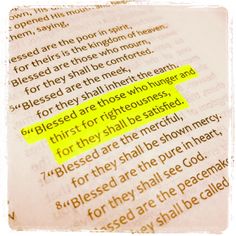
SatisfiedMat5+6Creative Commons License
Aloha Friday Messages by Charles O. Todd, III is licensed under a Creative Commons Attribution-ShareAlike 3.0 Unported License

Unless otherwise indicated, all scripture passages are from the New Revised Standard Version Catholic Edition (NRSVCE) New Revised Standard Version Bible: Catholic Edition, copyright © 1989, 1993 the Division of Christian Education of the National Council of the Churches of Christ in the United States of America. Used by permission. All rights reserved.

Biblical languages inserts from Bible Hub (Bible Hub: Search, Read, Study the Bible in Many Languages) Visit at http://biblehub.com.


Aloha Friday Message – July 24, 2014 – Simple Abundance

“1530AFC072415 – Simple Abundance

Read it online here, please.

2 Kings 4:42-44 42 A man came from Baal-shalishah, bringing food from the first fruits to the man of God: twenty loaves of barley and fresh ears of grain in his sack. Elisha said, “Give it to the people and let them eat.” 43 But his servant said, “How can I set this before a hundred people?” So he repeated, “Give it to the people and let them eat, for thus says the Lord, ‘They shall eat and have some left.’” 44 He set it before them; they ate, and had some left, according to the word of the Lord.

Aloha pumehana, ʻŌmea! Today is a beautiful day for learning! You may not have seen this passage before, but I’m pretty sure you can guess what it prefigures in Jesus’ ministry. I mentioned last week that this coming Sunday the liturgy focuses on Jesus feeding 5,000 people with five loaves and two fish. The Epistle will be from Ephesians and contains the hymn-like passage in Ephesians 4:4-6 There is one body and one Spirit, just as you were called to the one hope of your calling, one Lord, one faith, one baptism, one God and Father of all, who is above all and through all and in all.

The Apostle Paul frequently uses this concept of “oneness” in his teaching. Another passage we often hear is in 1 Corinthians 10:17 17 Because there is one bread, we who are many are one body, for we all partake of the one bread. The bread to which Paul refers, of course, is The Bread of Life (see John 6:35). Bread and grains to make bread were fundamental in the diet of ancient peoples. If you look at Deuteronomy 8:8, you can see a list of some of the major crops: Barley, wheat, grapes, figs, olives, honey, and pomegranates. Barley was usually the first crop that was harvested. It was planted in mid-autumn and harvested in early spring around mid-April. It was milled into flour and baked in stone or earthenware ovens; it was often unleavened bread, but could also be baked using leavening. In today’s passage, Elisha is presented with fresh-baked barley bread and also “fresh ears of grain.” I like barley. I usually encounter it in soups and stews, but I don’t recall ever eating bread made from barley. It looks a little like wheat before harvest, but once the husk is removed you can see a big difference.

In this passage from 2 Kings, we are told “A man came from Baal-shalishah.” This location

L: Barley   R: Wheat

L: Barley R: Wheat

is east of the coastal city of Joppa and a little north of the city of Lydda (Lod or Lud in Hebrew). It is in the very fertile plain called the Plain of Sharon, and historically was the place where the crops ripened well before crops in surrounding locations. It was a place of blessing because of this. The name, Baal-shalishah, is a compound word. Baal means Lord or Master, and Shalishah refers to the number three. It is variously translated as “the god that presides over three,” or “the third idol.” Its exact location is currently unknown. We also do not know the name of the man who brought the loaves and fresh grain. We only know that Elisha told that man to set the bread before a hundred people, and that they would all have their fill with some left over. We see the same sort of miracle in Jesus’ feeding of the 5,000 in the Gospel of John. We read in John 6:1313 So they gathered them up, and from the fragments of the five barley loaves, left by those who had eaten, they filled twelve baskets. Here again, we do not know the size of the baskets but only that there was a superabundance of food which left no doubt that a miracle had been performed.

God created the plants to feed all the animals, including the humans, and in this miracle, God made the food from plant (barley loaves) and animal (fish) more than sufficient for thousands. We are told it was “about 5,000 men,” so if you figure there were also women and children, the number goes up accordingly. When God feeds us, his generosity is always greater than our needs. When he makes a promise, it is always kept and always exceeds our expectations. It is often said that God’s generosity cannot be outdone; he is indeed El Shaddai – God Almighty. His intent is always to shower us with blessings. It is, therefore, a good thing for us to return to him our blessings.

Recently a friend asked why I inverted GOD BLESS AMERICA to AMERICA BLESS GOD. I believe America must work harder at thanking and pleasing God. In this formulation BLESS means (especially in Christian usage) to proclaim that God is Holy. When we “bless God” we praise him, we exalt him, we honor, glorify, and reverence him. We acknowledge his majesty and magnificence. “To Bless” also has the meaning of “to make happy.” In Psalm 103 the Psalmist says, “Bless the LORD o my soul, and all that is within me bless his holy name.” in the Gloria we pray, “We praise you, we bless you, we adore you, we glorify you, we give you thanks for your great glory, …” God has blessed America, but I feel strongly that America has not done well in returning that blessing lately. It is going to catch up with us one day. “There are no inconsequential acts.” The numerous “decisions” made by our Judiciary over the past five decades which are contradictory to God’s plan for his creation have contributed to the weakening of our country. The crimes of leaders in business and government have contributed to the moral decay that we see played out in the news every evening. I am aware that some of you will take offense at my saying that America is slipping into international disgrace. So be it.

I, myself, can be accused of helping that regression by not speaking up, standing up, and bearing up against the pervasive evil that is a tsunami of pain and sorrow around the world. Nonetheless, I still want to, and will, bless God – praise and exalt him forever – for the myriad blessings he has bestowed on this country and its citizens, including me and my family and friends. As with the man from Baal-Shalishah and the feeding of the thousands, there is a superabundance of GOOD things – spiritual, temporal, and material – for which I am constantly grateful. I cannot fathom why God has heaped up such blessing in my life; it makes no sense to be so blessed. Yet I know that it is he who does this. It is he who clearly enjoys blessing all of creation. It is he alone who can do that without ever depleting his own resources. He shows this to us in these miracles of providing the most basic items of sustenance in extraordinary ways. He does that same thing with his Grace. It is always sufficient and then some (See 2 Corinthians 12:9“My grace is sufficient for you, for power is made perfect in weakness.”)

It is my hope, then, that this present weakness which I see growing in our great nation will be the basket into which God’s people gather up the superabundance of his Grace like the people in Elisha’s time and like the people in Jesus’ time, and share that Grace with everyone who rejects Jesus as the Christ of God. We have that Grace to share. In these Bible passages it does not say what was done with the fragments that were left. For me, it is unimaginable that they were thrown away or left unused. What I can imagine is how many more were fed when the surplus was shared. That is yet another way to bless God. He asks us to give a tithe of the firstfruits of our labor. He also expects us to make an offering of the surplus of his blessings. We become one with him who alone is One by sharing that One with one another. That is simply Simple Abundance. Blesséd be God forever!

Whatever, whenever, wherever, whoever, however, if ever, forever — at your service, Beloved!

Psalm 126:3

psalm126-3


Creative Commons License
Aloha Friday Messages by Charles O. Todd, III is licensed under a Creative Commons Attribution-ShareAlike 3.0 Unported License

Unless otherwise indicated, all scripture passages are from the New Revised Standard Version Catholic Edition (NRSVCE) New Revised Standard Version Bible: Catholic Edition, copyright © 1989, 1993 the Division of Christian Education of the National Council of the Churches of Christ in the United States of America. Used by permission. All rights reserved.

Biblical languages inserts from Bible Hub (Bible Hub: Search, Read, Study the Bible in Many Languages) Visit at http://biblehub.com


Aloha Friday Message – July 17, 2015 – The Rest of The Story

1529AFC071715 – The Rest of the Story

Read it online here, please. Use the links for a better view.

Excerpt from Mark 6:30-46 30 The apostles gathered around Jesus, and told him all that they had done and taught. 31 He said to them, “Come away to a deserted place all by yourselves and rest a while.”

Aloha pumehana, ʻŌmea. Here we are, back in our belovéd Kauaʽi. Our journey to the mainland in the state of New Mexico was, all-in-all, good. We visited with many, many friends and relatives, ate lots of the best food on the planet, and shared in hours of laughter, joy, reminiscences, and sight-seeing. Our stay in the Española Valley was terrific. The travel to and from – not so much. It was exhausting, uncomfortable, and in some ways even dehumanizing. We will definitely need to rest up for healing and restoration of full functionality of limbs and torsos. Perhaps at another time I can fill you in on the stuff we did, but you can also check it out on Facebook if you happen to have access to my wall there.

Perhaps some of you remember Paul Harvey, the extraordinary radio and television personality who told amazing behind-the-scenes stores about people and places. He was perhaps most famous for the ongoing series of reports called “The Rest of the Story.” That’s what we’re going to do today; we will look at “the rest of the story.” In recent posts, we’ve looked at passages from Mark 6. We reviewed Jesus’ rejection in his home town at Nazareth. We read about the sending of The Twelve to the villages in Galilee. We touched on the death of John the Baptizer. There was also the feeding of the 5,000. We studied Jesus calming the storm, but did not mention him walking on the water and saving Peter from drowning when his faith faltered. And we also reviewed the healings of the demoniacs at Genessaret. Today we’re going to look at the account of what happened after The Twelve came back from their first mission. They went out healing every disease, casting out demons, and sharing the Gospel. But let’s look at time when they reported back to Jesus all that they had seen and done. I want to show you how we can take that and apply it to our worship experiences.

In this passage, we have the stories of the loaves and fishes. That will be covered in next week’s Gospel from John. We’ll finish this look at Mark 6, which has several familiar Gospel scenes. I want to look at four key points and then compare that with what we do on Sunday. We see that Jesus told the disciples to [1] go to a place to rest and pray, [2] attend to teachings, [3] share a meal with others, and [4] go out to continue building the Kingdom. I want to give credit here to Marist Father Rev. Fr. Ralph Olek for a homily about this chapter back in July, 2012. The basic four-point outline is something I recorded in my homily notes. Fr. Ralph, I hope it’s OK to embellish a bit on what you laid out back then.

In many ways, we – the modern church – are like the crowds that surrounded Jesus as he taught. We attend to his teaching. We are a very diverse group who are of many nationalities and ethnicities. We range in age from infants to the elderly. There is wide economic variation. Some of us barely participate in worship, and some take active roles in various ministries. We come to church for many reasons. Some come to worship, some come to pray and present their petitions to God. Some come to serve God and his family. Some come to console or to be consoled. Some come to seek hope, others to share their hope. Some come out of a sense of duty, others come for political or social reasons. Some come willingly, others reluctantly, and still others come because they have no choice in the matter. For whatever reasons we have to come together at church, we are also varied feelings about being there.

We go away to a place of rest to compose our hearts and minds in God. Some of us feel convicted by our sin and wish to join in the sacraments to set our lives aright. Some of us feel the necessity of “being religious,” and some appreciate the fellowship with others whose religious aspirations and views match ours. Some of us feel the joy of friendships and some of us feel shunned by the hypocrites around us. Some of us believe we are better at complying with the practices of worship and praise – we recite, gesture, sing, listen, and nod appreciatively on cue – and some of us think that the people around us are superficial religious nuts who have no idea about the depth of faith in our own hearts. If we look at all of these traits of the people at church, we see that we are a microcosm of humanity very much like the crowds – including The Twelve and Jesus’ closest disciples – who were the foreshadowing of the Kingdom of God and The Church of today. In that sense, we recognize – or at the very least, we should suspect – that we are a work in progress. We are aware of our own imperfections (even if we don’t always fess up to them), and sometimes we are (regrettably) more acutely aware of the imperfections of others both in the assembly and outside in the World. For whatever reason we have for being in church, we come as we are even though we may not exhibit our true selves. Perhaps from time to time we pray or sing “Just As I am.” And sometimes, if we lift up our hearts and minds in prayer, we acknowledge our sins and repent, calling on our Lord and Savior to cleanse us from the things that keep us at the threshold of the Gates of Heaven as fully-participative citizens of the Kingdom of God. We may, on occasion, become so in tune with what God wants from his servants that we cry out “Here I am, Lord.” There, in church, we are inspired by the people, things, and actions around us to do as Jesus invites: “Come away to a deserted place all by yourselves and rest a while.” In the tabernacle of our hearts, we go to that inner closet where only God sees the real person that we are. Once we have placed our attention in the presence of God, we are ready to take a meal together; we feast on the Word and The Presence of Christ.

In this meal, we are edified and nourished so that we can do our part in bringing the Kingdom of God to all Peoples and Nations. That is our primary responsibility in the World – to call all earthlings to repentance and to proclaim the Gospel so that they, too, will believe and receive the Salvation of our God. (See Psalm 98:3) As in the Multiplication of the Loaves and Fishes, Christ provides the sustenance we need, and – as his followers – we share that with others as we give and receive from one another. The lesson there is a powerful one: We participate in the sharing by passing on that which we have so that others will also have it. It is part of the way we work at building the Kingdom of God: We share the meal that comes from what we have by inviting others to come so we can share it with them as well. WE become what we eat, and all become the Body of Christ. That is the kerygma κήρυγμα (kérugma) {‘keh-rig-mah} – the Truth called the Good News, the Gospel we proclaim – we are one in the Lord. Because we are one, we are sent out into the world to increase the size of that one. To the World, that makes no sense. But if you can fire up your imagination for just a moment, think of the signs above the doors at your church. They say EXIT, but they are also and entrance. *

When we exit the church, we enter the World. The signs in the church above the door could say ENTRANCE. We “go in Peace to serve the Lord and each other.” We are sent at the end of every church service – Mass or otherwise – to take the peace from our visit with God, the teaching we received, and the energy from the nourishment of Word and Eucharist and to share all of that with the World. The purpose of that sharing is to take invitations to everyone who has not come into the Kingdom of God. We share what we have become when we feed on the Word and on the Christ. It is the rest of the story. We cherish the sacrament of nourishment so much that we cannot help but want to share it – if indeed we partake of it fully. What we share through our gifts to others and to the Church becomes the treasure laid up for us in Heaven. It is returned to us in full measure, shaken down, pressed together, and filled to overflowing. The measure of return is God’s measure, not ours, and his is always more generous. What he returns to us is always better than we can imagine, better than we deserve, and more than we can hold; it just flows out onto the people around us. No matter what trials we have, the blessings we receive make the trials seem more manageable by comparison.

When we experience these changes in our lives, the connections they produce are temporal, spiritual, and eternal Good; but, without these four actions in our lives – seclusion for prayer, meditation on teachings, feeding on the Word and the Christ, and going forth to share the Gospel – we decline a portion of the available Good. We in essence tell God, “I don’t want any more blessings.” It sounds silly, but earthlings are messy like that. We interrupt the flow of blessings so we can do what we think we should and avoid doing what God requires of us. And what does he require? He requires us to repent, to believe in the Gospel, and to share the Gospel to all the corners of the World. The best place to start that is to share it in every corner of our family, then every corner of our community, our locale, our Church, and our nation. From there it goes on to cover all humanity with the Goodness of the Lord. Sometimes this seems too formidable a task, and we despair and feel powerless to even spread the Gospel among family and friends. But God is El Shaddai, God Almighty, God All-Powerful. El Shaddai knows how to clean up the messes we make. He shows us we need to pray, learn, feed, and go because he takes our place in life and death so that we can be together with him – and each other – in the resurrection and eternally thereafter. There is no need to have a fear of evil or to feel any distress, for God is always with us. We can be calm in all situations when we fully rely on the Lord who made Heaven and Earth. His generous love is extraordinarily extravagant!

And THAT’S the rest of the story!

* This idea was generated by our long-time friend, Fr. Chuck Faso OFM. In a homily given some time ago, he suggested that a small sign could be mounted under each EXIT sign. The small sign would read “Service Entrance.” What a great idea!

ExtravagantLove


Whatever, whenever, wherever, whoever, however, if ever, forever — at your service, Beloved!

Creative Commons License
Aloha Friday Messages by Charles O. Todd, III is licensed under a Creative Commons Attribution-ShareAlike 3.0 Unported License
Unless otherwise indicated, all scripture passages are from the New Revised Standard Version Catholic Edition (NRSVCE) New Revised Standard Version Bible: Catholic Edition, copyright © 1989, 1993 the Division of Christian Education of the National Council of the Churches of Christ in the United States of America. Used by permission. All rights reserved.

Biblical languages inserts from Bible Hub (Bible Hub: Search, Read, Study the Bible in Many Languages) http://biblehub.com


SPECIAL PRAYER REQUESTS: Please remember in your prayers NH, the niece of AT who writes: She has cancer on her head (not brain) and lungs.  She is in her mid 50s and very determined to beat this thing.  She is currently in the hospital with no/little white blood cells from the chemo and radiation.  She can’t swallow so is down to 90 pounds.  Poor as a church mouse.  My heart goes out to her.  Prayers will help her.

Please remember NH this week, and include all the people you know about who are battling cancer or working to stay in remission. Ask God for his merciful Divine Intervention. Pray also for those who are working on or preparing for ending cancer.


Aloha Friday Message – July 10, 2015 – Let It Go!

1528AFC071715 – Let It Go!

Read it online here, please.

Mark 6:11 – If any place will not welcome you and they refuse to hear you, as you leave, shake off the dust that is on your feet as a testimony against them.

E pili mau na pomaika‘i ia ‘oe a me ke akua ho’omaika’i ‘oe, ʻŌmea! (May blessing always be with you and may God bless you, Beloved!) Today’s reference passage comes in the next paragraph after last week’s message about Jesus’ visit to Nazareth. Jesus has gathered the Twelve and is sending them out in pairs. They are to go with no extra provisions – just a walking stick – but no food, no sack, no money in their belts, no second tunic, but it was OK to wear a pair of sandals. They went out and did as he told them. They went to various villages. They stayed with whoever would welcome them. They ate and drank what was offered. Here is a comparison of this event in the three Synoptic Gospels:


Mark 6:7-13 Jesus summoned the Twelve and began to send them out two by two and gave them authority over unclean spirits. He instructed them to take nothing for the journey but a walking stick— no food, no sack, no money in their belts. They were, however, to wear sandals but not a second tunic. He said to them, “Wherever you enter a house, stay there until you leave. Whatever place does not welcome you or listen to you, leave there and shake the dust off your feet in testimony against them.” So they went off and preached repentance. The Twelve drove out many demons, and they anointed with oil many who were sick and cured them. Luke 9:1-6 – Then Jesus called the twelve together and gave them power and authority over all demons and to cure diseases, and he sent them out to proclaim the kingdom of God and to heal. He said to them, “Take nothing for your journey, no staff, nor bag, nor bread, nor money—not even an extra tunic. Whatever house you enter, stay there, and leave from there. Wherever they do not welcome you, as you are leaving that town shake the dust off your feet as a testimony against them.” They departed and went through the villages, bringing the good news and curing diseases everywhere.
Matthew 10:1-15 – 10 1 Then Jesus summoned his twelve disciples and gave them authority over unclean spirits, to cast them out, and to cure every disease and every sickness. These are the names of the twelve apostles: first, Simon, also known as Peter, and his brother Andrew; James son of Zebedee, and his brother John; Philip and Bartholomew; Thomas and Matthew the tax collector; James son of Alphaeus, and Thaddaeus; Simon the Cananaean, and Judas Iscariot, the one who betrayed him.The Mission of the Twelve These twelve Jesus sent out with the following instructions: “Go nowhere among the Gentiles, and enter no town of the Samaritans, but go rather to the lost sheep of the house of Israel. As you go, proclaim the good news, ‘The kingdom of heaven has come near.’ Cure the sick, raise the dead, cleanse the lepers, cast out demons. You received without payment; give without payment. Take no gold, or silver, or copper in your belts, 10 no bag for your journey, or two tunics, or sandals, or a staff; for laborers deserve their food. 11 Whatever town or village you enter, find out who in it is worthy, and stay there until you leave. 12 As you enter the house, greet it. 13 If the house is worthy, let your peace come upon it; but if it is not worthy, let your peace return to you. 14 If anyone will not welcome you or listen to your words, shake off the dust from your feet as you leave that house or town. 15 Truly I tell you, it will be more tolerable for the land of Sodom and Gomorrah on the day of judgment than for that town.


The disciples were having some utterly amazing experiences – the storm on the Sea of Galilee and Jesus’ calming it; the healing of two demoniacs; the healing resuscitation of a “sleeping” child; the healing of a woman who was sick for twelve years; Jesus’ rejection in Nazareth; and now they are sent out to do what Jesus does – heal the sick and cast out demons. And that’s just for starters! As they traveled with Jesus, they learned from him. They called him Teacher, Rabbi, and in one single instance he was called Rabbouni. They called him Master. They called him Lord, and eventually they all called him Messiah. In the Gospel of John, the author states that Andrew and “another disciple” (probably the Apostle John) have been following John the Baptizer and hear him declare that Jesus is the Lamb of God and testifies “And I myself have seen and have testified that this is the Son of God.” (See John 1:34)

Andrew and “the other disciple” follow Jesus to try to find out where he lives. Then Andrew finds his brother, Simon (renamed Peter later) and 41 He first found his brother Simon and said to him, “We have found the Messiah” (which is translated Anointed). 42 He brought Simon to Jesus, who looked at him and said, “You are Simon son of John. You are to be called Cephas” (which is translated Peter). Right from the get-go, Jesus challenges his followers to act on his behalf under his authority and to do the same kinds of things he is doing. Wouldn’t that be something? Think about this: They had not yet seen everything Jesus could do, but believed they could do what he told them because he said so.

And look who went out on the first “mission” for the disciples – everyone including Judas Iscariot. Judas was told do go perform miracles, and he obeyed … initially. I have often wondered with which of the others he travelled. James and John bar Zebedee were brothers. Simon-Peter and Andrew bar Jonah were brothers. Thaddaeus and James bar Alphaeus may have been brothers (though not specifically named brothers in Scripture it seems; some speculate Thaddaeus – who is also called Jude or Judas – might have been James’ son). We have no way of knowing who paired with Judas Iscariot, though. When all twelve went out from Jesus, I’m sure they discussed what he had told them to do. It must have been a little scary at least, don’t you think, to go to strangers (or perhaps worse, to people you know well) and tell them, “The Kingdom of God is at hand. The Messiah sent us to teach and to heal. Who’s going to be first?” Based on the terrific reports they brought back at the end of their mission, they enjoyed good success. They had to let go of their fear and embrace the authority Jesus granted them. But that’s not all they had to let go.

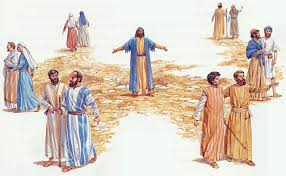
They also had to let go the people who rejected them. This is hard. We know that later on the Apostles – and by inheritance, all of us – are sent out into all the world to spread the Gospel and to save souls. It was a distinct part of their first mission to “leave there and shake the dust off your feet in testimony against them.” They had to let go of the people – and souls – who would not accept Jesus’ gifts of healing, deliverance, and salvation. Jesus himself set the example throughout his ministry. He put the Kingdom out there. He preached the Gospel. He wowed everyone (except the other Nazarenes) with miracles and great wisdom; but he didn’t argue with anyone and say, “Look here, you’re going to miss out if you don’t get with the program.” He let them go. It saddened him to do that, but he was there to do the will of his Father; God’s will includes the Gift of Free Will for us – and it always has. We can choose to let go of God (you know God doesn’t let go of us!). We can choose to just walk away. In that instance we will be a little more like the central character, Queen Elsa, in Disney’s Frozen

It’s time to see what I can do,
To test the limits and break through.
No right, no wrong, no rules for me. I’m free!

Eventually Elsa gets things figured out, but it takes some doing, some suffering, and a lot of self-control which is only available to her through love. There are millions of kids who can tell you that whole story, sing the songs, and even act out the movie. I wish they could do as well with the stories about Jesus. Like Elsa, many of those kids, whether in anger or ignorance, believe there is ” No right, no wrong, no rules for me I’m free!” It saddens me to know that. It hurts in my heart to realize that. It, too, is a reality that must also be let go. “Many are called. Few are chosen.” (See Matthew 22:1-14) So, then, do we just stop proclaiming the Gospel? Oh, my goodness, no! We always proclaim the Gospel, and (remembering St. Francis’ adage) sometimes – but only when absolutely necessary – we use words. Will everyone be convinced of the Truth of the Gospel? No. Will anyone be saved by hearing the Gospel? No. Hearing is not enough. It must be believed to be effective, for belief leads to repentance, repentance to forgiveness, forgiveness to justification, and justification to salvation. That salvation is imminent as soon as we let go of The World.

Let go of The World and its vanities. Let go of our selfishness. Let go of our fears, our self-doubt, our self-loathing, and our pride. Let it go not because you are freed of all rules, but let it go because you let Love be your only rule. The people who embrace World do not accept that. As much as we love them, as much as we want them to see God, as much as we pray for their conversion, there is a time when we shake off the dust that is on our feet as a testimony against them. Is it your child, or your spouse, or your relative, or your parent, or your friend who will not welcome or listen to the Gospel? Do what the disciples did. Let it go and return to Jesus. It is he who gave you the power to testify. It is they to whom  you testify who exercise their wills to ignore that testimony. Truly I tell you, it will be more tolerable for the land of Sodom and Gomorrah on the day of judgment than for that soul.

twobytwo

Jesus sent them two-by-two.
Who will you choose to go with you?

Whatever, whenever, wherever, whoever, however, if ever, forever — at your service, Beloved!


Creative Commons License
Aloha Friday Messages by Charles O. Todd, III is licensed under a Creative Commons Attribution-ShareAlike 3.0 Unported License


Unless otherwise indicated, all scripture passages are from the New Revised Standard Version Catholic Edition (NRSVCE) New Revised Standard Version Bible: Catholic Edition, copyright © 1989, 1993 the Division of Christian Education of the National Council of the Churches of Christ in the United States of America. Used by permission. All rights reserved.


Aloha Friday Message – July 3, 2015 – Not Surprising

1527AFC070315 – I could die of not-surprise!

Read it online here, please.

Mark 6:6And he was amazed at their unbelief. Then he went about among the villages teaching.

Aloha pumehana ʻŌmea and welcome to Friday at the movies. When our kids, Tim and Cherie, were youngsters in middle-school in 1992, there was a Disney movie called Aladdin. One of the characters – the monkey named Abu – was played by a guy in my high school 1964 class named Frank Welker; that was cool. Another character was voiced by Gilbert Gottfried – not so cool in my book – and the character was a parrot named Iago. In one memorable scene he says, “Oh, there’s a big surprise! That’s an incredib… I think I’m gonna have a heart attack and die from not surprise!” The saying became a household aphorism ‘ “I could die of not-surprise!” I think the semantics are a little goofy, maybe, but the message is clear enough. Some things are so predictable that we are not surprised when they happen; in fact we are so hugely unsurprised that the unsurprise itself is unsurprising. That’s convoluted logic, but here are a few examples.

Internet blogs and Facebook quotes often follow such a path. Someone could post, “The best thing about water is that it’s wet.” I can practically guarantee that someone will come back with some pseudoscientific claptrap that water isn’t actually wet. We only think it’s wet because we’ve been conditioned to accept that disreality and YADA-YADA-YADA. Even if a statement is clearly tongue-in-cheek, there is bound to be someone who will take offense, or claim they have a better idea, or just make some rude remark unrelated to the topic at hand. I’ve even seen comments like “Maybe your right you’re arugment would make more sense if you spelled better.” I could die of not surprise. (misspelling intentional)

Sociopolitical “experts” seem to come like a tsunami out of the woodwork when there is an event that can garner headlines. A current noisy and noisome event here in Hawaii is the topic of building telescopes on top of the highest peaks of the volcanoes that formed the islands. The range of “experts” who take positions on this is astonishing. It goes from “this is sacred land and you have no right to be here” to “your ancestors would never have stood in the way of progress like this,” to “this is science, not religion or politics.” All of the positions have some core of validity, some aspect of truth they espouse, but the most common characteristic they share is that the arguments shaped around those core truths are specious because the truth is manipulated to suit the individual views of the speakers. On both ends of the spectrum of argument there are even sharp disagreements between parties whose differences appear to be minor but whose defenses for those positions are uncompromising. I could die of not surprise.

The volatility of remarks about “religious topics” is even more incredible and the polarization on both ends of the debates grow farther apart daily. For example, whether it’s Islam or Christianity, one is always absolutely right and the other is always absolutely wrong – except, of course, to those who think religion is a social construct (“God created man in his own image, and man returned the compliment.”), or that spirituality is really all that matters (so that polytheistic, pantheistic, theocentric, and atheistic tenets are all equal), or that my theology trumps your theology because you are fooled by the Devil. Really? “All Muslims are YADA-YADA-YADA.” “Christians have done YADA-YADA-YADA.” Israel has been YADA-YADA-YADA. Francis I is an anti-Pope. Francis I is the best (or worst) Pope ever. The Catholic Church is the antichrist. Barack Obama is the Antichrist. There’s no such thing as an antichrist because there no such thing as a Christ. You need to really study Matthew 24:1 though 25:46, then you’ll understand that you are wrong. Really? I could die of not surprise.

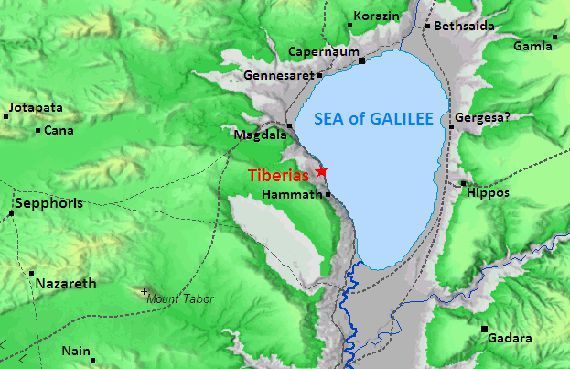
SeaOfGalileeThe topic verse for today comes from the end of Sunday’s Gospel reading. Jesus has made a second crossing of the Sea of Galilee – this time without a storm – after healing two demoniacs on the eastern shore, probably in or near Gesera. He’s back home, presumably Nazareth, so he might have headed toward the western shore of the Sea and stopped in Tiberius and then walked up to Nazareth. (Remember that the Sea of Galilee was about 700 feet below sea level while Nazareth was about 1200 feet above sea level.) As was his custom, he went to the synagogue to teach. In this passage in Mark, the people of his hometown take offense at his teaching. In today’s vernacular, it would sound like, “Where’s he getting all this stuff? How can he do all this? He’s just Jesus, the son of the construction contractor. How could he have such wisdom, or the ability to perform miracles? We know him! He shouldn’t be trying to put us on like this!” They were angry with him because he was so familiar to them that they could not accept that he was different from them – as if he were pretending to be better than them.

Yet all throughout Galilee from the North in Damascus, Tyre, and Sidon, and then all the way South to Hebron and Gaza, people sought him out to hear him, to be healed by him, to see his miracles, and to be “in the know” about this guy from the hill-country between Samaria and Galilee. The folks in Nazareth were surprised that he was so famous and thought he was faking it. He was surprised at their lack of faith, and – because of that lack – Mark tells us he could not perform many (or any) miracles there. For two additional accounts of this event, see Matthew 13:53-58 and Luke 4:16-30. There’s a very interesting map resource here that shows the places listed in the Gospels where Jesus spent time during his life. In many of those places, the crowds were joyful to be in his presence. In some places, there were skeptics, but still some acceptance. In Nazareth, however, Jesus declares, “Prophets are not without honor, except in their hometown, and among their own kin, and in their own house.” (Mark 6:4) That hasn’t changed much except for the size of the “hometown” and “kin.”

Thanks to the Internet (and a slew of other modern marvels like airplanes, televisions, and other mass-media outlets), our hometown is planet Earth and our kin are the earthlings thereon because we are now a World Village. Seeing that, I get the feeling that someone out there is itching to write back, “It’s not because of modern marvels! It’s always been that way. God made humans Stewards of Creation and to say it’s only a modern phenomenon is to show your blatantly ignorent and probably a biggot, too. If the world is a village you must be it’s idiot. Maybe you’d be better off selling apple’s by the road side.” (misspellings intentional) I could die of not surprise.

What is it then that makes us so swift to embrace unbelief, disbelief, and misbelief? Perhaps it is that there no longer exists a majority of people who believe there is an independent, objective, knowable Truth that is not changed in any way at all by subjective reasoning. We are all guilty of what Thomas Merton called “The heresy of individualism.” (And please, no affirmation or negations of Merton’s worth). Here’s what he had to say:

“The heresy of individualism: thinking oneself a completely self-sufficient unit and asserting this imaginary ‘unity’ against all others. The affirmation of the self as simply ‘not the other.’ But when you seek to affirm your unity by denying that you have anything to do with anyone else, by negating everyone else in the universe until you come down to you: what is there left to affirm? Even if there were something to affirm, you would have no breath left with which to affirm it. The true way is just the opposite: the more I am able to affirm others, to say ‘yes’ to them in myself, by discovering them in myself and myself in them, the more real I am. I am fully real if my own heart says yes to everyone.” – From Thomas Merton: Essential Writings

Oliver Wendell Holmes reputedly coined the adage “The right to swing my fist ends where the other man’s nose begins.” (Even that is disputed and some attribute it to John B. Finch, Abraham Lincoln, or Zechariah Chaffee.) WHOEVER SAID IT, the concept has been widely used to describe the limitations of liberty. Limitless freedom is anarchy. Freedom OF religion has become freedom FROM religion. Constrained freedom is liberty. Making everybody right means everyone is wrong. As we continue to dissolve the constraints of liberty, we continue to suppress freedom and to promote anarchy. The choice between liberty and death is abrogated. Socioeconomic compromises are broadened with the result that First Amendment freedoms are being negated:

Amendment I. Congress shall make no law respecting an establishment of religion, or prohibiting the free exercise thereof; or abridging the freedom of speech, or of the press; or the right of the people peaceably to assemble, and to petition the government for a redress of grievances.

If you disagree with supporters of those socioeconomic compromises, you are characterized as being a bigot and can face civil or even criminal prosecution. In the Gospel of Matthew, the account of this episode in Jesus’ life ends with the townspeople trying to throw him headlong off a cliff. In all three  Gospels, he doesn’t remonstrate the crowd, or stay to argue with them in hope of convincing them. In all accounts, he simply leaves and goes on with his work. I know he must have been familiar with what we call Proverbs 26, but before someone quotes me Proverbs 18:2 or Proverbs 12:1, I think I’ll close by recommending we imitate Jesus by doing what we’re going to do, saying what we’re going to say, and then … just move on. Jesus told us it would be like this – people would hate us because of his name. I’m OK with that. Besides, it drives them crazy if they can’t beat me over the head with their arguments. I could die of not surprise!

Whatever, whenever, wherever, whoever, however, if ever, forever — at your service, Beloved!

Creative Commons License
Aloha Friday Messages by Charles O. Todd, III is licensed under a Creative Commons Attribution-ShareAlike 3.0 Unported License

Unless otherwise indicated, all scripture passages are from the New Revised Standard Version Catholic Edition (NRSVCE) New Revised Standard Version Bible: Catholic Edition, copyright © 1989, 1993 the Division of Christian Education of the National Council of the Churches of Christ in the United States of America. Used by permission. All rights reserved.


Yes. This is sophomoric. That’s the point.


Aloha Friday Message – June 26, 2015 – The Power of Life and Death

1526AFC062615 – Power of Life and Death

Read it online here, please.

Wisdom 1:12-15, 2:23-24

12 Do not invite death by the error of your life, or bring on destruction by the works of your hands; 13 because God did not make death, and he does not delight in the death of the living. 14 For he created all things so that they might exist; the generative forces of the world are wholesome, and there is no destructive poison in them, and the dominion of Hades is not on earth. 15 For righteousness is immortal.

23 […] God created us for incorruption, and made us in the image of his own eternity, f24 but through the devil’s envy death entered the world, and those who belong to his company experience it.

NB: The links I provide in the Aloha Friday Message are included so that you can see the scripture I reference in context. The whole point of these essays is to open the Scriptures so that more people feed on the Word. The link above will take you to a full presentation of the first and second chapters of the Book of Wisdom so that you can see these selected verses in context. I sincerely hope that in this essay and in all the Aloha Friday Messages you will take advantage of these links to become further acquainted with Holy Scripture.

Aloha pumehana ʻŌmea! Aloha ʽoe! Today marks a bit of a departure from my usual choices for scripture. Today’s passage is from the Book of Wisdom. You won’t find it in your Bible if you use anything based on the Authorized King James Version. It is part of what some Christians call “The Apocrypha.” They do not believe the Book of Wisdom, and six other books, meet the “canonical standard” as being the inspired Word of God. The Catholic Church accepts the books a canonical. They are included in the Catholic Bible: 1 and 2 Maccabees, Sirach (Ecclesiasticus), Wisdom (Wisdom of Solomon), Baruch, Tobit, Judith, and additions to Daniel and Esther. We won’t get into the apologetics of that today, but I will take just a moment and explain that term: Apologetics.

It comes from the Greek root word ἀπολογία (appologia) {ap-o-LOH-gia} which means “to present a verbal defense.” It is – was – actually a legal term in Grecian courts. The prosecutor presented the list of charges called the κατηγορία (katagoria) {kat-e-GOR-ia} and the defense presented the ἀπολογία. There are some instances in the New Testament where this concept is expressed. For example in 1 Peter 3:14-15 we read – 14 But even if you do suffer for doing what is right, you are blessed. Do not fear what they fear, and do not be intimidated, 15 but in your hearts sanctify Christ as Lord. Always be ready to make your defense to anyone who demands from you an accounting for the hope that is in you. The Apostle Paul uses this legal term at least a couple of times in the Acts of the Apostles:

Acts 22:1 “Brothers and fathers, listen to the defense that I now make before you.”

Acts 26:2 I consider myself fortunate that it is before you, King Agrippa, I am to make my defense today against all the accusations of the Jews

And again in Philippians 1:7 It is right for me to think this way about all of you, because you hold me in your heart, for all of you share in God’s grace with me, both in my imprisonment and in the defense and confirmation of the gospel.

Apologetics deals with defending something in which one believes and the defense is based on the premise that the belief held is worthy of trust, rational, not against human wisdom, and is in no way harmful spiritually or socially. This can be a little confusing to English-speaking persons because our word “apology” comes from the same Greek word but has a nearly opposite meaning. An apology is based on an admission of guilt and the intent to reform is implicit in that admission. It is not a defense of right but an admission of wrong. Today we will use the correct understanding of apologetics as we look at this set of verses from the Book of Wisdom.

The passage starts with a wise warning to all earthlings: Don’t be stupid. It could kill you. We know this well enough; it’s what are parents told us over and over while we were growing up – and then we preached the same thing to our kids. “Use your head. Think it over. Don’t do something that you know can hurt you or others. LOOK BEFORE YOU LEAP!” This certainly is wisdom, and common wisdom at that; in fact, it falls into the category of what we usually call “common sense.” What comes next, though, is a little surprising.

The passage goes on to say, “God did not make death, and he does not delight in the death of the living.” This seems a little counterintuitive. Death is such an integral part of our “world-view” that we seem sometimes to worship Death. We have been reminded in the past couple of decades that we live in a Culture of Death. Our movie heroes tell us it’s just part of the journey, a way of living in a different set of circumstances. We are often reminded not to fear death, and yet we seem never to take that advice and instead worry about dying. Death is the ultimate chaos, the dissolution of everything we gain through living to the fullest. We fear it so much that we say “Rest in Peace,” and “s/he’s in a better place now.” We are afraid of death, but somehow hold the irrational belief that it is better than being alive. That is where the apologetics come in.

Christians believe there is life – LIFE – after death. Our spirit or soul lives on and will eventually (or in some cases immediately) be reunited with God and then – later according to God’s Will – we will be given a resurrected, glorified body, too. We believe this principally because God told us so – over and over and over. In fact, in our passage for today, the writer goes on to explain why death came to be and what God did about it: 14 For he created all things so that they might exist; the generative forces of the world are wholesome, and there is no destructive poison in them, and the dominion of Hades is not on earth. 15 For righteousness is immortal. God did not make things and people for the purpose of death corruption. God did not make junk. God gave earthlings a perfect world with perfect Peace and then let them choose to accept or decline that gift. Part of the Gift of Life was the Paradise in which grew the Tree of Life and the Tree of the Knowledge of Good and Evil. The fruit of that second tree is what changed Paradise. The fruit of the Tree of the Knowledge of Good and Evil (or the Tree of All Knowledge) made them aware of a “dualism.” There is good and there is evil; once they realized there was a difference, they had to make another – a second – choice. Their first choice was to disobey. Their second choice was deciding what to do about their first choice. You know the rest of the story; they hid, they tried to blame each other, and then they blamed the serpent. Adam, Eve, and the serpent each received a curse for the choices they made, but only Adam and Eve also received a covenant blessing. An apologist would point to that blessing as a defense of God’s Omnibenevolence, Omnipotence, and Omniscience.

So how did Death get into the world and why is it such a frightening thing? The writer of Wisdom continues: God created us for incorruption, and made us in the image of his own eternity, f24 but through the devil’s envy death entered the world, and those who belong to his company experience it.

God started Creation with the intent of sharing eternal unity with everything he created; nonetheless, he did not impose that intent on humankind. He gave us a choice – Free Will is what we call it. From God’s point of view it’s more like Common Sense; pretty basic stuff really – you can have paradise forever with me or opt out at any time and lose it all. Who wouldn’t chose “paradise forever?” Well, Adam and Eve, for starters, and all of us traipse right along in their footsteps every time we make the selfish decision to be our own god. But why is it through the devil’s envy? HE – Satan – wanted to be God and learned it was impossible, so – out of envy and spite – he did (and continues to do) everything he can to spoil God’s handiwork. Part of the dualistic reality that came with Free Will was the end of eternal life with God – death. “You are dust, and to dust you shall return.” (Genesis 3:19)

There certainly are days when it seems that life is nothing but dust. The dust – death – we experience flits into every nook and cranny, every passing second, and every waking thought of our day-to-day lives. In this passage, death is the word Θάνατον (than’-a-ton) from Θάνατος (thanatos) {than’-at-os} in the Septuagint. Death is the wage we earn by sinning. We are eternally invited to accept the freely given Gift of Eternal Life. In this Book of Wisdom, God tells us not to seek death by the error of your life, or bring on destruction by the works of your hands because he does not delight in the death of the living. 14 For he created all things so that they might exist; the generative forces of the world are wholesome, and there is no destructive poison in them, and the dominion of Hades is not on earth. 15 For righteousness is immortal. We are immortal when we are righteous.

Power_of_God.smrThe fear of death we have is the antithesis of the Peace we desire. Perhaps it is not the physical cessation of life that is the object of this passage, but rather the fear and sorrow we associate with losing our earthly existence. Dying in fear is a horrible way to go. Dying in Peace is like only sleeping. In this Sunday’s Gospel, we listen to the account of the raising to life of Jairus’ daughter. When Jesus gets to Jairus’ house, the crowd is carrying on hysterically because the child has died. Jesus knows she is at Peace and says, “Why this commotion and weeping? The child is not dead but asleep.” (see Mark 5:21-43) Death is, of course, inevitable for all earthlings – even Jesus; but we were made for better things, and it is for those things that we should live and hope in all the days of our earthly lives. God wants us to live – forever – in and with HIM. What’s stopping us? When you find out, do not fear it or invite it to take over your eternity! What   gives us the power over life and death is the Salvation of our God in Christ Jesus. We have nothing to fear. Death has its power, but LIFE is an even greater Power, the Power of God!

Whatever, whenever, wherever, whoever, however, if ever, forever — at your service, Beloved!

Creative Commons License
Aloha Friday Messages by Charles O. Todd, III is licensed under a Creative Commons Attribution-ShareAlike 3.0 Unported License

Unless otherwise indicated, all scripture passages are from the New Revised Standard Version Catholic Edition (NRSVCE) New Revised Standard Version Bible: Catholic Edition, copyright © 1989, 1993 the Division of Christian Education of the National Council of the Churches of Christ in the United States of America. Used by permission. All rights reserved.

Biblical languages inserts from Bible Hub (Bible Hub: Search, Read, Study the Bible in Many Languages) http://biblehub.com


Aloha Friday Message – June 19, 2015 – In the Still of the Night

1525AFC061915 – In the Still of the Night

Read it online here, please.

Mark 4:35-41 35 On that day, when evening had come, he said to them, “Let us go across to the other side.” 36 And leaving the crowd behind, they took him with them in the boat, just as he was. Other boats were with him. 37 A great windstorm arose, and the waves beat into the boat, so that the boat was already being swamped. 38 But he was in the stern, asleep on the cushion; and they woke him up and said to him, “Teacher, do you not care that we are perishing?” 39 He woke up and rebuked the wind, and said to the sea, “Peace! Be still!” Then the wind ceased, and there was a dead calm. 40 He said to them, “Why are you afraid? Have you still no faith?” 41 And they were filled with great awe and said to one another, “Who then is this, that even the wind and the sea obey him?”

A happy Aloha Friday to all of you, Beloved! Today we will look into some of the little gems in this passage. What a wonderful story it is! It occurred on one of those days when Jesus had been teaching all day. He told the parable of the sower and explained it to his disciples. Then he told the parable of the lamp under a bushel basket. That was followed by a parable about how scattered seeds grow from the earth in accordance with God’s plan until it is time for the harvest. That was followed by the parable of the mustard seed. (Take a look at that post for a lesson on Seed Verses.)

After he had spent the day teaching, he proposed to the disciples that they should go to the other side. If we look at Mark 4:1, we see that he was teaching a very large crowd and had made his teaching center in the stern of a boat: Again he began to teach beside the sea. Such a very large crowd gathered around him that he got into a boat on the sea and sat there, while the whole crowd was beside the sea on the land.

As evening approached, Jesus asked to be taken to the other side of the sea – probably the Sea of Galilee. That’s the largest freshwater lake in Israel – about 33 miles around – and is about 21 miles long and 13 miles wide. It is also the lowest freshwater lake on earth in that it is in some places over 700 feet below sea level. It is also referred to in scripture as the Kinneret (see Numbers 34:11), the Lake of Genessaret (Luke 5:1), the Sea of Ginosar (in the Babylonian Talmud), Sea of Minya (Persian and Arabic name). In the Gospels it is called Sea of Galilee, Sea of Tiberias, and Lake Tiberias (See John 6:1 for example).

We don’t know for sure the point of departure nor do we know what the destination was; however, you can see that it would be quite a trip given the size of the water they were crossing. In addition, the crossing would be at least partially at night as it was already evening when they left. The passage contains an interesting comment – they took him with them in the boat, just as he was. This signifies that he made no additional preparation for the journey. He was already in the little boat, so they just hauled anchor and left the crowd behind – although a few other boats did follow along. Jesus may have been sitting or perhaps even reclining a bit on the cushion in the stern as he taught. When he decided to leave, he stayed where he was and asked the owners or users of the boat to take him to the “other side” – perhaps Capernaum. The trip started out well enough, but soon there was trouble in the weather. A storm interrupted their journey.

Because of the surrounding geography, the Sea of Galilee is especially susceptible to storms. There are large temperature and humidity differences between the sea’s coast and the surrounding mountains some of which are up to 2000 feet above sea level. The cool, drier air in the heights collides with the moist, warm air at the level of the lake and generates a convection pressure which can generate terrific wind and rain – squalls – in a very short time. Everything can be A-OK one moment, and then in a jiffy a small craft out on the lake can be violently tossed about with a good chance of capsizing. The winds are compressed as they come through the valleys between the hills and when they break out across the surface of the water they can be surprisingly disorienting and very dangerous in mere moments.  The kinds of boats in use at that time were between 20 to 30 feet long and around 8 feet wide. Such small craft would be really dangerous in bad weather.

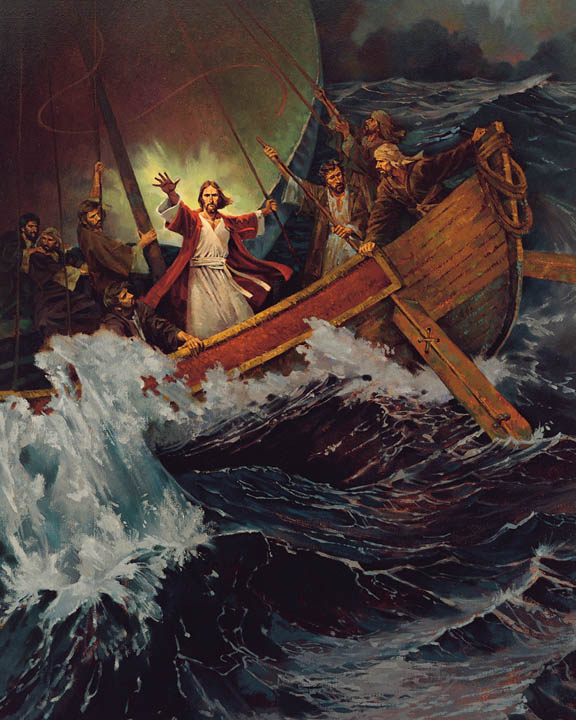
jesus-christ-calming-the-stormIt was that kind of a storm that blew up that evening – sudden, violent, tossing water into the boat so that it was already starting to sink. Jesus was so tired he had fallen asleep on a cushion in the stern of the small boat. He didn’t notice the erratic movements of the boat or the water splashing over the sides. He didn’t wake up in the storm; he only woke up when the disciples roused him and said to him “Teacher, do you not care that we are perishing?” There were other boats around them, and they too were tossed about in this sudden squall. Once Jesus was awake, he took immediate action. He rebuked the wind, and said to the sea, “Peace! Be still!” Then the wind ceased, and there was a dead calm. Everyone who had been in that storm which came up so suddenly was just as suddenly dead calm in the water. No sign of the storm remained. In its place were only wonder and awe. Jesus looked out over the water and said to the sea, “Peace! Be still!” These are words of command.

(Click HERE to hear a Hymn about this. I sang this often at Corona Presbyterian in Sunday School.)

Jesus had used similar expressions of rebuke before. In Mark 1:25 we read how Jesus rebuked a demon: But Jesus rebuked him, saying, “Be silent, and come out of him!” There is a parallel of the story of the storm at sea in Matthew, and in Matthew 8:26 we read, And he said to them, “Why are you afraid, you of little faith?” Then he got up and rebuked the winds and the sea; and there was a dead calm. The same event in Luke 8:25 reads 25 He said to them, “Where is your faith?” They were afraid and amazed, and said to one another, “Who then is this, that he commands even the winds and the water, and they obey him?” In Mark 4:40 it reads like this: 40 He said to them, “Why are you afraid? Have you still no faith?”  In this statement, the Greek for “still” is οὔπω (oupó) {oo’-po}. It is an adverb that expresses the negative “not yet.” In all three versions, the disciples are astonished that Jesus could have such authority over the weather. (The Gospel of John does not cover this event.)

In this truly significant account of Jesus’ life we draw three great lessons. First that Jesus is God, for only God can control the wind and the sea.

Proverbs 30:4Who has ascended to heaven and come down?     Who has gathered the wind in the hollow of the hand? Who has wrapped up the waters in a garment?     Who has established all the ends of the earth? What is the person’s name?     And what is the name of the person’s child?     Surely you know!

We also see that Jesus was confident and comfortable with his decision to cross the lake. He knew there would be a storm – he is of course omniscient – and yet he decided to cross knowing that there would be a storm; and he knew it could be calmed in the same way he knew that the death of Lazarus would lead to giving God glory. He was confident he would be at peace because he knew his Father was with him:

Proverbs 3:24 If you sit down, you will not be afraid;     when you lie down, your sleep will be sweet.

Psalm 4:8 I will both lie down and sleep in peace;     for you alone, O Lord, make me lie down in safety.

The third truth we see in this story is that Jesus was also completely human. He was exhausted and needed rest. We don’t often think of Jesus’ humanity and the ordinary events of daily life. He went to parties, he sang, he slept, ate, dreamed, laughed, wept, bathed, used a latrine, and enjoyed his friends. All of these (and thousands more) are things we do because we are human. In addition, Jesus often withdrew from the press of the crowds to take some “down-time.” He knew, as a human, that it is unhealthy to be working ceaselessly without a change of pace. It is his humanity that made his Passion possible because, as a human, he died and was buried.

We need to remember Jesus’ divinity and humanity when we hear this account of Calming the Storm at Sea. When the storm broke, even seasoned fishermen like Peter, Andrew, James, and John knew it was dangerous. After Jesus rebuked the storm with divine words of command, everything went perfectly calm, and they reflected on the majestic power of God in the still of the night. When Jesus calms the storms in our lives, we should also take time to meditate and give glory, thanks, and praise to God who alone give light to our days.

Creative Commons License
Aloha Friday Messages by Charles O. Todd, III is licensed under a Creative Commons Attribution-ShareAlike 3.0 Unported License

Unless otherwise indicated, all scripture passages are from the New Revised Standard Version Catholic Edition (NRSVCE) New Revised Standard Version Bible: Catholic Edition, copyright © 1989, 1993 the Division of Christian Education of the National Council of the Churches of Christ in the United States of America. Used by permission. All rights reserved.

Biblical languages inserts from Bible Hub (Bible Hub: Search, Read, Study the Bible in Many Languages) http://biblehub.com


Aloha Friday Message – June 12, 2015 – Whole World View

1524AFC061215 – Whole World View

Read it online here, please.

2 Corinthians 5:6-7 So we are always confident; even though we know that while we are at home in the body we are away from the Lord— for we walk by faith, not by sight.

Aloha pumehana, ʻŌmea. Warmest Aloha Beloved. You may hear this short passage in a couple of days. When I read it earlier this week, I was certain I had cited this pair of verses previously. After an extensive search, I found that I had not used this very familiar section from Paul’s second letter to the Corinthians. Paul probably wrote this sometime around 57 AD, about six years after he helped form the church in Corinth. Corinth was a busy crossroads of trade and culture. The citizens of Corinth had an international reputation for wanton excess, debauchery, drunkenness, and blatant immorality. There was even a specific word, korinthiazethai, which meant to “live like a Corinthian.” It was the center of the worship of Aphrodite, the goddess of love and sexual pleasures. Corinthians were well-pleased to live like their favored goddess – temperamental, manipulative, party-party people, unfaithful in marriage, philandering, flirting, and lots of boozing. If you called a woman a “Corinthian girl,” that was a euphemism for prostitute. In fact, perhaps as many as 1,000 “attendants” of Aphrodite helped enrich the temple through fees charged to worshipers for sexual rites practiced on the temple grounds with the approval of the temple officials. Corinth was a pretty filthy place for many reasons, and if there was something that was nasty, it showed up in Corinth and was widely welcomed. Because it was an important city, whatever went on in Corinth influenced other cities. Doubtless, Paul had that in mind when he decided to seed a church in Corinth.

In his first letter to the Corinthians, he took them to task about their behaviors at the “Agape Meal.” He had learned some of them were getting drunk, having a little too much “agape,” over eating, and pretty much using the Love Feast as an opportunity for orgy. There was in-fighting, some serious heresies, and a failure to understand the message of the Gospel. Yet, Paul knew there were also persons who were good, solid Christians – folks like the Roman tent-makers he stayed with named Priscilla and Aquila. In fact, these two actually traveled and ministered with him. They also are believed to have instructed Apollos, one of the key contemporary evangelists Paul mentions in his epistles. Paul was concerned, though, about the lingering worldliness in the Church in Corinth. They still clung to the old habits of focusing on the appearance of devotion without truly experiencing devotion. Let me show you what I mean.

Some of us are familiar with the word religiosity. It is the state of being excessively or sentimentally devout and describes someone who is self-righteous, a sanctimonious, “holier-than-thou” person who is into religion for the sake of religion and how that enhances her/his appearance in the community. It is religion for status and therefore a religion of Self. How they look is more important than how they are. They are “keeping up appearances.” In Corinth, the Christians (although they were not called by that name yet) still wanted to “fit in” with their neighbors, so they brought their party lifestyle to church, so to speak. Paul criticized this kind of superficiality several times. For instance, in 1 Corinthians 9:19-23, Paul states (quoting in part) “I have become all things to all people, that I might by all means save some.” His conformance is for the sake of the Gospel, not for his self-esteem. In Romans 12:2 he says, Do not be conformed to this world, but be transformed by the renewing of your minds, so that you may discern what is the will of God—what is good and acceptable and perfect. In this verse, “transformed” means “transfigured,” or “changed in form” as in metamorphosis. We see a similar concept expressed in 1 John 2:15-17 where John says, Do not love the world or the things in the world. The love of the Father is not in those who love the world; … the world and its desire are passing away, but those who do the will of God live forever. Together these passages for the basis for the popular adage “Be in the World but not of the World.”

The World calls us to act in our own best interests. Faith calls us to act in the best interest of God first, others second, and ourselves last. We should not try to live our life by appearances, but rather to live genuinely; and even if we cannot observe the effects of our living in faith, we should continue to live by the core values of our faith. We do not live our lives merely for the appearance of being faithful. We live in faith so that our faith, not our religiosity, is what others see.

This is important when looking at this particular Bible passage because many of us have understood it incorrectly. Count me in on that. In earlier days, I understood this verse to mean something like “walking in blind faith.” Or maybe the opposite of that? Either way, I thought it had something to do with walking through life with the faith that even the things unseen could not harm us. We didn’t need to see where we are going in order to get there because “faith does the seeing.” I don’t need to worry about getting to my goal – Heaven – despite being unable to see it. I just have faith that it’s there and keep marching in that direction. That certainly is practical advice, and a good way to set our course for Heaven. But it is not what this verse means. That catchy little prepositional phrase at the end – not by sight – actually means “not by appearance.”

In the Latin Vulgate, this verse reads per fidem enim ambulamus, et non per speciem.” By faith we walk and not by appearance. Speciem means a sight, a look, a view, an appearance, an aspect, a mien, bearing, expression, or manner. It has nothing to do with the act of vision, but everything to do with the thing seen. We walk – live our lives – in faith, not by tangible things. We live by trust, not by what we can see. We live in the hope of what we choose to believe will happen, not by our limited understanding of reality. If seeing is believing, then we believe without having seen (think of Thomas). J. B. Phillips put it this way: for we have to live by trusting him without seeing him. We don’t need the presence of Jesus – his appearance – to believe in him. In Greek, it’s the same concept. The word is εἶδος, (eidos), { i’-dos} and it means visible form, shape, appearance, outward show, kind, species, or class. It is something observed by its outward appearance. It is not “looking where you’re going.” That’s a lot different from what I thought earlier.

And while it is different, it is also clearer, and for me, more meaningful. One reference expressed it this way: “Eidos refers to the outward form taken on by each of the three Persons of … God.” The Holy Spirit’s appearance as a dove; Christ’s appearance at his Transfiguration; or, as in John 5:37 And the Father who sent me has himself testified on my behalf. You have never heard his voice or seen his form.”  If I walk – and here walk means to live my life – by faith, I do not need to depend on having to rely on his appearance to believe in him. I believe him because I have faith that he is the true, only-begotten, ever-living Son of the Father. I walk by faith and trust my faith more than my perception of him. I can do that because I know in my heart – and my mind and spirit too – that I am walking with him because he is walking with me “every moment of every day.” “We walk by believing, not by seeing” is an imperfect understanding of Paul’s words. There is a whole world to see, but our faith is not in the world or of the world. It is what appears beyond the world that inspires our hope.

stairwaytoheaven

Whatever, whenever, wherever, whoever, however, if ever, forever — at your service, Beloved.

Creative Commons License
Aloha Friday Messages by Charles O. Todd, III is licensed under a Creative Commons Attribution-ShareAlike 3.0 Unported License

Unless otherwise indicated, all scripture passages are from the New Revised Standard Version Catholic Edition (NRSVCE) New Revised Standard Version Bible: Catholic Edition, copyright © 1989, 1993 the Division of Christian Education of the National Council of the Churches of Christ in the United States of America. Used by permission. All rights reserved.

Biblical languages inserts from Bible Hub (Bible Hub: Search, Read, Study the Bible in Many Languages) http://biblehub.com

Aloha Friday Message – June 5, 2015 – The Whole Loaf

1523AFC060515 – The Whole Loaf

Read it online here, please

John 6:51 I am the living bread that came down from heaven. Whoever eats of this bread will live forever; and the bread that I will give for the life of the world is my flesh.

Aloha nui loa ʻŌmea! Here we are again at the verge of summer and the summer break for most school-age kids. Even though the “official” start of summer is Memorial Day (May 25 this year) the actual official first-day-of-summer is June 21. That is also Fathers’ Day. Sounds like a day for Celebrating. Speaking of celebrations, this coming Sunday, June 7, is pretty special, too. It is The Solemnity of the Most Holy Body and Blood of Christ (Corpus Christi). As I prepared this Aloha Friday Message, I realized this is the third in a series. I didn’t know it was a series until I saw the title – The Whole Loaf. The first message in the series was Fire in the Whole! The second was Whole in One. And now we have The Whole Loaf. It brings to mind something from days gone by about “wholly” and “holy.” It’s based on Matthew 5:48 Be perfect, therefore, as your heavenly Father is perfect. I know I am not perfect, I am no saint (yet), and I am far from being any kind of holy. But we need to understand that word “perfect” better. It actually means “grown up,” “mature,” “complete and whole.”

So we begin to see that being holy – Holiness – requires total — whole — devotion to God. Whether in Greek, Hebrew, or Aramaic, the word used in Matthew 5:48 for “perfect” means to be whole, complete, as in fully developed. God created us for his purposes, not for our purposes. We differ from the world – set ourselves apart – not out of spite, but because we have been called by God to be in his Kingdom, and in his Kingdom we grow and grow until we become like him. God is there with us every step of the way to help us, to guide us, to sustain us, to help us repent, to help us become Holy. That is the life-transforming power of the Holy Spirit whom God the Father through Christ Jesus has given to us as our Companion. Still, that seems like a big challenge to meet. What if we fail? Isn’t it more probable that we will fail rather than succeed? Here’s something that popped into my mind once when I was pondering that question.

If the road to Hell is paved with good intentions
Then the road to heaven is paved with good works.

In James 2:18 we read, But someone will say, “You have faith and I have works.” Show me your faith apart from your works, and I by my works will show you my faith. (Use the link to see that in full context, please.) I don’t think I will ever be perfect – at least not as an earthling – but that’s kind of a crazy thing to say because the whole objective of being a Christian is to become a Saint – someone who ends up in Heaven after leaving this Earth. If I plan to “see him as he is,” then I need to plan on being perfect – mature, whole, complete, HOLY. How in the World can I do that?

The answer, of course, is simple; I cannot. I cannot, but HE can be perfect in me when I am completed in HIM. When all of him fills all of me then I shall see him as he is. One excellent and efficacious way to do that is to be filled with him in the Eucharist. My “diet” needs to be The Word, The Living Bread Come Down From Heaven. “We become what we eat” is the assertion of the Church Fathers. Please take a moment and look at these three short passages:

Through Him, with Him, and in Him ...

Through Him, with Him, and in Him …

1 Corinthians 10:16-17

1 Corinthians 11:23-29

…and especially…

John 6:32-71

The TV commercials and shows about losing weight are ubiquitous and all are based on the same premise: Diet and Exercise make change possible. Hm. Diet and exercise can change our lives. A diet that is the “Body, Blood, Soul, and Divinity of Christ” certainly is a healthy diet. The exercise of our Faith is facilitated by the excellence of our diet. Diet and Exercise in this case also makes change possible. Better still, it makes complete change not only possible, but also feasible, and probable.

I can imagine someone thinking, “Hey! Hold on a minute! Are you trying to say that only Catholics have the full assurance of Heaven because of their belief in the Real Presence?” No. All Catholics are Christians, but not all Christians are Catholics. Jesus is the only begotten son of the Father who came to save the World and not to condemn the World. Remember John 3:17 Indeed, God did not send the Son into the world to condemn the world, but in order that the world might be saved through him.

Most people don’t memorize that one. Some people slide right past it, so sure of being redeemed eternally because they are confident they are in the group called “Whosever Believeth in Him” that they have no qualm whatsoever in roping off their part of the world with the Personal Relationship Clause of their religion. So then, what about John 3:17? It seems to me that if God sent Jesus for Salvation and not condemnation, I shouldn’t be condemning either. It seems too impersonal to write someone off because they disagree with me about how my relationship with Jesus works. “Of course I have a personal relationship with Jesus,” I tell them. “In fact, I have a close, personal, and deeply satisfying relationship with the whole family – Father, Son, Holy Spirit, our Blessed Mother, and all the Angels and Saints.” For me, that entire familial connection has its foundation and zenith in the Real Presence – the Whole Loaf, the Living Bread Come Down From Heaven.

Every Christian who is true to her/his faith is called to fearless and joyous communion with God through Jesus as Jesus’ adopted brothers and sisters:

Romans 8:15-17 15 For you did not receive a spirit of slavery to fall back into fear, but you have received a spirit of adoption, when we cry, “Abba! Father!” 16 it is that very Spirit bearing witness with our spirit that we are children of God, 17 and if children, then heirs, heirs of God and joint heirs with Christ – if, in fact, we suffer with him so that we may also be glorified with him.

So if the diet is Christ, then the exercise is our suffering with and for him. That doesn’t need to be as dramatic as it sounds. Suffering is not always misery, anguish, torment, and affliction. Sometimes it is just keeping your mouth shut when a stinging retort is poised at your lips. Sometimes it is dropping a dollar into a jar for a street musician or a homeless person. Sometimes it is giving up a bit of our time to volunteer at the Boys and Girls Club. Sometimes it is taking a moment to be kind to the “least of these my brethren.” For me and for my fellow Catholics, that exercise is made possible in a fuller and more satisfying way for us because of our confidence in the wholeness – mature, fully grown, complete Body and Blood of the Eucharist. I gave up accepting the symbol of our faith as expressed in symbolic communion when I accepted the challenge to live in the Mystery of Transubstantiation. It’s a difficult concept for many Catholics to embrace and not all Catholics accept it. I cannot condemn that nor can I judge them for that perspective.

Whenever we give ourselves over to moments of reverie, we usually can focus on the great times in our lives, but occasionally there are memories of not-so-great moments, too. Of these, the most unyielding are those moments of regret we feel for failing to live Christ’s law of Love. I think that is because we feel those moments make holes in the fabric of our lives, and that is not the kind of holiness we crave. Being holey is not wholly holy.

In our reference verse for today, the Greek word for “perfect” is τέλειός (teleios) {TEH-li-ohs} and is related to the word we studied in the Seven Last Word of Christ Series Τετέλεσται, (Tetélestai) {teh-TEH-les-tie} for “it is finished.” There we saw that Jesus’ words meant consummation, or to complete a process all the way through the final step which means everything that needed to be done has been done. It is a fully-completed, made-to-order, exactly-right process concluded properly and correctly in every possible way. Whatever can or needs to come next can succeed because the perfect preparation for it has been completed. That’s the meaning behind The Whole Loaf, too. Jesus is wholly present in the Holy Sacrament of the Eucharist. I need to be wholly present to receive it and it is possible to do that by being whole through him, with him, and in him. Blessed be God forever.

Whatever, whenever, wherever, whoever, however, if ever, forever — at your service, Beloved!

Creative Commons License
Aloha Friday Messages by Charles O. Todd, III is licensed under a Creative Commons Attribution-ShareAlike 3.0 Unported License

Unless otherwise indicated, all scripture passages are from the New Revised Standard Version Catholic Edition (NRSVCE) New Revised Standard Version Bible: Catholic Edition, copyright © 1989, 1993 the Division of Christian Education of the National Council of the Churches of Christ in the United States of America. Used by permission. All rights reserved.

Biblical languages inserts from Bible Hub (Bible Hub: Search, Read, Study the Bible in Many Languages) http://biblehub.com


Aloha Friday Message – Whole in One – May 29, 2015

1522AFC052915 – Whole in One

Read it online here, please.

Matthew 28:19-20 19 Go therefore and make disciples of all nations, baptizing them in the name of the Father and of the Son and of the Holy Spirit, 20 and teaching them to obey everything that I have commanded you. And remember, I am with you always, to the end of the age.

2 Corinthians 13:13 13 The grace of the Lord Jesus Christ, the love of God, and the communion of the Holy Spirit be with all of you.

Aloha nui loa, ʻŌmea! In 1894, a man named George W. Cole came out with a product that eventually ended up in just about every American household. He invented it for taking care of bicycles, but the people who bought it found hundreds – even thousands – more uses for it. It was designed to be a cleaner, to prevent rust, and to lubricate bicycle parts. He called it 3-IN-ONE® Oil. I used it on just about every moving part of my J. C. Higgins Bike.

According to the company’s Material Safety Data Sheet (MSDS), the principle ingredient – greater than 97% – is something called “Severely Hydrotreated Heavy Naphthenic Oil

The name, “3-in-ONE,” then describes what is does and not what it is.

In previous posts, we have used descriptions of God with the Identity Symbol, the ≡ symbol, to say that

LIGHT ≡ GOD ≡ LOVE ≡ TRUTH ≡ WAY ≡ LIFE ≡ ETERNAL ≡ JUSTICE  ≡ OMNIPOTENCE  ≡ ONE GOD IN THREE PERSONS

Unlike 3-IN-ONE® Oil –  which is one entity that does three things – God is One Entity that is three things – three persons. Sometimes we try to understand The Trinity by saying that we, too, are “triune beings,” in that we have a body, soul (intellect and emotion), and spirit. We can see the body, we can experience the soul, but we’re usually stumped by what to think or say about our spirit. It is, after all, the one thing about us that is most like God for “God is spirit, and those who worship him must worship in spirit and truth.” (See John 4:6-30) That still doesn’t quite get it.

In another attempt to understand this extraordinary doctrine of the Trinity, we turn to geometry.

I was thinking about the Trinity and how we often depict it using a triangle, one side for each Person of the Godhead. I wondered what was in the middle. If the three lines represent Father, Son, and Spirit, then what is in the space they enclose? My first guess was Love, because God is Love, but somehow that seemed too static and too (ah-HA!) two-dimensional.

What if we thought of the Trinity as something three-dimensional – like a Tetrahedron? Then each face of the tetrahedron could represent one person of the … Hold it. The tetrahedron has FOUR faces, Mr. Mathless! OK. No problem, the fourth side is going to represent … Love? No, because if the triangle’s space represented love, then the tetrahedron’s volume must be the representation of Love. But, Love could be the foundation of the Trinity – be the fourth side – and then the other three faces would be the three Persons. That would sort of make sense. Maybe.


However, that just didn’t seem to satisfy me. I started thinking about that screen saver in Windows® and how you can set it to a shape based on a tetrahedron. It morphs through hundreds of variations of color and shape – all of them tetrahedrons – and then I realized maybe that’s how the Trinity works, too.

It is somewhat helpful to imagine the Trinity as a triangle, but we know the Godhead is more dynamic than that. There are three distinct persons, all right, but we mere mortals still don’t get it; hence, the Mystery of the Trinity. So thinking about Love being the foundation of the tetrahedron, and remembering how that 3-D tetrahedron changes … it is pretty hard to tell which side is the foundation.

Which way is UP? Is this tetrahedron resting on one point or sitting on one side? What would it look like if we made it dynamic – that is made it a 3-D moving shape? There is a very interesting mathematical representation of that idea. Use this link to see it: (or copy and paste this into your browser http://math.ucr.edu/home/baez/klein.html This is a really cool visual!!

Tetrahedron simple line drawing

Which side is teh base?

So we can get some other ideas about the Trinity, about the Universe, and about our role in all of that by looking at a screensaver image and watching it “change.” It appears to change, but it’s really always the same thing: A tetrahedron. No matter how we see or understand God, God is always ONE-God-in-Three-Persons.

If we are Disciples of Christ, we know that Jesus named the three Persons in the Trinity at the end of the Gospel of Matthew – our opening verse. You will remember, though, that even the Disciples who were there with him throughout his Mission just couldn’t grasp that Jesus was God – and we have Jesus’ word on it that he is. Consider this, for example: John 14:9 Jesus said to him, “Have I been with you all this time, Philip, and you still do not know me? Whoever has seen me has seen the Father. How can you say, ‘Show us the Father’?” And also Jesus’ testimony about his relationship with God is spelled out in John 10:30 30 The Father and I are one. In John 1:1-4 we read, In the beginning was the Word, and the Word was with God, and the Word was God. He was in the beginning with God. All things came into being through him, and without him not one thing came into being. What has come into being in him was life, and the life was the light of all people. Jesus – the Logos of God – was there at Creation when the Spirit of God hovered over the waters. The whole trinity was there. Again, at Jesus’ Baptism, the whole Trinity was there. We interact daily with the whole Trinity, for whenever we pray to God we pray to God-in-Three-Persons. Even if we pray, “Loving Heavenly Father,” or “Jesus my Lord and my God,” or “Spirit of the Living God,” we pray to God-in-Three-Persons. God is the Whole of Divinity in One Being – he’s not “the force,” he’s not “the guy upstairs,” he’s not “the intelligent designer.” He is GOD – known by many names to be sure (see 818AFC050208), but still just GOD-in-Three-Persons – Blesséd Trinity. The God of Abraham, Isaac, and Jacob is the God or our Salvation. Here’s an example you might enjoy:

Do you remember the cumulative tale and nursery rhyme called “The House That Jack Built?” (Read it here) Maybe we could hijack (no pun there) that story as an example.

  • This is the Eternal Triune God.
  • This is Israel, the House built by the Eternal Triune God.
  • This is the Law that guided Israel, the House built by the Eternal Triune God.
  • These are the Prophets, that proclaimed the Law that Guided Israel, the House built by the Eternal Triune God.
  • These are the Kingdoms that persecuted the Prophets, that proclaimed the Law that Guided Israel, the House built by the Eternal Triune God.
  • These are the Kings and Priests who ruled the Kingdoms that that persecuted the Prophets, that proclaimed the Law that Guided Israel, the House built by the Eternal Triune God.
  • These are the Scribes and Pharisees who were servants to the Kings and Priests who ruled the Kingdoms that persecuted the Prophets, that proclaimed the Law that Guided Israel, the House built by the Eternal Triune God.
  • This is Jesus Christ, the Son of God, who exposed the hypocrisy of the Scribes and Pharisees who were servants to the Kings and Priests who ruled the Kingdoms that persecuted the Prophets, that proclaimed the Law that Guided Israel, the House built by the Eternal Triune God.
  • This is the Bible, which is entirely the story and revelation of Jesus Christ, the Son of God, who exposed the hypocrisy of the Scribes and Pharisees who were servants to the Kings and Priests who ruled the Kingdoms that persecuted the Prophets, that proclaimed the Law that Guided Israel, the House built by the Eternal Triune God.
  • This is you, encountering God through His Word, the Bible, which is entirely the story and revelation of Jesus The Christ, the Son of God, who exposed the hypocrisy of the Scribes and Pharisees who were servants to the Kings and Priests who ruled the Kingdoms that persecuted the Prophets, that proclaimed the Law that Guided Israel, the House built by the Eternal Triune God.
  • This is your Eternal and Complete Joy in discovering that your Salvation through Jesus Christ is clearly explained to you by encountering God through His Word, the Bible, which is entirely the story and revelation of Jesus The Christ, the Son of God, who exposed the hypocrisy of the Scribes and Pharisees who were servants to the Kings and Priests who ruled the Kingdoms that persecuted the Prophets, that proclaimed the Law that Guided Israel, the House built by the Eternal Triune God.

God gave himself to us through his only begotten son and delivered to us, through him, the Spirit of the Living God. What would you say to him for doing that? Even the most eloquent “thank you” seems inadequate repayment for the gift of himself to me, to you, to us, to every living soul. God gave me GOD himself. I wish to honor the Giver by Accepting the Gift. To do that I need to use the gift. But how can I make use of it in the best-possible way? Perhaps by giving his gift to me back to him:

Almighty, Ever-living, Triune God, my El Shaddai Olam,

I offer You this day, and my entire life, as a sacrifice of adoration, thanksgiving, and praise. Bless and approve this offering; sanctify it, and make it Holy so that it becomes for you a living sacrifice Holy and acceptable to You, O LORD, my Strength and my Salvation; an offering made in Spirit and in Truth.

I offer You this day because You are my God and I am Your servant and this is my reasonable service of joyful worship.

I offer You this day because You are my Creator and I am Your creation, and all creation rightly gives You joyful thanks and praise.

I offer You this day because I love You, and I joyfully love You because You first loved me.

Thank You for this day, this life, this love, this JOY; please help me to use them with whomsoever or whatsoever Your will allows. I offer this prayer in Jesus’ name. AMEN.

Beloved, let us also thank God for His giving each of us to all of us for “through him, with him, and in him” all are One and part of the Whole Community which is One. The inexpressible love I feel for you is yet another way for me to know that God lives and moves among us, because I find and see His Spirit working in you. Blessed be God forever! AMEN. This is how we can be whole in the One and one in the Whole – it is the Whole in One

Creative Commons License
Aloha Friday Messages by Charles O. Todd, III is licensed under a Creative Commons Attribution-ShareAlike 3.0 Unported License

Unless otherwise indicated, all scripture passages are from the New Revised Standard Version Catholic Edition (NRSVCE) New Revised Standard Version Bible: Catholic Edition, copyright © 1989, 1993 the Division of Christian Education of the National Council of the Churches of Christ in the United States of America. Used by permission. All rights reserved.


Light Life Word

Pages Email Newsletter Categories Archives Connect
  • Connct to us here