Aloha Friday Message – January 2, 2015 – Watch Out!

1501AFC010215 – Watch out!

Read it online here, please.

Matthew 2:1-2 In the time of King Herod, after Jesus was born in Bethlehem of Judea, wise men from the East came to Jerusalem, asking, “Where is the child who has been born king of the Jews? For we observed his star at its rising,and have come to pay him homage.”

Hau’oli Makahiki Hou! Happy New Year!

E pili mau na pomaika‘i ia ‘oe a me ke akua ho’omaika’i ‘oe, ʻŌmea! (May blessing always be with you and may God bless you, Beloved!)

We are finished with 2014. Think of it like this: Go out into deepest space and build a 12X12X4 wall. Everything on that side of the wall is the Past and beyond your reach. Everything on this side of the wall is the future … and beyond your reach. Don’t look back unless you want to go back. Stand on the top of the wall and look forward with eagerness to everything that will come your way for all of it will be a blessing to you if you accept it as a gift from God who gives you only the Good Gifts which you need so that you will know him better, love him more, and serve him well – all through HIS Eternal Power.

If, however, you try to use your own power to bless your own life, 2015 could turn out to be uncomfortable at best and even disastrous. This is a mistake we earthlings very often make. I’d like to show you a few examples today about how seemingly simple things can be very harmful.

We all know that “too much of a good thing” can be damaging – the sun for example. For some silly reason we seem to think that toasting our hide like a marshmallow so that it’s all brown and crispy is a good idea; I’ve done that! We all know that UV exposure damages skin cells and raises the risk of skin cancer. Then, somewhere along the line, we notice that our skin is aging faster, and filled with hard little bumps called actinic karatoses – scaly, crusty growths (lesions) caused by damage from the sun’s ultraviolet (UV) rays. At that point – hopefully – sunscreen sounds like a better idea. Some of us find that inhaling noxious fumes, gases, and ashes is pleasing; I’ve done that! Then we find out that our lung tissues are chock-full of gooey gunk, the air sacs that exchange oxygen are dissolving, and it’s harder and harder to breathe. That knowledge – late in acceptance – causes us to rethink the whole idea of smoking whatever it was we inhaled (you know what else I’m thinking of here!). And of course, some of us can recall moments when the recognition that alcohol was slowly killing us and our relationships with others, or that sexual appetites were damaging us in body, mind, and spirit. Perhaps we realize that the way we eat – or don’t eat – is treading on the very borders of death. When we wake up and realize we are denying the presence of things that are killing us, we may – though not always – try to make a change in our lives. At this time of year we often do that with “Resolutions.”

Magi&StarSo what do New Year’s Resolutions have in common with the Wise Men – the Magi – visiting the Holy Family? It’s the Magi – the magicians “from the East,” the astronomers who relied on astronomy. They became part of the Nativity Narrative as a demonstration that Jesus the Christ came for all earthlings – Jew and gentile, holy and profane, rich and poor – as the angels heralded Glory to God in the highest, and on earth peace, good will toward men.” Now this was said to the shepherds on the night of Jesus’ birth – and we must not forget that the Magi showed up at least two years later – so also, I believe, it applies to these astronomers who came to honor a Divine King despite not being subject to his Kingship yet nonetheless subject to his Divinity. I have wondered many times if their encounter with that Divinity affected them spiritually. It certainly affected the shepherds who left the stable glorifying God; but of the Magi we only know that “being warned of God in a dream that they should not return to Herod, they departed into their own country another way.” (Matthew 2:12) My conclusion is that they arrived as sorcerers and departed as sorcerers, unchanged by choice. Like our “little bad habits,” which we cling to so dearly, they chose to stick with the status quo.

Beloved, we often err in much the same way. I’m not going to head off on a diatribe about Harry Potter and Hogwarts; read those fantasies with a wary mind and stand firm in the Truth. They will not harm you. Nor will I repeat my warning about the practice of yoga and other occult practices. I do want you to think about other little things that subtly maneuver us away from God, and that’s where this post connects with the Magi – magicians, sorcerers, astrologers, “dividers of the sky.” God is very explicit about trusting in our own powers, or – worse still – in the powers of our ancient enemy Satan. Check this out: Isaiah 47:12-15Keep up, now, your spells and your many sorceries; perhaps you can make them avail, perhaps you can strike terror! You wearied yourself with many consultations, at which you toiled from your youth. Let the astrologers [literally “dividers of the sky”] stand forth to save you, the stargazers who forecast at each new moon what would happen to you. Lo, they are like stubble, fire consumes them; they cannot save themselves from the spreading flames. This is no warming ember, no fire to sit before. Thus do your wizards serve you with whom you have toiled from your youth; each wanders his own way, with none to save you. Astrology, numerology, witchcraft, mediums (Tarot and palm readers for example), amulets and lucky-pieces are quick traps to life-threatening habits.

It comes up in the New Testament, too. Here’s a little excerpt from the travels of Paul and Barnabas. Acts 13:6-12 When they had gone through the whole island as far as Paphos, they met a certain magician, a Jewish false prophet, named Bar-Jesus. He was with the proconsul, Sergius Paulus, an intelligent man, who summoned Barnabas and Saul and wanted to hear the word of God. But the magician Elymas (for that is the translation of his name) opposed them and tried to turn the proconsul away from the faith. But Saul, also known as Paul, filled with the Holy Spirit, looked intently at him  and said, “You son of the devil, you enemy of all righteousness, full of all deceit and villainy, will you not stop making crooked the straight paths of the Lord? And now listen—the hand of the Lord is against you, and you will be blind for a while, unable to see the sun.” Immediately mist and darkness came over him, and he went about groping for someone to lead him by the hand. When the proconsul saw what had happened, he believed, for he was astonished at the teaching about the Lord.

Notice it doesn’t say that Bar-Jesus the Elymas (which means sorcerer) was converted! Sometimes the conversion we need comes at the cost of our lives. Here I am thinking about Samson. Note there is no letter P in that name; it’s not Sampson – it is Samson שִׁמְשׁוֹן (Shimshon) {shim-shone’} which means “like the sun.” Samson knew he was set apart by God for God’s service, but he thought he was so powerful in his own right that he could get away with fudging the lines. His troubles started when he moved close to the border of an area under control of the Philistines near Timnath. He spotted a good-looking woman named Delilah, went home and told his parents to get her for his wife. We know how that turned out. Later, he went to Gaza, shacked up with a harlot, and then lay in wait outside the city. In the middle of the night he tore that city gates off their hinges and put them on top of a hill. He kept doing things that were right on the border of temptation; he desired to be tempted, and gave in to that desire one time too often. Samson here was deliberately exposing himself to the danger of temptation instead of fleeing from it and as a result he gets trapped in sin. That eventually cost him his pride, his vision, and finally his life. When we constantly place ourselves in the path of temptation – you may recall the phrase “the near occasion of sin” – we are essentially risking our souls for the thrill of confronting God’s law. We open ourselves to spirits other than God’s, spirits who are real and truly seek our destruction – eternal destruction. “But it was only a little bit, only a little sin, only a little rebellion.” We are deliberately disobeying God and putting our trust in something (or better, someone) other than Him.
CAn'tSeeMeBeloved, watch out! Satan is always on the prowl for “silly little, harmless mistakes,” our flirtations with evil, and one by one these little easy betrayals of God build up until – like Samson – we are captured by the very sins we dared to try. That is when we realize that what Paul said about the wages of sin is true. It is death. Better to put the temptation to death by knowing the purpose of the Devil’s deceptions. Remember, his “little mistake” was the sin of rebellion. Read what God says about that in this passage from 1 Samuel as he prophesies against Saul. And Samuel said, “Has the Lord as great delight in burnt offerings and sacrifices, as in obedience to the voice of the Lord? Surely, to obey is better than sacrifice, and to heed than the fat of rams. For rebellion is no less a sin than divination, and stubbornness is like iniquity and idolatry. Trusting in occult practices is rebellion.


Don’t.


Whatever, whenever, wherever, whoever, however, if ever, forever — at your service, Beloved


Creative Commons License
Aloha Friday Messages by Charles O. Todd, III is licensed under a Creative Commons Attribution-ShareAlike 3.0 Unported License

Aloha Friday Message – December 26, 2014 – Our Return Policy

1452AFC122614 – Our Return Policy

Read it online here, please.

Psalm 126:3The LORD has done great things for us, and we are filled with joy. (New International Version)

Luke 1:49for the Mighty One has done great things for me, and holy is his name. (New Revised Standard Version Catholic Edition (NRSVCE))

Psalm 116:12 What shall I render unto the Lord for all his benefits toward me? (Authorized (King James) Version (AKJV))

Aloha nui loa, ʻŌmea! Very much Love to you, Beloved! If you are reading this on Friday, yesterday was Christmas. I hope you had a wonderful CHRISTmas filled with the realization that God brought Heaven to Earth for you. Our Pastor, Reverend Father Anthony Rapozo, reminded us in his Christmas homily that Jesus came to us as a helpless infant to redeem the human race, the very race that betrayed him, first in the Garden of Eden and then again in the Garden of Gethsemane. He did that intentionally, purposely placing himself among us as in a way that we could choose to accept him as a Gift. What a GIFT! And yet in the 33 years Jesus spent walking among us, hardly anyone figured out what he was doing here or why he came. Now that we do know, we have billions of people who know him and love him; he is the Christ of God, the only begotten Son of the Father, sent to redeem the World and every living soul in it. It is a Gift of inestimable value, so immense, so rich, so literally awesome that we can never hope to make a return for it or to adequately thank our Almighty Everliving God for his Glory and Grace. And yet, the part of us that is created in HIS Image eagerly strains to acknowledge the Gift by honoring the Giver. We honor him by accepting the gift, using it in our lives, and sharing the Gift with others.

This Aloha Friday Message is the fifth and last in the 2014 Advent Series. I didn’t tell you in advance that this was a series, though. I wanted to make it a surprise. I have always loved surprising my family with special gifts chosen for them and kept secret so that on Christmas Day – or birthdays, or anniversaries, or just for fun – the surprise of the gift is an integral part of the giving. If you think back about the past four Fridays, you might be able to guess the topic of the series, but I’m just going to spell it out for you by listing the dates and titles:

11/28/14          Grateful Stewards                   Gratitude

12/05/14          Did you do that?                      Responsibility

12/12/14          Fully Aware I Trust Him         FAITH

12/19/14          Generous Helpings                 Generosity

12/26/14          Our Return Policy                   A Return to the Lord

These are just five of the many characteristics of a good steward, the good and faithful servant Jesus described in some of his parables. I kind of gave it away in the first installment, but kept the topic “under wraps” in the four that followed. Together, these five messages make up my present to you, and also a small gift to our God as a token of appreciation for all his benefits. But, as the Psalmist says in Psalm 116, “How can I repay the LORD for all the good He has done for me?” I cannot, at least not fully, but there are some things I can do that are characterized by the word return.

The one most of us think about when we hear that phrase – A Return to the Lord – is the triple admonition to give tithes and offerings of our time, talent, and treasure back to God. I’ve touched on this many times over the years, but one in particular comes to mind from November 23, 2012. The point in that message was that there is no room for compromise when we decide to step forward and serve God. It’s all-in or not at all. We dicker and bicker with God about how we want to measure and define our service. When we do that with each other, it usually leads to strife. Somehow, when we do that with God, we get the very surprising gift of his unconditional love and all the blessings that come with it. In Romans 5:15, Paul tells us, But there is a great difference between Adam’s sin and God’s gracious gift. For the sin of this one man, Adam, brought death to many. But even greater is God’s wonderful grace and his gift of forgiveness to many through this other man, Jesus Christ.” New Living Translation there is no tithe or offering from our time, talent, or treasure that can come anywhere close to matching the magnanimity of such a noble and generous gift! Only the gift of our life, freely given, is in the neighborhood of that type of generosity. Jesus gave his life freely for us, and that is why his is always the “even greater” gift – the loving gift of redemption. Think about redemption, not in the usual religious terms meaning freed from sin, but in the worldly terms of indebtedness: The action of regaining or gaining possession of something in exchange for payment, or clearing a debt. He freely paid our debt of sin, freely endured the wages of sin, and freely accepted death – even death on a cross – to cancel our debt utterly and forever. Knowing that, I should be completely, totally, utterly, unreservedly subservient to him rather than to my sinful human nature.

I am not.

What I return to him are excuses, betrayals, and empty promises. It seems my return policy is to return junk for Treasure. God, in his infinite mercy and wisdom, accepts my junk and sanctifies by covering it with the Precious Blood of Jesus. The sum of what I owe is so immense that I cannot even calculate it, and yet by that baptism in the Blood of Christ, I am made whole and become a child of God. You will remember John 1:12 is a “foundational verse,” a verse that describes the basis for our salvation and the result of our faith – we become the children of God. God is omnipotent and omniscient, so he can still forgive and forget the stupid things I do to hurt myself and others. How does he do that?!?! He does it with another surprising Gift. He waits for me to come back to him.

GOD’S Return Policy is that I can – and should – always come back to him. Take a look at how the Prophet Joel expressed it: Joel 2:12-13Yet even now, says the Lord, return to me with all your heart, with fasting, with weeping, and with mourning; rend your hearts and not your clothing. Return to the Lord, your God, for he is gracious and merciful, slow to anger, and abounding in steadfast love, and relents from punishing. What happens when I, when you, when we return to the Lord? Everyone rejoices. The Angels in heaven, the people we love, the people that love us, the Holy Trinity, our ancestors in Heaven and all the saints we know plus all the saints we don’t know – they ALL rejoice! They are ALL made happy when we gift our lives to God by going back to him. And that, Beloved, is how we Give a Return to the Lord – we give him love, worship, praise, glory, honor, time, talent, treasure … in short we return everything he has given us by just going back to him and letting him walk with us all our days. As we do that, we are at the beginning of living out the true purpose of the Life he gave us since the Dawn of Creation: To be with him where he is forever.

Return to the Lord. Think of it as Life Assurance. What’s your policy?

Whatever, whenever, wherever, whoever, however, if ever, forever — at your service, Beloved.

Please continue to pray for the victims of the heretical murderers in ISIS, and pray that those perpetrators of evil will repent and return to truly serving their Creator.

Remember that Jesus loves you, and I love you, too. Pray for one another, Little Children of the Most High God. He is waiting for our return even as we await his. Merry Christmas and Happy New Year! Mele Kalikimaka me ka Hauʽoli Makahiki Hou!

May Hope and Peace and Love and JOY be yours in the coming of the Christ Child.

Hope Peace Love Joy

Hope Peace Love Joy

Creative Commons License
Aloha Friday Messages by Charles O. Todd, III is licensed under a Creative Commons Attribution-ShareAlike 3.0 Unported License

Aloha Friday Message – December 19, 2014 – Generous Helpings

1451AFC121914 – Generous Helpings

Read it online here, please.

Romans 12:6-8We have gifts that differ according to the grace given to us: prophecy, in proportion to faith; ministry, in ministering; the teacher, in teaching; the exhorter, in exhortation; the giver, in generosity; the leader, in diligence; the compassionate, in cheerfulness.

Proverbs 11:24-25One gives freely, yet grows all the richer; another withholds what he should give, and only suffers want. Whoever brings blessing will be enriched, and one who waters will himself be watered.

2 Corinthians 9:7 Each one must give as he has decided in his heart, not reluctantly or under compulsion, for God loves a cheerful giver.

Luke 6:38Give, and it will be given to you. Good measure, pressed down, shaken together, running over, will be put into your lap. For with the measure you use it will be measured back to you.

Patience; kindness; generosity; humility; courtesy; unselfishness; good-temper; guilelessness; sincerity–these make up the supreme gift, the stature of the perfect man. The most obvious lesson in Christ’s teaching is that there is no happiness in having or getting anything, but only in giving. ~ Henry Drummond

 Happiness is not in having what you want. It is in wanting what you have. Use of our spiritual and temporal gifts must be based on prudent stewardship and not on selfish motivations.

I have delivered that line hundreds and hundreds of times, in fact that short paragraph is part of my personal Mission Statement. You can see the whole thing online by following that link. I think it is an important distinction to understand; getting what you want is nowhere near as fulfilling as giving others what they need. Another adage that comes up often in what I write is …

Always seek,
Expect to receive,
And accept
The Greater Gift.

What is the greater gift? It is the joy of giving. Paul is recorded as having said in Acts 20:35 In all things I have shown you that by working hard in this way we must help the weak and remember the words of the Lord Jesus, how he himself said, ‘It is more blessed to give than to receive'” Some of you may wish to point out that there is no quote exactly like that in any of the Gospels. That’s OK because in the Gospel of John, the author himself tells us that not everything Jesus said or did was written down. Besides, Paul did actually meet Jesus, so who knows? Surely the awareness that Jesus held the gift of giving in high esteem is a reasonable inference from what we have of his teaching. There are few instances of the words generous or generosity in the Bible, and perhaps the most noteworthy is in Paul’s list of the Fruit of the Spirit. In the King James Version of the Bible, these words are phrased as “Dealt graciously,” “has done good to me,” or just “good.” (See Matthew 20:15 for example).

Generosity is something God understands very well. I have mentioned previously that the “famous Bible verse” about God’s generosity isn’t actually in the Bible. What is that verse? It is “God will not be outdone in generosity.” While it is true, it is not stated directly in the Bible. It is God’s own pattern of behavior. God is capable of awe-inspiring generosity, as scripture itself attests in so many places. He is teaching that they will have their needs met and more. His provisioning for believers covers not only supplying their needs, but also increasing their righteousness. Paul challenges them – and us – to emulate God’s generosity and reminds them that God’s goodness is the basis for great encouragement: God himself cannot be outdone because he is infinitely good, gracious, and does only good to those who love him; in fact he is so generous, he does good even to those who do not love him because ” … he makes his sun rise on the evil and on the good, and sends rain on the righteous and on the unrighteous.” (Matthew 5:45)

Personal generosity is a character trait that often astonishes me. Not so much ostentatious philanthropy like Buffet and Gates – although their generosity is certainly genuine and effective – but more like the impoverished widow who dropped her two small coins into the temple treasury box because “for all these out of their abundance have put in offerings for God,but she out of her poverty put in all the livelihood that she had.” (See Luke 2:1-4) You and I might find that challenging, but you and I also know people who live incomprehensibly blessed lives because they rely entirely on God. There are the parents with 14 children – many of them adopted – who somehow hold the whole family together with what would appear to be insufficient funds for “the average American family of four.” We see news reports from time to time about men and women who work multiple jobs so that they can help disadvantaged youth in their neighborhood. There are stories of ordinary people who do extraordinary things because it is their heartfelt mission to “accept the greater gift.” This is the kind of generosity that is admirable to most of us because it is difficult – or so we think. Yet if others can do that, why can’t I be that generous? Are you generous like these people I have described? What stops us from being godlike in our generosity?

I know many people who are really, really good people, and most of them are also really, really generous. Is there a connection between goodness and generosity? Of course there is! God is Good and God is Generous. When we are generous, we are good. Now, are we good because we are generous, or generous because we are good? The philanthropic people I mentioned earlier are probably generous because they are good, but they are also generous because it is advantageous. It helps with taxes, it helps with esteem, and it helps others who in turn convey their gratitude. It’s always nice to have someone be grateful for what we do for or to them. I think that is the key – GRATITUDE. Generous people are grateful people. They know they are blessed and they know blessing others helps others to feel grateful. Even if one’s generosity is mostly self-serving, the fact that it makes someone else feel gratitude is a way of perpetuating and nurturing generosity.

Generosity seems to me to be a natural part of human nature. We often see it in babies and toddlers when a small child spontaneously offers to share food or toys with a parent, a sibling, or another toddler. They know what it means to be taken care of, and in their innocence, they return that caring – often with complete strangers. Somewhere along the line we learn to be selfish, and that pretty much puts an end to our spontaneous generosity; we have to relearn it, and we relearn it by being grateful. We are enriched by blessings, and especially enriched by bestowing blessings for “one who waters will himself be watered.”

Think back to the Parable of the Pharisee and the Tax Collector. Generosity does not judge others by exalting self. Generosity serves others. The Pharisee was being generous to himself, taking credit for all his “goodness.” The Tax Collector was acknowledging the generosity of God by asking God for Mercy. When we show mercy to others without their asking, we are being humbly, quietly, and justly generous. That kind of generosity is something to which I can aspire. I usually fall short of that, though, and my shortfalls are for thousands of pointless reasons. In what ways is God calling you to be generous as we approach the close of Advent and anticipate the Joys of Christmas?

Is there a Giving Tree you pass by frequently but ignore. Is there a Red Bucket next to a bell-ringer you pass by and slip in a few coins? Do you give of your surplus instead of sacrificially? Have you felt the Spirit reaching into your wallet, moving things around on your calendar, or prompting you to do good to “even to the least of these?” If you and I feel we have stopped that Spiritual inclination, perhaps it’s time to be humbled and to let God know how grateful we are for all good gifts. Remember “Whoever is generous to the poor lends to the LORD, and he will repay him for his deed”. (Proverbs 19:17), for truly Each one must give as he has decided in his heart, not reluctantly or under compulsion, for God loves a cheerful giver. (2Corinthians 9:7) How much is enough and how much is too much? Better to ask, “How much is too little?” Turn your eyes upon Jesus for the answer to that one.

Whatever, whenever, wherever, whoever, however, if ever, forever — at your service, Beloved
Creative Commons License
Aloha Friday Messages by Charles O. Todd, III is licensed under a Creative Commons Attribution-ShareAlike 3.0 Unported License

Aloha Friday Message – December 12, 2014 – Fully Aware I Trust Him

1450AFC121214Fully Aware I Trust Him

Read it online here, please.

1 Thessalonians 5:23-24 May the God of peace himself sanctify you entirely; and may your spirit and soul and body be kept sound and blameless at the coming of our Lord Jesus Christ. The one who calls you is faithful, and he will do this. New Revised Standard Version Catholic Edition (NRSVCE)

1 Corinthians 1:9 God is faithful; by him you were called into the fellowship of his Son, Jesus Christ our Lord. New Revised Standard Version Catholic Edition (NRSVCE)

Deuteronomy 7:9 Know that the LORD your God is God, the trusted God who faithfully keeps his covenant to the thousandth generation of those who love him and obey his commands. International Standard Version (ISV)

1 Corinthians 4:1-2 Let a man so account of us, as of the ministers of Christ, and stewards of the mysteries of God. Moreover it is required in stewards, that a man be found faithful. Authorized (King James) Version (AKJV)

Matthew 25:23 His lord said unto him, ‘Well done, good and faithful servant; thou hast been faithful over a few things, I will make thee ruler over many things: enter thou into the joy of thy lord.'” Authorized (King James) Version (AKJV)

Psalm 12:1Help, O Lord, for there is no longer anyone who is godly; the faithful have disappeared from humankind. New Revised Standard Version Catholic Edition (NRSVCE)

“Let us give glory to God who is steadfast in his love and faithful in his promise.” That statement per se is not in the Bible, but it does echo other passages that attest to God’s faithfulness. The first passage presented, the one from Thessalonians, is part of the second reading for the Third Sunday of Advent also known as Gaudete Sunday, based on the Introit Antiphon “Gaudete in Domino semper” (Rejoice in the Lord always). Indeed, as we go through the Advent Season, we are reminded that we have much for which we can rejoice and the greatest cause of that rejoicing is the coming of our Lord to a stable in Bethlehem as a helpless infant. On that Holy Night, the promise made to Eve after the serpent tricked her in Eden was fulfilled: and I will put enmity between thee and the woman, and between thy seed and her seed; it shall bruise thy head, and thou shalt bruise his heel. Genesis 3:15 (AKJV) It took many generations to make that promise a reality, but God did as he had promised. He was faithful to his word.

We hear the word faithful throughout the Bible. In many places, as in these shown here, the text testifies that God is faithful. In other places, we are challenged to be faithful – not just faith-filled, but faithful. What does it mean to be “faithful?” Once again if we look into the original languages, we get a fuller picture of the words we read. In the Old Testament the word translated as faithful is אָמַן  ‘aman {aw-man’} and it connotes to support, to confirm, to be faithful, to uphold, to nourish, or to be reliable or trustworthy. In the New Testament the Greek word is πιστός pistos {pis-tos’}, an adjective which connotes unwavering faith, to believe, to be a believer in Christ, one who believes the faith given to us by God. Pistos is derived from the verb πείθω peitho {pi’-tho} which means to persuade, to have confidence, to obey because of trust, to have faith.

When we use the word faithful to describe someone, we mean that person is trustworthy, someone who can be relied on to be honest in word and action. In the parable of the Good Steward, Jesus describes the servants who meet or exceed their master’s will as “good and faithful servants.” We can contrast that with Jesus’ statement in Luke 10:16 “So you also, when you have done all that you were ordered to do, say, ‘We are worthless slaves; we have done only what we ought to have done!’” Someone who is faithful is not worthless but rather valued, and a faithful servant will – at the very least – follow all of the master’s orders. A good and faithful servant will endeavor to exceed the master’s expectations. Good stewards do good work and for that they are counted as reliable by their master and by others. Good stewards do the right thing even when the master is not good. But, what if the master is good?

A good master and a good servant are the basis for a good household, a good community, and a good nation. God himself is the epitome of the Good Master. Who is more faithful than God? Who can be trusted more than God? Who is more reliable, more believable, more honest? Who else is the embodiment of Truth? St. Augustine in his sermon on The Creed stated there are three things God cannot do. He cannot die, he cannot lie, and he cannot be deceived. These are not failings that arise out of weakness, but rather a testament to God’s infinite power and dignity. If a good master and good servant make a good combination, how much better is a combination of an infinitely good master and a good and faithful servant? We can only speculate about that because we, too, have at most done only what is expected of us; truth be known, we don’t make it to that level of excellence very often. How, then, can we hope to hear or Lord call us “good and faithful?” We have that hope because HE is faithful! Paul explained that in his second letter to Timothy.

2 Timothy 2:11-13Here is a saying that you can rely on: If we have died with him, then we shall live with him. If we persevere, then we shall reign with him. If we disown him, then he will disown us. If we are faithless, he is faithful still, for he cannot disown his own self.

He cannot lie, he cannot “go back on” his promise to deny those who deny him, nor will he fail to remember those who honor him. We see the same idea in Paul’s letter to the Romans. Romans 3:3-4What if some were unfaithful? Will their faithlessness nullify the faithfulness of God? By no means! Although everyone is a liar, let God be proved true, as it is written, “So that you may be justified in your words, and prevail in your judging.” Being faithful is, or should be, more than just a goal; it should be a lifestyle. In the Gospel of Luke we read, He who is faithful in a very little is faithful also in much. He who is dishonest in a very little is also dishonest in much. (Luke 16:10, World English Bible WEB)

Stewards must be “found faithful.” The title of this post has the acronym Fully Aware I Trust Him. What God says and does are always, always trustworthy because HE is always, always trustworthy. We know implicitly and explicitly that we can trust God even though we ourselves are unfaithful, not trustworthy; but how do we live in a way that is worthy of being called faithful? I think we have a very good plan laid out for us in the letter to the Thessalonians, quoted above. I’m going to end with a larger quote from that passage – you’ll hear it in many churches this coming Sunday. I trust that if I, if you, if we could make this list our lifestyle, we would be well on our way to being good and faithful servants. If we can make this lifestyle our own, then – perhaps, just perhaps – there will still be some who are godly and the faithful will not disappear from humankind. This is quite a list! Read this a few times, and let me know what you think.

1 Thessalonians 5:15-25 See that none of you repays evil for evil, but always seek to do good to one another and to all. Rejoice always, pray without ceasing, give thanks in all circumstances; for this is the will of God in Christ Jesus for you. Do not quench the Spirit. Do not despise the words of prophets, but test everything; hold fast to what is good; abstain from every form of evil. May the God of peace himself sanctify you entirely; and may your spirit and soul and body be kept sound and blameless at the coming of our Lord Jesus Christ. The one who calls you is faithful, and he will do this. Beloved, pray for us.   New Revised Standard Version Catholic Edition (NRSVCE)

Whatever, whenever, wherever, whoever, however, if ever, forever — at your service, Beloved

Creative Commons License
Aloha Friday Messages by Charles O. Todd, III is licensed under a Creative Commons Attribution-ShareAlike 3.0 Unported License

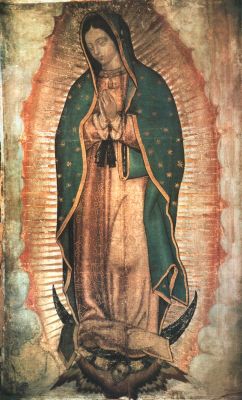
December 12 Feast of Our Lady of Guadalupe
December 12
Feast of Our Lady of Guadalupe

Aloha Friday Message – December 5, 2014 – Did you do that?

1449AFC120514 – Did you do that?

Read it online here, please.


ADAM! WHERE ARE YOU?

ADAM! WHERE ARE YOU?

Genesis 3:9-12 But the Lord God called to the man, and said to him, “Where are you?” He said, “I heard the sound of you in the garden, and I was afraid, because I was naked; and I hid myself.” He said, “Who told you that you were naked? Have you eaten from the tree of which I commanded you not to eat?” The man said, ”The woman whom you gave to be with me, she gave me fruit from the tree, and I ate.”

Adam was trying to shift responsibility from himself to Eve. It was clear to God that Adam had disobeyed because he and Eve knew they were naked. How and why is that important? It is because earlier in the story of Eden in the book of Genesis, we find in Genesis 2:25 And the man and his wife were both naked, and were not ashamed. Adam knew he had lost his innocence. He tried to blame it on Eve: “It’s her fault! She made me do it!” Eve was already two steps ahead of him. First, she lied to The Serpent. God had told Adam in Genesis 2:16-17And the Lord God commanded the man, saying, “Of every tree of the garden thou mayest freely eat: but of the tree of the knowledge of good and evil, thou shalt not eat of it: for in the day that thou eatest thereof thou shalt surely die.” When the Serpent was tempting Eve she told him in Genesis 3:1-3 “We may eat of the fruit of the trees in the garden; but God said, ‘You shall not eat of the fruit of the tree that is in the middle of the garden, nor shall you touch it, or you shall die.'” Notice that God said nothing about touching the tree!

As we continue in this account, you will recall that in Genesis 3:4-9, the story continues with – But the serpent said to the woman, “You will not die; for God knows that when you eat of it your eyes will be opened, and you will be like God, knowing good and evil.” So when the woman saw that the tree was good for food, and that it was a delight to the eyes, and that the tree was to be desired to make one wise, she took of its fruit and ate; and she also gave some to her husband, who was with her, and he ate. Then the eyes of both were opened, and they knew that they were naked; and they sewed fig leaves together and made loincloths for themselves. Eve’s defense was, “But God! We only wanted to be like you! It was the Serpent who tricked me!” And Adam? He was there, and he tried to pin it on her. Neither of them would take responsibility for what they had done; the first sin was disobedience with a nice dollop of lies for a topping. Also note that this first sin for earthlings was strikingly similar to Satan’s first sin – attempting to place himself equal to or above the God who had created him. Oh, Beloved! We still fall for this trick. And we still try to make excuses. What can we say about people who are supposed to be stewards of the earth and all its contents who will not take their stewarding responsibility seriously? Well, first, let’s think a bit about what responsibility is.

“Responsibility” implies there is a opportunity and duty to take control independently – as an individual or corporate entity – and to be accountable for the effects of how we exercise that control. We make the decisions based on a priori authorization. In The I.D.E.A.S. FORMAT ™ – Tools for Performance Improvement – Responsibility is defined as “A pledge to act consistently in the best interests of the party being served.” In the case of Adam and Eve, the party being served was God. Whatever they did or were going to do should have been done in the best interests of God. So what were HIS best interests?

God’s best interests in Creation were that he should create and love all the he created and that all of Creation should love an acknowledge him. Our First Parents failed the Responsibility Test through their disobedience. It became a pattern throughout scriptural history right up to this present moment. We fail to act consistently in the way God designed us to act – because we are sinners – and then we say it is someone else’s fault. That is irresponsible. God expects us to be responsible. He tells us that over and over in scripture. In Genesis 4:7 God told Cain, If you do well, will you not be accepted? And if you do not do well, sin is lurking at the door; its desire is for you, but you must master it.” Instead of mastering the sin of jealous anger, Cain lured his brother away to the field from which Cain had taken his offering and killed him there. Cain repeated the pattern of sin which started with his parents when God asked him “Where is your brother, Abel?” Cain’s reply was, “I don’t know. Am I my brother’s keeper?”

Jonah was held responsible for running away from God. The Apostles were responsible for spreading the Gospel. The Apostles appointed Deacons to be responsible for the  care of  the members of the Jerusalem church. In all these instances, the people involved carried out their responsibility. God respected and rewarded their decisions to act responsibly. He also respected and rewarded the decisions of the people who chose to act irresponsibly. He allowed them to choose their course of action, and rewarded them accordingly. Why does that happen? It is because God loves and respects his Creation – which includes us. He allows us to choose – we call it Free Will – to love and serve him or to disobey and refuse to serve. We, in turn should respect him and each other, and everything else that is a gift from God. But what is respect.

We often hear it said, “You have to earn my respect!” I think that’s backwards. That’s not the way God does things, so it’s not the way we should do things. Returning to THE I.D.E.A.S. FORMAT ™ Working Definitions, respect is the gift of courteous consideration of others. Respect is not earned because that would make it a commodity that can be bought and sold. Respect is a gift given unconditionally and continuously. To accept the gift is to honor the giver, and that is also respect. God expects us to be stewards of everything on earth. When we do that, we are being responsible and returning God’s respect as our gift to him. Respect that deep is called reverence. In scripture this deep feeling of awe is called “Fear of the Lord.” It is not a fear that is frightening, but a powerful understanding that knowing and obeying God is an amazing and humbling fact. For this reason our goal should be to know fear. That is the responsible thing to do.

Whatever, whenever, wherever, whoever, however, if ever, forever — at your service, Beloved

KnowFearFinal_Sm

To know him is to love him.


Creative Commons License
Aloha Friday Messages by Charles O. Todd, III is licensed under a Creative Commons Attribution-ShareAlike 3.0 Unported License
 

Scripture quotations from New Revised Standard Version Catholic Edition (NRSVCE) or Authorized (King James) Version (AKJV)

Aloha Friday Message – November 28, 2014 – Grateful Stewards

1448AFC112814 – Grateful Stewards

Read it online here, please.

Psalm 138:1-2aI will give thanks to you, O LORD, with all my heart, for you have heard the words of my mouth; in the presence of the angels I will sing your praise; I will worship at your holy temple.

1 Chronicles 16:34O give thanks to the Lord, for he is good; for his steadfast love endures forever.

1 Thessalonians 5:16-18Rejoice always, pray without ceasing, give thanks in all circumstances; for this is the will of God in Christ Jesus for you.

angels-sing-1Some of you already know this is my favorite Psalm. Every time we use it as the Responsorial Psalm, I think about how wonderful it will be to stand at the entry to the Throne of God. There will be myriads and myriads of Angels serving and listening to God. I imagine the sounds of singing and shouts of praise coming from billions and trillions of angelic voices will be awe-inspiring. Thinking about it is, of course, only a glimmer of what it will truly be like. Whatever I can conceive about it is a pale and poorly-extended metaphor – a paltry parable – but still illustrative of the eminently elegant Glory of Heaven. The parable I can grasp; the reality mystifies and humbles me. Part of the Preface of the Eucharistic Prayer consists of the invitation to sing the Sanctus – the Holy, Holy – and reads,

“And so, Lord, with all the Angels and Saints, we, too, give you thanks, as in exultation we acclaim …” In this verse the word for angels in Hebrew is אֱלֹהִ֣ים  ‘elohiym {el-o-heem’}. It is a plural word which translates as rulers, judges, divine ones (hence in some translations “gods”), or angels. In the Greek translation of the Old Testament, the Septuagint, the word used is ἀγγέλων angelōn {ang’-el-on}. When I hear that, it seems to me that as we sing that ancient and sacred hymn of praise, we are singing along with the Angels – those myriads and myriads – as a sort of rehearsal for when we are among the saints in heaven. I love singing with the Angels! I am so very grateful to have a chance to sing with them here, in this world, knowing that soon and very soon I will go to see the King and sing to him in person. I choose to offer up that hymn of praise gratefully and joyfully; it’s not a matter of obligation at all because it is a moment of Joy. Here’s a little story about making choices. You might have heard before. It’s about a guy named J. J., and his friend.

   J. J. and I worked together building and repairing transmission towers for cellular networks. J. J. is the kind of guy you love to hate. He is always in a good mood and always has something positive to say. When someone would ask him how he was doing, he would reply, “If I were any better, I would be twins!”

    He was a natural motivator. If an employee was having a bad day, J. J. was there telling the employee how to look on the positive side of the situation. Seeing this style really made me curious, so one day I went up and asked him, “I don’t get it! You can’t be a positive person all of the time. How do you do it?”

    He replied, “Each morning I wake up and say to myself, you have two choices today. You can choose to be in a good mood or … you can choose to be in a bad mood. I choose to be in a good mood. Each time something bad happens, I can choose to be a victim or…I can choose to learn from it. I choose to learn from it. Every time someone comes to me complaining, I can choose to accept their complaining or … I can point out the positive side of life. I choose the positive side of life.

    “Yeah, right! It’s not that easy,” I protested.

    “Yes, it is,” he said. “Life is all about choices. When you cut away all the junk, every situation is a choice. You choose how you react to situations. You choose how people affect your mood. You choose to be in a good mood or bad mood. The bottom line: It’s your choice how you live your life. You can be angry about what you don’t have or grateful for what you do have. I choose to be grateful. The more my life is filled with gratitude, the more I find for which to be grateful.”

    I reflected on what he said. Soon thereafter, I left the Tower Industry to start my own business. We lost touch, but I often thought about him when I made a choice about life instead of merely reacting to it. Several years later, I heard that he was involved in a serious accident, falling some 60 feet from a communications tower. After 18 hours of surgery and weeks of intensive care, he was released from the hospital with rods placed in his back. I saw him about six months after the accident. When I asked him how he was, he replied, “If I were any better, I’d be twins! Hey! Wanna see my scars?”

    I declined to see his wounds, but I did ask him what had gone through his mind as the accident took place.
    “The first thing that went through my mind was the well-being of my soon-to-be born daughter,” he replied. “Then, as I lay on the ground, I remembered that I had two choices: I could choose to live or…I could choose to die. I chose to live.”

“Weren’t you scared? Did you lose consciousness?” I asked.

    He continued, “The paramedics were great. They kept telling me I was going to be fine. But when they wheeled me into the ER and I saw the expressions on the faces of the doctors and nurses, I got really scared. In their eyes, I read ‘he’s a dead man’. I knew I needed to take action.”

    “What did you do?” I asked. “Well, there was a big burly nurse shouting questions at me,” said J. J. “She asked if I was allergic to anything. ‘Yes,’ I replied. The doctors and nurses stopped working as they waited for my reply. I took a deep breath and yelled,

 ‘Gravity!!'”

    Over their laughter, I told them, “I am choosing to live. Operate on me as if I am alive, not dead!”

    He lived, thanks to the skill of his doctors, but also because of his amazing attitude – his choice to be grateful instead of hateful. I learned from him that every day we have the choice to live fully. Attitude, after all, is powerful because it is our attitude that sets our altitude and that sets our capacity for gratitude. Gratitude is the first and most important characteristic of a Good Steward.

There are days, I confess, when J. J.’s attitude seems impossibly bright, even wacky or foolish. Those are the days when my own little pity party is running full bore and I’m a first-class curmudgeon. That is when I most need to sing with the Angels, and sure enough God sends one along in a friend, an email, or maybe a few measures of a well-loved hymn that mysteriously enters my mind. Sometimes, it takes a reminder that is less gentle such as an angry response to my grouchy behavior. I can choose not to be grouchy about what I don’t have or about having something I don’t want. I have often said “Happiness in not in having what you want, but in wanting what you have.” To that I would add, “And to be grateful for it – so grateful that you share it.” Of all the things I have, I am most grateful for the gift of Faith and  my faith is multiplied as my gratitude is multiplied. That always happens when I share my faith, especially with you, Beloved! Stewardship is caring for and sharing of the gifts that matter to others. Therefore let us choose grateful stewardship, Beloved, for this is the will of God in Christ Jesus for us.

Whatever, whenever, wherever, whoever, however, if ever, forever — at your service, Beloved.

Yesterday was Thanksgiving. We want you to know that we are thankful for your participation in the MBN. All of us who take the time to pray for, with, and about each other become a source of great blessing for each of us. As the Apostle Paul said in Ephesians 5:19-20 Sing psalms and hymns and spiritual songs among yourselves, singing and making melody to the Lord in your hearts, giving thanks to God the Father at all times and for everything in the name of our Lord Jesus Christ. May God be with you and may our Almighty Everliving God, or El Shaddai Olam, bless you always and all ways in all things both now and forever. Amen.


Creative Commons License
Aloha Friday Messages by Charles O. Todd, III is licensed under a Creative Commons Attribution-ShareAlike 3.0 Unported License

Aloha Friday Message – November 21, 2014 – Matters of the Heart

1447AFC112114 – Matters of the Heart

Read it online here, please.

Genesis 6:5 And God saw that the wickedness of man was great in the earth, and that every imagination of the thoughts of his heart was only evil continually. Authorized (King James) Version (AKJV)

Genesis 8:20-21 Then Noah built an altar to the Lord, and took of every clean animal and of every clean bird, and offered burnt offerings on the altar. And when the Lord smelled the pleasing odor, the Lord said in his heart, “I will never again curse the ground because of humankind, for the inclination of the human heart is evil from youth; nor will I ever again destroy every living creature as I have done. New Revised Standard Version Catholic Edition (NRSVCE)

Psalm 10:13 Why do the wicked get away with despising God? They think, “God will never call us to account.” New Living Translation (NLT)

1 Peter 1:22 Now that you have purified your souls by your obedience through the Spirit so that you have genuine mutual love, love one another constantly with a pure heart.

The word heart is mentioned more than 500 times in the Bible. It is the “place” where deep thought, imagination, intent, or purpose is framed and formed. The concept first appears in the Bible in Genesis 6:5, and is given as the reason for God’s decision to send the Great Flood. After the flood waters subsided, Noah offered a sacrifice of thanksgiving and praise to God, and he promised (hence rainbows) never again to destroy all life in that way.

Fast forward to David’s lament and supplication to God about the persistent problem of the wicked, the people who are enemies of God because of their selfishness and arrogance. The wicked person puts the laws of God far from himself, and even scoffs at the idea that God is aware of that person’s evil behavior. David calls upon God to disarm the wicked and take away their power to oppress others. Elsewhere in the Psalms, as we know, the Psalmist says the just – or righteous – who are upright in heart rejoice in the Lord with praise. (See Psalm 32:11, Psalm 64:10, and Psalm 97:10-11) The righteous love the Lord and serve him and their fellow creatures. They preserve the land and everything in it. They nurture the oppressed, give alms to the poor, and bring peace in times of trouble. They submit to God by being merciful, for God is merciful. Those who do not submit to God in that way condemn themselves; that is what prompts this message today.

Today I am thinking about you and the goodness of your heart. There is a place in my heart for each of you. This means that it is not really my heart, but our heart. In contrast, I think of the cruel and arrogant hearts that claim to serve God but instead give themselves over to hatred, murder, violence, and a culture of death; their hearts are in darkness. Beloved, where is your heart? What is in your heart today? What imaginations do you form in the depths of your being and how are they like – or unlike – the God who created you in his image? If you could see your heart, or better, if WE could see your heart. What would we see? Would it be all smooth and beautiful, full of light and joy, a paragon of charity and devotion to God? Or would it be like mine, tarred with sin, scarred with wounds, irregular and untidy? Here is a little story by that famous author, Anonymous, that illustrates what I mean.

A Piece of My Heart

One day a young man was standing in the middle of the town proclaiming that he had the most beautiful heart in the whole valley. A large crowd gathered and they all admired his heart for it was perfect. There was not a mark or a flaw in it. Yes, they all agreed it truly was the most beautiful heart they had ever seen. The young man was very proud and boasted more loudly about his beautiful heart.

Suddenly, an old man appeared at the front of the crowd and said “Why, your heart is not nearly as beautiful as mine.” The crowd and the young man looked at the old man’s heart. It was beating strongly, but it was full of scars. It had places where pieces had been removed and other pieces put in, but they didn’t fit quite right and there were several jagged edges. In fact, in some places there were deep gouges where whole pieces were missing.

The people stared — how can he say his heart is more beautiful, they thought? The young man looked at the old man’s heart and saw its state and laughed. “You must be joking,” he said. “Compare your heart with mine. Mine is perfect and yours is a mess of scars and tears.”

“Yes,” said the old man, “yours is perfect looking but I would never trade with you. You see, every scar represents a person to whom I have given my love – I tear out a piece of my heart and give it to them, and often they give me a piece of their heart which fits into the empty place in my heart, but because the pieces aren’t exact, I have some rough edges, which I cherish, because they remind me of the love we shared.”

“Sometimes I have given pieces of my heart away, and the other person hasn’t returned a MendedHeartpiece of his heart to me. These are the empty gouges — giving love is taking a chance. Although these gouges are painful, they stay open, reminding me of the love I have for these people too, and I hope someday they may return and fill the space I have waiting. So now do you see what true beauty is?”

The young man stood silently with tears running down his cheeks. He walked up to the old man, reached into his perfect young and beautiful heart and ripped a piece out. He offered it to the old man with trembling hands. The old man took his offering, placed it in his heart and then took a piece from his old scarred heart and placed it in the wound in the young man’s heart. It fit, but not perfectly, as there were some jagged edges. The young man looked at his heart, not perfect anymore but more beautiful than ever, since love from the old man’s heart flowed into his. ~ By that famous author, Anonymous.

I have room in my heart for the people I love, and parts of my heart are built of the love I receive from others. Is there room in my heart, though, for those who hate me? Can I hold my arms open to embrace those who vow to do me harm because of the evil in their hearts? Evil acts are abhorrent to God and to us who are made in his image. Evil is offensive to anyone who knows and truly understands Love. Nonetheless, we must make the adage “Love the sinner, hate the sin” more than just a moral platitude. Why? Because of what evil does to the people who commit it. We cannot choose superficial moral indignity and be done. That would be choosing to leave those in the grip of evil in the darkness they themselves embrace. We cannot do that because we are commanded not to. Let’s look at Matthew 5:44-45:

But I say to you, Love your enemies and pray for those who persecute you, so that you may be children of your Father in heaven; for he makes his sun rise on the evil and on the good, and sends rain on the righteous and on the unrighteous.

Does that mean we just let evil run amok and don’t take a stand against it? Of course not! We are to oppose evil, but pray for our enemies. So, yes, I am thinking of the atrocities that have happened this week – and for decades before – in Jerusalem, Darfur, Colombia and Mexico, Somalia, Nigeria, Rhodesia, Sudan – especially Darfur – and in Ethiopia, Zambia, Zaire, Libya, Mali, Democratic Republic of Congo, Central African Republic, Iran, Iraq, and Afghanistan, Egypt and Syria, the Philippines, N&S Korea, Syria, Israel and Palestine. No, we stand up to the evil, but we pray for those souls who are lost to it. That is the only way – blessed by God – that we can hope to get past this terrible time. Many speculate that it will get a lot worse before it even starts to get better. That is especially true if we do not call upon God to help and defend the innocent, the righteous, the persecuted, and the lost – even if the lost are part of ISIS/ISIL.

BattleKneesMed

Get on your knees and fight like the Devil himself is against you – BECAUSE HE IS!

Pray for ALL the people. Pray about the hearts in your heart. Pray with anyone and everyone who has loved, does love, or will love you. Remember, “When we pray FOR each other, we act as intercessors, “in-the-place-of” praying. It’s making a prayer on behalf of someone else rather than on behalf of ourselves.

 “When we pray ABOUT each other, we’re making prayers that are intended to be blessings. We ask God for this favor or that outcome for one another. I might pray for your health or you might pray for me to find strength in a trial.

 “When we pray WITH each other, ah, there’s a power in that. Usually this is focused on something outside of both of us, like the people who are suffering in troubled areas of the world, or a child who has been kidnapped.

Whatever, whenever, wherever, whoever, however, if ever, forever — at your service, Beloved

chick

Creative Commons License
Aloha Friday Messages by Charles O. Todd, III is licensed under a Creative Commons Attribution-ShareAlike 3.0 Unported License

Aloha Friday Message – November 14, 2014 – I Ain’t Lyin’

1446AFC111414 – I Ain’t Lyin’!

Read it online here, please.

John 8:44 – You belong to your father, the devil, and you want to carry out your father’s desires. He was a murderer from the beginning, not holding to the truth, for there is no truth in him. When he lies, he speaks his native language, for he is a liar and the father of lies. New International Version

This Sunday, many of us will hear a reading from Proverbs 31. I have mentioned this section of scripture before when I wrote about the Virtuous Woman. Check that last link for a list of 10 Virtues of the Proverbs 31 Woman. I have known a number of women who are worthy of the title, Virtuous Woman – or Proverbs 31 Woman. If you look through that list of 10 virtues, you will perhaps think of someone who fits most, if not all, of those descriptions. For the passage about the Virtuous Woman in Proverbs 31, see Proverbs 31:10-31.

I’ve made my own little list of Characteristics of the Proverbs 31 Woman based on that passage. It looks like this:

1)    Faithful – She is first and foremost always faithful to God in Christ Jesus. She loves Jesus enough to do whatever he says.

2)    Generous – She is always ready to give or to share whatever she has. She will even seek out what she does not have if she perceives someone else needs it.

3)    Trustworthy – She has irreproachable integrity, and everyone knows she keeps her promises, and can be counted on to speak and act truthfully.

4)    Conscientious – She is vigilant. She prudently watches for things that contradict her life’s mission and values.

5)    Industrious – She finds, or makes, ways to sustain and improve the lives of the people she loves.

6)    Confident – She is poised and presents herself with unmistakable dignity in everything from housework to career work.

7)    Beautiful – She may or may not be considered physically beautiful, yet there is an attractiveness seen in her smile, heard in her voice, and felt in her company. She puts the hearts and minds of others at ease.

In today’s world, such a list is deemed overly-optimistic, or maybe even insulting and unrealistic. Some might say that no one can live up to that imaginary standard of excellence. Personally, I think that’s a lie. As I said, I’ve known, or known about, some extraordinary virtuous women – and valorous men; most of them can nail that list of seven characteristics. There’s a feminine character portrayed in the Bible that exceeds all of these virtues listed in Proverbs 31, on the Virtuous Woman website, and in this short list. I am referring to Wisdom. In much of the Wisdom Literature in the Bible, Wisdom is personified as being female. Wisdom was with the Trinity when the universe was created. Wisdom is the cooperating accompanist to the symphony of creation, “the music of the spheres.” Wisdom is to be desired above all else, and is more valuable than any treasure one might possess.

The passage describes a woman who could be the composite of everything ideal in a wife. She is the accomplished woman of wide-ranging intelligence, pleasant beauty, and unquestionable, invincible faith in God. Her love for God and his guidance is epic, unswerving, and the pattern for all her human relationships. She is the paragon of practicality and the quintessence of creativity simultaneously. She is wise, humorous, attractive, modest, honest, the model of integrity, and does all things well. She is A Virtuous Woman. The first use of the phrase a virtuous woman occurs in the story of Ruth – one of the two books in the Bible named after a woman (Esther is the other one). Catholic scripture includes a third book, Judith, which is an exciting tale about a feisty and daring Jewish widow who bested an enemy general and saved her community.

In Ruth 3:11 we see this term for the first time as Boaz is speaking to Ruth: And now, my daughter, fear not; I will do to thee all that thou requirest: for all the city of my people doth know that thou art a virtuous woman. The word used in Hebrew is חַיִל; chayil {khah’-yil}. It is a word that signifies valor, valiance, strength, riches, might, wealth, efficiency. And here’s a little something to think about: It is used when referring to both men and women who are extraordinary examples of great courage, strength, integrity, and most importantly love of and reverence for God and his commands. So Boaz was saying to Ruth that he would be a helper and protector for her and her mother-in-law (Naomi) and he knew it would be OK to help her even though she was a foreigner from Moab (an enemy state) because she was an exceptional woman. I am not lying about the fact that such women do indeed exist.

By now you may be wondering why I started this out with Jesus’ argument against the claims of his listeners that they, the Jews, were the children of Abraham. His point in verses 42 and 43 was that because they refused to listen to him, they were not behaving as the children of Abraham should. He said to them, “If God were your Father, you would love me, for I came from God and now I am here. I did not come on my own, but he sent me. Why do you not understand what I say? It is because you cannot accept my word.” And what “word” is that? Let’s look at a handful of main points in Jesus’ teaching.

1)    Love God with all your heart and soul and strength and mind, and Love your neighbor as yourself.

2)    No one comes to the Father unless the Father calls him; no one comes to him except through me.

3)    Repent and believe the Gospel.

4)    Love one another as I have loved you.

There may be more you would want to add to the list, but I’d like to just stick with these for now. These are things that really make Satan angry when we make them part of our lives. He works very hard to make these things undesirable and constantly works to undermine the love and trust we have for God by guiding us into sin through misdirection. I have some examples I want to share with you. Some of these may tick you off or offend you; they’re not very “PC,” so let’s start with that – “Political Correctness.”

It makes sense that one should not be deliberately offensive on the basis of a personally-held prejudice. Behaviors and laws that result in persecution of others because of their personal characteristics should be examined carefully to see if they are equitable for all. There is a difference between EQUITY and EQUALITY. God is equitable, as we read in Psalm 96:10Say among the nations, “The LORD reigns.” The world is firmly established, it cannot be moved; he will judge the peoples with equity. We see the same idea in Psalm 9:8 He rules the world in righteousness and judges the peoples with equity. To be equitable is to be fair and upright, righteous. Equity aims to give access to what people need for a full and successful life. Equality aims to give everyone access to the same things on the assumption that they have the same origins and requirements. Both try to impose impartiality in justice, but equity is more evenhanded. When equality is imposed, it is often the case that a minority need affects the entire population rather than just restoring requirements to the minority. The effect is that “being politically correct” facilitates relativism – the belief that there is no independent, inviolate Truth: “What’s true for you may not be true for me.” That’s a lie. There is an independent, inviolate Truth which is true regardless of your knowledge of it or belief in it. So what about relativism?

In relativism there are no absolutes – morality is based on social norms internal to the community and not on external standards not originating in the community. Truth, Justice, and the concept of right and wrong are fluid. Relativism and Political Correctness erode virtues, and therefore are inappropriate for Virtuous Women and Valorous Men. Being kind and equitable is OK in any system of morality, but in relativism “kind” and “equitable” have inconstant meanings. Relativism leads us to accept other things that are not good for us on the basis that others are doing X so it must be OK, therefore we can to X, too. That’s often a lie. A good example is yoga. Lots of people do yoga without realizing that it is something every Christian should absolutely avoid. The purpose of yoga is to separate life from reality. Its philosophy and poses are for homage to Hindu deities. It is an insidious method of drawing us from the pure and wholesome worship of God into a pagan, pantheistic lifestyle that can have seriously deleterious effects on our spiritual life. Most people will tell you that yoga is a physical exercise, not spiritual. It’s just the opposite. Try Pilates instead. Same benefits, none of the dangers associated with spiritual self-gratification “in union with Brahman” instead of spiritual service to Jehovah. Learn more here. There are five separate articles. Read them all.

Self-gratification is behind the epidemic of social media and the ubiquitous selfies we send. We want to be important so we broadcast to the world what we had for lunch, how our “significant other” treated us this morning (really?), and artsy little self-affirmations that tell the world we’re struggling through something horrible and need their sympathy. None of can do anything wrong or stupid anymore because there’s always some self-sufficient guru who can give us fashionable spirituality that is noncommittal and unstructured. Is everyone who shoots a selfie a vaporous nobody? No, of course not; we want to share our happiness – or miseries – with others, often using the reasoning that they should know they’re not the only ones suffering. That’s not inherently problematic – unless it leads us to cease to offer up our suffering to God for the sake of others. To keep it all for ourselves so we can buy sympathy is a special form of selfishness.

SerpentEdenSelfishness – the desire to satisfy our own self-interests – goes back to Eden. It is the basis of the first lie Satan told humanity: “You want to be like God; he doesn’t want you to do that, but this act of defiance will make you just like him.” According to Genesis 3:3, Eve responded with the first human lie. In 2:17 God told Adam, “… you must not eat from the tree of the knowledge of good and evil, for when you eat from it you will certainly die.” Eve told the Serpent, “but God did say, ‘You must not eat fruit from the tree that is in the middle of the garden, and you must not touch it, or you will die.'” They wanted a “good thing,” to be like God; Satan got them to believe they were not already like God!

These are but a few of the things – the lies – that tarnish the virtue and valor of women and men. All of them are things we innately know are dangerous to us. All of them are things that can lead us to sin and by which we move our lives farther from God. Sin is moving our lives farther from God. I want you moving the other direction, closer to God. Any and all of us can be taken in by these lies – I certainly have, so I know it does happen. When you were a kid, it was important that you learn not to touch the hot stove. You’re not a kid any more. Learn to stay away from the other things that can burn you. I’m not one of those gurus telling you “this is going to change your life.” I’m just another stumbling sinner that gets tripped up by things I pick up that are bad for me. I want to share what I’ve learned because learning it has been a blessing to me so I want it to bless you, too.

Whatever, whenever, wherever, whoever, however, if ever, forever — at your service, Beloved!

chick

Creative Commons License
Aloha Friday Messages by Charles O. Todd, III is licensed under a Creative Commons Attribution-ShareAlike 3.0 Unported License

Aloha Friday Message – November 7, 2014 – Illuminate

1445AFC110714 – Illuminate

Read it online here, please.

Hebrews 10:32But call to remembrance the former days, in which, after you were illuminated, you endured a great fight with afflictions; King James 2000 Bible

Remember those earlier days after you had received the light, when you endured in a great conflict full of suffering. New International Version

But you must continue to remember those earlier days, how after you were enlightened you endured a hard and painful struggle. International Standard Version

John 1:5, 9The light shines in the darkness, and the darkness did not overcome it. He was the true light that enlightens everyone coming into the world.

John 8:12 – Again Jesus spoke to them, saying, “I am the light of the world. Whoever follows me will never walk in darkness but will have the light of life.”

Matthew 5:14a, 16b“You are the light of the world…let your light shine before others, so that they may see your good works and give glory to your Father in heaven.” New Revised Standard Version Catholic Edition (NRSVCE)

You can probably see what’s on my mind today. Yes, the Light. Have you ever heard – or said – a sarcastic remark like, “Oh really? Why don’t you enlighten me?” We might say to someone, “Let me see if I can shed a little light on the subject.” These kinds of statements came to mind as the midterm election results were made known. I felt that some of the results were really disappointing, and in those matters where I felt that way, the proponents of those measure or supporters of those politicians seemed to smugly contend it was they who had been in the right all along implying I was the stupid one for opposing their superior wisdom. And then I realized that getting my way might not be what God had in mind.

It certainly turned out that way for the Priests, Scribes, and Pharisees in Jesus’ day. They thought they had it all figured out and were adamant about not changing their outlook on life or their hold on the populace. Jesus really messed up their game plan, and from their point of view, God was doing exactly the right thing by getting Jesus out of the way. Of course, we are enlightened by the Gospel and know that God’s plan was to have Jesus’ way be the Way, the Truth, and the Life. It’s always easier to believe you’re right when you’re sure the other fellow is wrong. That strategy always works well – in the dark! “In the Light of Day,” things can look a lot different. It’s “putting things in the right light” that frequently fumbles us into foolishness. That’s because we often think that it’s our light that is the right light. We forget that God is only interested in One Light – HIS. That is the only Light which illuminates our hearts and minds so that the Light of The Spirit becomes the Light of our lives. It is the Light of Love ≡ God.

I know you’re a busy person, and you have a lot of demands on your time. Still, I’m going to ask you to read the entire tenth chapter of Paul’s letter to the Hebrews. This is such an important letter! It is masterfully written and portrays Christ as the sole mediator between God and all earthlings. This chapter describes how the sacrifices made by the Priests under The Law were inadequate insofar as having redemptive power. He demonstrates that there is no longer any need for that kind of sacrificial offering because Christ’s sacrifice atones for all sin. The enlightenment, illumination, of which Paul speaks comes through Baptism and the Word. While at some point the recipients of this letter had endured persecution and loss of wealth, prestige, and security, Paul urges them to persevere, to hold on to the truth, or we might say to stay in the Light of His Glory and Grace.

If we have the Light, then we should have no need for Darkness; if we possess the Truth but renounce our allegiance to that Truth though our actions and words, it is unlikely – in Paul’s view – that we will return to the Truth and are therefore even more liable to severe judgment. There is One who is Light; if we try to take the place of that light instead of being placed in the Light, we commit a huge offense. As Paul says in Hebrews 10:31, “It is a fearful thing to fall into the hands of the living God.” Sometimes we are so sure that we must be right that we put ourselves in the position of saying God is wrong. When we think about that, it sounds like a really stupid thing to do; but we do it. Remember what Isaiah said: Who can fathom the Spirit of the LORD, or instruct the LORD as his counselor? Whom did the LORD consult to enlighten him, and who taught him the right way? Who was it that taught him knowledge, or showed him the path of understanding? (Isaiah 40:13-14) That brings to mind one of my favorite aphorisms: If you really knew as much as you think you know, you’d know it’s not enough. How can it be then that Christ in the Light of the World, and so am I?

LightOfTheWorldIn John 9:4-5, Jesus says, “We must work the works of him who sent mewhile it is day; night is coming when no one can work. As long as I am in the world, I am the light of the world.” And up at the beginning of this essay we have John 8:12 – Again Jesus spoke to them, saying, “I am the light of the world. Whoever follows me will never walk in darkness but will have the light of life.” To follow him, we must follow in the light for in the darkness no one can see where he’s going (see John 12:35“You are going to have the light just a little while longer. Walk while you have the light, before darkness overtakes you. Whoever walks in the dark does not know where they are going.”) When the Light is in us, we carry it and thereby share it. We should therefore always pray that our own darkness will not obscure the Light given to us. There’s a great little hymn that conveys that idea:


OPEN MY EYES, THAT I MAY SEEMusic and Text: Clara H. Scott, 1841-1897
1 Open my eyes that I may see
Glimpses of truth Thou hast for me;
Place in my hands the wonderful key
That shall unclasp and set me free.
ChorusSilently now I wait for Thee,
Ready, my God, Thy will to see;
Open my eyes, illumine me,
Spirit Divine!
2 Open my ears that I may hear
Voices of truth Thou sendest clear;
And while the wave notes fall on my ear,
Everything false will disappear.
3 Open my mouth and let me bear
Tidings of mercy everywhere;
Open my heart and let me prepare
Love with Thy children thus to share.
4 Open my mind that I may read
More of Thy love in word and deed;
What shall I fear while yet Thou dost lead?
Only for light from Thee I plead.

Light-of-the-World_1433-1024x768The illumination we need comes to us via the Holy Spirit, the LORD, the Giver of Life and Light. Even if we have days when we have to endure “a hard and painful struggle,” the Light is also our strength and guide. It is the Light of Love, the brightest and best of all Light. When his Light shines from you, you can live out the Gospel as in Matthew 5:14a, 16b“You are the light of the world…let your light shine before others, so that they may see your good works and give glory to your Father in heaven.”

Whatever, whenever, wherever, whoever, however, if ever, forever — at your service, Beloved


Creative Commons License
Aloha Friday Messages by Charles O. Todd, III is licensed under a Creative Commons Attribution-ShareAlike 3.0 Unported License

Aloha Friday Message – October 31, 2014 – Delighted to Be Here

1444AFC110114 – Delighted to be here

Read it online here, please.

Romans 5:5 – Now this hope does not disappoint us, because God’s love has been poured out into our hearts by the Holy Spirit, who has been given to us. The Holy Bible: International Standard Version® Release 2.1 Copyright © 1996-2012 The ISV Foundation

Good morning, Beloved. Here we are at the end of October. It seems this year has flown by so quickly; that supports the old adage “Time flies when you’re having fun.” It has been an enjoyable year for Crucita and me. Today, 10/31/14, is the 304th day of 2014, and also the 304th day of “retirement.” Many of you know I still put in 16 hours a week at Hawaii Home Infusion Associates, so I’m not completely out of the workforce; but still, I’m not working 40+ hours a week either. It’s nice. One of the best things about it is that we get to sleep longer – and more often – than we did when we were working full time. It was one of the things I was really looking forward to as we planned our retirement date. Another really great aspect of this new lifestyle is that we spend more time together, and that was another benefit we looked forward to. We got a lot of what we hoped for, and to our surprise, not as much of what might have given us apprehension. In fact, as we look back over the year, we have been blessed in unexpected ways, in ways we could not have hoped for because we didn’t even know about them. God did, though, and blessings definitely changed our lives. Those changes open the way to even more blessings.

Perhaps you are thinking now that it’s a little out of character to point this out. As Christians, we’re not really supposed to brag about what God has given us. All of us are given gifts – we’ve shown that many times in these messages – and all of us make choices about if, when, where, and how we use those gifts. Crucita and I have been given many gifts. One of the best gifts is to understand the necessity of using those gifts. It almost becomes redundant to talk about being gifted with the gift of gifts which can be gifted to others. Try saying that three times fast! But this is a concept that is Biblical – gifts are multiplied. Let’s look at John 1:16From his fullness we have all received, grace upon grace. Perhaps this could mean we have received the grace of being in Christ instead of under the Law. I can see that point of view; however, for me it feels more like we are given the grace – the unmerited favor – to receive grace. When we choose to accept that grace to receive grace we are open to additional gifts of grace so that the graces we have are always greater than our capacity to receive them – our cup overflows. This super-abundant provision of blessings is God’s modus operandi; is just the way he rolls. His blessings are always available to us. We have only to accept them, and they are ours.

Let’s look back at Jeremiah 9:23-24 where we read – Thus says the Lord: Do not let the wise boast in their wisdom, do not let the mighty boast in their might, do not let the wealthy boast in their wealth; but let those who boast boast in this, that they understand and know me, that I am the Lord; I act with steadfast love, justice, and righteousness in the earth, for in these things I delight, says the Lord. Living within the blessings of God entails obedience; for the people living under the First Covenant of the Law, it meant obeying the Law – and as we saw last week that Law was based on love of God and neighbor. When God chose a People for his own, he wanted them to live in his blessing and grace; they were to show the rest of the world the goodness and wisdom of God. Other nations would look at Israel and say, ‘Surely this great nation is a wise and understanding people.’ (See Deuteronomy 4:6-8 and 2 Samuel 7:23).

In Isaiah 60:3 God tells Israel “All nations will come to your light; mighty kings will come to see your radiance.” God wants to be known by all nations. He chose Israel as his elect people to become a nation of “a kingdom of priests and a holy nation.” (See Exodus 19:6) God’s plan of Salvation – the covenant spoke to Adam and Eve in Eden – included all people of all times and all places, of all nations and all souls. God’s intent was that Israel would inspire other nations to recognize, love, honor, and obey him. In so doing they – Israel – would be blessed because they brought blessings to the entire world and all of history. It seems like an incredibly simple plan: Act with righteousness and you will be righteous. Show others your righteousness and they will desire righteousness. Those who desire righteousness will receive it and much, much more. Jesus summed it up this way: In the same way, let your light shine before others, so that they may see your good works and give glory to your Father in heaven. (See Matthew 5:14-16) Crucita and I have been blessed to be candles lit and placed on the lampstand. It is grace upon grace. It is more than we could have ever hoped for.

Therefore, of course, we are not disappointed but instead delighted because we are so blessed. I want to share with you what that means the way it appears in scripture. In the Old Testament the word used is אֶשֶׁר   ʼesher { eh’-sher} as in Deuteronomy 33:29Happy are you, O Israel! Who is like you, a people saved by the Lord, the shield of your help, and the sword of your triumph! Your enemies shall come fawning to you, and you shall tread on their backs. It is happiness. That is true in the New Testament as well, as in The Beatitudes – ” Blessed are” is μακάριος  (makários) { mak-ar’-ee-os} – to be happy because God has conferred his benefits in advantageous ways. Because of his extravagant generosity, those benefits and the happiness they bring are blatantly obvious to the people around us. Should we ever for some ridiculous reason decide we wanted to hide our happiness we derive from him, it would be impossible. Let me give you an example from a recent Bible study at our church.

There was a question about what we were reading in 1 Peter. The commentator asked “What are some admirable traits you recognize in … non-Christians in your civic community.” In our discussion we listed many of the same traits – graces – that we see (or expect) in Christians. One member in the group stated that some non-Christians are more “Christian” than some of us who claim to be Christian. Does that sound familiar? It is called secular ethics or secular moralism. It purportedly comes from human abilities such as logic, what some would call moral intuition, and is not derived from any external supernatural power (well, maybe “The Force” for some folks). There are lots and lots of good, moral, upstanding, gentle, kind, and loving people who want nothing to do with God; they reject the idea and the necessity of God and believe that what they are is entirely internal to themselves. Their inner nature is a god which is mightier in their lives than the God worshipped in the Abrahamic religions. What they do not know is that it is God – not themselves – who has blessed them with these graces which they choose to accept and use without acknowledging the Giver of all Good Gifts. They are happy, they make others happy, but they do not make God happy because they deny his impact on and authority in their lives. We know better than that, you and I, because we know the Trinity and their place in our lives.

Paul tells us that is “ because God’s love has been poured out into our hearts by the Holy Spirit, who has been given to us.” Last week we ended with Jesus’ command to “Repent, and believe in the gospel.” The week before we concluded that our hope is in trusting that God has the power and intent to keep his promises. This week our conclusion is that God blesses us because it pleases him to do so – it makes him happy. Did you know you can do that – you can make God happy? In the Old Testament it is to kneel down – בּרך (bârak) { baw-rak’} before him in adoration thereby humbly acknowledging his Majesty and Glory shown through his blessing and protection. In the New Testament it is εὐλογία (eulogia) {yoo-log-ee’-ah}  from eu “good” and logia “words” we have acts and speech which is eloquent adoration, celebration through praise.

BlessTheLordYou might recognize this as the root of the word eulogy. We make God happy by giving him praise – simply acknowledging and using the graces he has poured out into our hearts by the Holy Spirit. When you say, “God has certainly blessed you / him / her / us / them / me,” you are delighting (blessing) God – making him happy –and for that God will delight you with another blessing for you. Is that cool or what?!?! This Little Light of mine can’t help but shine, shine, shine because I/you/we can – as the Psalmist said in Psalm 103:1-2 – Bless the Lord, O my soul, and all that is within me, bless his holy name. Bless the Lord, O my soul, and do not forget all his benefits!

And now you know why my emails end with America Bless God!

Whatever, whenever, wherever, whoever, however, if ever, forever — at your service, Beloved!


Creative Commons License
Aloha Friday Messages by Charles O. Todd, III is licensed under a Creative Commons Attribution-ShareAlike 3.0 Unported License
Pages Email Newsletter Categories Archives Connect
  • Connct to us here