Aloha Friday Message – October 24, 2014 – All you need is LOVE

1443AFC102414 – All You Need is LOVE

Read it online here, please

Matthew 22:37-40 – Jesus said to him, “You must love the Lord your God with all your heart, with all your soul, and with all your mind. This is the greatest and the first commandment. The second resembles it: You must love your neighbor as yourself. On these two commandments hang the whole Law, and the Prophets too.”

This is from this Sunday’s reading. It is also a passage I have quoted in several posts over the years. It is a quotation that stands as a ruler against which I measure my faith and the actions my faith produces. This statement appears in three of the Gospels, and it is drawn from two sources in the Old Testament. I have found it instructive to look at it using comparison and contrast. Here are two tables that list the origins of these concepts.


Deuteronomy


Matthew


Mark


Luke

6:5

22:37

12:30

10:27

Therefore, you shall love the LORD, your God, with all your heart, and with all your soul, and with all your strength.   You shall love the Lord, your God, with all your heart, with all your soul, and with all your mind.   You shall love the Lord your God with all your heart, with all your soul, with all your mind, and with all your strength.   You shall love the Lord, your God, with all your heart, with all your being, with all your strength, and with all your mind,
וּבְכָלמְֿאֹדֶ֑ךָ = kol + meode = all your might, strength, intensity
διανοια dianoia {dee-an’-oy-ah} mind, understanding, imagination


Leviticus


Matthew


Mark


Luke 10:27

19:18

22:39

12:31

You shall love your neighbor as yourself. I am the LORD.   You shall love your neighbor as yourself. The whole law and the prophets depend on these two commandments.   Love your neighbor as yourself. No other commandment is greater than these.”   and love your neighbor as yourself.

(Spoken by a lawyer – “scribe” – to Jesus)


In the first set of comparisons, you may notice that in Deuteronomy the words applied to the act of love are heart, soul, and strength. The Hebrew words used to express “heart and soul” are לֵבָב (lebab) {lay-bawb’} and נֶפֶשׁ nephesh {neh’-fesh}. Both of these express the concept of the “inner man.” Lebab – heart – is the inner man’s conscience, his will, his understanding. Nephesh – soul – is an expression of being a living entity with life in the blood, the man himself. In the passages from the Gospel, I emphasized the word mind. That word does not appear in the Old Testament passages. There are about 20 or so Old Testament verses that say “with all your heart, and with all your soul.” It is an expression that signifies complete dedication and obedience. The connotation of “strength” in Deuteronomy 6:5 speaks to the idea of holding on to that dedication and obedience regardless of any pressures – temptations or forces – to “give up on God.”

The word for “mind” in these Gospel passages is διανοια dianoia {dee-an’-oy-ah} which connotes mind, understanding, imagination. I began to wonder why that word was included in the Gospels. In Mark and Luke, the word Strength is included as ἰσχύς ischus {is-khoos’} and that word connotes strength, might, ability, power, or force. That is similar to the understanding of “Strength” in Deuteronomy. Matthew leaves out “strength” but includes “mind.” How is that showing us something about Jesus’ teachings? I think it has something to do with a word we have looked at in the past: Metanoia. It is the word translated into English as “repent” or “repentance.” Jesus first declaration in his ministry was “Repent, for the kingdom of heaven is at hand!” (Matthew 3:2). In mark 1:15 this is recorded as “The kingdom of God is at hand. Repent, and believe in the gospel.” In Luke it is in the account of certain Galileans killed by Pilate, and Jesus asks if they died because they were sinners. He says, ” No; but unless you repent you will all perish as they did.”

We have looked at repentance often, but the look today is with the eyes of Love. “All you need is Love,” the Beatles sang to us. That’s how God sees it, too. He loves us so much – he’s crazy in love with us! – that he is eager to forgive and forget. Here’s what I mean:

In Ezekiel 33:11 God says, Say to them, ‘As surely as I live, declares the sovereign LORD, I take no pleasure in the death of the wicked, but prefer that the wicked change his behavior and live. Turn back, turn back from your evil deeds! Why should you die, O house of Israel?'” There is the key: that the wicked change his behavior and live. Turn back, turn back from your evil deeds! Repentance is to turn around and go away from evil. ) Jesus and John the Baptist used the word μετάνοια, – metanoia. It is a change of heart, a change of mind, or a change of direction as in a one-eighty turn. A closely-related word is μετανοέω – metanoéō. Both come from the same root meanings meta – above, beyond, higher; and noein to think from nuos – mind. This metanoia is something I’ve written about often. It is important to understand that it means  to move beyond where our hearts and minds are to a new paradigm, a new way of thinking and feeling and seeing everything in life. When we repent, we have a change of mind – not a renewing of mind (See Romans 1:12). Another way to think of it is we quash, break, nullify, defeat, or conquer a temptation that is repeatedly before us; we break a bad habit; we realign our values-system so that it aligns more closely with God’s values. WE make an effort to sin less even though we know we can never be sinless. Not even sin can separate us from the love of God in Christ Jesus our Lord.

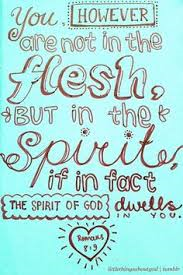
Beloved, there is nothing that will be able to separate us from the love of God in Christ Jesus our Lord. NOTHING! Especially nothing of flesh – humankind, governments, wicked rulers, terrorists, haters, deeply evil people, nor anything else in all creation; they cannot keep us from the Love of God in Christ Jesus. When we are in Christ, we are in God and the Holy Spirit is in us. Just a few verses before today’s selected text we read, But you are not in the flesh; on the contrary, you are in the spirit, if only the Spirit of God dwells in you. Whoever does not have the Spirit of Christ does not belong to him. (NAB – Romans 8:9)

But you see, it is not our love of God and redeems us. It is HIS love for us that makes it so! I cannot, you cannot, we cannot love God enough to earn his forgiveness! It is his Gift, a gift of LOVE. That LOVE is what makes metanoia possible. How do we find the way to do this? Is it something that is hidden? On, goodness NO! Ephesians 5:10 is one of my favorites because it was so easy: “Try to learn what is pleasing to the Lord.” Not far from that is Ephesians 6:13, ” Therefore, put on the whole armor of God, that you may be able to resist on the evil day and, having done everything, to hold your ground.” When I forget that, I lose ground. And just down the page a bit is Ephesians 6:18: “With all prayer and supplication, pray at every opportunity in the Spirit.

Psalm 118:24 says, “This is the day the Lord has made. Let us rejoice and be glad!” Good enough for me!! and what about that banquet prepared for us in the presence of the enemy? It is the Word which is our banquet.

Feasting on the word is great fare indeed! Come on! The banquet is ready. A table is prepared for us in the presence of that scheming old codger The Accuser. He knows The Word, too, but to him it’s poison. To you and me, it’s LIFE! Love is Life because the Eternal God is Love. That’s all we need. And yes, it really is just that simple! How do you “love the Lord your God with all your heart, with all your soul, with all your mind, and with all your strength?” Accept the Gift of his love: “The kingdom of God is at hand. Repent, and believe in the gospel.”


chick

Aloha Friday Message – October 17, 2014 – Hope Revisited

1442AFC101714 – Hope Revisited

Read it online here, please.

As I reflected on where to turn for this week’s message there were a lot of things on my mind: Ebola, enterovirus d68, Hurricane Ana, ISIS, Hurricane Gonzalo, Super Typhoon Vong Fong, a 7.3 earthquake in Nicaragua, mass shootings across the country, war in Sri Lanka, persecutions in North Korea, Somalia, Nigeria, Rhodesia, Sudan – especially Darfur – and in Ethiopia, Zambia, Zaire, Libya, Mali, Democratic Republic of Congo, Central African Republic, Iran, Iraq, and Afghanistan, Egypt and Syria, and even in Texas. That’s a lot of bad things happening! Some folks find all that overwhelming – a hopeless situation. For others it reminds them of Matthew 24:4-14 (Go ahead, read that. I’ll wait.) That’s the eschatological passage where the disciples have asked when the dire predictions Jesus had just made would come to pass. It is this passage where we hear about wars and rumors of wars, many claiming to be the Messiah, famines, earthquakes, pestilence, persecutions, false prophets, and rampant lawlessness. And yet, there is Hope. This is the message the Holy Spirit sends out again, today as well as on October 21, 2011. This is an edited version of that message.

Matthew 22:37-40You shall love the Lord, your God, with all your heart, with all your soul, and with all your mind. This is the greatest and the first commandment. The second is like it: You shall love your neighbor as yourself. The whole law and the prophets depend on these two commandments.”

HopeButterflyBeloved, today I am thinking about distractions. What is it that keeps us from always, always, always putting God first in our lives? Well, as you know there are many, many, many things. Family, television, cell-phone, computer games, sports broadcasts, disinterest, laziness, bad habits, anger, confusion, a spouse, a child, misinformation, other “obligations,” indifference, ignorance, and perhaps you can take a moment here to think about more such as those in the first paragraph.

I have often written in these messages over the years a question something like this one: “Why would you ever settle for anything less than God Himself?” Yet I do that, you do that, we do that so often – maybe even dozens of times in a single day – and many times we come back to Him and say, “I’m sorry. I’ll do better next time.” And next time we break that promise, too.


Hope for the asking ...

Hope for the asking …

It almost seems hopeless, doesn’t it? But I say almost. Today we have a Guest Columnist who will come in right now. You will recognize his works because you are familiar with just about everything that comes from him. What I’m going to present are several excerpts from this long-standing Greatest among the Greats. All the excerpts are about HOPE. As you read through these excerpts, you will doubtless realize that the authority and knowledge on display in this short collection demonstrates the wisdom and power of our Guest today: The Holy Spirit. I’ll try to keep my comments between the excerpts as short as possible, but listen now to what the Spirit has to say about Hope (and I do mean listen; read the excerpts out loud so their full Power falls on you).

Job 14:7-9For a tree there is hope תִּקְוָה (tiqvah) {tik-vaw’}, if it be cut down, that it will sprout again and that its tender shoots will not cease.  Even though its root grow old in the earth, and its stump die in the dust,  yet at the first whiff of water it may flourish again and put forth branches like a young plant.


ShootFromJesseThink of the sprig that sprouted from the stump of Jesse (Isaiah 11:1). That sprig is the Hope of All Israel – Jesus!

Isaiah 40:31They that hope in the LORD will renew their strength, they will soar as with eagles’ wings; they will run and not grow weary, walk and not grow faint.

Jeremiah 29:11For I know well the plans I have in mind for you, says the LORD, plans for your welfare, not for woe! Plans to give you a future full of hope.

Hope descends to those who will receive it ...

Hope descends to those who will receive it …


Romans 5:1-5Therefore, since we have been justified by faith, we have peace with God through our Lord Jesus Christ, through whom we have gained access (by faith) to this grace in which we stand, and we boast in hope ἐλπίδι (elpis) {el-pece’} of the glory of God. Not only that, but we even boast of our afflictions, knowing that affliction produces endurance, and endurance, proven character, and proven character, hope, and hope does not disappoint, because the love of God has been poured out into our hearts through the holy Spirit that has been given to us.

Romans 8:24-28For in hope we were saved. Now hope that sees for itself is not hope. For who hopes for what one sees? But if we hope for what we do not see, we wait with endurance. In the same way, the Spirit too comes to the aid of our weakness; for we do not know how to pray as we ought, but the Spirit itself intercedes with inexpressible groanings. And the one who searches hearts knows what is the intention of the Spirit, because it intercedes for the holy ones according to God’s will. We know that all things work for good for those who love God, who are called according to his purpose.


Hope supports Peace and is centered in Love

Hope supports Peace and is centered in Love

Romans 12:8-12Let love be sincere; hate what is evil, hold on to what is good;

 love one another with mutual affection; anticipate one another in showing honor. Do not grow slack in zeal, be fervent in spirit, and serve the Lord. Rejoice in hope, endure in affliction, persevere in prayer.

Romans 15:13May the God of hope fill you with all joy and peace in believing, so that you may abound in hope by the power of the Holy Spirit.

1 Corinthians 13:13So faith, hope, love remain, these three; but the greatest of these is love.

Hope Fulfilled

Hope Fulfilled

Galatians 5:5 – For through the Spirit, by faith, we await the hope of righteousness.

2 Thessalonians 2:16-17May our Lord Jesus Christ himself and God our Father, who has loved us and given us everlasting encouragement and good hope through his grace, encourage your hearts and strengthen them in every good deed and word.

Hebrews 10:23Let us hold tightly without wavering to the hope we affirm, for God can be trusted to keep his promise.

And the People of God said AMEN!

"Our Hope is in the Lord..."Beloved, if you have given your life, your heart, your attention, your intentions, and your service to any of the distractions named at the beginning of this piece (next to the butterfly), and if you would rather be in that state of distraction than in the Lord’s house with the Lord’s people singing the Lord’s praises, then you have chosen that over God. You have also chosen to set aside the Hope from God that is yours through trust and obedience in your service to him. You have cast the First Great Commandment onto the ground, and are very likely ignoring the Second Great Commandment as well.

“Why would you ever settle for anything less than God Himself?” How can “third down and 17” compare to John 3:17? How can “Go Dallas” compare with “Come Holy Spirit?” How can the NBA Final or the Super Bowl compare with Holy Communion? If these are your gods, and if all you hope for is that your distraction wins, or makes you happy, or distracts you from God’s Love and Grace, then where you find Faith and Love? If, instead of “fear of the Lord,” you have fear of illness, persecution, violence, hunger, and crime, how have you allowed these passing evils to steal your Hope? “So these three things abide – Faith, Hope, and Love. But the greatest of these is Love.”

The Gifts of Hope

The Gifts of Hope

Beloved Grace builds up Faith. Faith builds up Hope. Hope builds up Love. And Love is our greatest treasure. Why? Because the only reason we have it is so that we can give it away! That’s all it’s good for because it’s Good for all.

Ah, but the converse of all this is the FACT that when your god is The Living God, then the Hope, and Peace, and Joy, and Love that fills your life is so AWESOME that life is a constant blaze of “Glory and Praise to Our God / who alone gives Light to our days. Many are the blessings he shares / with those who trust in his ways.” Beloved, Trust is the inner Spirit of Hope. God calls us to that Hope by asking us to simply believe he will keep his promise. In that belief is the greatest of all HOPE which is what some day in the future will bring us face to face with “the light of his Glory and Grace.”

Share-A-Prayer

For the marginalized, the oppressed, the wounded, the ill, the terrified, the lost, and the lonely: God, grant them the HOPE which sees only Victory over Death, Salvation conquering Sin, Faith overthrowing Despair, and Wisdom overwhelming Ignorance.

Be a Beacon that Shines from The Rock

Be a Beacon that Shines from The Rock

My hope is built on nothing less
Than Jesus’ blood and righteousness.
I dare not trust the sweetest frame,
But wholly trust in Jesus’ Name.

Whatever, whenever, wherever, whoever, however, if ever, forever — at your service, Beloved.


You remember GI-GO – Garbage In – Garbage Out? GI-GO can also be Gospel In – Gospel Out. Think about it.

Creative Commons License
Aloha Friday Messages by Charles O. Todd, III is licensed under a Creative Commons Attribution-ShareAlike 3.0 Unported License

Aloha Friday Message – October 10, 2014 – It’s All Good

1441AFC101014 – It’s all good

Read it online here, please.

Philippians 4:19-20 And my God will fully satisfy every need of yours according to his riches in glory in Christ Jesus. To our God and Father be glory forever and ever. Amen.

E pili mau na pomaika‘i ia ‘oe a me ke akua ho’omaika’i ‘oe, ʻōmea! (May blessing always be with you and may God bless you, Beloved!)  Lately I have been thinking a lot about stewardship. That’s not too surprising in my case because it is a topic much discussed in our parish. It’s a topic many of us struggle with – mainly because we are convinced that what it’s really all about is money. I’d like to make the case that that’s not quite right.

First, I think it’s important to understand what a steward is before we try to understand stewardship. A steward is someone hired or appointed to watch over – manage – another’s land and property or to ensure that other persons have access to services provided by the steward’s supervisor. A steward is someone who takes care of things that belong to someone else and is enriched – paid –  by doing that well.

Stewardship is a systematic application of moral standards or principles that demonstrate the responsible planning and management of property, skills and abilities, and/or occasions. That’s a mouthful! The whole idea of stewardship goes back to the idea of a household servant who had the responsibility to bring food and drink to the dining area. Eventually that idea grew to include just about everything that had anything to do with running a household. Stewardship is now usually characterized as the agreement to and/or delegation of responsibility to manage and safeguard the possessions of others. When we are asked to “be good stewards,” the expectation is that we will be generous in sharing our “time, talent, and treasure.”

ZZ-GraqtitudeThat seems contradictory to many people. “It is my time, my talent,  and my hard-earned, short-supply, barely-sufficient ‘treasure’ you’re talking about. Hand off!!” And that’s where the true idea of stewardship gets badly trampled. I believe this happens because too much emphasis has been put on the giving part of stewardship, and not enough emphasis on the receiving part of stewardship. In our worldly society where there is no real truth, where the accumulation of wealth is the measure of our personal worth, and where the goodness of God is strongly criticized or even denied altogether, we are led to believe that everything we have is what we have earned or come to possess. We “forget” to give credit to God of all the good things we have. Oh, in Sunday School and Church we know that “Every good and perfect gift is from above, coming down from the Father of the heavenly lights, who does not change like shifting shadows.” (James 1:7) But by Monday morning (often even by Sunday afternoon), we are back in control of our time, our talent, and especially our treasure.

I think I first learned about stewardship when I was a kid – yep, back to Corona Presbyterian church again. It was presented as the “Biblical Tithe.” In the Old Testament, the Israelites were instructed to contribute one-tenth of the first-fruits of their produce. In some congregations, this idea was “sold” using verses like Malachi 3:10 which says, “Bring ye all the tithes into the storehouse, that there may be meat in mine house, and prove me now herewith, saith the LORD of hosts, if I will not open you the windows of heaven, and pour you out a blessing, that there shall not be room enough to receive it.” The way to get rich was to “invest” in God. That wasn’t the case a Corona, though. We learned what I think is the true understanding of stewardship – the meaning that was evident in many places throughout the Bible. Everything we have comes from God, as James said, and when we return a portion of that to God, God does bless it.

Emmerson_GratitudeIt was at Corona where I first learned the importance of knowing that God wanted my whole life, not just Sunday morning (and Sunday evening and Wednesday night), but literally my whole life. I decided at about age 10 to give my life to Full-Time Christian Service – my first Vocation. By the time I was in high school, I planned to take on a second vocation – the ministry. But at age 22, I found another life-long vocation as a Catholic: I married Crucita, and we have worked together for 45+ years to be good stewards of our Christ-centered home. I confess I still struggle with the concept of “Being a Good Steward,” but I am learning and growing in it. As a Catholic, I heard about two other things God wanted in my life – Time and Talent. I have also grown in my understanding of the benefits of stewardship. It is true that God blesses what you share with – return to – him. There is great JOY in this giving-back. That joy starts with and is reinforced by the understanding that it’s all good and it all comes from God which becomes the source of great gratitude – An Attitude of Gratitude that pervades every moment of every day. I honor the giver by accepting and using the gifts he has given me (and there’s a boatload!) on his behalf with and among his creatures in his creation.

My stewardship, then, applies to the Time, Talent, and Treasure in my own life as well as the life of the planet and all the people on it. That’s a tall order; but it is doable and certainly worthwhile. Let me give you an example. Suppose you have a sack of seed-corn you put away from last year’s crop so you can plant this year’s crop. If the seeds you saved were all of the puny and smallest kernels – the leftovers – you will have a lousy harvest this year. If you have good seed, but only plant a small portion of it – say 1-2% – and keep the rest of it … you will have a lousy harvest this year. If you plant all of the best seeds– the first-fruits – (the sack you have is only a part of last year’s harvest), you will have a huge harvest this year. If you keep the sack in the corn crib, you won’t have any harvest. And if you plant the seeds with only the intention of getting rich, you miss the point about stewardship. God does take care of us, and when we use his gifts to take care of other people, places, or things, he blesses us all the more. Here are some verses to think about:

Ephesians 2:4and it is according to the riches of his grace he supplies the spiritual wants of his people, and he does it like himself, according to the riches he has; he gives all things richly to enjoy, plenteously and abundantly

Ephesians 6:7-8Render service with enthusiasm, as to the Lord and not to men and women, knowing that whatever good we do, we will receive the same again from the Lord, whether we are slaves or free.

Colossians 3:23-24Whatever your task, put yourselves into it, as done for the Lord and not for your master since you know that from the Lord you will receive the inheritance as your reward; you serve the Lord Christ.

Matthew 5:15-16No one after lighting a lamp puts it under the bushel basket, but on the lampstand, and it gives light to all in the house. In the same way, let your light shine before others, so that they may see your good works and give glory to your Father in heaven.

Luke 6:38 give, and it shall be given unto you; good measure, pressed down, and shaken together, and running over, shall men give into your bosom. For with the same measure that ye mete withal it shall be measured to you again.

Psalm 104:24 O LORD, how manifold are thy works! In wisdom hast thou made them all: the earth is full of thy riches. God made everything including me and you. I am grateful to know that! In our opening verse, Paul is telling the Philippians that  he appreciates what they have done, and he considers the support that they have given him as their gift to God as stewards of the Word.

1 Corinthians 3:8The one who plants and the one who waters have one purpose, and they will each be rewarded according to their own labor.

It turns out that the purpose of work, the purpose of time, the purpose of God-given skills and abilities is really for the growing in righteousness and to give us an opportunity to serve others. When we do that intentionally, consciously, conscientiously, and consistently with planning and forethought, we are being good stewards. It is through this process of being a good steward that we have the hope to one day hear, “Well done, thou good and faithful servant: thou hast been faithful over a few things, I will make thee ruler over many things: enter thou into the joy of thy lord.” (Matthew 25:21)

Thanks for allThe real value of stewardship is not that it makes us wealthier in this life – although certainly God provides all we need for the simple reason that he has the power to do so because of his nature – but that God wants us to manage the gifts he gives us in ways that reflect HIS generosity and glory. When we acknowledge with genuine gratitude that everything we have we have received from him, we realize our thankfulness arises from a humble and contrite heart that recognizes God has gifted us with every good thing we have. Seek first the Kingdom of God and his righteousness, and all this will be added unto you.  So, a steward is someone who takes care of what belongs to someone else and is enriched by doing that well. A good steward is one who does that with profound gratitude for the opportunity of being a steward.

Whatever, whenever, wherever, whoever, however, if ever, forever — at your service, Beloved

Share-a-Prayer – Be good stewards of God’s Peace by sharing it through prayer around the world, especially in Syria and Iraq.

Aloha Friday Message – October 3, 2014 – Pulled Both Ways

1440AFC100314 – Pulled Both Ways

Read it online here, please.

Philippians 4:6Do not be anxious about anything. Instead, in every situation, through prayer and petition with thanksgiving, tell your requests to God. New English Translation (NET)

Aloha pumehana – Warmest Aloha – to all of you. I did not realize it until just this morning, but this message today is part of a series that started on September 5, 2014. Let me recap the titles so you can see what I mean.

9/5/14 – Gathered Together (Where two or three are gathered)
9/12/14 – Stage 2 – What is born of flesh is flesh and what is born of spirit is spirit
9/19/14 – My 4,357th Second Chance – Repentance is always an available option
9/26/14 – Duplex Grace – Gratitude and Generosity
10/3/14 – Pulled Both Ways

The common factor there is 2 – two people, two natures, two chances, two perspectives, and two … something.

This passage is from the Epistle for next Sunday. It’s from the last chapter of Paul’s letter to the Philippians, and it contains instructions for community living, including exhortations to live in Joy and Peace, comments about their generosity, and a farewell from Paul and his companions.

The part of this verse that refers to two things is the word anxious. In the original text, this word is μεριμνάω (merimnaó) [mer-im-nah’-o]. It means drawn in opposite directions as in divided into parts, to be divided or distracted; worried, troubled with cares about one’s own interests. It is sometimes expressed in the prayer we all pray so often: “Lord, what should I do?”

I am reminded of another old Gospel chorus, Why Worry:

Why worry when you can pray?
Trust Jesus, He’ll be your stay;
Don’t be a “doubting Thomas.”
Trust fully in His promise.
Why worry, worry, worry, worry,
When you can pray?

Alfred B. Smith, John W. Peterson

© 1949 Singspiration Music

Back in May of last year we covered the topic of worrying in a post called Scissors and Stars. This same word for worry – μεριμνάω – is also used in Matthew’s Sermon on the Mount and Luke’s Sermon on the Plain:


KJV Matthew 6:25-28 –  Therefore I say unto you, Take no thought for your life, what ye shall eat, or what ye shall drink; nor yet for your body, what ye shall put on. Is not the life more than meat, and the body than raiment? Behold the fowls of the air: for they sow not, neither do they reap, nor gather into barns; yet your heavenly Father feedeth them. Are ye not much better than they? Which of you by taking thought can add one cubit unto his stature? And why take ye thought for raiment? Consider the lilies of the field, how they grow; they toil not, neither do they spin:

NIV Luke 12:22-26 – Then Jesus said to his disciples: “Therefore I tell you, do not worry about your life, what you will eat; or about your body, what you will wear.  Life is more than food, and the body more than clothes.  Consider the ravens: They do not sow or reap, they have no storeroom or barn; yet God feeds them. And how much more valuable you are than birds!  Who of you by worrying can add a single hour to his life?  Since you cannot do this very little thing, why do you worry about the rest?”

It is not our job to worry about how things will turn out. We are to trust that God will provide, but in order to live like that we have to follow that advice to first seek the Kingdom of God (See Matthew 6:33) Our mission is to walk through The Kingdom following the straight-and-narrow path to Heaven. Along the way, we are to use our hands and feet, our eyes and ears, and our lips and voices to praise God and share the Gospel. Many of us might recall the words of the Spanish mystic and Carmelite Nun, St. Theresa of Avila:

“Christ has no body now but yours. No hands, no feet on earth but yours. Yours are the eyes through which he looks compassion on this world. Yours are the feet with which he walks to do good. Yours are the hands through which he blesses all the world. Yours are the hands, yours are the feet, yours are the eyes, you are his body. Christ has no body now on earth but yours.”

It is our feet that now follow the Way of Christ. It is our feet and carry us to help others, to a place of worship, to evangelize our neighbors, and to carry us to Heaven. As we walk along that narrow path, we do so frequently find ourselves divided in purpose; we want to “Enter through the narrow gate,” (Matthew 7:13-14) but our feet wander off the path. Go to one side and we enter the territory of becoming “God’s Perfect Little Helper.” We get to be so full of ourselves that we never realize we have strayed from that narrow road. Wander off to the other side and we get tangled up in the darkness of doubt and despair where faith is dry and it seems noting is possible.

It is our hands which reach out to lift up those who have fallen away on one side of that narrow road or the other. It is our hands which reach out to sooth and to heal. It is our hands which build shelter for the poor, distribute clothing to the needy, and feed the poor. Our hands can also grab and hold the things of this world. Our hands can be raised up to wound rather than to help or to praise. Our hands can turn love into fear and push away the stranger who needs to touch the hands of Christ. Right this very moment, it is the hands of Christ that fly over this keyboard to share whatever the Spirit commands.

It is our eyes which show the world the compassion of Christ. It is our eyes which see the horrors of war, the destructiveness of addiction, and the hopelessness of poverty, famine, and plague. It is our eyes that see the glories of God’s creation, and that glory inspires our hearts and minds to seek him out in every place that needs his presence.

Our hearts and minds are not created for anxiety or worry but for the honor and praise of God. When we feel that we are pulled in two directions – to worry about the world rather than to calmly trust in God’s providence – we would do well to look at our feet to see where we are standing. The book of Psalms begins with this advice: Psalm 1:1How blessed is the one who does not follow the advice of the wicked, or stand in the pathway with sinners, or sit in the assembly of scoffers! New English Translation (NET)

When we feel we are pulled in both directions, we have usually forgotten that we need to be mindful of the things we can change, the good we can do, the path we must follow. There are no “two things” to divide us if we remember Jesus’ question: “Since you cannot do this very little thing, why do you worry about the rest?” Why indeed? There is another passage where this word for “worried” is used, and in my mind and heart, it is the most instructive passage on this topic. It is at the home of Lazarus, Mary, and Martha. Martha is flying around the house trying to take care of being the perfect hostess. She complains to Jesus that her sister, Mary, is not helping her; she’s just sitting around chatting with Jesus. What Jesus told her is something we should all remember.

Luke 10:41-42But the Lord answered her, “Martha, Martha, you are worried and troubled about many things, but one thing is needed. Mary has chosen the best part; it will not be taken away from her.”

Next time you’re being pulled in both directions, think of that verse, put your name in place of Martha’s name, and choose what Mary chose: To be with Jesus. That’s all you need to know.

Whatever, whenever, wherever, whoever, however, if ever, forever — at your service, Beloved!


Aloha Friday Message – September 26, 2014 – Duplex Grace

1439AFC092614 – Duplex Grace

Read it online here, please.

Philippians 2:5Have in you the same attitude that is also in Christ Jesus

NLT Philippians 2:5 Your attitude should be the same that Christ Jesus had.

NJB Philippians 2:5 Make your own the mind of Christ Jesus:

1 John 2:5-6 But whoever keeps his [Christ’s] word, the love of God is truly perfected in him. This is the way we may know that we are in union with him: whoever claims to abide in him ought to live [just] as he lived.

Something that operates as a duplex is something which is made up of two parts, especially two identical or equivalent parts.

Aloha pumehana ʻŌmea!

Today I want to share with you something that’s been bubbling around inside and now must burst out. It’s about the connection between gratitude and generosity and about exploring the connection between unselfishness and humility. When I read this verse from St. Paul’s letter to the Church at Philippi, it was one of those OH-NO/OH-WOW kind of moments. OH NO because that’s a lot to ask of earthlings like me – to have the same attitude about life as Christ has? Oh no, I don’t think I can do that! OH WOW because it is in and through Christ that this is not only possible, not only feasible, but also it is actually doable. True, it would take a remarkably dynamic individual to pull it off flawlessly, but it is something worth attempting because it opens us to the blessings which come from stretching our faith to the point of ridiculous generosity.

Let’s begin by taking a closer look at that quote from Philippians. In context, and looking at the structure, the prepositional phrase “in you” doesn’t mean “amongst you” but rather “in you,” that is in your own heart and soul. Walk the walk, talk the talk, live the life. It is the original and ultimate WWJD challenge. Jesus told his disciples they would do what he did and be able to do even more. (See John 14:12) That’s kind of the OH NO part; it’s asking for a lot of faith – the kind of faith that tosses mountains into the sea like a beach-ball from the end of the pier. Jesus says, though, that it only takes a tiny pinch of faith – about the size of a mustard seed – to do that. By those measurement standards, sometimes I feel that my own personal faith in Christ is somewhat less than the size of that mustard seed – more like something … sub-atomic!

There is a popular saying – often used when exhorting the Church to take up its rightful role as the steward of God’s Glorious Gifts – and many folks think it’s in the Bible; actually it’s one of those famous Bible verses that isn’t in the Bible. It goes like this: God will not be outdone in generosity.  Now, the closest I can get to that is also in Philippians and in a very modern translation called The Message. Take a look at Philippians 4:19 there: You can be sure that God will take care of everything you need, his generosity exceeding even yours in the glory that pours from Jesus. Not quite the same, but close.

Another quote that often comes up in discussions of stewardship – especially tithing – is Malachi 3:10 “Bring the entire tithe into the storehouse so that there may be food in my temple. Test me in this matter,” says the LORD who rules over all, “to see if I will not open for you the windows of heaven and pour out for you a blessing until there is no room for it all.” (NET Bible). Tithing is an Old Testament concept that’s been given new impetus in New Testament preaching so that it focuses on the Gifts we get from God: Time, Treasure, and Talent. Most people think tithing is only associated with “Treasure;” give us your money because it belongs to God. That’s a pretty narrow view! God has loaded-up all of us with so many gifts that we often overlook them. We take them for granted because they are granted/given to us in such abundance. We tend not to talk about them much – if at all. But some folks do.

Perhaps on Facebook or some other social media you have seen something called the Gratitude Challenge. This makes way more sense than the Ice Bucket Challenge. You spend like nine days announcing three things every day for which you are grateful. Most people get way beyond three things a day and even farther beyond a total of 27 things because they start understanding there is SO MUCH for which we can be – and should be – grateful, and that ALL of it – every single blessing – comes from God.  Now, really, that’s not too surprising because we all know that counting our blessings is a much more positive experience than counting our burdens. See more about that in the post from 10/29/10. What’s interesting though, is that many times folks end up counting as a blessing something they originally considered a burden. Those burdens became blessings when they were accepted as gifts from God, not curses by God. Seeing a burden as a Gift really is a blessing! When I think about that I think about the greatest burden laid down EVER. THE LIFE OF JESUS ON THE CROSS.

No matter how often I go over those moments in my mind, no matter how deeply I study and try to understand his life, that sacrifice is to me exceptionally astonishing. Could I do that? I’ve already said a number of times I could not because God has not prepared me for that; it is not my gift to accept. The thing is, I don’t have to; it’s already done and I get to claim the completed sacrifice in his name. How did he do that? It was an act of exceptional humility – even more humility than laying aside all of the Glory of God to become a human being. His humility was based on his gratitude for the gift of redemption through God’s perfect Integrity, endless Mercy, and eternal Salvation. You need gratitude to understand God’s gifts, and you need humility to be the seed of that gratitude because gratitude is something you feel for a gift, not a possession. A gift is from someone else, and you can only be grateful for something that comes from outside of you. That requires humility because it means you don’t have it in you to give that to yourself.

And in this, God truly is not, in fact cannot be, outdone in generosity because generosity has its seed in unselfishness. We are selfish; we want this or that – often beyond our needs – and we want it on our terms. God is not in the least bit selfish. How could he be? What is there he lacks, or what is there he needs from us? Everything he created, he created for us to receive so we can better know him. “To know him is to love him,” and we do! IF we love him, we try to be like him. As the Apostle John said, 1 John 2:4-6Whoever says, “I have come to know him,” but does not obey his commandments, is a liar, and in such a person the truth does not exist; but whoever obeys his word, truly in this person the love of God has reached perfection. By this we may be sure that we are in him: whoever says, “I abide in him,” ought to walk just as he walked.

I will have more to say on this soon. There is a series being built up, and the first installment happened here. I’ll wrap this on up with these observations:

What Gratitude

Gratitude is a prerogative made possible by being aware we cannot fill our emptiness with ourselves or by ourselves.

Gratitude and generosity are paired graces granted as benefits of the immense and excellent Gift of Free Will. They are like the bread-and-butter, or peanut-butter and jelly, or salt-and-pepper of the Good Gifts. One is always accompanied by and enhanced by the other. Each is desirable and pleasant on its own, but together they are an ambrosia more delectable to the soul than any of the mythical delights conceived in the mind of earthlings. Gratitude and generosity are gifts from God, and as such we can accept or reject them – in part or in full, in tandem or independently. When generosity and gratitude are properly yoked, directed, and balanced, all things proceed forward in unity and order. When this is not so, all is disarray and chaos. If love and marriage go together like a horse and carriage, then gratitude and generosity go together even better; there are far more similarities between gratitude and generosity than there are between a horse and a carriage.

Whatever, whenever, wherever, whoever, however, if ever, forever — at your service, Beloved! Pray for peace, pray for the defeat of those who defile peace, and become the home of that Peace which surpasses all understanding.

chick

Aloha Friday Message – September 19, 2014 – My 4,357th Second Chance

1438AFC091914 – My 4,357th Second Chance

Read it online here, please. /?p=6232

Isaiah 55:6-7Seek the Lord while he may be found, call upon him while he is near. Let the wicked forsake their way, and sinners their thoughts; Let them turn to the Lord to find mercy; to our God, who is generous in forgiving. New American Bible (Revised Edition) (NABRE)

“PLEASE, just give me one more chance! I know I can do it!”

How many times have we heard that one? And how many times have we thought, “What difference does it make? You’re a hopeless case.”? Why do we think we deserve a second chance anyway? Are we that confident that we can change, get better, and reform our lives? Why would we need to do that? We have free will; if we want to be “like this,” why should we want to change? Here’s what I think: Because change matters in relationships.

Somewhere along the line, at least once, you’ve been asked to mend your ways. Somewhere along the line, at least once, you’ve asked someone else to mend their ways. You’ve probably been in a situation where both of you were saying “I’ll do that if you’ll to this.” It’s how we learn to get along. We come to consensus, we compromise sometimes, we give a little to get a little. Sometimes it’s really hard to forgive even the first time. You’ve seen on the news where a relative of a person who was brutally murdered states, “I can never forgive you for what you did to my loved-one.” In our hearts, we understand, but in our minds we say, “Ummm, that’s not good. Hating tears you up inside and forgiveness is healing.” Sometimes it seems some of us are less interested in healing than we could be.

But, what if we really could change? What if we’re not really the bad, bad persons we believe we are? Would others see the potential for change in us, and take a step closer to us so we could step closer to them? On which side of a wrong do we begin to make things right? Is it our repentance or our neighbor’s forgiveness? Maybe there’s a scriptural way to see this question answered.

We can start with today’s text: Let the wicked forsake their way, and sinners their thoughts; Let them turn to the Lord to find mercy; to our God, who is generous in forgiving. So which do you think happens first? The sinner forsakes his way or God is generous in forgiving? My money’s on God being first. He’s always ready to forgive because he always loves us – no matter how messed up we are. It’s like he knows we’re going to need forgiveness, so he’s just standing there with a big bucketful of it waiting to douse our grubby sinfulness with his cleansing Grace. He is always ready to forgive. But we need to build some intentionality. I chose that word because it expresses “the quality of mental states (e.g., thoughts, beliefs, desires, and hopes) that consists in their being directed toward some object or state of affairs.” Say what? It means we have to be focused on the goal of [1] finding God, and [2] asking for forgiveness. The first one is generally pretty easy; I mean God is everywhere, right? Except maybe sometimes we crowd him out of our hearts, yeah? Seek the Lord while he may be found, call upon him while he is near. That’s a clue that it’s easier to lose track of God that we usually want to admit.

It turns out though that seeking God is a pretty common theme. Check these out:

1 Chronicles 28:9As for you, Solomon, my son, know the God of your father and serve him with a whole heart and a willing soul, for the Lord searches all hearts and understands all the mind’s thoughts. If you search for him, he will be found; but if you abandon him, he will cast you off forever. New American Bible (Revised Edition) (NABRE)

Deuteronomy 4:29 – … but if from thence thou shalt seek the Lord thy God, thou shalt find him, if thou seek him with all thy heart and with all thy soul. Authorized (King James) Version (AKJV)

Here’s a trio of references about seeking God that will help you identify something important about intentionality: 2Chronicles 15:2, 4, 15 .The key is that I need to search for him, not casually, but diligently, with my “whole heart and soul.” That’s the same way I am supposed to love him; I guess you could say I should seek him in, through, and for the sake of love.

Since he’s everywhere to be found, seeking him is simply a matter of loving him enough to admit he’s really right there with us while he may be found. So step 1 really is pretty simple. It just requires keeping our heads on straight and admitting God knows what we’re up to – all the time!

Part 2 – ask for forgiveness – is what usually trips us up because … we have to admit we were WRONG! Why is that so hard to do? Well, that one’s a three-part deal. First we have to get past our pride that makes us feel we are superior to everyone else because – although we may not always be right – we are never wrong. That’s also what did in Adam: “It wasn’t my fault! She made me eat it!” You’ve been through that enough times that I don’t need to spell it out. Next, even if we can wrestle down our pride and admit we were wrong, we have to be willing to say – and mean – that we are sorry. “I’m sorry” gets stuck in our craw for the same reason as admitting we’re wrong: Pride. It takes humility to apologize and most of us are wired to avoid humility. Lastly, we have to make up our minds not to do “that” again. We have to repent. We have to reform. We have to go back to being without that intention to gratify our egos and, in so doing, hurt someone else – or even ourselves.


The Presence -A.E.BorthwickSo here are a few thoughts on that 3-step process:

2 Chronicles 7:14if my people, who are called by my name, will humble themselves and pray and seek my face and turn from their wicked ways, then I will hear from heaven, and I will forgive their sin and will heal their land. New International Version (NIV)

Acts 3:19-20Repent ye therefore, and be converted, that your sins may be blotted out, when the times of refreshing shall come from the presence of the Lord; and he shall send Jesus Christ, which before was preached unto you.

Romans 6:23The payment for sin is death, but the gift that God freely gives is everlasting life found in Christ Jesus our Lord.

Matthew 3:2 “Repent of your sins and turn to God, for the Kingdom of Heaven is near.”

Acts 2:38Peter said to them, “Repent, and be baptized, every one of you, in the name of Jesus Christ for the forgiveness of sins, and you will receive the gift of the Holy Spirit.”

Matthew 4:17From that time Jesus began to preach, and to say, Repent: for the kingdom of heaven is at hand.

Luke 5:32“I have not come to call the righteous but sinners to repentance.”

Psalm 25:11For the honor of your name, O LORD, forgive my many, many sins.

Joel 2:12-13Therefore also now, saith the Lord, turn ye even to me with all your heart, and with fasting, and with weeping, and with mourning: and rend your heart, and not your garments, and turn unto the Lord your God: for he is gracious and merciful, slow to anger, and of great kindness, and relents from punishing.

Isaiah 44:22 – I have blotted out your transgressions like a cloud and your sins like mist; return to me, for I have redeemed you.

Psalm 103:12As far as the east is from the west, so far has he removed our transgressions from us.

Zechariah 1:3Therefore say to them, “Thus says the Lord of hosts: Return to me, says the Lord of hosts, and I will return to you, says the Lord of hosts.” New Revised Standard Version Catholic Edition (NRSVCE)

COME BACK TO ME WITH ALL YOUR HEART, TURN FROM YOUR SIN. I WILL FORGIVE YOU BECAUSE I LOVE YOU. I FORGIVE ALL OF IT!

“Well,” you say, “that might work for some people, but God doesn’t want to have anything to do with me. I’m too much of a sinner!” Well, that’s a good beginning; you’ve confessed you are a sinner. 1 John 1:8-10 If we say that we have no sin, we are deceiving ourselves and the truth is not in us. If we confess our sins, He is faithful and righteous to forgive us our sins and to cleanse us from all unrighteousness. If we say that we have not sinned, we make Him a liar and His word is not in us. See what I mean? And how about this?

ROMANS 2:23 For all have sinned, and come short of the glory of God.

Or this? Isaiah 53:6All we like sheep have gone astray; we have turned everyone to his own way; and the LORD has laid on him the iniquity of us all.

Romans 7:15-20I don’t understand why I act the way I do. I don’t do the good I want to do, and I do the evil I hate. And if I don’t want to do what I do, that means I agree that the law is good.  But I am not really the one doing the evil. It is sin living in me that does it. Yes, I know that nothing good lives in me—I mean nothing good lives in the part of me that is not spiritual. I want to do what is good, but I don’t do it. I don’t do the good that I want to do. I do the evil that I don’t want to do. So if I do what I don’t want to do, then I am not really the one doing it. It is the sin living in me that does it. Easy-to-Read Version (ERV)

Romans 7:24-25Miserable one that I am! Who will deliver me from this mortal body? Thanks be to God through Jesus Christ our Lord. Therefore, I myself, with my mind, serve the law of God but, with my flesh, the law of sin.

So, did I really just use up my 4,357th second chance? You probably think that’s just some random number; I chose it for a reason (which I’ll explain next Tuesday), but the number isn’t what’s important. What’s important is the time-span. Is that for my lifetime? Or is it just this year?  Or maybe it’s just for today??? Here’s the thing: It doesn’t matter. There is no limit on forgiveness if we put no limit on finding God, repenting, asking forgiveness, and reforming our lives by returning to God.

Change that fosters closeness and minimizes separation matters in relationships. God’s only human Son was brutally murdered, and because God is Love and Love yields forgiveness, EVERY sin from Adam’s to ours can be forgiven. We are not only one step closer to eternal holiness as is the Life in Heaven, but also we are one step farther from being the grubby little sinners who are cleansed and healed by perfect, completely unqualified, and absolute forgiveness.

Share-a-Prayer

Please pray for the people, especially Christians (but Muslims, too) who are being oppressed, persecuted, tortured, and murdered by ISIS/ISIL. This is an unspeakably evil crusade they are conducting. Pray to God that it will take less than the blood of thousands of martyrs to stop this horror.

Whatever, whenever, wherever, whoever, however, if ever, forever — at your service, Beloved!
chick

Creative Commons License
Aloha Friday Messages by Charles O. Todd, III is licensed under a Creative Commons Attribution-ShareAlike 3.0 Unported License

Aloha Friday Message – September 12, 2014 – Stage 2

1437AFC091214 – STAGE 2

Read it online here, please.

John 3:1-7 Now there was a Pharisee named Nicodemus, a ruler of the Jews. He came to Jesus at night and said to him, “Rabbi, we know that you are a teacher who has come from God, for no one can do these signs that you are doing unless God is with him.” Jesus answered and said to him, “Amen, amen, I say to you, no one can see the kingdom of God without being born from above.” Nicodemus said to him, “How can a person once grown old be born again? Surely he cannot reenter his mother’s womb and be born again, can he?” Jesus answered, “Amen, amen, I say to you, no one can enter the kingdom of God without being born of water and Spirit. What is born of flesh is flesh and what is born of spirit is spirit. Do not be amazed that I told you, ‘You must be born from above.'”

Aloha, Beloved; Grace, mercy, and peace will be with us from God the Father and from Jesus Christ the Father’s Son in the truth and love of the Holy Spirit. Glory to God forever!

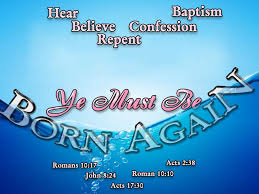
bornagain                        In a great many pulpits around the world this coming Son-Day, the Gospel reading will touch on John 3:13-21 – the setting for the most-quoted Bible passage in the world, John 3:16. When looking at this verse in the past, I have always reminded you that John 3:17 is equally important: For God sent not his Son into the world to condemn the world; but that the world through him might be saved. Today I’ll just refer you back to some of those previous messages and ask you to turn with me to focus on this conversation between Nicodemus and Jesus. As with all of the Gospel of John, there are layers upon layers of insights in each passage, sometimes in each word. We’ll let Scripture do a lot of the teaching today, but we’ll also look into interpreting the teaching.


Let’s start with the man’s name. This Pharisee is known as Nicodemus which is the Greek name Νικόδημος (Nikodemos) which means “victory of the people” from Greek νικη (nike) “victory” and δεμος (demos) “the people.” In this conversation, Christ the Lord and Savior is telling “victory of the people” how God’s plan of redemption works, and also what the result will be. Nicodemus is a sincere, albeit fearful, seeker who recognizes that Jesus is surely sent from God, but isn’t sure what he, Nicodemus, should do about it. It’s almost as if Nicodemus suspects Jesus is not Jewish enough, and that worries him enough to cause him to seek out Jesus under cover of darkness.

The contrast between Darkness and Light is one of the major themes in the Gospel of John, and so when we see Nicodemus coming to The Light (see John 1:3-4), we note that he’s in the dark about Jesus’ teaching and Jesus is showing him the Light. Jesus tells Nicodemus “Amen, amen, I say to you, no one can see the kingdom of God without being born from above.” No one can see the Kingdom of God (in the Dark) without being “born from above.” Being born from above? A number of other translations read “born again,” hence, the Born-Again Christian. The Greek word here is ἄνωθεν [anōthen] {an-o-then}, and it carries the connotation of from above, from the beginning, from the first, of things which came or come from heaven, anew, or over again. Nicodemus needs a change in perception to see The Kingdom.

He has glimpsed the Kingdom in the mighty miracles Jesus has done. He understands that the authority of Jesus is something elusively greater than everything else with which he is familiar. Nicodemus is asking Jesus to tell him how this Kingdom can be seen and experienced. He wants to know if the baptism John practiced at the Jordan was sufficient. Jesus tells him it is not; what is required is to be born “from above,” to be “reborn,” to be born of water (John’s baptism of repentance) and the Spirit (Jesus’ baptism of everlasting life). Jesus tells Nicodemus he must be born from above; Nicodemus misunderstands that as born again. Jesus is talking about spiritual rebirth; Nicodemus is thinking about physical rebirth (“born again). This is a little surprising, because in those days, the Pharisees were actively seeking converts – they were proselytizing (trying to convert somebody to a religious faith or political doctrine) – and the proselyte is regarded as a new-born child having shed his/her previous life to become a child of Abraham.

Nicodemus’ question, however, is the opening for Jesus’ teaching that follows, the teaching about Spiritual rebirth which ends at verses 14-15 where he says, “Just as Moses lifted up the serpent in the wilderness, so must the Son of Man be lifted up, so that everyone who believes in him would have eternal life.” (John 3:14-15) This is the first time “Eternal Life” is used in the Gospel of John; this term emphasizes quality of life rather than quantity or duration. Everlasting life is life that is always renews, it is always new, it is always regenerated from the moment it begins through all of eternity with God. Eternal and everlasting: What’s the difference? As an adjective eternal means “without beginning or end.” As an adjective, everlasting connotes something created with a beginning but which continues ad infinitum through eternity. God is eternal; the redeemed know everlasting life: For God so loved the world, that he gave his only begotten Son, that whosoever believeth in him should not perish, but have everlasting life.

Everlasting/Eternal in Greek is αἰώνιος [aiónios] {ahee-o’-nee-os} and it connotes something existing “for ages and ages.” It is independent of time in that it is included in measured time as well as excluded from measured time and therefore beyond measured time because it itself is timeless. Confusing, yes? But that is the Mystery of the Life of God and God’s children by adoption through the birth of his “only begotten son.” This timelessness is available only in The Kingdom, and being in The Kingdom is only available to those who are born from above, reborn as “a new creature in Christ.” (2 Corinthians 5:17)  We have a glimpse of this from the prophet Daniel when he speaks of the end of days and says: Daniel 12:2And many of those who sleep in the dust of the earth shall awake, some to everlasting life, and some to shame and everlasting contempt.

And as Jesus makes his point, Nicodemus begins to understand that The Kingdom is not political so that it will evict Rome from Israel, nor is it religious in the sense that it will acknowledge the holiness of the Pharisees. The Kingdom is a place of spiritual renewal through repentance and conversion – conversion from a creature which lives a mere seventy years to an entity that lives for the rest of eternity. When Jesus says,” What is born of flesh is flesh and what is born of spirit is spirit. Do not be amazed that I told you, ‘You must be born from above,'” Nicodemus begins to understand that Jesus as the Messiah is showing him “a more excellent way.” (See 1 Corinthians 12:31, the introduction to the Chapter of Love).

Romans8_9So, Beloved, Jesus wants us to begin a new life by laying aside our old life. Those who earnestly seek him where he may be found have the beginnings of that new life. Those who serve him in The Kingdom have left this World behind and gone to him here in The Kingdom of God. All who believe that God sent is only begotten Son into the world will know everlasting life because God has sent his Son to redeem the world, not to condemn it. That is why he said to Nicodemus then – and to you and me now – “Do not be amazed that I told you, ‘You must be born from above.'” When people are “born again,” we call them “Born-Again Christians.” Next time you hear that term, I hope you will hear a little voice saying, “That means ‘born from above,’ and that means reborn in the Spirit!” Beloved, YOU will be living in the Kingdom if you will remember Romans 8:9 – But you are not in the flesh; on the contrary, you are in the spirit, if only the Spirit of God dwells in you. Whoever does not have the Spirit of Christ does not belong to him. Remember? What is born of flesh is flesh and what is born of spirit is spirit. Hold out your hands in prayer and call the Spirit to pray for you, “Jesus, I trust in you. Jesus, I love you. Jesus, I give my life to you. Jesus, I accept you as my personal Savior. Jesus, my Brother, you are Lord, Christ, and Son of God. In your Name I pray. Amen.”

Welcome (back) to the Kingdom! The Kingdom which is life that is always renewed, it is always new, it is always regenerated from the moment it begins through all of eternity with God, your new everlasting home forever and ever. Stage 1 is life outside The Kingdom. Stage 2 is life inside The Kingdom. Stage 3? That has to be between now and the Resurrection; the Resurrection is Stage 4, the final stage.

Whatever, whenever, wherever, whoever, however, if ever, forever — at your service, Beloved

Please pray fervently for an end to the violence in the Middle East (from the Mediterranean to beyond the Amu Darya River, and all across Africa.


chick


Aloha Friday Message – September 5, 2014 – Gathered Together

1436AFC090514 – Gathered Together

Read it online here, please. (And please take advantage of the links in this message.)

Matthew 18:18-20“Amen, I say to you, whatever you bind on earth shall be bound in heaven, and whatever you loose on earth shall be loosed in heaven. Again, [amen,] I say to you, if two of you agree on earth about anything for which they are to pray, it shall be granted to them by my heavenly Father. For where two or three are gathered together in my name, there am I in the midst of them. 1

If you clicked on the link in the title, you heard a hymn that is usually sung around Thanksgiving time. It is an image we can easily recall – the family gathered together at table to share a meal and remember the bounty of God’s Love. Perhaps we call to mind a community of graciously generous people getting together to feed the homeless and hungry – not just around Thanksgiving, but often. We have often stated here that God is a Holy Community, and we are blessed to be like that aspect of him; we, too, are to be a Holy Community here on Earth.

There is a lot of comfort in the highlighted words above – “For where two or three are gathered together in my name, there am I in the midst of them. That has become the inspiration for many prayer meetings, intercessions, and for inspiring hope among us. When we gather together to pray a prayer of petition to God for his protection, we have this verse in mind as we unite our hearts and minds in prayer to seek his will or to encourage him to favor our petition. We have faith in those prayers because of what this verse says. We feel that if two or more of us are in agreement and praying about one certain thing, then Jesus is there with us – praying with us to his Father and ours – and we are uplifted by the thought of his presence.

Knowing that Jesus is present with us as we worship him through confident prayer gives us a wonderful feeling. We know that when we worship, praise, and petition together we are carrying out the intent of this verse. We find great comfort in sharing the Divine Love of Christ with our fellow believers, and this is as it should be. Scripture often encourages us to depend on each other as an outward sign of our inward commitment to obey the law laid down by God. In fact, if we look for the Old Testament roots of this passage, we can learn more about why Jesus was using this phrasing when teaching his disciples. Let’s look back, then to Deuteronomy.

Deuteronomy 19:15One witness alone shall not stand against someone in regard to any crime or any offense that may have been committed; a charge shall stand only on the testimony of two or three witnesses. There we see that familiar term, “two or three witnesses.” But take a look at the context of that phrase. This passage is talking about a legal proceeding, a time of judgment and discipline. In verses 15-21 of this chapter, God is describing how to deal with someone accused of any crime or offense. One witness against him is not enough. There must be at least two or three witnesses, and they must all agree. They must meet together before the Priests and the Judges who must listen carefully to the case presented, and judgment is rendered based only on the verifiable testimony of the plaintiff and the witnesses. A false witness is condemned to receive whatever punishment the plaintiff was seeking for the accused. This is also the passage that ends stating Show no pity: life for life, eye for eye, tooth for tooth, hand for hand, foot for foot.” Now, if you look at the context of this passage – rules for dealing with discipline in a community – we have better chance of gaining insight into what Jesus’ statement is all about: Community discipline.

If you will go back to the context of these verses, you can see that Jesus is actually giving his disciples rules for Church discipline – how to make decisions when there is controversy in the Church, and how to conduct a fact-finding mission when accusations are made. I’m going to give you the link to the full passage (and I really do hope you’ll take two minutes to read it): Matthew 18:15-22

If you elected not to use the link, this passage is about restoring consideration, understanding, and acceptance among believers in the Church. This passage begins with this statement: “If your brother sins [against you], go and show him his fault when the two of you are alone.” The words in brackets there are left out of some translations, but they are there in the original Greek. The “you” pronoun is singular – it applies to just one person. You and the person who has wronged you need to meet one-on-one to discuss the contention between you. Next Jesus makes the connection to that passage in Deuteronomy involving two or three witnesses; he is reiterating that it is important to follow the pathway to justice laid down through Moses and carried forward by tradition for millennia. Look for arbitration with the one who has give offense, and try to get the matter resolved through contrition and reparation on one side with forgiveness and leniency on the other side. If that still doesn’t work, then the matter should be taken to the Church (ekklhsia ekklesia {ek-klay-see’-ah}. This is the same word used previously in Matthew in which Jesus told Peter he would be the Rock (Petra or Cephas) on which his Church would be built). Finally Jesus says that if even the Church cannot convince the defendant to make amends, he should be cast out of the fellowship of the Church and treated “like a Gentile or a tax collector.” Next, Jesus emphatically restates the parameters of this process – and this is where it gets a little confusing.

Jesus says, “Again, I tell you that if two of you on earth agree about anything you ask for, it will be done for you by my Father in heaven.” In the context of Deuteronomy as applied to restoring Church relationships, this is where Jesus refers to the offender and offended working things out together privately. In the presence of God, when two people seek to be reconciled, God will bless that work. And in that same context, if the falling-out cannot be resolved by the two, then arbitration through two or three witnesses should be the next step. In that regard, if two or three agree about anything they (the litigants) ask for, God will ensure that it is carried out. We can be assured of this because Jesus himself will participate in the reconciliation to ensure justice is done in the kindness and mercy of God. That’s one way to look at it based on the context in which it is given. In going to scripture for answers, context reigns supreme.

The times and situations surrounding an event are important even in the context of our prayers. What if two or more of us are gathered together in Jesus’ name to pray about something that is not related to a disagreement between to Christians? What if we are gathered together in the faith that praying as a community is God’s will and that God listens to the prayers of the faithful? Can God just ignore that? No, of course not. But what does he tell us about prayer and answers. We can get some insight by reading 1 John 3:21-22Beloved, if our heart condemn us not, then have we confidence toward God. And whatsoever we ask, we receive of him, because we keep his commandments, and do those things that are pleasing in his sight. When we are well-reconciled with God, our confidence in God’s response is increased because we are asking in the context of his commandments. We also have 1 John 5:14-15Now this is the confidence that we have in Him, that if we ask anything according to His will, He hears us. And if we know that He hears us, whatever we ask, we know that we have the petitions that we have asked of Him.

Have you ever heard that famous Bible verse, Hezekiah 9:9 that says, “God helps those that help themselves?” Or how about 1 Simon 4:1 “This too shall pass.” These two popular sayings are not in the Bible! There are no books in the Bible named Hezekiah or 1 Simon, so those verses can’t be there either. “Where two or three are gathered, I am there with them” is in the Bible – sort of – but not in the context we usually ascribe to it. Does that mean Jesus is present only when there is a conflict in the Church? No. Remember that he said Behold, I am with you always even to the end of the world. (Matthew 28:20) He also said Matthew 7:7“Ask and it will be given to you; seek and you will find; knock and the door will be opened to you.” Jesus is always with us even when no one else is with us. When we meet together in community, resolve to pray in agreement toward one goal, and are unified in our obedience to God, he certainly hears our prayers; and experience has shown he often answers those prayers in the spirit in which they are offered.

Never hesitate to call on him – alone or in community – because he alone can hear everything you think or say. He “chastens and hastens, his will to make known.” Next time you hear someone say, “You know what the Bible says; where two or three are gathered,” you will know the context of that phrase, but you will also know that we should humbly seek to help one another for we are to [b]ear one another’s burdens, and so you will fulfill the law of Christ. For if anyone thinks he is something when he is nothing, he is deluding himself. Galatians 6:2-3

Whatever, whenever, wherever, whoever, however, if ever, forever — at your service, Beloved

Creative Commons License
Aloha Friday Messages by Charles O. Todd, III is licensed under a Creative Commons Attribution-ShareAlike 3.0 Unported License


chick

Aloha Friday Message – August 29, 2014 – Your Cross or Mine?

1435AFC082914 – Your Cross or Mine?

Read it online here, please.

Matthew 10:38 Anyone who does not take his cross and follow in my footsteps is not worthy of me. (NJB)
Matthew 16:24 Then Jesus said to his disciples, “Whoever wishes to come after me must deny himself, take up his cross, and follow me. (NJB)

Mark 8:34 He called the people and his disciples to him and said, ‘If anyone wants to be a follower of mine, let him renounce himself and take up his cross and follow me. (NJB)
Mark 10:21 One thing thou lackest: go thy way, sell whatsoever thou hast, and give to the poor, and thou shalt have treasure in heaven: and come, take up the cross, and follow me. (KJV)

Luke 9:23 Then, speaking to all, he said, ‘If anyone wants to be a follower of mine, let him renounce himself and take up his cross every day and follow me. (NAB)
Luke 14:27 No one who does not carry his cross and come after me can be my disciple. (NAB)

Aloha nui loa, ʻōmea! The passage from Matthew 16 is part of the Gospel reading for August 31. There are similar statements in all three synoptic Gospels. The passage in Matthew 10 is part of the Gospel where Jesus is telling the disciples that following him must be the preeminent purpose in their lives. In all six of these verses, there is a pattern of three criteria for being a disciple of Jesus: [1] Deny one’s self, [2] take up one’s cross, and [3] follow Jesus. In Mark 10:21, Jesus tells “The Rich Young Man” that he must divest himself of every material and temporal comfort and then return to Jesus ready to follow him.

Love=Cross

In Mark 8, Peter has just confessed his conviction that Jesus is the Messiah. Immediately thereafter, Jesus begins to describe his arrest, trial, execution, and resurrection. Peter takes him aside and reprimands him for speaking that way. In a flash, Peter goes from being declared the foundation of the Church to being a Satan. Peter later learns he will indeed follow Jesus to the same destination: Death, death on a Cross. Peter’s Cross was waiting for him in the future; or was it? He denied Jesus; how did he deny himself? He literally took up his cross.

When we hear this expression, “Take up your cross,” we often think of some particular trial, difficulty, or long-standing burden. “I have arthritis, but that’s my cross to bear.” “My neighbors are so rude, they irritate me constantly! But, then, that’s my cross to bear.” “There are thousands of refugees living in abject poverty and fear for their lives. What a difficult cross to bear!” “I really don’t mind the suffering in my life because it means I can offer all that up to God. He has blessed me with a difficult cross to bear.”

These sentiments are common among people of faith. We know how much Christ suffered on our behalf, and we know we will definitely experience suffering in our lives, too. Jesus paid the full price for our sins through his passion, death, and resurrection. It was done once for all of us, and its effectiveness extends to all who accept Christ as Master and Savior. We don’t need to be crucified the way he was, and he does not need to be crucified again; once was exactly enough. Why then does he want us to take up our cross and follow him? Considering the perfection of his sacrifice, what can we add to that? And just what, exactly, is “my” cross.

A few times in the past, I have stated, “I am my cross.” Have you ever felt that way? We look at our sinful – sin-filled – lives and think about how grieved we are that we cannot do better. We feel like we’re letting God down because we never quite get over the border between bad behavior and good behavior. We even feel a little miffed to know that everyone feels like that. In Romans 7:15 Paul says, “I don’t realize what I’m doing. I don’t do what I want to do. Instead, I do what I hate.” Isn’t that irritating?!? We say, “I try so hard, but I still mess up!” Then our better self, or our friends, or our pastor, or someone we love says, “Well, welcome to the human race. You are only human you know!” And let’s face it; humans are prideful. Humans think we can figure it out on our own and make our lives better conformed to the life of Christ. We just crucify our bad selves with him and resurrect our good selves … with him. But I think there’s something missing in that scenario. Let’s go back and look at today’s text more closely.

We said the first point was denying one’s self. Why would anyone do that? What does that mean? Again it is the Apostle Paul who gives us a keen insight in Philippians 2:5-11. There is one phrase in that passage – perhaps an early form of a Creed or hymn – that says, “Rather, he emptied himself, taking the form of a slave, coming in human likeness;” He gave up his own Glory in Heaven to become a helpless human child who lived – and died – among us: Emanuel. Eve’s mistake was to reach out for equality with God (Genesis 3:5“For God knows that in the day you eat from it your eyes will be opened, and you will be like God, knowing good and evil.”) Adam’s sin was to accept that deception as truth. Jesus did not regard equality with God something to be grasped.” Everything Jesus did, he did in obedience to his Father. (John 12:49For I have not spoken from my own authority, but the Father himself who sent me has commanded me what I should say and what I should speak.) Whatever he did he did first and foremost for God, his Father. That includes the second point, taking up his cross.

As soon as we hear that, most of the time we think about Calvary, the crucifixion, the hours and hours of shame, derision, and intense agony. But that is not where Jesus “took up his cross.” Where did that happen? In Jerusalem, probably in or near the Praetorium. He had already been beaten nearly to death, mocked, insulted, cursed, and denied. Pilate found no guilt in him, but the crowd overruled his decision. Jesus was forced to carry his own cross. In the context of that time, this was not an unusual sight. Criminals were forced to carry their means of execution to the place of execution. Along the way they were taunted, lashed, hit with stones, scoffed at, and treated without mercy. Jesus did that. We have it in all the Gospels – the Way of the Cross. He took up his cross and carried it to the place of his execution, knowing it would be a horrific experience. He went anyway. Why? Why such a terrible, cursed death? He was committed to do what God had asked of him. He completely identified with God’s loving act of bringing into the world “his only begotten Son, so that whosever believes on him shall not perish but have everlasting life.” The whole thing – the trial, the passion, the way of the Cross, the Crucifixion – every moment of that was a moment of love. When we take up the Cross, we take up his Love and carry it to where that Love is fulfilled. We carry it to follow him.

When we want to follow him, we want to go as he went: We must always be prepared to accept whatever is on our Way of the Cross – pain and suffering, shame and sorrow, even death, and be eager to endure it, to meet it with a earnest joy, and to rejoice we are counted worthy for this. Remember, Jesus did this of his own will, so are you, am I, are we willingly shouldering our cross without complaint, histrionics, or thoughts of some saving intervention? There is only one path to Golgotha, only one Way to go; it is the way HE went. It is the Way of Love. Only Love can conquer sin and death – the same sin and death that came upon all of us when first we deemed equality with God something to be grasped at. How often do we do that in our daily lives as we curse our neighbors, threaten our enemies, or cherish our little (or large) vices in the depths of our hearts? We are commanded to love our neighbors, bless our enemies, and disdain our sins. That is our cross to bear; to always be faithful to the mission of giving up our lives to God in order save them because of his Love.

Our Cross to bear is to live in and through the Love of God no matter what; to get up each day and say, “Good morning, LORD! Thank you for this day! What have you got on your To-Do List for me today?” And so, we are called to love one another by [1] denying one’s self, [2] taking up one’s cross, and [3] following Jesus. That doesn’t mean we glorify ourselves by acknowledging how greatly we are suffering (while hoping others notice how humbly we suffer), nor do we do well to count up all the petty trials and tribulations in life (everyone has those, you know), and most certainly it does not mean that we pay tribute to the merits of pain and suffering as if they were the only things that please God. It is not the pain and suffering of bearing our cross that matters; it is the LOVE that permeates us body, mind, and spirit as we willingly and joyfully live the life we have as the best way to embrace our cross as what it truly is: The Love of God for all living souls.

LoveU_ThisMuchWe all surely know that there is no Easter without Good Friday. Let’s remember, though, that Good Friday included a walk far more difficult than anything any of us have had to endure. But that’s us. Beloved, all around this world – most notably recently in Iraq and across Africa – Christians are being tortured, hunted, persecuted, and killed for following Christ. Jesus loves them, too; stand with them in your prayers, even in your politics. Make them part of your Way of the Cross. And while we’re at it, I’m going to give you a little something to help you offer up to God your daily walk to Golgotha. It’s a Prayer to Seek God’s Will, a way to offer your whole self to God each day.

Almighty Triune God – Father, Son, and Holy Spirit – I love You. I worship You. I adore You. I praise You. I glorify Your name. Enlighten, guide, strengthen, and console me. Teach me Your will and empower and inspire me to fulfill it completely, for it is my heart’s desire to serve You well in all that You ask of me and everything that You allow to happen to me. Only make Your will known, and grant me the graces necessary to faithfully follow You to the place You have prepared for me. I offer You this prayer in the name of Jesus, The Christ, our Lord who lives and reigns with God, The Father Almighty, in the unity of The Holy Spirit, The Lord, the Giver of Life. AMEN.

To restate the three points differently: [1] Always put God first, [2] live in and for his Love, and [3] carry that love to the end of the road and lay it all out for him there. Then you will be his disciple.

Whatever, whenever, wherever, whoever, however, if ever, forever — at your service, Beloved

Aloha Friday Message – August 22, 2014 – AGE QUOD AGIS

1434AFC082214 – AGE QUOD AGIS

Ecclesiastes-9-10-2TRead it online here, please. (Take advantage of the links in this message to boost the value of your experience here.)

Ecclesiastes 9:10a Whatever your hand finds to do, do it with your might;

Revised Standard Version Catholic Edition (RSVCE) The Revised Standard Version of the Bible: Catholic Edition, copyright © 1965, 1966 the Division of Christian Education of the National Council of the Churches of Christ in the United States of America. Used by permission. All rights reserved

AGE QUOD AGIS

What does that mean? You see it in almost every email I send to you. Have you ever wondered why I put it there? Have you ever wondered what it means?

Many years ago I adopted this as my personal motto. It became part of my Personal Mission Statement. I’m not 100% positive where I first heard it, but I think it was a motivational speaker at a meeting of Clinical Laboratory professionals associated with the American Society for Medical Technology, so it was probably in the late 70’s or early 80’s. It’s been part of me for quite a while – more than half my life, I think. So what is it anyway, and how do you say that?

Say what? AGE QUOD AGIS. If you were reading this in a high school or college Latin class you would pronounce it AH-gay kwod AH-giss (both hard g’s like giggle). If you were using “liturgical Latin,” you would pronounce it AH-jay kwod AH-jiss (both soft g’s like Georgia). When I read it in my emails or in My Personal Mission Statement, I usually follow the Liturgical pattern of sounds. I guess it seems closer to French for me. (I studied French 4th through 12th grades, although I have lost most of my facility in that language from disuse.)

Why did I choose that old Latin phrase for a motto? Well, mainly for its meaning. It means, DO WHAT YOU ARE DOING. Big deal, right? But it kind of is a big deal – especially if you’re one of those persons who is easily distracted by just about anything (Were you just thinking about a squirrel? I was!) When I picked that phrase to be my personal motto, my thought was that it fit in with the way I like to work: Make it happen, whatever the obstacles or push-backs. One of the memory verses I learned in grade school was Philippians 4:13 I have the strength for everything through him who empowers me.

New American Bible (Revised Edition) (NABRE) Knowing that, I know that whatever I do, if I do it with, in, for, and through Christ, it’s worthwhile and doable. That fits me to a T (for Todd). It also matches up with our text for today from Ecclesiastes.

Ecclesiastes is a wonderful book to read, and even more wonderful to study. It is one of the “Wisdom Books.” There are all kinds of good, practical advice there. You’ll probably recall the 1965 song by The Byrds called Turn! Turn! Turn! It was actually written by Pete Seeger in the 1950’s. It comes directly from Ecclesiastes 3:1-8. In today’s text, the writer of Ecclesiastes, Koholeth (The Teacher), goes on to say (Ecc. 9:10b), “… for in the realm of the dead, where you are going, there is neither working nor planning nor knowledge nor wisdom.” It’s kind of like the old adage, “Eat, drink and be merry, for tomorrow we die,” which is similar to Ecclesiastes 2:24 A person can do nothing better than to eat and drink and find satisfaction in their own toil. This too, I see, is from the hand of God, {25} for without him, who can eat or find enjoyment? Everything – every thing – is a Gift from God. Therefore everything that is worth doing is worth doing well, because it all comes from God and it all goes to God. Even if we can’t admit that in our own lives, we see it so often we can be sure that it is true!

Here are some other scripture passages that make that point:

Romans 12:11 – Never be lacking in zeal, but keep your spiritual fervor, serving the Lord.


Colossians 3:23Whatever you do, work at it with all your heart, as working for the Lord, not for human masters,  …


John 9:4 “I must work the works of him that sent me, while it is day: the night cometh, when no man can work;”

Galatians 6:10 “As we have opportunity, let us do good unto all men.”

We have only this life to live. We have only this life to give. You and I choose to give this life over to Good or to Evil. We have the amazing Gift from God called Free Will, and in that Gift we have the opportunity to do what we’re doing and do it with, in, for, and through Christ. Stick to the task at hand in the company of the Lord and things will always turn out well. Now, of course we also know that not everything goes smooth as silk even if we are doing what we’re doing. Sometimes there are adversities that come up. That brings up another Latin phrase – perhaps learned at that same meeting all those years ago:

Per aspera ad astra – Through adversity to the stars. Doing what you’re doing isn’t always easy. If you’re doing what you’re doing for the wrong reason, it never really turns out well either. Strangely, doing what you’re doing for the wrong reason is sometimes easier than doing what you’re doing for the right reason because you have the false sense of security that if things are going well, you must be Doing The Right Thing. You have to persevere, and always make sure you’re on course. That is hard in a world that values wrong things more than right things. Here are some thoughts about perseverance:

Romans 12:12Be full of joyful hope, patient under persecution, earnest and persistent in prayer.

Galatians 6:9Let us not grow tired of doing good, for in due time we shall reap our harvest, if we do not give up.

James 1:12Happy is the one who endures testing, because when he has proven to be genuine, he will receive the crown of life that God promised to those who love him.

Let us not be weary2 Thessalonians 3:13But ye, brethren, be not weary in well doing.

John 15:7If you remain in me and my words remain in you, ask for whatever you want and it will be done for you.

And finally …

John 6:40And this is the will of him that sent me, that every one which seeth the Son, and believeth on him, may have everlasting life: and I will raise him up at the last day.

Here’s another gem we often slide right past. It’s from the Letter of James. When we have in mind the performance of a charitable act, what use is it if it is thought up but not completed. Please turn to James 2:14-26. I’m going to show you just verses 18 and 26, but please read the  whole passage – James 2:18 18 But someone will say, “You have faith and I have works.” Show me your faith apart from your works, and I by my works will show you my faith. James 2:26 26 For just as the body without the spirit is dead, so faith without works is also dead. If you’re going to be kind, be kind.

And so, Beloved, I invite you to AGE QUOD AGIS “through every day, o’er all the way, God will take Care of You.” You will go through adversity to the stars, to “infinity and beyond!” Do what you’re doing, Beloved. That is why I write these to you. I want you to do everything you can, which is often more than you think you can, by just doing what you’re doing and doing it with, in, for, and through Christ. I send you these studies because I want you to get into the Word, to let it feed you and give you strength to do whatever you have been given to do with all the Gifts that you have been given. Feed on the Word. You can do it if you just do it.

Whatever, whenever, wherever, whoever, however, if ever, forever —

at your service, Beloved

Share-a-Prayer

Please pray FOR the people in Iraq and for the terrorists ISIL and ISIS in the hope that the brutality of these groups will end quickly.

Also remember to pray against the so-called satanic mass scheduled in Oklahoma City. Stop the Devil in his tracks!

Pray for the folks caught up the natural disasters – fire, floods, and other damage – across the country and around the world.

And don’t forget our brothers and sisters in Ferguson, Missouri. Pray that Peace will prevail and that the outsiders coming in to cause disruptions will be defeated.

chick

Creative Commons License
Aloha Friday Messages by Charles O. Todd, III is licensed under a Creative Commons Attribution-ShareAlike 3.0 Unported License

Pages Email Newsletter Categories Archives Connect
  • Connct to us here