Aloha Friday Message – May 25, 2012 – Friday before Pentecost

1221AFC052512 Pentecost

Read it online here, please.

KJV Acts 2:1 – And when the day of Pentecost was fully come, they were all with one accord in one place.

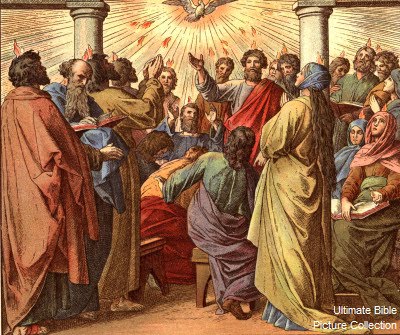
This coming Sunday is the Feast of Pentecost. As Christians we think of it mostly in terms of the second Chapter of Acts – the first four verses, the strong, driving wind, “cloven tongues as of fire,” speaking and prophesying in many languages (some of them possibly angelic languages), and Peter’s amazing proclamation of the Gospel. But what does it mean “… when the day of Pentecost was fully come?” And what were they doing with a Honda? (all with one Accord) OK, that’s an old joke and not a very good one either. Still let’s look a little into what Pentecost is all about.

We begin by turning to Leviticus 23 where God is telling Moses about the feast days he wants celebrated. Leviticus is the third book of the Bible after Genesis and Exodus and the middle book of the Pentateuch, the first five books of the Hebrew Bible. The name Leviticus refers to the fact that most of the content of this book is the Policy and Procedure Manual for the Tribe of Levi, the Priestly Tribe. There are 27 chapters of rules, advice, and information on topics like sacrificial offerings, purity, holiness, the prescribed conduct and values for priesthood, rules for the sanctuary, and definitions and procedures for all of the feast days. In chapter 23, there are several feasts listed. They are given in the order in which they are to be observed and there is information on preparations for each and in some cases the reasons for the feasts and the rules that go with them.

Here are the feasts described in chapter 23, the section of Leviticus devoted to “Holiness Laws.” The Sabbath is described and then come other annual memorials. First comes Passover. Next is the Feast of Unleavened Bread which begins the day after Passover and lasts one week. During that time, Israelites ate unleavened bread. Then comes the Feast of Firstfruits, the day after Passover’s Sabbath, a Festival of Harvest and thanksgiving to God for the blessings of food. This was an offering made in hopes of further blessings from God. Usually this would be barley as it is one of the first grains to ripen.

Then there is the Festival of Trumpets, Rosh Hashanah which commemorates the creation of the world. No work was to be done on that day and all of Israel was to bring offerings to the temple when they heard the blast from the trumpets. This is the fifth of the Seven Feasts. The Feast of Trumpets begins on the first day of the seventh month. It is the opening Festival of the “High Holy Days.” These three feasts )Feast of the Trumpets, the Feast of Atonement – Yom Kippur, and the Feast of Tabernacles – Succoth) bring to a close the Liturgical Year of Israel and foreshadow the Plan of Redemption made manifest in Jesus. So, the seven feast are:

1. Passover (Pesach)
2. Unleavened Bread (Chag Hamotzi)
3. Firstfruits (Yom Habikkurim)
4. Pentecost (Shavu’ot) The Feast of Weeks or Festival of Harvest
5. Trumpets (Yom Teru’ah)
6. Atonement (Yom Kippur)
7. Tablenacles (Succoth)

Pentecost is described in Leviticus 23:15-22. There was a period of seven weeks – a week of Sabbaths – that were measured off. On the day after the end of the seven weeks – the fiftieth day, a celebration was prescribed by God. The name “Pentecost” comes from the Greek term for the celebration, Πεντηκοστή ἡμέρα (pentekoste hemera) which means fiftieth day. The offering for that day consisted of two loaves of finest yeast bread made from the finest flour, seven one-year-old lambs, one bull, and two rams offered as burnt offerings. Verse 19 says, “Then you must offer one male goat as a sin offering and two one-year-old male lambs as a peace offering.” It is also in this passage that the directive to allow for gleaning. It was the law of gleaning that brought Ruth and Boaz together. That’s for another lesson, though.

Jesus was crucified during the Feast of the Lord’s Passover, and he ascended 40 days after his resurrection. The Holy Spirit came 50 days after the Resurrection, which was of course, 10 days after the Ascension. Because of the importance of this feast, which God said, “This is a permanent law for you, and it must be observed wherever you live,” Jews of many nations would be gathered in Jerusalem in pilgrimage for this festival. When Peter, therefore, with the Holy Spirit rushing upon him and the other apostles stood up and addressed the crowd that had gathered around the place where the disciples were staying, persons of many languages and cultures were attracted to these curious events. The “tongues as of fire” are a fulfillment of John the Baptist’s prophecy of Jesus: “He will baptize you with Fire.” The parallel here is that God validated the Law given on Mount Sinai to Moses with fire (Exodus 19:16-18), and in the New Covenant, validated the arrival of the Paraclete with fire as well. Whereas in the First Covenant the fire was only in one place, in the New Covenant it was in many people.

The Feast of Firstfruits stands as a foreshadowing of the Resurrection of Christ as the “first fruits of them that sleep” (1 Cor. 15:20) in the expectation of further blessings from God – an even greater harvest. Pentecost foreshadows the coming of the Spirit, and the resultant harvest as the beginning of the “High Holy Days” of the Church.

Rosh Hashannah prefigures the Resurrection, the sounding of the trumpets and the dead being raised as Paul described in 1 Corinthians 15:51-58. This is one of my favorite Bible passages because it is one of my favorite solos in Handel’s Messiah. I’m getting the shivers just thinking about it right now!

Yom Kippur was the singularly unique of the year in which the Most Sacred space in the Temple, the Holy of Holies (or “the Most Holy Place”), was entered. You may recall from a previous Aloha Friday Message that it was where the Ark of the Covenant was the location for the Sh’khinah Glory of God to reside. God’s presence literally inhabited the area above the Ark, and no one was permitted into the Most Holy Place except on Yom Kippur and in the precise manner which God had established. It was on this day that the sins of the whole nation were considered atoned – expiated, wiped out, redressed – for the preceding year. With Jesus Atonement, the sins of all time are wiped out forever.

So, now we know a bit more about why Pentecost is called Pentecost, why everyone was in Jerusalem at the time, why it is 50 days after Easter and 10 days after Ascension. And we know why and how it relates to the Seven Great Feasts God told Moses and the Levites to establish forever for the people of Israel. As we are the adopted children of Moses, Abraham, Isaac, and Jacob through the Life, Passion, and Resurrection of Jesus the Christ, we really should know how these feasts came about and why they are important to us.

And now, Beloved, in closing I ask you to reflect on what you have read as you consider what God has planned for the Second Covenant Feast of Tabernacles.

Whatever, whenever, wherever, whoever, however, if ever, forever — at your service, Beloved!

Aloha Friday Message – May 18, 2012 – Look him up.

1220AFC051812 Look him up.

Read it online here.

Today I want to return to something from 2009. It begins right after the rainbow graphics. I feel strongly about sharing it with you again, so strongly that I have been thinking about how, exactly, I should present the topic that has dominated my thinking all through the Lenten and Easter Season. Every devotional, every Mass, every Bible study has been circling around this one passage from The Acts of the Apostles:

Acts 1:1-11 (ESV) In the first book, O Theophilus, I have dealt with all that Jesus began to do and teach, 2 until the day when he was taken up, after he had given commands through the Holy Spirit to the apostles whom he had chosen. 3 He presented himself alive to them after his suffering by many proofs, appearing to them during forty days and speaking about the kingdom of God. 4 And while staying with them he ordered them not to depart from Jerusalem, but to wait for the promise of the Father, which, he said, “you heard from me; 5 for John baptized with water, but you will be baptized with the Holy Spirit not many days from now.” 6 So when they had come together, they asked him, “Lord, will you at this time restore the kingdom to Israel?” 7 He said to them, “It is not for you to know times or seasons that the Father has fixed by his own authority. 8 But you will receive power when the Holy Spirit has come upon you, and you will be my witnesses in Jerusalem and in all Judea and Samaria, and to the end of the earth.” 9 And when he had said these things, as they were looking on, the was lifted up, and a cloud took him out of their sight. 10 And while they were gazing into heaven as he went, behold, two men stood by them in white robes, 11 and said, “Men of Galilee, why do you stand looking into heaven? This Jesus, who was taken up from you into heaven, will come in the same way as you saw him go into heaven.”

This is a chance to review my #1 favorite passage of Scripture. It is also an opportunity to publicly say HAPPY BIRTHDAY to my One True Love ~ Crucita. Make it a wonderful day, Crucita. I love you!!


Happy Aloha Friday, everyone.~!  Is everything looking up in your life despite so many people, places, things, and ideas being so down? I hope so. Looking up is a handy thing sometimes. After all, “What goes up must come down.”

I look up a lot. Well, I mean, I look a lot of things. I’ve always been kind of a research freak. I had the Richard’s Topical Encyclopedia when I was a kid – still have it in fact in my home library. It was one of those things my parents bought for me before I could even read. It also came with ten year’s worth of In Our times, an annual publication that summarized the year’s events. As I recall there was also a set of books called Lands and Peoples and a collection of popular books like Black Beauty, Heidi, Treasure Island, and even Tales from Shakespeare. One of my favorite places to look up things was the Funk & Wagnall’s Standard Dictionary of the English Language. It was two big, blue, thick, heavy volumes of thousands of words all defined to the nth degree. I loved using all those books and read for hours and hours just looking up one thing after another.

Of course, another mode of “looking up” is like, “Things are looking up!” I can remember joking (badly as is often the case in my life), “Well what are those ‘things’ looking up at?!” Of course that expression, things are looking up, means that life is getting better. I keep hearing that the things that are happening in the economy mean that “things are looking up,” but I am not convinced yet that they really are. I mean, we’re being told that what’s going on will make things better and that there would be consequences even direr if we didn’t do them.

I just wonder if the duplicity and amorality that got us into this mess is the best approach to getting out of it. Can we really solve our economic crises by just printing more money and using it to pay for more stuff? I’m not very good at understanding that kind of thing, and the more I look up about it the more confused I get. I find that looking down on it doesn’t do me much good either. Looking past it or overlooking it doesn’t seem to be very helpful as well. My thinking is moving more and more toward “stop looking” and “get involved.”

We look up to people we respect – our elders, our heroes, our loved ones. That’s a good thing in some ways as long as we don’t put them up so high that all we can do is look up but never reach up high enough to connect up. We do that with God sometimes – put him up so high and far away that we forget He’s walking along with us every inch of the way, and even lives in our hearts! We look up to all these persons as persons of quality, persons who will accept the gifts of respect and love we exchange between them and us.

All of us have done the kind of looking-up at clouds and stars, and the moon (hooray for the MBN!!), and airplanes, and sky-scrapers, and birds (another hooray for the iwi and albatrosses here on Kaua‘i!!), and all manner of things above our heads. Of course, we still have to pay attention to what’s around our feet, and whatever is within our sphere of experience and responsibility. Looking up in awe is great exercise

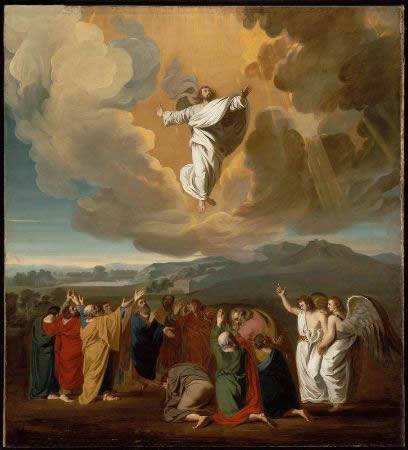
This week, yesterday in fact, there was another kind of looking up that we commemorated: The Ascension. To me, that event is so reassuring. It is a very strong central tenet of my faith. And in a way, it’s one of my favorites because the angels in that account have a little bit of attitude about them.

The Ascencion - by Copley

Here’s what I mean. Jesus has just been talking with the disciples, and suddenly WHOOSH! He’s on the Cloud Elevator going back to spend eternity with His Dad – Abba. Very, cool. And if we could be there watching (and we are – I’ll tell you about contemporaneous concomitance sometime), we would see the disciples standing there literally dumbfounded. Then two angels show up and say, “Men of Galilee, why-y-y-y are you standing there looking into the sky!? This same Jesus, who has been taken up from you into Heaven will return to you in the same way you saw him going up into Heaven.” Man! How great is that?!?! I think that passage is just amazing. I guess some scholars can debate about “in the same way” or “in like manner” but for me the word that jumps off the page and makes my ears ring is SAME as in THIS SAME Jesus. Now for those of you who are true Biblicists, really-real Bible scholars, I may be stepping out on a limb here. In the Greek used in Acts, the word for same is houtos I can put the Greek letters here, but they might not display correctly on your screen: οὗτος. So it turns out that this word, which is used in a bunch of places in the Bible, means this one, the one visibly present here, the one just named and none other than this one. There’s not another one, there’s no way it could be someone else. It will be precisely, exactly, permanently that same guy you just saw take off into the clouds. It is HE who will return to you.
Pre-millennial, post-millennial, silently or with a mighty trumpet blast, in fire or in thunder – I don’t really care about any of that. I only care that it will be Him. I don’t care if He comes with The Church Triumphant or The Bride of Christ or with Many Crowns or a white horse and an army or whatever. It will be HIM, and that is all I need to know. It is also the best reason I have for always looking up in every sense of the phrase. He won’t be coming to us from inside us – where He lives now for all who accept Him. He will be coming back from somewhere UP THERE. Look up, Beloved. What went up will be what comes down: Christ, The Lord.
Whatever, whenever, wherever, whoever, however, if ever, forever— at your service.
Make it a great day. Pray as you look up. Pray for healing, health, and hope for our loved-ones who are ill – yours and mine. Pray for justice, mercy, and peace – yours and mine, theirs and ours. Pray for enemies who seek to destroy life, faith, meaning, and freedom – yours and mine and even their own. Pray for those who pray. They are ours, together. Pray with, for, and about each other, Beloved. Be diligent in your love. When he returns, I want, you want, we want, to be found joyfully working in and for the Kingdom of God.
~chick


Aloha Friday Message – May 11, 2012 – Overflowing JOY

1219AFC051112 Overflowing Joy

NAB: John 15:11

I have told you this so that my joy may be in you and your joy might be complete.

NJB: John 15:11

I have told you this so that my own joy may be in you and your joy be complete.

Aloha nui loa, hiwahiwa! Today we look at JOY, the second of the Fruits of the Spirit listed by Paul in his letter to the Galatians (5:22-23). The first fruit listed is Love. (So when we are told throughout Scripture to bring to God the first fruits …). When we first experience the Love of God it is followed immediately by the Joy of his presence. Joy is more than happiness. Happiness is fleeting, dependent on external stimuli, a state of mind perceived intellectually, and is derived from a subjectively realized source of satisfaction. Joy is a persistent delight, a state of being arising from an objective internal realization of exceptional fulfillment. Jesus’ Joy truly was exceptional – he lives in the Father and the Father lives in him – and that is the Joy, his own personal Joy he gives to his disciples. We are his disciples if we keep his command to love one another as he has loved us.

Notice I used the word command and not commandment. When I think of “commandment,”  I think of a prescribed rule in accordance with which a thing is done. When I think of “command,” I think of an order to which obedience is mandatory. If you look at that passage in multiple Bible versions, you can see that both words are used. To me, a rule is something set up out there for everyone which I should know about, but might not always follow. A command, on the other hand, is something aimed directly at me, and I am fully and individually responsible for obeying that command. So in John 15:12, when Jesus says “This is my command(ment): That you love one another as I have loved you, ” is Jesus giving us a rule to live by or a direct order to be carried out? We have the same options in John 13:34 and John 15:17. Whether you choose command of commandment, compliance with the intent is an absolute requirement.

In John 14:27, Jesus tells us he is leaving us his own Peace. Here in today’s passage, John 15:11, Jesus is filling us with his own Joy, a Joy that far exceeds any sense exceptional fulfillment. This is a Joy that is more than exceptional; it is unsurpassable – endless, boundless, perpetual, infinite – it is Divine Joy because it is HIS Joy.

This JOY is cara chara {khar-ah’} – a word related to χαίρω – chairo which is “to rejoice exceedingly. Here we have a great Mystery of Faith as well as a great Gift of Grace: We are to be filled with the Peace of Christ which opens our hearts which the Holy Spirit deluges with inexpressible, overwhelming Joy. “Love one another as I have loved you.”

How does he LOVE you, LOVE me, LOVE us? With Perfect Peace. With Total Joy. Completely. Unconditionally. Eternally. He knew us before we were formed in our mother’s womb, and he knew us because he created us, and he created us because he loved us, and he loved us because he is LOVE. In Ecclesiastes 11:5 we read, “Just as you know not how the breath of life fashions the human frame in the mother’s womb, So you know not the work of God which he is accomplishing in the universe.” We are known by him before, during, and after we have life, and the life we have comes for the Spirit, the LORD, the Giver of Life. The same LORD who is

LIGHT ≡ GOD ≡ LOVE ≡ TRUTH ≡ WAY ≡ LIFE

graces us with Peace and Joy which began with the first word of creation, took shape in us at conception, and stays with us through perpetuity … when we love one another as he has loved us.

How can we love one another that perfectly? When we live in, with, and for The Way, The Truth, and The Life – when the Veil is torn from top to bottom – then Peace and Joy transcend all our brief existence in our present life. And therein we find our hearts opened to that complete Joy. Here, complete is πληρόω pleroo {play-ro’-o} – filled to the top so that nothing more can be added, complete and perfect in every way, absolutely and totally filled in a way that will cause God’s will (as made known in the law) to be followed and obeyed as it should be, and God’s promises (given through the prophets) to entirely fulfilled. Jesus’ Divine Peace comes to us through Jesus’ Divine Love and refreshes our hearts in the River of his Divine Joy, The River of Life.

Whatever, whenever, wherever, whoever, however, if ever, forever — at your service, Beloved.

Share-A-Prayer

© For all the folks who are seeking lasting, meaningful, financially rewarding work including CC, TH, TO, CT, KD, & all of the people you might know who need good jobs.

© Bless and protect the lives and works of the gallant men and women who serve in our Armed Forces around the world. For those who are in the greatest danger in combat zones, send your mighty angels to stand with them against our foes.

© Bless and protect the lives and works of the gallant men and women who serve in our Armed Forces around the world. For those who are in the greatest danger in combat zones, send your mighty angels to stand with them against our foes.

© We pray for Christians, and for people of all faiths, who are being persecuted for their beliefs, especially Pastor Youcef Nadarkhani. Deliver him and his whole family from the Lions’ Den and from every possible threat of danger or death.

© We continue to pray for and support the families who are affected by addictions of any kind. Bind and eject the demons that imprison these souls.

© Continued prayers also for all of our friends suffering serious illnesses – cancer, diabetes, heart ailments, mental illness, and any other debilitating disease: FO, CC, GW,SC,CW,MG, TM, JC, JG, JM, and everyone you know – especially the children – whose life is threatened by acute or chronic illness.

© Bless everyone who prays for us and everyone who asks for our prayers. Bless all of us with the will to do small things with great love, that love which we share among all of the members of the Moon Beam Network.

© Please send me your pray requests. We’ll get together to give God our PUSH. Pray Until Something Happens.

Special MBN Announcement May 5, 2012 – SUPER MOON

Aloha nui loa ʻōmea! I should have mentioned that this evening will feature quite a beautiful event in the sky. It will be the so-called Super Moon. Sometime during the evening hours, look for the full moon in the sky and take a few seconds to be in touch with the MBN. Chances are pretty good at least one of us will be looking at the moon with you!

Here’s a place where you can get some information and another place to see a map. Make it a special viewing by sharing this with your fellow MBN members:

MiniMoon

Father, I take a moment to remember everyone in the Moon Beam Network. Watch over them all. Bless them. Protect them. Guide them. Direct them. Keep them all safe from any harm or danger in body mind and spirit. See to their temporal needs and continue to call them all to a deeper spiritual awareness of and commitment to you. Give them your Light. Bless everyone who prays for us and everyone who asks for our prayers. Bless all of us with the will to do small things with great love which we share among all of the members of the Moon Beam Network. Likewise bless everyone I have ever loved and everyone who has ever loved me, and anyone who has ever loved them, for the love we have comes from You through Your Son Jesus the Christ by the ministry of The Holy Spirit. AMEN.


Aloha Friday Message – May 4, 2012 – 127 degrees

1218AFC050412 Fifth Sunday in Easter

Read it online here.

About 1,000 years ago, when I was in the eighth grade at Merrill Junior High in Denver, we had a pretty active Youth Program at our church. It was sponsored by two people who were not a “couple,” both in their mid-thirties, and the 15 or so Jr-Hi kids really had a great time with them. They let us call the Rick and Jane – adults addressed by their first names! They planned and chaperoned great parties, trips, Bible studies, and service opportunities that were – and still are – unforgettable. One particular party I remember was our Halloween Party in 1959. We had the usual scavenger hunt, hot cider and donuts, apple-bobbing, scary stories, and decorations. Toward the end of our party we played a little “adventure game.” Here’s how it went:

It was mid-Fall, the end of October, and it was already really cold outside. All of us were wearing our winter coats. The coats were piled up on a bed in one of the bedroom of the house hosting the party. Rick told us, “Go get your coat and bring it into the living room.” Once everyone had complied, he said, “Now, find a spot on the floor and lay down so that you’re not touching anyone else.” Amid some giggling and grumbling, we did as he asked. What came next made us wonder what he was up to and promised to be super fun.

“OK, now cover yourself with your coat so that you are completely hidden. If your coat won’t cover everything, make sure it at least covers your head, shoulders, and most of your trunk.” (Rick was a doctor.) Once we’d worked that out, with Jane’s help to make sure we were well-covered, Rick gave us this scenario.

“You are lost in the desert. It is a hundred-twenty-seven degrees. You have no water. The heat is just burning you up. You decide you have to get rid of a piece of clothing that you don’t need in this heat. Pick an article of clothing you don’t need and set it on the floor next to you.” More giggles, more unspoken questions, more temptations to peek, more patrols by Jane and Rick. Most people had taken off a shoe. The game continued.

“It’s still a hundred-twenty-seven degrees. You’re burning up. That last move didn’t help much. You need to discard something else you don’t need.” More giggles, more groans, more shoes. This just kept going on, and on; it was always a hundred-twenty-seven degrees, and it was always, “Take something else off, a piece of clothing you don’t need in this heat.” After several rounds a few people were getting close to experiencing embarrassment in one form or another. They might be embarrassed because they removed so many clothes they were down to their unmentionables, or they might be embarrassed because they were one of the last persons to recognize that if it is a hundred-twenty-seven degrees outside, the first piece of clothing you don’t need is … YOUR WINTER COAT!

We all had a good laugh about that and trooped into the kitchen to finish up the cider and donuts. Then we went back to the living room and talked about our adventure. We talked about when we first realized what we needed to do – move the coat. Jane asked us if the rules said we had to stay hidden. Nope. No one told us to stay hidden so getting rid of the coat was OK. Rick asked us if we were told we couldn’t ask for help from someone else. Nope. There was nothing wrong with asking anyone or everyone, “What did you throw off?” Then we talked about sin.

Rick said, “Each one of us, everyone here, has a burden of sin. It weighs us down. No matter what the weather is – boiling hot or freezing cold – if our lives are covered with sin, it’s not helping us, it’s not protecting us, and we certainly don’t need to keep carrying it around with us.” Then he read Psalm 55:22 to us: Cast thy burden upon the LORD, and he shall sustain thee: he shall never suffer the righteous to be moved.” HE will never allow us to fall. Then Rick and Jane explained that we never should feel like we have to carry that burden of our sins around with us. It’s like loading up a backpack with big rocks and then walking up a hill covered with boulders. “Sin is a burden you can always lay down and leave behind,” said Rick.

Jane followed with, “And as we saw tonight we’ll often try to get rid of everything else in our life but still hold onto and even hide behind that sin which we do not need.” Someone asked, “What if you lay it down, but pick up more somewhere else?” Another teen answered, “Well, I guess whenever we realize we’re carrying around a burden we don’t need, we can just do the same thing. Give it to the Lord, or just leave it lying on the ground.” You could see little light bulbs above everyone’s head. Then one friend’s light bulb winked out. “But, what if you lay it down and it still doesn’t help? What if you’re still burdened, hot, and tired, and feel terrible?” That was a tough one. Rick and Jane waited for us to think it over, and then another friend said, “Then come over and tell me about it. I’ll help you! You’re my friend!”

Beloved, so many of us are burdened with so many useless things. Remember Martha and Mary? Martha’s multi-tasking in the kitchen, the garden, and the terrace getting together a banquet for Jesus and a house-load of friends. Mary is sitting at Jesus’ feet talking, listening, and being of no help to Martha. Martha comes in and blows a gasket asking Jesus to tell her sister to help her. Very gently, Jesus says, “Martha, Martha,” the Lord answered, “you are worried and upset about many things but only one thing is needed. Mary has chosen what is better, and it will not be taken away from her.” Many of the things we think we need to do, have to do, and can’t live without – they are like that winter coat in the desert. They might as well be dead, barren, fruitless branches. We trim the dead branches out of trees and vines, and we need to get the “deadwood” out of our hearts as well. And that brings us to today’s Bible passage.

John 15:5 (NAB) I am the vine, you are the branches. Whoever remains in me and I in him will bear much fruit, because without me you can do nothing.

If you are hoping for a very fruitful vineyard, for example, you have to prune the vines. It’s not enough to cut out the sections that have dried up. You also have to cut back the good parts, the living parts, the fruitful parts so that they will become even more fruitful. In verse 2 of this same chapter, Jesus said, “He takes away every branch in me that does not bear fruit, and every one that does he prunes, so that it bears more fruit.” What is it like when God prunes away the deadwood in our lives? It is like laying down that winter coat in the desert. And what is it like when God prunes the live branches? It is like the times we know our lives are reshaped, refocused, and poised for growth; it is when we learn by yielding to the hand of God. It is when our lives are shaped by listening to the Word of God.

Suppose I know that you really love grapes. I decide I want to give you a memorable present, so I go to a vineyard being pruned and gather up a few of the pruned branches, and wrap them in a pretty bow as a friendship present to you. “Not much of a present,” you say. “What am I supposed to do with these? They’re already wilting.” You get the idea. You do not define your life, or anyone else’s, by the fruit that can’t be grown on pruned branches. Like the artist who throws away everything he does not need in a chunk of marble so that only the figure remains, the branches that are pruned are discarded because they allow the true purpose of the vine to become manifest. The vine bears more fruit after it is pruned.

Beloved, lay down your burdens. Sin, painful relationships, ill will in families, bad habits. NONE of these are things you need. Let your branches be pruned. Friendship, faith, knowledge, charity, wisdom. ALL of these are things you need. Remain in the vine so the vine remains in you. He has loved you with an everlasting love; he has created you and shaped you to be uniquely his and to resemble him closely in your life on Earth. Why should we do this? Look at verses 7-9:

7. If you remain in me and my words remain in you, ask for whatever you want and it will be done for you. 8. By this is my Father glorified, that you bear much fruit and become my disciples. 9. As the Father loves me, so I also love you. Remain in my love.

Beloved, you will always be nestled in my love, too.

Whatever, whenever, wherever, whoever, however, if ever, forever — at your service, Beloved.

chick todd

Aloha Friday Message – April 27, 2012 – It’s Jude

1217AFC042712 It’s Jude – Catholic Letter Series

Read it online here.

Today we will look at the last of the catholic epistles. Most of them are quite short, and this one fits that definition at a mere 25 verses. Like previous letters we have looked at over these past several weeks, this one is packed full of wonderful lessons; indeed, it would be easy to write upwards of a dozen pages about the content of this beautiful letter. One very early scholar of scripture, Origen (O-ruh-jen) wrote “an epistle of few lines, but full of powerful words of heavenly grace.” (International Standard Bible Encyclopedia Copyright, 1939, by Wm. B. Eerdmans Publishing Co. – now in public domain).

Let’s start with a bit of background on who Jude was. At the opening of the letter he writes “Jude, a servant of Jesus Christ and brother of James …” He does not name himself as an Apostle, nor does he name his brother, James, as an Apostle. If we look at Mark 6:3 we read,” Isn’t this Mary’s son and the brother of James, Joseph, Judas [a/k/a Jude] and Simon? Aren’t his sisters here with us?” Some people believe the word “brother” in this verse signifies cousin, while others believe it means “step-brother.” Whichever you follow, the meaning is that he was in some way related to Jesus. This James, then, is not the Apostle James son of Zebedee and brother of the Apostle John. He is the James who was an early leader of the Jerusalem church. And of course it has nothing to do with the Beatle’s song “Hey Jude” written by Paul McCartney about John Lennon’s son Julian who was taking being separated from his father rather hard during his parents’ divorce. So, with that out of the way, let’s get onto the epistle.

The letter, like other letters from Peter and James, addresses something called apostasy – a renunciation of faith or a refusal to believe the established doctrines of true faith. There is one particular passage I want to highlight:

ESV: 12 These are hidden reefs at your love feasts, as they feast with you without fear, shepherds feeding themselves; waterless clouds, swept along by winds; fruitless trees in late autumn, twice dead, uprooted; 13 wild waves of the sea, casting up the foam of their own shame; wandering stars, for whom the gloom of utter darkness has been reserved forever.

Jude was speaking of people who had infiltrated the early Christian churches and, under the guise of being “part of the flock,” behaved in shameful, lewd conduct at the meetings of believers (referred to as love feasts in this epistle). At this time in church history, believers met at the home of one of the members, shared a full meal intended to foster Christian fellowship, and then that was followed by celebration of the Last Supper. These pseudo-believers pretended to be believers when in fact they were just looking for ways to par-tay! Jude had apparently planned to write a longer, more detailed discourse about these false teachers and “church-goers” as Peter had done (there are a lot of similarities between the Epistle of Jude and 2 Peter), but felt it was more urgent to dash of a letter warning of these people who posed an imminent danger to the true church and the true believers.

These false teachers were twisting the teachings of the apostles to suit their own twisted desires. This was leading to confusion among the faithful. Jude refers to them, in the passage above, as “hidden reefs.” Another version of that idea is that they were like sunken rocks that could tear apart any vessel (church) just as a ship might be tore asunder against a hidden obstacle. They feed upon the flock like shepherds feasting on their own sheep with no regard for the future of the flock; they gorge themselves without even thinking of the consequences. They are like clouds that produce no rain and don’t stick around long enough to even provide shade. They are as worthless as withered trees stripped of leaves and bark and then uprooted; they provide nothing but firewood and Jude says that’s where they are headed – to everlasting fire. As you look at the five different negative descriptions Jude uses to describe them it is pretty clear he considered them highly dangerous – and utterly useless. There were insincere, immoral, and doomed to God’s just punishment for their disrespect of the Gospel, of the Apostles, and of the Church itself.

The Epistle of Jude has been part of the canon of scripture – the accepted books of the Bible – for most of the existence of Christianity. There were some “rough spots” in accepting it as inspired scripture because of references Jude makes to two literary works that were known as traditional stories but which were never considered to be inspired works. One was The Book of Enoch which purported to be the writing of the ancient holy man Enoch (see Genesis 5:21-24) and The Assumption of Moses in which the death of Moses is described. These are referred to as apocryphal books – mythical stories which were popular and well-known, but not inspired scripture. Jude uses these well-known sources to illustrate a point, but in no way does his use of these common quotes signify that he considered them Scripture.

Throughout the entire epistle, Jude is warning the church that they must be thoroughly grounded in the fullest-possible understanding of the teaching of the Apostles, for therein they will find protection from the excessive and ridiculous teachings of the false teaches that have infiltrated their church and in some cases caused others to fall into errors of faith. Jude warns that these unrepentant evil-doers will face God’s most severe judgment for their rebellion against the Gospel, the Church, and Christ and his Holy Apostles. He describes how a whole generation of Israelites died in the desert because they would not trust God and rejected his leadership. Only two people of that generation survived and entered into the Promised Land – Joshua and Caleb. Then he describes how the angels, living in the very presence of God himself, rebelled with Lucifer and were cast out of Heaven. Lastly he describes Sodom and Gomorrah – the very epitome of lawlessness, perversion, and sin. God utterly destroyed those cities but saved Lot and a remnant of his family. Jude says that if God would punish, exile, eliminate the creatures who rejected him, how much more so would he condemn and punish these wicked false teachers who rejected his Son, perverted the Gospel, and endangered the souls of so many who were new to the Living Word as preached by the Apostles and the True Church?

Nowadays, we risk the same kind of error when we take sin for granted, assume there can’t really be eternal punishment, and ignore the same kinds of budding hypocrisy and apostasy in the world today. Wherever there is gross corruption of the Truth, these false teachers are at the core of it. It happens in every religion, and is certainly to be found in all three of the Abrahamic Religions, Judaism, Christianity, and Islam. It is the Devil’s favorite way of fighting God: Tell a lie that seems just plausible enough and then compound it with more lies once we take the bait.

Beloved, this is the lesson I have wanted you to take from these lessons, that you should know your faith, and that you should start by knowing when God is speaking to you. That is why we have the Bible, the inspired word of God. Next you must learn to discern between false and true teachings, and there again we turn to the Bible in Paul’s letter to the Hebrews (4:12) we read that the Word is like a two-edged sword, so effective that it cuts right into us differentiating between the soul and the spirit, between the joints and bones of our lives, and judges the content of our hearts. Paul calls the Word the Sword of the Spirit in Ephesians 6:17. Get into the word, get into your Bible, then get you and your Bible into church and good, sincere, holy Bible study. Just keep a sharp eye and ear for those hidden reefs that proffer slander, hatred, lust, and self-serving greed.

Share-A-Prayer

Please remember GW in you prayers for the next few weeks as she goes back into treatment after a relapse of her cancer. Her husband C has also had cancer treatments. These faith-filled friends always say “God is still on His Throne.”

Remember also RH who is now recuperating from a big-time surgical procedure, just the latest in a long spate of serious health issues. Pray for endurance and well as respite for his family.

Please continue in your prayers for everyone who suffers addictions to things that destroy health, destroy lives, and do damage to their loved-ones in the process. We have so many requests for addicts, from addicts, and especially about their families and friends. Pray for them because they may not be able to pray for themselves. Pray about them because they may not see the hope you see in taking your prayers to Jesus. And hopefully at times we can pray with the, especially when they cry out to God for merciful deliverance from whatever is separating them from him.

Now, to close, I want to give you the last few verses of Jude, a doxology (literally “praise-words”) NAB:24To the one who is able to keep you from stumbling and to present you unblemished and exultant, in the presence of his glory, 25 to the only God, our savior, through Jesus Christ our Lord be glory, majesty, power, and authority from ages past, now, and for ages to come. Amen.

Whatever, whenever, wherever, whoever, however, if ever, forever — at your service, Beloved!

Jesus loves you, and so do I.

1217AFC042712 It’s Jude

Read it online here.

Today we will look at the last of the catholic epistles. Most of them are quite short, and this one fits that definition at a mere 25 verses. Like previous letters we have looked at over these past several weeks, this one is packed full of wonderful lessons; indeed, it would be easy to write upwards of a dozen pages about the content of this beautiful letter. One very early scholar of scripture, Origen (O-ruh-jen) wrote “an epistle of few lines, but full of powerful words of heavenly grace.” (International Standard Bible Encyclopedia Copyright, 1939, by Wm. B. Eerdmans Publishing Co. – now in public domain).

Let’s start with a bit of background on who Jude was. At the opening of the letter he writes “Jude, a servant1 of Jesus Christ and brother of James …” He does not name himself as an Apostle, nor does he name his brother, James, as an Apostle. If we look at Mark 6:3 we read,” Isn’t this Mary’s son and the brother of James, Joseph, Judas [a/k/a Jude] and Simon? Aren’t his sisters here with us?” Some people believe the word “brother” in this verse signifies cousin, while others believe it means “step-brother.” Whichever you follow, the meaning is that he was in some way related to Jesus. This James, then, is not the Apostle James son of Zebedee and brother of the Apostle John. Je is the James who was an early leader of the Jerusalem church. And of course it has nothing to do with the Beatle’s song “Hey Jude” written by Paul McCartney about John Lennon’s son Julian who was taking being separated from his father rather hard during his parents’ divorce. So, with that out of the way, let’s get onto the epistle.

The letter, like other letters from Peter and James, addresses something called apostasy – a renunciation of faith or a refusal to believe the established doctrines of true faith. There is one particular passage I want to highlight:

ESV: 12 These are hidden reefs at your love feasts, as they feast with you without fear, shepherds feeding themselves; waterless clouds, swept along by winds; fruitless trees in late autumn, twice dead, uprooted; 13 wild waves of the sea, casting up the foam of their own shame; wandering stars, for whom the gloom of utter darkness has been reserved forever.

Jude was speaking of people who had infiltrated the early Christian churches and, under the guise of being “part of the flock,” behaved in shameful, lewd conduct at the meetings of believers (referred to as love feasts in this epistle). At this time in church history, believers met at the home of one of the members, shared a full meal intended to foster Christian fellowship, and then that was followed by celebration of the Last Supper. These pseudo-believers pretended to be believers when in fact they were just looking for ways to par-tay! Jude had apparently planned to write a longer, more detailed discourse about these false teachers and “church-goers” as Peter had done (there are a lot of similarities between the Epistle of Jude and 2 Peter), but felt it was more urgent to dash of a letter warning of these people who posed an imminent danger to the true church and the true believers.

These false teachers were twisting the teachings of the apostles to suit their own twisted desires. This was leading to confusion among the faithful. Jude refers to them, in the passage above, as “hidden reefs.” Another version of that idea is that they were like sunken rocks that could tear apart any vessel (church) just as a ship might be tore asunder against a hidden obstacle. stripedd upon the flock like shepherds feasting on their own sheep with no regard for the future of the flock; they gorge themselves without even thinking of the consequences. They are like clouds that produce no rain and don’t stick around long enough to even provide shade. They are as worthless as withered trees striped of leaves and bark and then uprooted; they provide nothing but firewood and Jude says that’s where they are headed – to everlasting fire. As you look and the five different negative descriptions Jude uses to describe them it is pretty clear he considered them highly dangerous – and utterly useless. There were insincere, immoral, and doomed to God’s just punishment for their disrespect of the Gospel, of the Apostles, and of the Church itself.

The Epistle of Jude has been part of the canon of scripture – the accepted books of the Bible – for most of the existence of Christianity. There were some “rough spots” in accepting it as inspired scripture because of references Jude makes to two literary works that were known as traditional stories but which were never considered to be inspired works. One was The Book of Enoch which purported to be the writing of the ancient holy man Enoch (see Genesis 5:21-24) and The Assumption of Moses in which the death of Moses is described. These are referred to as apocryphal books – mythical stories which were popular and well-known, but not inspired scripture. Jude uses these well-known sources to illustrate a point, but in no way does his use of these common quotes signify that he considered them Scripture.

Throughout the entire epistle, Jude is warning the church that they must be thoroughly grounded in the fullest-possible understanding of the teaching of the Apostles, for therein they will find protection from the excessive and ridiculous teachings of the false teaches that have infiltrated their church and in some cases caused others to fall into errors of faith. Jude wars that these unrepentant evil-doers will face God’s most sever judgment for their rebellion against the Gospel, the Church, and Christ and his Holy Apostles. He describes how a whole generation of Israelites died in the desert because they would not trust God and rejected his leadership. Only two people of that generation survived and entered into the Promised Land – Joshua and Caleb. Then he describes how the angels, living in the very presence of God himself, rebelled with Lucifer and were cast out of Heaven. Lastly he describes Sodom and Gomorrah – the very epitome of lawlessness, perversion, and sin. God utterly destroyed those cities but saved Lot and a remnant of his family. Jude says that if God would punish, exile, eliminate the creatures who rejected him, how much more so would he condemn and punish these wicked false teachers who rejected his Son, perverted the Gospel, and endangered the souls of so many who were new to the Living Word as preached by the Apostles and the True Church.

Nowadays, we risk the same kind of error when we take sin for granted, assume there can’t really be eternal punishment, and ignore the same kinds of budding hypocrisy and apostasy in the world today. Wherever there is gross corruption of the Truth, these false teachers are at the core of it. It happens in every religion, and is certainly to be found in all three of the Abrahamic Religions, Judaism, Christianity, and Islam. It is the Devil’s favorite way of fighting God: Tell a lie that seems just plausible enough and then compound it with more lies once we take the bait.

Beloved, this is the lesson I have wanted you to take from these lessons, that you should know your faith, and that you should start by knowing when God is speaking to you. That is why we have the Bible, the inspired word of God. Next you must learn to discern between false and true teachings, and there again we turn to the Bible in Paul’s letter to the Hebrews (4:12) we read that the Word is like a two-edged sword, so effective that it cuts right into us differentiating between the soul and the spirit, between the joints and bones of our lives, and judges the content of our hearts. Paul calls the Word the Sword of the Spirit in Ephesians 6:17. Get into the word, get into your Bible, then get you and your Bible into church and good, sincere, holy Bible study. Just keep a sharp eye and ear for those hidden reefs that proffer slander, hatred, lust, and self-serving greed.

Share-A-Prayer

Please remember GW in you prayers for the next few weeks as she goes back into treatment after a relapse of her cancer. Her husband C has also had cancer treatments. These faith-filled friends always say “God is still on His Throne.”

Remember also RH who is now recuperating from a big-time surgical procedure, just the latest in a long spate of serious health issues. Pray for endurance and well as respite for his family.

Please continue n your prayers for everyone who suffers addictions to things that destroy health, destroy lives, and do damage to their loved-ones in the process. We have so many requests for addicts, from addicts, and especially about their families and friends. Pray for them because they may not be able to pray for themselves. Pray about them because they may not see the hope you see in taking your prayers to Jesus. And hopefully at times we can pray with the, especially when they cry out to God for merciful deliverance from whatever is separating them from him.

Now, to close, I want to give you the last few verses of Jude, a doxology (literally “praise-words”) NAB:24To the one who is able to keep you from stumbling and to present you unblemished and exultant, in the presence of his glory, 25 to the only God, our savior, through Jesus Christ our Lord be glory, majesty, power, and authority from ages past, now, and for ages to come. Amen.

1217AFC042712 It’s Jude

Read it online here.

Today we will look at the last of the catholic epistles. Most of them are quite short, and this one fits that definition at a mere 25 verses. Like previous letters we have looked at over these past several weeks, this one is packed full of wonderful lessons; indeed, it would be easy to write upwards of a dozen pages about the content of this beautiful letter. One very early scholar of scripture, Origen (O-ruh-jen) wrote “an epistle of few lines, but full of powerful words of heavenly grace.” (International Standard Bible Encyclopedia Copyright, 1939, by Wm. B. Eerdmans Publishing Co. – now in public domain).

Let’s start with a bit of background on who Jude was. At the opening of the letter he writes “Jude, a servant1 of Jesus Christ and brother of James …” He does not name himself as an Apostle, nor does he name his brother, James, as an Apostle. If we look at Mark 6:3 we read,” Isn’t this Mary’s son and the brother of James, Joseph, Judas [a/k/a Jude] and Simon? Aren’t his sisters here with us?” Some people believe the word “brother” in this verse signifies cousin, while others believe it means “step-brother.” Whichever you follow, the meaning is that he was in some way related to Jesus. This James, then, is not the Apostle James son of Zebedee and brother of the Apostle John. Je is the James who was an early leader of the Jerusalem church. And of course it has nothing to do with the Beatle’s song “Hey Jude” written by Paul McCartney about John Lennon’s son Julian who was taking being separated from his father rather hard during his parents’ divorce. So, with that out of the way, let’s get onto the epistle.

The letter, like other letters from Peter and James, addresses something called apostasy – a renunciation of faith or a refusal to believe the established doctrines of true faith. There is one particular passage I want to highlight:

ESV: 12 These are hidden reefs at your love feasts, as they feast with you without fear, shepherds feeding themselves; waterless clouds, swept along by winds; fruitless trees in late autumn, twice dead, uprooted; 13 wild waves of the sea, casting up the foam of their own shame; wandering stars, for whom the gloom of utter darkness has been reserved forever.

Jude was speaking of people who had infiltrated the early Christian churches and, under the guise of being “part of the flock,” behaved in shameful, lewd conduct at the meetings of believers (referred to as love feasts in this epistle). At this time in church history, believers met at the home of one of the members, shared a full meal intended to foster Christian fellowship, and then that was followed by celebration of the Last Supper. These pseudo-believers pretended to be believers when in fact they were just looking for ways to par-tay! Jude had apparently planned to write a longer, more detailed discourse about these false teachers and “church-goers” as Peter had done (there are a lot of similarities between the Epistle of Jude and 2 Peter), but felt it was more urgent to dash of a letter warning of these people who posed an imminent danger to the true church and the true believers.

These false teachers were twisting the teachings of the apostles to suit their own twisted desires. This was leading to confusion among the faithful. Jude refers to them, in the passage above, as “hidden reefs.” Another version of that idea is that they were like sunken rocks that could tear apart any vessel (church) just as a ship might be tore asunder against a hidden obstacle. The feed upon the flock like shepherds feasting on their own sheep with no regard for the future of the flock; they gorge themselves without even thinking of the consequences. They are like clouds that produce no rain and don’t stick around long enough to even provide shade. They are as worthless as withered trees striped of leaves and bark and then uprooted; they provide nothing but firewood and Jude says that’s where they are headed – to everlasting fire. As you look and the five different negative descriptions Jude uses to describe them it is pretty clear he considered them highly dangerous – and utterly useless. There were insincere, immoral, and doomed to God’s just punishment for their disrespect of the Gospel, of the Apostles, and of the Church itself.

The Epistle of Jude has been part of the canon of scripture – the accepted books of the Bible – for most of the existence of Christianity. There were some “rough spots” in accepting it as inspired scripture because of references Jude makes to two literary works that were known as traditional stories but which were never considered to be inspired works. One was The Book of Enoch which purported to be the writing of the ancient holy man Enoch (see Genesis 5:21-24) and The Assumption of Moses in which the death of Moses is described. These are referred to as apocryphal books – mythical stories which were popular and well-known, but not inspired scripture. Jude uses these well-known sources to illustrate a point, but in no way does his use of these common quotes signify that he considered them Scripture.

Throughout the entire epistle, Jude is warning the church that they must be thoroughly grounded in the fullest-possible understanding of the teaching of the Apostles, for therein they will find protection from the excessive and ridiculous teachings of the false teaches that have infiltrated their church and in some cases caused others to fall into errors of faith. Jude wars that these unrepentant evil-doers will face God’s most sever judgment for their rebellion against the Gospel, the Church, and Christ and his Holy Apostles. He describes how a whole generation of Israelites died in the desert because they would not trust God and rejected his leadership. Only two people of that generation survived and entered into the Promised Land – Joshua and Caleb. Then he describes how the angels, living in the very presence of God himself, rebelled with Lucifer and were cast out of Heaven. Lastly he describes Sodom and Gomorrah – the very epitome of lawlessness, perversion, and sin. God utterly destroyed those cities but saved Lot and a remnant of his family. Jude says that if God would punish, exile, eliminate the creatures who rejected him, how much more so would he condemn and punish these wicked false teachers who rejected his Son, perverted the Gospel, and endangered the souls of so many who were new to the Living Word as preached by the Apostles and the True Church.

Nowadays, we risk the same kind of error when we take sin for granted, assume there can’t really be eternal punishment, and ignore the same kinds of budding hypocrisy and apostasy in the world today. Wherever there is gross corruption of the Truth, these false teachers are at the core of it. It happens in every religion, and is certainly to be found in all three of the Abrahamic Religions, Judaism, Christianity, and Islam. It is the Devil’s favorite way of fighting God: Tell a lie that seems just plausible enough and then compound it with more lies once we take the bait.

Beloved, this is the lesson I have wanted you to take from these lessons, that you should know your faith, and that you should start by knowing when God is speaking to you. That is why we have the Bible, the inspired word of God. Next you must learn to discern between false and true teachings, and there again we turn to the Bible in Paul’s letter to the Hebrews (4:12) we read that the Word is like a two-edged sword, so effective that it cuts right into us differentiating between the soul and the spirit, between the joints and bones of our lives, and judges the content of our hearts. Paul calls the Word the Sword of the Spirit in Ephesians 6:17. Get into the word, get into your Bible, then get you and your Bible into church and good, sincere, holy Bible study. Just keep a sharp eye and ear for those hidden reefs that proffer slander, hatred, lust, and self-serving greed.

Share-A-Prayer

Please remember GW in you prayers for the next few weeks as she goes back into treatment after a relapse of her cancer. Her husband C has also had cancer treatments. These faith-filled friends always say “God is still on His Throne.”

Remember also RH who is now recuperating from a big-time surgical procedure, just the latest in a long spate of serious health issues. Pray for endurance and well as respite for his family.

Please continue n your prayers for everyone who suffers addictions to things that destroy health, destroy lives, and do damage to their loved-ones in the process. We have so many requests for addicts, from addicts, and especially about their families and friends. Pray for them because they may not be able to pray for themselves. Pray about them because they may not see the hope you see in taking your prayers to Jesus. And hopefully at times we can pray with the, especially when they cry out to God for merciful deliverance from whatever is separating them from him.

Now, to close, I want to give you the last few verses of Jude, a doxology (literally “praise-words”) NAB:24To the one who is able to keep you from stumbling and to present you unblemished and exultant, in the presence of his glory, 25 to the only God, our savior, through Jesus Christ our Lord be glory, majesty, power, and authority from ages past, now, and for ages to come. Amen.

Whatever, whenever, wherever, whoever, however, if ever, forever — at your service, Beloved!

Jesus loves you, and so do I.

Whatever, whenever, wherever, whoever, however, if ever, forever — at your service, Beloved!

Jesus loves you, and so do I.

Aloha Friday Message – April 20, 2012 – Hospitality Sunday

1216AFC042012 – Catholic Letter Series

Happy Aloha Friday, Beloved! I want to begin today with a special acknowledgement of some recent celebrations.

  • March 25th – 35th anniversary of my confirmation at St. Bede church in Montgomery AL
  • March 27th – 64th anniversary of my baptism as an infant at 1st Presbyterian Church in Rapid City SD
  • April 3rd – 57th anniversary 1st profession of faith at Corona Presbyterian Church in Denver
  • April 5th – 43rd anniversary of my baptism and first communion as a Catholic in 1969
  • April 18th – 57th anniversary of my selection for membership at Corona Presbyterian Church in Denver CO
  • April 19th 43rd anniversary marriage. Charles O. Todd, III married Crucita A. Gonzales at Chapel 2 on Lackland Air Force Base in San Antonio TX.

Seems like Spring is the time of year for good things to happen! For all of you who have been part of those celebrations, I send you my heartfelt thanks and lasting appreciation for your presence in my life (especially you, Mrs. Todd!).

We are now in the Octave of Easter and heading for Pentecost Sunday. Along the way, we’ll pass my absolute favorite passage in the Bible – the account of The Ascension in Acts 1:1-11. But before we get there, there are still a couple of these short epistles we will review. Today we have the third and last epistle from John. There is another book written by John – Revelation – but that won’t be included in this series. A quick comment, though, about that book. The full title is “The Revelation of Jesus Christ” which is given in Revelation 1:1. Many of us hear or say “Revelations” when we refer to this amazing book of prophesy, but there is no “s” in the title. Grab your Bible right quick and have a look. The author of the Gospel named after John, the author of the three epistles we’re reviewing, and the author of Revelation are all the same guy: John, the Beloved Apostle. So, let’s see what John is writing about in this last epistle.

You may remember that the first two dealt with heresies, mostly Gnosticism. 1 John is an elegant treatise on the Love of God. We saw that John’s explication of Jesus’ ministry and purpose could be summarized as LIGHT ≡ GOD ≡ LOVE there the “≡” means “is identical to.” In the second epistle, John addresses his words to a beloved Lady Kyria in Truth and Love, so we added to the identity-expression: LIGHT ≡ GOD ≡ LOVE ≡ TRUTH ≡ WAY ≡ LIFE. In this third epistle, John is writing to another close friend, Gaius who is a member of a small church – perhaps one that John himself planted – and he is telling Gaius to help care for some itinerant preachers who have been denied hospitality. That sounds pretty straightforward, but as with the previous epistles, there are some real treasures in this super-short (15 verses) letter.

John begins with the kind of opening any of us my use; to paraphrase: ” Beloved Gaius, I hope you are well and prospering physically as much as you have prospered spiritually. Some of your friends passed through here recently and commented on your reverence to the Lord and your devotion to serving his church.

John commends Gaius for doing such a good job and for being considerate and hospitable to these itinerant preachers who were bringing the Truth to the region – quite unlike the previous situation in which John warned about itinerant preachers who were assaulting the True Faith with their self-centered lies. John apparently knows the travelers well, and is grateful that Gaius looked after them and helped them.

This is especially important because there is one person associated with that particular community who is not hospitable an is in fact a real detriment to the newly-formed community of believers. The man’s name is Diotrephes (die-AH-tre-fees), a very uncommon name. It means “nourished by Jupiter.” We don’t know exactly what his relationship to this particular church was, but it seems he had assumed the role for being “The Decider.” John had sent a letter to the church previously (we do not have that letter however), and Diotrephes refused the letter on behalf of the community, then made a big stink about how the Apostle John really had no authority to “interfere” with their community. The arrogant chap sees himself as the center of the church, the center of attention, and the epitome of truth. He is a know-it-all who is profoundly ignorant about all matters of faith and incredibly overconfident about his authority in the community. John says of him that he “likes to put himself first.” Diotrephes has intercepted the letter, belittled John’s authority, refused hospitality to the persons who carried the disputed letter to the new church, and then punished those who tried to be hospitable by kicking them out of the church – canceling their membership!

John is laying out an explanation for why he is seeking Gaius’ continued help and hospitality. There is another itinerant preacher – another missionary – headed in the direction of that church. The man’s name is Demetrius, and John gives him a solid thumbs-up introduction: “Demetrius has received a good testimony from everyone, and from the truth itself. We also add our testimony, and you know that our testimony is true.” There is another Demetrius mentioned in Acts 19:24 – Demetrius the Silversmith – who gave Paul and his companions a pretty hard time in Ephesus (two epistles to the Ephesians tell of Paul’s concerns for that church). That guy had a sweet deal going at the Temple of Diana. He was making little silver ornaments – tiny charms to small scale models of the temple – and selling them to devotees of Diana. Paul’s preaching put quite a dent in his business, so that Demetrius really came after Paul and tried to get him thrown out of town. By this time Paul had been in Asia  a little over two years, and nearly all of Asia had heard the Gospel through Paul and his assistants, Timothy, Erastus, Gaius, and Aristarchus. Was this the same Gaius to whom John was writing? We do not know – it was a fairly common name back then, as was Demetrius.

The Demetrius being introduced to Gaius by John was someone John could vouch for personally, and he wanted Gaius to know that he should do everything possible to make sure Demetrius and his companions would receive the utmost courtesy, respect, and hospitality – despite of and in disregard of anything Diotrephes said or did. John closes the letter in a way similar to the previous letters: “I could write more, but why waste the paper and ink? I’ll be speaking with you face-to-face soon.”

Is this brief history, we see some excellent insights into managing difficulties in the church. John begins by reaching out and staying in contact with the church and with people he trusts. Many times we’d rather retreat because we “don’t want to seem confrontational.” MALARKEY! When there’s something amiss, you fix it. One of my previous supervisors often said, “If you see a snake, shoot it!” There is nothing to be gained by avoiding a problem. John’s solution was to face it head on, call upon some allies, and lay out a plan for dealing with the problem.

Diotrephes seems to have relatives living in our churches today. We have all probably known someone who is a self-appointed fixer-of-all, someone whose personal brand of piety is – in their humble opinion – superior to everyone else’s. The thing is that if these misguided souls are allowed to build a broader power-base by intimidating everyone from the Pastor to the choir-member, they will be destroying the church from the inside. We need to confront these people with the Power of the Gospel, and make clear where their authority – if any – reaches and does not reach.

John’s second step was to go to this unnamed church personally and there confront Diotrephes. If Diotrephes didn’t accept John’s authority from afar, he might change his mind if he met John “up close and personal.” John didn’t need to swagger into town and blow the guy away. He would just show up and lovingly, gently elucidate the differences between their roles in the church. So, the reason for facing off with the people like Diotrephes is to spare the Church the pain and discomfort of enduring such an abscess in the Mystical Body.

John also tells us – by telling Gaius – to keep doing the right thing. It has echoes of Paul’s letter to the Ephesians (4:32), “Be kind to one another, tenderhearted, forgiving one another, as God in Christ forgave you.” We should always be hospitable, yes? Well, yes, but we need to temper hospitality with wisdom and reverence. Remember how John counseled Lady Kyria? Know the boundaries. Don’t just invite everyone into the mix and then be overly-tolerant when they trash the room. It’s nice to be welcoming, sociable, and engaging when we share fellowship with one another. Don’t get so carried away with that, though, that you neglect being reverent during times set aside for worship and praise of God. There is a time and a place for socializing, but it might not be appropriate during worship. Fellowship in worship and praise is way different from chatting it up (here we say, “talking story”) loudly while others are worshiping or preparing for worship.

Di0trophes wanted to rule the church, and more than that, he wanted to oppose John. He thought he was better than the church and better than John. He was unwilling to submit to the authority of the apostle or the church he founded. We see quite a lot of that nowadays, too. A fellow I know once told me, “I never go 25 mph in the city. That’s ridiculous! It’s just too slow!” Here on Kauai – I’ve said this before – you can find “25 mph” on your speedometer just right above the point-part of the 4 in forty. We are convinced we can make our own rules to fit whatever situation we get into so that, regardless of what others may think, we are always right. And we may not always be right but we are never wrong. John makes it clear that we are to submit to authority – and this is consistent with what Jesus and Paul and all the Apostles said. Diotrephes must have heard it differently.

Well, I’ve got about six more pages of things to write to you about this little letter, but I’ve already written about three times as much as John did!! I’m going to stop right here and promise to get into the letter of Hey Jude next week.

Whatever, whenever, wherever, whoever, however, if ever, forever — at your service, Beloved!

LIGHT ≡ GOD ≡ LOVE ≡ TRUTH ≡ WAY ≡ LIFE

≡ FOREVER ≡

Aloha Friday Message – April 13, 2012 – John and the Chosen Lady

1215AFC041312 A Lady chosen for Truth and Love

Catholic Letter Series

Read it online here.

Aloha nui loa, Beloved. Today we continue our studies of the catholic (i.e., universal) epistles. Today’s epistle is really short! It’s only 13 verses. I’d say it would take you less than two minutes to read the whole letter. Use the link in this paragraph to go to a website where you can actually read the letter.

This second letter by John was written not too long after the first letter, the one we looked at last week. In the letter John refers to himself as the Elder, or the Presbyter. Since this was possibly written sometime in the early 90’s – 90-95 A.D. – It’s possible he was around 100 years old then. During that era, living to be 70 was quite a feat, so John definitely had earned the title, “Elder.” It could also refer to his position in the church as someone who is responsible for the governance and upkeep of a church.

It is addressed to Electa Kyria – “a chosen lady” is one translation – and her children. It can also be translated as Lady Electa, with Lady as a title and Electa as a given-name, and therefore her children would be her offspring. Both Electa (chosen) and Kyria (lady, matron) were known to have been used as a proper name for a woman. The term Electa was applied to “all” Christians during this time period, so it could also mean simply “the elect” or “the chosen.” Some commentators say that the chosen lady to whom this letter is addressed is a real person, a well-respected, possibly wealthy woman who has a lot of influence in her community and apparently had other Christians coming to her house to meet as a church-body of Christians. Other scholars believe that Electa Kyria refers to the church in Jerusalem; “her children” then would be the members of that church.

John repeatedly uses the words truth and love in this short letter. The opening clause is “To the elect lady and her children whom I love in truth…” In our modern English we would say “whom I truly do love…” He makes quite a point of stating that Electa Kyria, John, and everyone who knows The Truth (Gospel) will know God’s grace, mercy, and peace in love and in truth. This letter is not as formal as 1 John, and certainly not as well developed as a exposition of theological standards. It’s just a nice, simple, rather personal letter to someone John respects and admires a great deal, someone he knows well. He’s addressing a couple of problems in a church which meets where this person lives. Electa Kyria has been too generous, he indicates, with hospitality for persons who should be shunned, left out of the church, because what they bring into the church is dissent and heresy.

He goes on to encourage Electa Kyria to remember Christ’s commandments to love one another and that love is expressed and confirmed by living in Christ’s commandments, following his teachings, and staying true to the Apostolic Traditions. There were a few “Christian progressives” circulating throughout the church at that time, and – as we saw in First John – some of the heresies that were preached by these traveling preachers were way off-base. John clearly and bluntly labels these deceivers as the antichrist. They were taking scraps of the Apostolic faith and weaving them into fantastic “spiritualized” fables – based on their own internal “revelations” – scams and schemes for riches, fame, and stardom. That was diametrically opposed to the teaching of Christ as conveyed by the Apostles. The bogus preachers claimed that Christ was not really a human, or that he didn’t really die on the cross, and these ideas weakened the faith of people who fell for their stories.

The point of this letter is to warn Electa Kyria – whether she be a church or a much-loved woman – of the dangers of the false teaching that have recently cropped up among its/her church meetings. There were itinerant preachers who went town to town telling the story of Jesus – what we today call the Gospel. The problem was that the Gospel was being distorted. There were people saying that Christ did not really come in the flesh, that he was not really a human being, but a spirit who had learned to take on the appearance of being human.

John warns Electa Kyria that only love and truth abide in those who truly know the Lord because only in Christ Jesus are Love and Truth brought to perfection. However, this letter is written about some very practical matters – disruptions in the church which are introduced into the church by people with dishonest motives and flat-out erroneous teaching. This is because All Truth and All Love come together in Christ. We could extend last week’s expression of identity (the one with the signs) to say this: LIGHT ≡ GOD ≡ LOVE ≡ TRUTH ≡ WAY ≡ LIFE

Whether addressed to a person or to a church, the impact of the letter is the same. John is encouraging the letter’s recipient to continue to serve God in and through truth, love, and joy. However, that does not mean that she should always just open her doors to everyone who wants in. John warns that at times we need to be cautious about the degree and range of hospitality we offer. John says that when someone comes into the Christian Community with a message that is contrary to the Gospel, we should not welcome their message or tolerate their presence. He says we should deny hospitality to people who were so “progressive” that they ended up denying the divinity and humanity of Christ, and therefore do not have God in them. Whoever follows and keeps Christ’s teachings faithfully, has not only God the Father, but also God the Son and God the Holy Spirit. He says of these people, “If anyone comes to you and does not bring this doctrine [the Apostolic Faith], do not receive him in your house or even greet him; for whoever greets him shares in his evil works. That sounds pretty harsh in light of our 21st Century Political Correctness – where common sense converts to nonsense; but, it’s great advice even in this day and age.

It may be that this letter was so short because John was planning to go visit Electa Kyria in person (see verse 12), or it may be short because he limited himself to writing on a single sheet of papyrus. John encourages Electa Kyria – and us as well – to love our brothers and sisters in Christ with careful discernment guided by love and truth; we are to support and uphold only that which is true, and to do so without regard to the cost. He basically says we have to walk the talk – live the Gospel in actions, not just in written or spoken words. Agape Love never contradicts the scriptures, and never compromises the values and ideal of The Christian Life. This sure knowledge of what we believe must be rooted in studying and meditating on the Scripture, in being aware of the doctrines and traditions of our faith, and in the Apostolic Faith handed down to us over the centuries. That will ensure that we are sufficiently prepared in our faith to be able to resist those tantalizing “progressive” ideas that turn the Power of God into a gimmicky bundle of superstitious rubbish.

Share-A-Prayer

Please continue to pray for all the folks who are looking for meaningful, stable, financially supportive work. Among them MBN members CC, TH, DO, and RM.

We also pray for those who are working, but still struggling to make ends meet – pay the mortgage; pay for gas, food, and medicine; keep a roof over their heads such as BC, PH, RB, and others.

We’ve got a male infant here, just under a year old – EL – who’s just having a terrible time with respiratory problems – asthma, infections, fevers. Mom and dad are spending many hours in the ER and staying up nights at home with the nebulizer running. Pray for complete cure for these respiratory ailments. He’s a good little boy, and we want to see him grow up.

A request from the family of DM to pray for reconciliation with God and with family members: It’s time to let go of old hurts and make room for forgiveness and growth. Pray for all the families that are divided by betrayal, abuse, drugs, arrogance, violence, poverty, and ignorance. There’s plenty of them out there!

And Beloved, remember to love each other, to pray for, with, and about each other and to share the truth with each other. You may not know another person in your neighborhood who is in the MBN, but all the MBN members should be praying for, with, and about you. An if you don’t have an MBN member close by … recruit one.

Whatever, whenever, wherever, whoever, however, if ever, forever — at your service, Beloved.

Why? Because I love you, and that’s the truth.

chick

1215AFC041312 A Lady chosen for Truth and Love

Aloha nui loa, Beloved. Today we continue our studies of the catholic (i.e., universal) epistles. Today’s epistle is really short! It’s only 13 verses. I’d say it would take you less than two minutes to read the whole letter. Use the link in this paragraph to go to a website where you can actually read the letter.

This second letter by John was written not too long after the first letter, the one we looked at last week. In the letter John refers to himself as the Elder, or the Presbyter. Since this was possibly written sometime in the early 90’s – 90-95 A.D. – It’s possible he was around 100 years old then. During that era, living to be 70 was quite a feat, so John definitely had earned the title, “Elder.” It could also refer to his position in the church as someone who is responsible for the governance and upkeep of a church.

It is addressed to Electa Kyria – a chosen lady is one translation – and her children. It can also be translated as Lady Electa, with Lady as a title and Electa as a given-name, and therefore her children would be her offspring. Both Electa (chosen) and Kyria (lady, matron) were known to have been used as a proper name for a woman. The term Electa was applied to “all” Christians during this time period, so it could also mean simply “the elect” or “the chosen.” Some commentators say that the chosen lady to whom this letter is addressed is a real person, a well-respected, possibly wealthy woman who has a lot of influence in her community and apparently had other Christians coming to her house to meet as a church-body of Christians. Other scholars believe that Electa Kyria refers to the church in Jerusalem; “her children” then would be the members of that church.

John repeatedly uses the words truth and love in this short letter. The opening clause is “To the elect lady and her children whom I love in truth…” In our modern English we would say “whom I truly do love…” He makes quite a point of stating that Electa Kyria, John, and everyone who knows The Truth (Gospel) will know God’s grace, mercy, and peace in love and in truth. This letter is not as formal as 1 John, and certainly not as well developed as a exposition of theological standards. It’s just a nice, simple, rather personal letter to someone John respects and admires a great deal, someone he knows well. He’s addressing a couple of problems in a church which meets where this person lives. Electa Kyria has been too generous, he indicates, with hospitality for persons who should be shunned, left out of the church, because what they bring into the church is dissent and heresy.

He goes on to encourage Electa Kyria to remember Christ’s commandments to love one another and that love is expressed and confirmed by living in Christ’s commandments, following his teachings, and staying true to the Apostolic Traditions. There were a few “Christian progressives” circulating throughout the church at that time, and – as we saw in First John – some of the heresies that were preached by these traveling preachers were way off-base. John clearly and bluntly labels these deceivers as the antichrist. They were taking scraps of the Apostolic faith and weaving them into fantastic “spiritualized” fables – based on their own internal revelations – scams and schemes for riches, fame, and stardom. That was diametrically opposed to the teaching of Christ as conveyed by the Apostles. The bogus preachers clamed that Christ was not really a human, or that he didn’t really die on the cross, and these ideas weakened the faith of people who fell for their stories.

The point of this letter is to warn Electa Kyria – whether she be a church or a much-loved woman – of the dangers of the false teaching that have recently cropped up among its/her church meetings. There were itinerant preachers who went town to town telling the story of Jesus – what we today call the Gospel. The problem was that the Gospel was being distorted. There were people saying that Christ did not really come in the flesh, that he was not really a human being, but a spirit who had learned to take on the appearance of being human.

John warns Electa Kyria that only love and truth abide in those who truly know the Lord because only in Christ Jesus are Love and Truth brought to perfection. However, this letter is written about some very practical matters – disruptions in the church which are introduced into the church by people with dishonest motives and flat-out erroneous teaching. This is because All Truth and All Love come together in Christ. We could extend last week’s expression of identity (the one with the signs) to say this: LIGHT ≡ GOD ≡ LOVE ≡ TRUTH ≡ WAY ≡ LIFE

Whether addressed to a person or to a church, the impact of the letter is the same. John is encouraging the letter’s recipient to continue to serve God in and through truth, love, and joy. However, that does not mean that she should always just open her doors to everyone who wants in. John warns that at times we need to be cautious about the degree and range of hospitality we offer. John says that when someone comes into the Christian Community with a message that is contrary to the Gospel, we should not welcome their message or tolerate their presence. He says we should deny hospitality to people who were so “progressive” that they ended up denying the divinity and humanity of Christ, and therefore do not have God in them. Whoever follows and keeps Christ’s teachings faithfully, has not only God the Father, but also God the Son and God the Holy Spirit. He says of these people, “If anyone comes to you and does not bring this doctrine [the Apostolic Faith], do not receive him in your house or even greet him; for whoever greets him shares in his evil works. That sounds pretty harsh in light of our 21st Century Political Correctness – where common sense converts to nonsense; but, it’s great advice even in this day and age.

It may be that this letter was so short because John was planning to go visit Electa Kyria in person (see verse 12), or it may be short because he limited himself to writing on a single sheet of papyrus. John encourages Electa Kyria – and us as well – to love our brothers and sisters in Christ with careful discernment guided by love and truth; we are to support and uphold only that which is true, and to do so without regard to the cost. He basically says we have to walk the talk – live the Gospel in actions, not just in written or spoken words. Agape Loved never contradicts the scriptures, and never compromises the values and ideal of The Christian Life. This sure knowledge of what we believe must be rooted in studying and meditating on the Scripture, in being aware of the doctrines and traditions of our faith, and in the Apostolic Faith handed down to us over the centuries. That will ensure that we are sufficiently prepared in our faith to be able to resist those tantalizing “progressive” ideas that turn the Power of God into a gimmicky bundle of superstitious rubbish.

Share-A-Prayer

Please continue to pray for all the folks who are looking for meaningful, stable, financially supportive work. Among them MBN members CC, TH, DO, and RM.

We also pray for those who are working, but still struggling to make ends meet – pay the mortgage; pay for gas, food, and medicine; keep a roof over their heads such as BC, PH, RB, and others.

We’ve got a male infant here, just under a year old – EL – who’s just having a terrible time with respiratory problems – asthma, infections, fevers. Mom and dad are spending many hours in the ER and staying up nights at home with the nebulizer running. Pray for complete cure for these respiratory ailments. He’s a good little boy, and we want to see him grow up.

A request from the family of DM to pray for reconciliation with God and with family members: It’s time to let go of old hurts and make room for forgiveness and growth. Pray for all the families that are divided by betrayal, abuse, drugs, arrogance, violence, poverty, and ignorance. There’s plenty of them out there!

And Beloved, remember tor love each other and to pray for each other and to share the truth with each other. You may not know another person in your neighborhood who is in the MBN, but all the MBN members should be praying for, with, and about you. An if you don’t have an MBN member close by … recruit one.

Whatever, whenever, wherever, whoever, however, if ever, forever — at your service, Beloved.

Why? Because I love you, and that’s the truth.

Aloha Friday Message – Good Friday with John the Beloved

1214AFC040612 – Catholic Letter Series

Read it online here.

E pili mau na pomaika‘i ia ‘oe a me ke akua ho’omaika’i ‘oe! (May blessing always be with you and may God bless you!) Today we continue with the catholic letters, turning now to the first letter of John. All three letters by John were written probably around A.D. 85-95 when Christianity had already been established in much of the Roman world for more than a generation. You will recall that Peter’s letters were written just before his death around A.D. 66 and focused on keeping the new churches on the right track in the face of some early heresies. John’s letter also addresses heresies by the early Gnostics. But there are two overriding key themes I want examine carefully for this week. 1 John is a pretty short little letter, but it packs a huge wallop in practical, spiritual, and theological lessons.

The first key theme is, “GOD IS LIGHT.” What we are obviously not talking about here is “God-lite,” the preferred god of Cafeteria Christians, or those Christians who think of God as the ultimate Jedi Knight. John tells us that GOD ≡ LIGHT, therefore there is no darkness in or around him. In John’s culture Light was everything that was goodness and dark was everything that was badness; good and evil, obedience and sin, blessing and curse, and thereby Life and Death. John makes it clear that this is Jesus’ message. (John 8:12“I am the Light of the World. Whoever walks in me will not walk in darkness.”) And he makes it equally clear that he heard the message and conveys it to his audience. This is one of those “one-degree-of-separation” incidents. “Jesus told me. I told you.”

KJV 1 John 1:5This then is the message which we have heard of him, and declare unto you, that God is light, and in him is no darkness at all.

NAB 1 John 1:5Now this is the message that we have heard from him and proclaim to you: God is light, and in him there is no darkness at all.

NJB 1 John 1:5This is what we have heard from him and are declaring to you: God is light, and there is no darkness in him at all.

When we are in the Light, the Light is also in us, and the Light shines in us in the World because we become part of the Light, In Matthew 5:16, Jesus has just said that no one lights a lamp then hides it under a basket or puts it under the bed; no, they set it on a stand where it gives light to the whole room. Let your light so shine before men, that they may see your good works, and glorify your Father who is in heaven.” If we claim to be in the Light but that Light does not shine in us, we are easily seen to be liars because we possess Darkness, not Light.

John gives many more words of Wisdom on this as he touches on a great number of themes that summarize the doctrines and challenges of the early church. Satan wasn’t able to stop Christ from completing his Mission, but he was (and is) working frantically (then and now) to stop The Body of Christ – the Church – from completing her Mission by using lies and persecutions to propagate doubt and fear throughout the Church. Then John shifts gears, but just a bit, and tells his audience, “GOD ≡ LOVE.” This passage is so beautiful I don’t want to break it up, so here it is from the New Jerusalem Bible.

1 John 4:7-217 My dear friends, let us love one another, since love is from God and everyone who loves is a child of God and knows God. 8 Whoever fails to love does not know God, because God is love. 9 This is the revelation of God’s love for us, that God sent his only Son into the world that we might have life through him. 10 Love consists in this: it is not we who loved God, but God loved us and sent his Son to expiate our sins. 11 My dear friends, if God loved us so much, we too should love one another. 12 No one has ever seen God, but as long as we love one another God remains in us and his love comes to its perfection in us. 13 This is the proof that we remain in him and he in us, that he has given us a share in his Spirit. 14 We ourselves have seen and testify that the Father sent his Son as Savior of the world. 15 Anyone who acknowledges that Jesus is the Son of God, God remains in him and he in God.


16 We have recognized for ourselves, and put our faith in, the love God has for us. God is love, and whoever remains in love remains in God and God in him. 17 Love comes to its perfection in us when we can face the Day of Judgment fearlessly, because even in this world we have become as he is. 18 In love there is no room for fear, but perfect love drives out fear, because fear implies punishment and no one who is afraid has come to perfection in love. 19 Let us love, then, because he first loved us. 20 Anyone who says ‘I love God’ and hates his brother, is a liar, since whoever does not love the brother whom he can see cannot love God whom he has not seen. 21 Indeed this is the commandment we have received from him, that whoever loves God, must also love his brother. Isn’t that beautiful???

LIGHT ≡ GOD ≡ LOVE. Whoever walks in Light walks in Love, and whoever walks in Love walks in God, and whoever walks in God walks in the Light and Love of God and the Light and Love of God are in him and he in them. If I tell you I am in the light, you should be able to see me because all becomes visible in the Light. If you cannot see me, it is because I am hidden in the darkness. John insists that Jesus is the Son of God made known to us in real, human flesh. He reminds us that if we know that Jesus is the True, Living, Only-Begotten Son of God in the flesh, then we should be more than willing to obey all the commandments of God both in scripture and in civil law and authority. This obedience, the opposite of sinfulness, comes through our commitment to live in the Light and Love of God by sharing the Light and Love of God by living Godly – that is, Holy – lives. This is only possible when God has Primacy in all things. When you live in and for God you live in and for Light, in and for Love, and in and for each other – all the other bearers of THE Light of the World – Jesus.

The purpose of these lessons has been to encourage you to read your Bible enough that you get excited about studying your Bible. The First Letter of John is such a treasure because it has so many scriptural jewels in it. I want you to know the joy of running that treasure through your hands, into your mind, and from there straight to your heart. First John is wonderful reading, and I know I will come back to this book again and again in the coming years so I can share with you the beautiful thoughts John penned under the inspiration of the Holy Spirit. I love you and I see you, so you are in the Light. Come and bathe in the Light of the Living Word of God. Let us especially delight in going together this weekend to the holiest season of all, Easter.

Today is Good Friday in addition to Aloha Friday. If you have the day off, please consider taking part of your day to read First John – it’s near the end of the New Testament (fifth from the book of Revelation). It’s only 5 chapters, five short chapters at that. Believe me, you will be blessed for the time you spend reading it! If you don’t have the day off, please try to make some time this weekend to read this wonderful letter.

Whatever, whenever, wherever, whoever, however, if ever, forever — at your service, Beloved.

chick

Aloha Friday Message – March 30, 2012 – Sixth Friday in Lent

1213AFC033012 – Catholic Letter Series

Read it online here.

KJV 2 Peter 1:2 Grace and peace be multiplied unto you through the knowledge of God, and of Jesus our Lord,

NAB 2 Peter 1:2 may grace and peace be yours in abundance through knowledge of God and of Jesus our Lord.

NLT 2 Peter 1:2 May God bless you with his special favor and wonderful peace as you come to know Jesus, our God and Lord, better and better.

Last week we looked at First Peter. It was writer to encourage and strengthen the churches in the provinces of Asia who were experience persecutions. He reminded them that Christ was the living cornerstone, and – like him – they were to be living stones building up the house of God.

Today we will take a look at the second letter of Peter. The primary focus of this letter is against heresies, so let’s take a moment to define HERESY. Some synonyms are unorthodoxy, profanation, sacrilege and heterodoxy. I don’t easily recognize some of those so a more precise definition would be “an opinion or doctrine contrary to the traditional and established beliefs of a religious body or church.” It’s like making stuff up that’s got a little bit of truth and a lot of lies. Often a heresy evolves because of a selfish, personal, internal reason; it is not part of God’s inspired and tested tradition of faithfulness. There are evil motives and hence false teachings that sway other people using Satan’s favorite tool: Doubt. Remember? “Did God really say …?” Peter systematically reaffirms the truths of Christ’s teaching – by direct personal experience and though references to scripture and revelation as unto Paul. Peter points out that the heretical teachings have no sound scriptural foundation, they devalue and demote the place and purpose of Faith in Jesus’ teachings, and they cast doubt on or even deny the possibility of Christ’s return. Peter marches trough their inconsistent arguments and exposes the falsehood on which they are based.

Peter goes on to say (2Peter 1:5-9) that true faith isn’t simply knowing the stories, knowing the history, of what Jesus said and did. Faith requires action. The history relayed through the early oral history of Christianity had to result in change, in actions that were in line with what Jesus taught – and some of it was pretty radical for the people of his time. Peter emphasized the we need to become more familiar with God – Jesus used the word Abba, “Daddy,” to demonstrate what he meant – and that our faith and intimate knowledge of God would help us love other as Jesus loved them, to endure persecutions with patience and hope, and to live righteously and humbly before God and man. This is not an easy assignment! Think of these things as subjects one studies in school. It seems for our whole lives we are always studying language, math, history, social studies, and science. We work on them all at the same time, slowly mastering more and more of each discipline. IN the same way, we are always learning more and more about how to love and serve God and neighbor.

A littler farther down the page in verses 12-15 Peter points out that he is aware he is going to die soon. He tells them they know all of this, but he must continue to remind then, to refresh their memories, lest they forget the basic truths, he and others have taught them. Remembering that will help protect them when the heretics come calling. In short, stick to the basics, do what I taught you, follow the plan, and you’ll do all right. Does that sound familiar? It’s Coaching 101: Fundamentals. Follow the game plan. Be prepared to do what you know. To do that, Peter reminds them of God’s messages through the prophets, and the message was always redemption. But they were not redeemed with material things or the blood of animals. They were redeemed with the Precious Blood of Christ, the One Word who existed before all ages but was only lately (in Peter’s time) revealed to the world to all of us, “who through Him are believers in God, who raised Him from the dead and gave Him glory, so that your faith and hope are in God.”

In the beginning of the second chapter of this letter Peter describes some of the heretical practices. He likens them to the ever-present false prophets in Israel’s history – basically flim-flam men who would betray God’s leading for a profit. You might say they were Profit Prophets. In the early churches there were people who professed to be Christian, but were only in it for personal gain. The gossiped about and slandered others, mocked the traditional oral teachings, pooh-pooh Paul’s letters, and tried to lead others into their own debauchery. They portrayed the ancient scripture as quaint fables, the oral traditions of the early church as suspect and, well, silly. Peter warns that those who do not stand in agreement with what the Apostles taught were not teaching the truth. They pretended to be seeking the benefit of others while simply lining their own pockets. Paul had described these heresies as doctrines taught by demons. Those demons are still busily at work this very day, trying to undermine the fundamentals of Jesus’ teachings. Peter reminds them of Noah, of Sodom and Gomorrah, and states flatly that God will cut down the wicked, so those who blaspheme about what they do not even understand are doomed unless they repent. Repentance – life-changing turn-around from sinning to serving – is the prescribed pathway to God. God rescued Noah and Lot, and God sent Jesus so that everyone can be rescued. Not everyone wants to get on board or get out of town when judgment comes.

At the beginning of Chapter 3, which is the last chapter in this short letter, Peter mentions that this is his second letter, and that both of them were written so that they will better understand that long line of authoritative scriptures and revelations that led to Christ’s life with us. He is writing to help them understand that Jesus isn’t just a “one-hit wonder” as we say these days, but the Promised One of Ages. He warns them that there will be people who make fun of that timeline and say, “If he ain’t back by now, he ain’t comin’ back!” Such persons do not understand God’s sense of timing: He is never late and he is never early – he is always precisely on time because he is that master of time. Some people can’t get over the fact that “the last days” is the period of time between Jesus’ ascension and his return in glory. I often hear people say, “I think we really are in the last days.” Yes, we are and we have been for a very long time it seems. However if God gave the Canaanites roughly 400 years to get their act together before sending the Israelites through to wipe them out, might not he wait thousands of years for the rest of us earthlings to catch on? That is a sign of mercy, not evidence of neglect! And when he does return, what would you like him to find you doing at that very moment? It’s a question we often hear, but do not answer well enough or often enough.

The next little bit Peter writes kind of tickles me because it reflects something all of us experience at times. Peter mentions Paul’s letters and the wisdom contained in them, wisdom that is inspired by God in Paul’s role as an apostle. He, and apparently the early church, is already esteeming Paul’s writings as Scripture. Peter goes on to say, “In them there are some things hard to understand that the ignorant and unstable distort to their own destruction, just as they do the other scriptures.” Sometimes Paul’s lengthy sentences and stacks of adverbs and adjectives overwhelms my thinking, but I suspect Peter wasn’t talking about that. He was saying that what Paul says is deep, and those with shallow minds can’t quite understand they are beyond their depth so they just splash around on the surface and pretend they have conquered the sea.


Peter closes this letter, the last before his death in Rome, by saying (2 Peter 3:17-18) Therefore, beloved, since you are forewarned, be on your guard not to be led into the error of the unprincipled and to fall from your own stability. But grow in grace and in the knowledge of our Lord and savior Jesus Christ. To him be glory now and to the day of eternity. (Amen.)

That last sentence really hits home: But grow in grace and in the knowledge of our Lord and savior Jesus Christ. Like that old sixties song says, “To know, know, know Him is to Love, love, love Him, and I do.” As you and I learn to know Jesus – really, really, really KNOW him, we do grow in grace. “From the days of my youth” “I love to tell the story of unseen things above; of Jesus and his glory, of Jesus and his love … I love to tell the story. ‘Twill be my theme in Glory, to tell the old, old story of Jesus and His love.”  (Please, please follow that link!) That is mainly why I write these things to you, to share my joy in knowing Christ in and through his Word the Holy Scriptures. Some have asked my, “Why use so much Greek and Hebrew?” Scripture is inspired by God, and when we look at the languages men used to convey that inspiration, we get a better feel for what they felt at the time it was written. By placing Scripture in historical and spiritual and linguistic context, we draw closer to the inspired meaning and grow in grace and knowledge of our Lord and Savior Jesus Christ. So to me there are these three basic things about how Scripture comes to us. It comes through:

  • Authority – Holy Spirit acts on behalf of the Trinity to reveal the heart and mind of God
  • Tradition – Inspired teaching results from that through and by people chosen by God
  • Scripture – Written testimony to the uniformity and constancy of Authority and Tradition

Sharing a little Greek and Hebrew might help us not just learn the scriptures, but learn what they mean and how to apply them.


Whatever, whenever, wherever, whoever, however, if ever, forever — at your service, Beloved.


Pages Email Newsletter Categories Archives Connect
  • Connct to us here