Aloha Friday Message – March 28, 2014 – Fourth Friday of Lent

1413AFC032814 – Blind Obedience

Read it online here, please.

Isaiah 29:18 – On that day the deaf shall hear the words of a scroll, and out of their gloom and darkness the eyes of the blind shall see.

Isaiah 35:5Then the eyes of the blind shall be opened, and the ears of the deaf shall be unstopped.

John 9:6-7When he had said this, he spat on the ground and made mud with the saliva and spread the mud on the man’s eyes, saying to him, “Go, wash in the pool of Siloam” (which means Sent). Then he went and washed and came back able to see.

As we continue with our survey of the book of the prophet Isaiah, today we connect that with the account of Jesus’ healing of a man blind from birth. You can see from the verses I’ve chosen that this is mostly about Jesus’ fulfillment of the prophecies concerning his power to heal. Let’s look at the first one then and see where our study takes us.

Isaiah’s prophecy is describing the New Israel, a new order in which all is restored to the goodness God placed in creation “in the Beginning.” (See Genesis 1-3) No more sickness, no more pain, no more blindness, no more deafness, everything will be cured. All of this comes about because God is sending his Servant, a Perfect Shepherd, to rule Israel and restore that nation to the place God intended for it to hold – as the leader to which all other nations look as the paragon of holiness. God gave his People, Israel – his Chosen Race – everything they needed to be the greatest of nations. All they had to do was obey God’s commandments and keep themselves pure by not taking up the illicit worship and immoral lifestyles of the people of Canaan.

They never quite lived up to that expectation.

Nor do we ourselves come close to that; in fact, obedience is something every living human soul has had difficulty with since Eve met the Serpent. Despite that, and despite God’s omniscience with regard to the nature of Man, God’s unfailing purpose for his creation has always been the same: To live in a way that glorifies and pleases God.

To make that possible he has exercised extraordinary patience, given us laws to guide us, sent us prophets to warn us, given us kings to rule us, given us priests to teach us, and given us the blessings of being priest, prophet, and king in our own lives. When even that was not enough, he sent us his only Son made incarnate by the Holy Spirit in the Mary, the virgin prophesied about in Isaiah 7:14 Therefore the Lord himself shall give you a sign; Behold, a virgin shall conceive, and bear a son, and shall call his name Immanuel. We see the splendor of God’s plan to restore humanity to God’s favor throughout the prophecies of Isaiah. Everything Isaiah describes is something about which a reasonable person would say, “That’s impossible … unless it was a miracle by God.” Isaiah repeatedly evinces that God is going to do exactly that – make a miracle so stupendous that all our sin, all our failings, all our weaknesses, and all our sorrows will be totally eradicated and expiated – erased and recompensed, forgiven and forgotten – and God himself will do this because we are incapable of doing it properly. He has shown us what to do, but we do not do it because we are blinded by our sin. He tells us what to do, but we do not do it because we cover our ears and shout LA-LA-LA-LA-LA-LA-LA!

We seem to prefer being blind and deaf. It saves us the perceived effort of being obedient. Actually, it takes more effort to sin than to obey, but that’s another lesson for another time. The man that Jesus met on the streets of Jerusalem, however, was not blind by choice; he was “blind since birth.” We, too, are “blind since birth,” in that we are sinful from the moment of conception – in the sense of Original Sin – and in this account in the Gospel of John, Jesus shows us that he is indeed the fulfillment of Isaiah’s prophesies (indeed the fulfillment of all the prophesies of all the prophets!) by healing the blind man.

Some special things to note in this passage: Jesus uses spittle as part of the healing. Saliva was recognized as a means of healing in Jewish lore, and so it was not all that unusual for it to be used in the culture in Jesus’ time. Using it to make a clay ointment was, however, unusual. I have often reflected on this particular passage – why the clay? This is a little silly, and certainly there is no theological or scholarly basis for it. But I have wondered if this man was born without eyes. We know that people are sometimes born without certain body parts – fingers, hands, arms and other extremities seem to be what is most often missing – but other body parts or organs may also be missing or deficient. What if the clay was used to create eyeballs? God created man from the clay of the earth; might Jesus as God create eyeballs for a blind man? As I say, it’s a silly idea, but sometimes I can’t help but wonder when I reflect on this passage.

Jesus makes this clay ointment and then smears it on the man’s eyes. Kind of a strange thing to do, and I’m sure – for a moment anyway – the man probably wondered what that was all about. Then Jesus tells him, a blind man with mud covering his eyes, to go to the Pool of Siloam (also called the Waters of Shiloah in Isaiah 8:5-7), and to wash the mud away there. Jesus required him to [1] accept the mud ointment as part of the cure, and [2] to go on his way (with or without help) to the Pool of Siloam. That water was used in rituals for certain Jewish feasts such as the Feast of Tabernacles – which might have been around the time this story occurred. The water in the pool was therefore sacred. Another thought is that the name Siloam, which John translates for us as meaning “sent,” is a metaphor conveying the idea that Jesus was also sent for healing. Still another idea is that the water itself was “sent.” It came from the stream called Gihon and was “sent” to the pool by two aqueducts. Whatever the meaning, the man had to go there to complete the healing; he had to take part in his miracle. He went as told “… and came back able to see.”

Beloved, when our lives are difficult because of troubles caused by our own blindness, when we falter because of our own deafness, we might hear Jesus say, “Do this for me, and your healing will be complete.” The man did not go to Jesus and asked to be healed; Jesus took the initiative. This man, blind from birth, didn’t argue. He did what Jesus told him – without question! Truly, that is “blind obedience.” When he did as he was told, he was “able to see.”

I mentioned a couple of weeks ago that I was in another period of discernment. Happily it has concluded well, and I can “see,” I can “perceive and comprehend,” what I need to do. This man was able to see for the first time. Can you imagine how mind-blowing that must be?!? To see his parents, his community, the place where he sat and begged for decades, to see the Temple, and to see Jesus; even to see his own hands and feet and clothing for the first time. In the middle of that, he is accosted by the temple officials and accused of lying about being blind from birth. He is questioned about his miracle. He is in effect persecuted for being able to see the world as it is for the first time. Meditate on that for a while and weigh the irony in those events.

I also see this event as a sort of parable about how radically life changes for us once we meet the Master and he opens our eyes. Toward the end of this chapter the Lord asks the man, “Do you believe in the Son of Man?”  He answered, “And who is he, sir? Tell me, so that I may believe in him.” Jesus said to him, “You have seen him, and the one speaking with you is he.” The man said, “Lord, I believe.” And he worshiped him. That man’s eyesight was produced through a miracle, and in the same way his spiritual blindness was also cured. It is the same miracle of conversion that happens to us every time we perceive our own blindness or our own deafness; we see, we hear, we obey, we worship.

As Isaiah said, “Then the eyes of the blind shall be opened, and the ears of the deaf shall be unstopped.” Sometimes that trip to the Pool of Siloam might be a little scary because we might stumble and fall on the way; but, once we humble our hearts to wash in the waters of forgiveness, we come away healed and ready to take up a new life, the life God promised Israel through the prophesies of Isaiah!

BlindMan'sMud

Whatever, whenever, wherever, whoever, however, if ever, forever — at your service, Beloved

chick

Creative Commons License
Aloha Friday Messages by Charles O. Todd, III is licensed under a Creative Commons Attribution-ShareAlike 3.0 Unported License

Aloha Friday Message – March 21, 2014 Water for the Third Friday of Lent

1412AFC032114 – Third Friday of Lent and Water

Read it online here, please.

Isaiah 55:1 – Ho, everyone who thirsts, come to the waters; and you that have no money, come, buy and eat! Come, buy wine and milk without money and without price.

John 4:13-14 – Jesus said to her, “Everyone who drinks of this water will be thirsty again, but those who drink of the water that I will give them will never be thirsty. The water that I will give will become in them a spring of water gushing up to eternal life.”

Today we continue looking into passages from the Prophet Isaiah. There are hundreds of prophetic promises in the poetry used convey the message in the book of the Bible. These two passages remind me of a tune called Jesus Met the Woman at the Well. I used to play it on my 12-string. It was written by Peter Yarrow, Milton Okun, and Mary Travers. Those names are familiar to some of us “older” folks who remember Peter, Paul, and Mary singing this tune. Peter Yarrow is perhaps best known for Puff the Magic Dragon. He wrote a lot of tunes and lyrics that were strong statements about Peace, an end to unjust wars (Viet Nam at the time), and some of them are still popular:  Day is Done, The Cruel War, Weave me the Sunshine, and Oh Rock my Soul. It’s beginning divides the audience into the “In Group” and the “Out Group.” And, in my memory anyway, there is a “Inner Group” that gets to sing a descant in this arrangement. I think from Peter, Paul, and Mary – and a few others along the way in those days like Pete Seeger and Bob Dylan – we learned that it was OK to believe in Peace enough to speak out for it and work openly for it and even die willingly for it. We were thirsty for Peace and many of us eventually learned that the Peace we were seeking was the Peace of Righteousness; as Jesus says in the Beatitudes, “Blessed are those who hunger and thirst for righteousness, for they will be filled.” (Matthew 5:6)

Jacob'sWell

Today we know that the Spiritual Thirst Isaiah spoke of and to which Jesus responded by saying he could give a spring of water gushing up to eternal life is the Holy Spirit. The image occurs more than once in Jesus’ words, as in John 7:37 where we read On the last day of the festival, the great day, while Jesus was standing there, he cried out, “Let anyone who is thirsty come to me, and let the one who believes in me drink. As the scripture has said, ‘Out of the believer’s heart shall flow rivers of living water.'” There are a number of different ideas about which Old Testament Jesus referred to (See Cross References here), and the one among those that speaks most to me is Isaiah 44:3For I will pour water on the thirsty land, and streams on the dry ground; I will pour out my Spirit on your offspring, and my blessing on your descendants. In the poetically-phrased prophecies of Isaiah, I think this probably resonated with Israel in exile very strongly. It is a message of hope – water for the People dying of thirst in the desert. As I look around the world today, I see there is still a lot of desert surrounding God’s People; not just the People called Israel, but all the people who are called by God in every way that he calls them. He calls them and us to quench their thirst and hunger for righteousness – justice. And he even tells everyone who will listen where to find that which quenches this thirst and satisfies this hunger, which gives us rest and solace in the desert: My soul rests in God alone. My salvation is from him. (Psalm 62:1)

In this desert we have an oasis of Living Water. Once we drink from it, it flows like an endless river from within us. That Living Water is the Holy Spirit. We need to Let the River Flow! Sometimes when I listen to this song on the way home in my truck, I crank it way up and sing at the top of my voice – and I feel that River. Even now, when there is chaos in the deserts of our lives, when the oppressive heat of worldly materialism presses us down, we know – or certainly should know – that our Salvation is in that Water promised to the Woman at the Well. She was astounded that Jesus would even speak to her. Do you sometime feel that way, too? I do. She was also astounded that Jesus knew everything about her – everything. And still he chose to speak to her. He knows everything about me, too; and about you; and about all of us traipsing through the desert. And still, he stops to speak to me, to you, to us and to offer us living water. He almost always starts it off with something simple, as he did in this passage from John, by asking us to do something for him – directly or for “the least of these, by brethren.” He asked the woman to give him a drink. Her retort was based on the long-standing enmity between Jews and Samaritans, but Jesus turned her response into an opportunity leading to salvation. You know, in that passage, it never says that Jesus got that drink of water! In fact, it says the woman left her water-jug at the well (John 4:28) and ran into the village to call others to come and meet the Prophet who “told her everything she had done.”

Our encounters with Jesus are often startling, astounding, and hopefully humbling, too. He truly is the Gift that keeps on Giving. It’s not just an oasis, it’s an ocean! The love of God is like the ocean, you can see its beginnings but not its end. The Grace of God is the ocean of His Love. He is the source of the Ocean of Grace. When you acknowledge Him, it is as if you are submersed in a vast ocean being fed by a fountain of purest water. You are standing in that fountain in the center of the center of the Crystal Sea drinking from a crystal cup of the Endless Grace and Love, and this is freely given to every human soul alive today in Heaven and on Earth.

Beloved, come to the waters! There is more than enough for everyone because the Waters of Righteousness are the Righteousness of God. (Amos 5:24 But let justice roll on like rivers, and righteousness like a mighty stream.) Let us hear and obey what God as conveyed to us in the words of his prophet Isaiah “If only you had paid attention to my commands, your peace would have been like a river, your well-being like the waves of the sea.” (Isaiah 48:18) In this Bible book, restoration is couched in terms of flowing water and destruction is imaged as trees cut down. Can’t come out of the desert? I know; it’s hard to do. Don’t want to die in the desert? Ho, everyone who thirsts, come to the waters; and you that have no money, come, buy and eat! Come, buy wine and milk without money and without price! It won’t cost you anything in this World except your willingness to open your life to Living Water that comes not from the well.

I want to close with one more story from the past. This comes from a Bible Study Broadcast in the Key Life Ministry Series and I originally heard it over the air from Dr. Steve Brown. It was at least 20 years ago, but when I asked Steve to send it to me, this is what came in the email:
Once there was a fish who lived in the great ocean and, because the water was transparent and always conveniently got out of the way of his nose when moved along, he didn’t know he was in the ocean. Well, one day the fish did a very dangerous thing. He began to think: “Surely I am a most remarkable being since I can move around like this in the middle of empty space.” Then the fish became confused because of thinking about moving and swimming, and he suddenly had an anxiety attack and thought he had forgotten how to move about.

At that moment he looked down and saw the yawning chasm of the ocean depths, and he was terrified that he would drop. Then he thought: “If I could catch hold of my tail in my mouth, I could hold myself up.” and so he curled himself up and snapped at his tail. Unfortunately, his spine was not quite supple enough so he missed. As he went on trying to catch hold of his tail, the yawning black abyss below became ever more terrible, and he was brought to the edge of a total nervous breakdown. The fish was about to give up when the ocean, which had been watching with mixed feelings of pity and amusement, said, “What are you doing?”

“Oh,” said the fish, “I’m terrified of falling into the deep dark abyss, and I’m trying to catch hold of my tail in my mouth to hold myself up.”

So the ocean said, “Well, you’ve been trying that for a long time now, and still you have not fallen down. How come?”

“Oh, of course, I haven’t fallen down yet,” said the fish, “because … Well, because I’m swimming!

“Well,” came the reply, “I am the Great Ocean where you swim, and I have given all of myself to you in which to swim, and I support you all the time you swim, but here you are, instead of exploring the length, breath, depth and height of my expanse, you have been wasting your time pursuing you own end.”

From then on, the fish put his own end behind him where it belonged … And set out to explore the ocean. (Deep and heartfelt thanks to Dr. Steve Brown for originally sharing this with me so long ago!)

Beloved, we are in the desert, but we are not deserted. We have the oasis of a spring of water gushing up to eternal life. There is so much of it that we can literally swim in it!

Whatever, whenever, wherever, whoever, however, if ever, forever — at your service, Beloved

chick


CreativeCommonsHTML

Creative Commons License
Aloha Friday Messages by Charles O. Todd, III is licensed under a Creative Commons Attribution-ShareAlike 3.0 Unported License

Aloha Friday Message – March 14, 2014 – In the Shadow of the Olive

1411AFC031414 – In the Shadow of the Olive

Read it online here, please.

Isaiah 11:1 A shoot shall come out from the stump of Jesse, and a branch shall grow out of his roots.

Aloha nui loa, ʻŌmea. E pili mau na pomaika‘i ia ‘oe a me ke akua ho’omaika’i ‘oe! (Much love, Beloved. May blessing always be with you and may God bless you!) We are continuing with passages from the book of the prophet Isaiah. His name in Hebrew is Salvation of Jehovah – יְשַׁעְיָה (Yesha’yahu). The book of Isaiah is written mostly in poetry which is why, in some Bibles, when you look at it, the text is in short lines with frequent indentations. Take a quick look at this passage from Isaiah chapter 9. You’ll recognize some familiar phrases there like “the people who walked in darkness have seen a great light,” and “ for unto us a child is born, unto us a son is given: and the government shall be upon his shoulder: and his name shall be called Wonderful, Counselor, The Mighty God, The everlasting Father, The Prince of Peace.” Isaiah is called upon by God to prophesy to the people and repeat God’s covenant promise that Salvation will come and it will come, as promised, through the house of David.

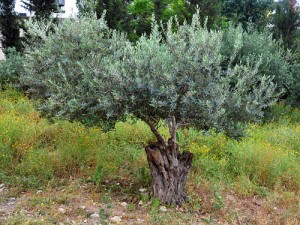
Isaiah’s message is to the people of Israel who have been through some terrible times. The Northern Kingdom was cut down by the Assyrians around 721 B.C., and Sennacherib laid siege to Jerusalem two decades later (around 701 B.C.). It seemed at the time that the promised glory of Israel could never come about because the nation was pretty much destroyed. In the poetry Isaiah used, the image for destruction is that of a tree cut down. In Isaiah 10:33-34, Isaiah prophesies that Assyria will be lopped off, cut down, and that it will not recover. There will be nothing regenerated from the leftovers of that destruction. Here in Isaiah 11, the prophecy is that Israel will be regenerated. A new Branch, a new Rod (a new Sapling), will spring up from the stump left after the “tree of Israel” was cut down and “left for dead.” The olive tree in biblical literature represents Israel because the tree symbolizes the characteristics of the “true (obedient) Israel” as steadfast, fruitful, and faithful. That was what God expected from his People. At this time in their history, they were experiencing what parents call natural consequences. Their lack of fidelity, their corruption by surrounding cultures and religions, and their lack of devotion to God led to their conquest by other nations. Isaiah is there to tell them that even so, they should not give up hope because God has a plan for saving them – a shoot from the stump of Jesse. We should look into that poetic image a little closer so we can understand why that particular image is one of great hope.

Olive trees were an essential part of daily life throughout the entire region of the eastern Mediterranean nations. The wood was used for decorations and building. The oil obtained from the olives was used for anointing and for fuel for lamps. The best of the oil was used for religious ceremonies, for social customs (a visitors head was anointed with scented oil at a banquet), and for food purposes. The lesser byproducts of the olive fruit were used for the oil lamps. The tree provided shade and shelter from inclement weather. The trees were cultivated in large groves. Wild olives were grown from seeds, but the trees in the olives groves were grown from saplings that came up from the roots around established trees. This is why, in Psalm 123:8, the psalmist says, “your children will be like olive shoots around your table.” Olive groves were a haven for travelers who could find a place to rest from the harsh Mediterranean heat during the day. There would usually be a source of water nearby for irrigation and for drinking. Large groves also had oil presses. You’ve probably heard the word for “oil press” frequently – it sounds like “Gethsemane” and comes from the Hebrew or Aramaic words Gat Shemanim – oil press.

Olive trees can live to be hundreds of years old. As they age they become more gnarled and even hollow, but they still produce fruit – good fruit! Eventually, though, a tree stops producing fruit, and is cut down. The stump is left. The extensive root system that formerly feed the ancient tree is still in the earth. It continues to feed the wood in the stump. With careful attention, the stump can send forth a shoot that grows to be a new olive tree. It is tender and fragile like any sapling, but it has a tremendous advantage – an extensive, well-established, efficient root system! The sapling can be easily broken off or munched by an animal, but if the one who tends the grove takes care of the shoot – it grows and produces excellent fruit. That is Isaiah’s message. God is saying, “I’m going to cultivate a new tree from the roots of the old, and the new tree will give you everything the old one did and even more.

olivetree_nazvillage_fjenkins_043010_140tThis image used by Isaiah was something the people of Israel understood clearly. Isaiah’s poetry was largely a commentary on the historical changes in the nation during his life – the wars, the intrigue, the failures of leadership, and the eventual defeat of Israel’s enemies. A significant feature of that victory for Israel would be a victory for the whole world – even for the gentiles who had been their enemies. It would be the fulfillment of the covenant prophesy of salvation: The Messiah.

In the book of Isaiah, chapters 6-12 are verses that prophesy the coming of Emmanuel (sometimes the section is called the “Book of Emmanuel”). The next two verses after our reference verse for today tell us about this Messiah: Isaiah 11:2-3The spirit of the Lord shall rest on him, the spirit of wisdom and understanding, the spirit of counsel and might, the spirit of knowledge and the fear of the Lord. His delight shall be in the fear of the Lord. Does any of that sound familiar? Well, yes, we often read the first 10 or 12 verses from this chapter during the second week of Advent, but also we can find a list similar to this in Paul’s list of Gifts of the Holy Spirit in 1 Corinthians 12:4-11.

Isaiah’s message was one of Hope, and that Hope is fulfilled in Jesus. Like the shade of the olive tree which spouts up from the roots of antiquity, we are sheltered by the “overshadowing of the Holy Spirit” just as Israel was protected and sheltered by the Pillar of Cloud that went before them during the day and became the Pillar of Fire during the night. This Sunday, you may hear the passage from Matthew 17 – The Transfiguration of Jesus. God appeared on that mountaintop as in a luminous cloud covering and surrounding Jesus, Peter, James and John as Jesus was visited by Moses and Elijah – symbolic of the Law and the Prophets. Peter got so excited about the event that he wanted to build three tabernacles – little tents – for Jesus and his visitors. Peter, at that time, did not realize that event was the beginning of promise of God found in Isaiah 43:18-19“Remember not the former things, nor consider the things of old. Behold, I am doing a new thing; now it springs forth, do you not perceive it? I will make a way in the wilderness and rivers in the desert.”

We can learn from the old things, from the Old Testament, from the Prophets and the Psalms, from the histories and the poetry. We can learn that under the shade of the olive tree, Jesus taught his disciples. Under the shade of the olive tree, Jesus prayed during his Passion. We can remember that under the shade of the olive tree, we can find the one who is called Wonderful Counselor, Mighty God, Everlasting Father, and Prince of Peace. In the shadow of the olive tree, it is Jesus of whom God said, “This is my beloved Son, in whom I am well pleased. Listen to him.”

“Almighty, Ever-Living God, grant us ears to hear and hearts to obey.” Beloved, think on these things.

Share-a-Prayer

Please join me in praying for WP who is struggling with pulmonary fibrosis, a fatal condition with little or no treatment to even provide symptomatic relief in someone in their 70’s, and for his wife K who is frail, and ill, and needs help caring for him.

Whatever, whenever, wherever, whoever, however, if ever, forever — at your service, Beloved


chick


Creative Commons License

Aloha Friday Messages by Charles O. Todd, III is licensed under a Creative Commons Attribution-ShareAlike 3.0 Unported License

Aloha Friday Message – March 7, 2014 – First Friday of Lent

1410AFC070714 – First Friday of Lent

Read it online here, please

Isaiah 5:20-21 – Woe to those who call evil good and good evil, who put darkness for light and light for darkness, who put bitter for sweet and sweet for bitter. Woe to those who are wise in their own eyes and clever in their own sight.

Aloha kakahiaka, ʻŌmea. Good morning, Beloved. Today we begin a Lenten Series with passages from The Book of the Prophet Isaiah. This won’t be an exhaustive chapter-by-chapter, verse-by-verse, line-by-line, precept-by-precept examination of this amazing collection of poetry, prose, and prophecy. I’ll write about the topics given to me, and that will be that. I recall when I was just a youngster, one of our pastors referred to Isaiah as a mini-Bible with 66 chapters that were in many ways like the 66 books of the Authorized King James Version of the Bible. The prophecies in this book are challenging. They are sometimes difficult to understand – especially the poetic imagery, and most especially out of historical context, sometimes surprisingly tender, and sometimes harshly descriptive of Israel’s sinfulness and Gods Righteous Anger. I’m not quite certain how this will all play out over the next seven weeks; I only know that as the weeks go by, new passages will be recommended, new topics will be developed, and new connections with the past will come to light.

SatanicDeceitI expect that some who read this series will wonder, “What got into him?!?” Well, if today’s reference-passage is any indicator, my guess would be The Word. Once again, I find myself in a “period of discernment,” and that always pulls me deeper into Scripture because I know it is “alive and active. Sharper than any double-edged sword, it penetrates even to dividing soul and spirit, joints and marrow; it judges the thoughts and attitudes of the heart.” (Hebrews 4:12) Perhaps some, even most, of you have some idea already where today’s writings will lead us. I have a vague idea, but I think it’s time to square up the keyboard and get on with it. If, at some point, you think I’ve gone too far, be assured it’s probably not far enough.

When I first saw this passage, it resonated with an old memory about George Orwell’s excellent story in Animal Farm, in particular, in the section toward the end where the leaders of the Animal rebellion – a pig aptly named Napoleon – is seated at table with humans who were formerly the enemy of all Animals. He has formulated a new maxim: “All animals are equal, but some are more equal than others.” All through the book, the readers see wrong things are reinterpreted, truth is subverted, and that which is intrinsically wrong is transformed to that which is extrinsically right. Orwell’s tale makes us realize that in the past (and perhaps even now) grassroots masses who willingly entrust their futures to charismatic leaders can be deceived and enslaved by those whom they trust. There are also a few on the periphery between leaders and followers who act as double-agents, gaining contemptuous but profitable recognition from both factions.

While Orwell’s book depicts the event leading to the Russian Revolution of 1917 and the ascent of Stalin, it also teaches a strong lesson about things that are happening now, and readily and rightly parallels with what is quoted from Isaiah today.

Do you remember the story about the two centurions walking through Rome and noting all the garbage littering the Via Apia? The first one complained, “All this garbage is terrible! Caesar should to something about getting rid of it!” His companion responded, “Well, all we need to do is change its name.” The first guy said, “How could changing its name make all of this go away?” The second centurion smiled, and said, “Easy. We just call it Tribute. Then Caesar will want it all for himself.” Sometimes just changing the name of something is “all it takes” to make it better. Once we condone that name change, we have made all things more equal. Equality among all earthlings is always a noble goal. Calling things equal that are actually hugely dissimilar is certainly not noble; it is deceitful. And there is the “hook” in this message.  “The only thing necessary for the triumph of evil is for good men to do nothing.” ~~ Edwin Burke Perhaps, though, there is one further necessity that helps ensure the triumph of evil – something a bit more proactive than complacency: Deceit dressed up in truth: The wolf in sheep’s clothing. Jesus specifically warns us about this kind of deception in Matthew 7:15: Beware of false prophets, which come to you in sheep’s clothing, but inwardly they are ravening wolves. I’d like to look at that term “false prophet” today because it will be something we hear again in the next few weeks. What is a “false prophet?”

The sensible place to begin is to know what “prophet” means. One common notion is that a prophet is someone who predicts the future, a “seer” someone who is clairvoyant, can divine the future through supernatural powers. In this connotation, a person is often already considered a false prophet, a hoaxer, and one whose pronouncements are self-promoting. This is not the biblical meaning of prophet. There are words in the Bible that are translated as “seer,” and the persons associated with that word (usually the Hebrew חֹזֶה (cho-zeh) {kho-zeh’} or רָאָה (ra’ah ) {raw-aw’}) are recognized as persons through whom God sends messages. We see this in 1 Samuel 9:9 (In former times in Israel, anyone who went to consult God used to say, “Come, let us go to the seer.” For he who is now called prophet was formerly called seer.) The Old Testament word for prophet is נָבִיא (nabiy’ ) {nah-bee’}. There are some disagreements among scholars about the origin of that word, but one that is well-accepted is that this noun comes from the verb noba` meaning to “bubble up,” “boil over”,” as in “to pour forth an abundance of words,” such as those who speak within divine inspiration. It is by and through the power and inspiration of God that a prophet speaks, and a prophet can’t help but speak when and what God commands any more than a boiling pot can stop bubbling. And that is the key. Those who have Divine Inspiration are True Prophets. The converse is that those whose “inspiration” is self-generated are the False Prophets. How then can we tell the difference? If we look at the verses following Jesus description of wolves in sheep’s clothing, the answer is clear.

The answer is, “by their fruits you will know them.” And here’s where we run into trouble because these days there’s a lot of fake fruit on the table. The fake fruit comes to us through the tireless work of the Prince of Lies, the devil, and he uses a few seeds of Truth and a ton of manure to raise a crop of bad advice. He wants us to change the names of things because it suits his purposes and not God’s. Anything that does not suit God’s purpose is, well, wrong; but Satan tries to convince us it is right to make these changes because “it is right to do this; you will be like God when you do.” Does that sound familiar, something you might have read recently in Genesis? And so we take something we know is wrong, call it by something we know is right, and PRESTO! What was wrong is now right. Marriage is no longer sacred, family is no longer a community of love, amorphous “spirituality” is true religion, and God is me because I am God. Beloved, there are seeds of truth in what the world is telling us about these things, but to believe them, one must overlook the ton of manure that comes along with them. So some of you are going to take umbrage at what follows.

A socioeconomic consensual partnership between two or more persons of the same gender is not a marriage. A marriage is only one man sacramentally united to one woman. You can name it a marriage, but it is not. A family is a mother and a father and their children either by natural conception or adoption. Faith is more than just a personal spirituality. It must be based on something outside of us that is greater than us, truer than us, and eternal. Does that make all non-Christian faiths invalid? Personally, I don’t think so, but only because I believe that God knows everyone who seeks him with a sincere heart; the ability to do that comes to every living soul because of the Power of the Son of God. Does it make a difference at the Resurrection? God knows, but right now he’s not telling. But I do know this: You can’t grow watermelons on a persimmon tree. You will know them by their fruit. The fruit of the Tree of the Knowledge of Good and Evil turned out to be Death. The devil lied about that; don’t you think he’d be willing to lie about anything and everything else?

He’s made corrupt capitalism, hedonism, immorality, addiction, terrorism, and situational ethics look like virtues. We know people who sincerely believe it’s OK to blatantly and elaborately lie if it is for a good reason. Many of them are in politics. We know people who are wise in their own esteemed opinion and claim to be an agnostic or atheist. They try to intellectualize and rationalize their place “in the Universe” but their arguments cannot begin to approach the perspective of infinite wisdom and knowledge, infinite power and glory. God’s way was to transcend his omnipotence by laying it aside to become one of us. That would be a little like one of us laying aside our nature to become an amino acid chain. Even that comparison is inadequate, but it is not a lie. There is only one way out of this pile of lies: Repent.

One of the most frequently quoted verses on the topic of repentance is 2 Chronicles 7:14If my people who are called by my name humble themselves, pray, seek my face, and turn from their wicked ways, then I will hear from heaven, and will forgive their sin and heal their land. Repentance of a nation begins with repentance by individuals. We are dealing with evil spirits who are counterfeiting righteousness and passing it off as “the Real Deal.” “What’s true for you may not be true for me and what’s true for me may not be true for you.” Baloney! I have quoted Frank E. Peretti in previous messages, and I’m going to put that quote here as the ending to this piece and the beginning of the next:

There is no way for you to know whether what I am telling you is true, unless you know what the truth is. And there’s no way for you to know what the truth is unless there is a truth that you can know! You’ve got to have a truth that is true, whether you believe it or not, boom! It’s true whether you like it or not, boom! It’s true whether you even know about it or not, boom! It’s just true! Objective, external truth that stands in and of itself. The bible talks all about that; from cover to cover it talks about the truth. And the Lord says, “I am the Lord thy God, I declare what is true, I declare what is right.”

Beloved, what I am telling you is True. I have met the Way, the Truth, and the Life, and what he declared is what is right; always has been and always will be.

Whatever, whenever, wherever, whoever, however, if ever, forever — at your service, Beloved

chick

Creative Commons License

Aloha Friday Messages by Charles O. Todd, III is licensed under a Creative Commons Attribution-ShareAlike 3.0 Unported License

Aloha Friday Message – February 28, 2014 – Facebook Finds

1409AFC022814 – Facebook Finds

Read it online here, please

Before we begin today, I want to make a prayer request for a family in a very difficult situation. A child – a teen – has succumb to the confusions of this world and left us through suicide. Any of you who have experienced a similar event among friends or family know how painful that is; the rest of us can only imagine. Together, all of us can share compassion for the teen and the family and friends who must cope with this loss. Take a moment now, please, and remember this family and all the families in general where suicide has occurred or is imminent. Ask God to send his Light to dispel the darkness surrounding these families, and – where you can – reach out with hand and heart to make way for the Light. Thank you, Beloved. Your prayers mean so much!!

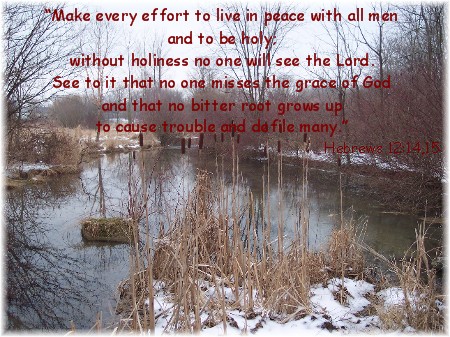
Hebrews 12:14-15Pursue peace with everyone, and the holiness without which no one will see the Lord. See to it that no one fails to obtain the grace of God; that no root of bitterness springs up and causes trouble, and through it many become defiled.

Why is this one called “Facebook Finds?” The verses you see in the post today all came from Facebook posts. I get a lot of scripture-based posts on my wall, and since last Friday, some of them have really jumped out – enough that I copied down the location for use today. To some it could seem like a coincidence that four different verses would come up in four different posts at four different times, and then somehow end up tied together along with such an urgent prayer request. I have learned, however, that – when it comes to scriptural inspirations – there are no coincidences. These four verses are all part of the same message (the other three coming up later).

hebrews12-15Last week we considered Paul’s history of intense suffering because of the Gospel. He suffered in mind as he anguished for the Church, in Spirit as he was tortured by “a thorn in the flesh,” and in his body through repeated scourging and other life-threatening – and very painful and scar-producing – punishments for boldly proclaiming the Gospel. Paul’s sufferings led him to depths of faith most of us cannot comprehend as well as heights of rejoicing that many of us may never know. The maturity of his faith came from consistently and persistently “weeding the garden” of his life to keep out those things which destroyed the view of Paradise he had gained. I am reminded of a recent Gospel reading which ended, “Be perfect, therefore, as your heavenly Father is perfect.” Jesus was saying that the standard for loving one another is the same standard God uses for loving us. In this passage from Hebrews, Paul is pointing us in the same direction – holiness. Other translations for this word holiness ἁγιασμόν hagiasmos {hag-ee-as-mos’} in this verse are consecration, purification, or sanctification. This is seen in the manner and degree by which we serve God and others, by our setting aside out own willful desires for those of our neighbors because of our faithfulness in God. We are to life our lives so as to ensure that, “no one fails to obtain the grace of God” especially through our negligence or lack of effort.

We are to be on the lookout, then, for the things that wheedle the weeds into our lives, those choking vines and tares that threaten to damage the productivity of our Christian lives. Those roots of bitterness can take hold in our hearts, in our family, in our churches, even in our governments, and they can cause so much grief, sorrow, sin, pain, despair, and even death – the final stage of human captivity. It is the Truth of the Gospel that can set us free – not to avoid these things – but to prevail against them.

Paul tells us in 2 Corinthians 3:17Now the Lord is the Spirit, and where the Spirit of the Lord is, there is freedom. This is because, as Paul says in Romans 8:28, “For the law of the spirit of life in Christ Jesus has freed you from the law of sin and death.” So, the freedom we know through the Spirit is the freedom from Eternal Death, because in Christ we have the liberty of Eternal Life. As we know, sin earns death, but salvation gifts Eternal Life. (See Romans 6:23) When we lay down our (day-to-day) lives and take up our cross (the hindrances to our faith) to follow Jesus, we are living in the Spirit for only the Spirit leads us to freedom, not bondage to all manner of sin. So often, Beloved, it is so very difficult to hear the words of Freedom being whispered to us by the Spirit! And yet we know that God does not always sound like a thunderous voice from the clouds; he often is just as quiet as the sweep of butterfly wings as they rest on the flower; but, quiet though the voice of God may be, it can still be heard!

Isaiah tells us in Isaiah 30:21 Your own ears will hear him. Right behind you a voice will say, “This is the way you should go,” whether to the right or to the left. Think about that. Haven’t you experienced that? Isn’t it wonderful? It amazes me how so many times it comes when I stop listening to the noise and start listening to my heart. When that happens, it is then and only then that I hear him with my ears. But, I also know that there are plenty of times when I hear this incessant whispering and (like an idiot) I yell, “Cut that out! I’m trying to listen for God here!!” Sometimes we are distracted by things we don’t understand, and we put so much energy into sorting them out that we can’t hear anything but our own silent screams of frustration and hurt. That whisper is still there, but it is overpowered by the noises of the World. In times like these, it often seems God as abandoned us – “if he was ever with us” we mutter in anger – and if God is gone what use it is to be close to anyone else? This is the converse or contrary lie to Satan’s original lie, “You can be like God;” it is “You cannot be like God because there is no God. (Not one you can know anyway!)” Still, the Whisper is always there, and whenever we can help someone hear it, we are taking up the challenge to “pursue peace with everyone.” The first time I read that I thought of it as a face-to-face encounter as in turning the other cheek (see Nonviolent resistance interpretation) and yielding to the requirements or demands of others. But on reflection, I also see it as a cooperative process in which a community works together to be at peace as in Romans 14:19 and Romans 15:2.

We all know it is easy, nonetheless, to sometimes feel lost, or discouraged, or confused. We look for someone to lead us, someone we can depend on to know the way, to lift up our spirit, or to help us muddle through. Often that someone is a parent, or a friend, a spouse or a relative, sometimes it is someone n the clergy and others someone in medicine. Even through love, knowledge, wisdom, or experience, these resources are insufficient. As the saying goes, “When all you have left is God, that is when you find God is all you need.” He is ours and we are his. We should not succumb to distress, for as God said to Moses and Israel in Deuteronomy 31:8 – “It is the Lord who goes before you. He will be with you; he will not fail you or forsake you. Do not fear or be dismayed.He leadeth me (You’re going to want to listen to that one!) When I yank my hand away, when to shout over the whisper, when I stopper my ears to hear the voice behind me, I am lost, I am weak, I am worn. (This one is so cool!) It is then that the love of a friend, the advice of a counselor, the support of a spouse, or the power of the Word digs out the root of bitterness and saves me from the harm to which my lack of faith compels me. Earthlings are constructed with two hands – one to reach up to God and another to reach out to others like us. It is uncomely for us to sit with our hands in our lap or stand with our hands in our pockets when there is Good to be done for God and for one another.

Here is the group of four verses for your review:

Hebrews 12:14-15Pursue peace with everyone, and the holiness without which no one will see the Lord. See to it that no one fails to obtain the grace of God; that no root of bitterness springs up and causes trouble, and through it many become defiled.

2 Corinthians 3:17Now the Lord is the Spirit, and where the Spirit of the Lord is, there is freedom.

Isaiah 30:21 Your own ears will hear him. Right behind you a voice will say, “This is the way you should go,” whether to the right or to the left. And finally we have …

Deuteronomy 31:8It is the Lord who goes before you. He will be with you; he will not fail you or forsake you. Do not fear or be dismayed.

Pray for the lost and lonely that they might hear the sweet whispers of God as an antidote to the bitterness which pursues them.

Whatever, whenever, wherever, whoever, however, if ever, forever — at your service, Beloved

chick

Your life AND theirs!

Your life AND theirs!


chick

2-heart-medThis just in: Please include in your prayers 21 y.o. Emily. She was hospitalized recently for diagnosis and treatment of a large abdominal mass. The pathology report returned with a diagnosis of ovarian cancer. Pray for Emi, for her family and friends, and for a cure for cancer, please.

Aloha Friday Message – February 21, 2014 – A Star Witness – Paul

1408AFC022114 – A Star Witness – Paul

Read it online here, please.

KJV Galatians 6:17 From henceforth let no man trouble me: for I bear in my body the marks of the Lord Jesus.

NRS Galatians 6:17 From now on, let no one make trouble for me; for I carry the marks of Jesus branded on my body.

NLT Galatians 6:17 From now on, don’t let anyone trouble me with these things. For I bear on my body the scars that show I belong to Jesus.

Aloha nui loa, ʻŌmea! I hope you are finally enjoying some relief from all the incredible weather we have had. It has been so hot and dry in the Southwest and so frigid and miserable in the rest of the country! Here on Kauaʽi we have had lots of rain, cooler temperatures (all the way down to the high 50’s!), and vog – a combination of volcanic ash/smoke and fog. It makes us a little uncomfortable, but not nearly as uncomfortable as our family and friends back on the mainland. There seems to be so much suffering because of the weather!

We know it is difficult to go for days – even two or more weeks – without electricity so that it is impossible to run a household and do the simple things we take for granted – fix a meal, use the restroom, watch  TV, make a phone call, or heat the house. We also know it is difficult for other people in the world who don’t have things as nice as we do in America. Take a look at this list of cities: Beirut Lebanon, Atlanta Georgia, Islamabad Pakistan, Fukuoka Japan, Damascus Syria, Baghdad Iraq, Los Angeles California, Wilmington North Carolina, Phoenix Arizona. All of these cities are around 33 DEG N. Latitude. In many of those places there is war. In some there is really bad weather. In others there is unprecedented drought. In a small number there is even aggressive persecution of Christians. In all of these cities, there are people who are suffering in many ways. If we look just in the Northern Hemisphere, we find dozes of armed conflicts, terrorism, famine, disease, persecution, government corruption, crimes against humanity, and all manner of unspeakable evil.

It makes my little backaches look pretty tame by comparison. Still, I moan and groan, limp and creak, and whine my way from the TV in the living-room to the TV in the bedroom. Poor little me. As I see my brothers and sisters in Christ, as I see innocents around the world, as I see “regular Americans” going through huge adversity, I wonder how far Christianity would have spread if the early church were like the church in America today. That usually prompts me to think about the Apostle Paul and what it takes to be a Radical Christian. I think I could sum it up in three words: Pain and Suffering. Of course Paul knew that pain as suffering was part of his life; after all, it was a huge part of the life of Jesus, so – as Jesus himself said – it would be part of the lives of his followers, too. Many of us have some pain and suffering in our lives – cancer, mental illness, family problems, betrayals, other chronic illnesses, injuries in body mind and spirit, even persecution for our faith for a few of us. But when you look deeper into Paul’s, you begin to think, “Maybe I have it pretty good after all.” Here’s a summary he himself provided when writing to the Church in Corinth:

2 Corinthians11:24-29 – Five times I have received from the Jews the forty lashes minus one. Three times I was beaten with rods. Once I received a stoning. Three times I was shipwrecked; for a night and a day I was adrift at sea; on frequent journeys, in danger from rivers, danger from bandits, danger from my own people, danger from Gentiles, danger in the city, danger in the wilderness, danger at sea, danger from false brothers and sisters; in toil and hardship, through many a sleepless night, hungry and thirsty, often without food, cold and naked. And, besides other things, I am under daily pressure because of my anxiety for all the churches. Who is weak, and I am not weak? Who is made to stumble, and I am not indignant? Paul was the “Apostle to the Gentiles,” and that was clearly a dangerous job to have. Now, I’ve worked at some difficult jobs, but never that difficult.

Can you imagine being flogged 39 lashes 5 separate times, beatings with rods three different times, stoned to the degree that those persecuting him presumed him dead. Shipwrecked and in danger of drowning in a storm, bitten by a poisonous snake, and on and on. And yet he kept going, kept preaching, sometimes for months or years at a time. He always worked as a tradesman or craftsman – traditional sources say he was a tent-maker – and still found time to teach, testify, argue, persuade, and live the exemplary Christian life. If you and I were to take stock of our Christian witness and look at Paul for the “yardstick,” we might not take as much pride in the durability of our faith and the power of our convictions. I can tell you, my testimony looks pretty feeble compared to Paul; in fact, compared to many of the people I know personally, my testimony, my faith, my living-the-life of Christ is … pitiful and pretty much ridiculous.

We started off with at verse from Galatians about Paul having the marks of the Lord Jesus on – or in – his body. Some folks take that to mean what are called the “stigmata,” wounds in body caused by piercing, burning, or both. It is like branding and cutting at the same time. We don’t have any direct proof in the Bible that that is precisely what Paul was referring to here, but think of this: how scarred would our bodies be after the kind of abuse Paul described? Would the flesh on our backs bear welts and multilayer scars after all that? I think at the very least that is one way to understand what Paul was writing about. Paul was all about doing everything he can to make sure that anyone who knew him or hear his message had full access to the entire Gospel – no matter what it cost him personally. Some of us have friends who are shocked to find out that we are Christians. There’s a real disconnect there. It could be a fatal disconnect – not so much for us, but for those whose lives could be changed by our testimony, by our fearless way of living-out the Gospel. There is a Day of Judgment coming when good will be rewarded and evil will be recompensed. Another quote from Paul when he address Felix at his trial: Acts 24:15 –  I have the same hope in God as these men (the Pharisees), that there will be a resurrection of both the righteous and the wicked.

Jesus knew he would suffer greatly. Remember in Mark 8:31-32a we are told, “Then he began to teach them that the Son of Man must undergo great suffering, and be rejected by the elders, the chief priests, and the scribes, and be killed, and after three days rise again. He said all this quite openly.” We are also told that Peter could not accept the idea of a suffering, dying Messiah, and rebuked the Lord for talking like that. It was then that Jesus rebuked Peter saying, “Get behind me, Satan. You are thinking in human terms, not as God thinks.” And there’s the rub, Beloved. We think in human terms when we measure our suffering; even when we measure the suffering of others, we think in human terms. We do not find suffering in any way, share, or form to be something that causes rejoicing. And yet, Paul writes to the Colossians (See Colossians 1:24-25) “I rejoice in my sufferings for your sake, and in my flesh I am filling up what is lacking* in the afflictions of Christ on behalf of his body, which is the church.” Perhaps Paul’s deep spiritual unity with Christ allowed him to identify so closely with him and even the Church – the body of Christ in the World – that he could understand how plainly Christ had foretold we would have the opportunity to testify – to be martyred – for the sake of his name. Paul was willing to go to the complete extreme of that prediction. Let us pray to God all of us might stretch a little father in that direction whenever we have an opportunity to preach the Gospel through what we do and how we live – even perhaps as much as Paul did. But I have yet to find a scar on or in me that is attributed to my testimony. I haven’t tried as hard as I could, then, have I?

Whatever, whenever, wherever, whoever, however, if ever, forever — at your service, Beloved


chick

Aloha Friday Message – February14, 2014 – Love Remains

1407AFC021414 – Love Remains

Read it online here, please.

KJV 1 Corinthians 13:13 And now abideth faith, hope, charity, these three; but the greatest of these is charity.

BGT 1 Corinthians 13:13 Nuni. de. me,nei pi,stij( evlpi,j( avga,ph( ta. tri,a tau/ta\ mei,zwn de. tou,twn h` avga,phÅ

NAB 1 Corinthians 13:13 So faith, hope, love remain, these three; but the greatest of these is love.

NLT 1 Corinthians 13:13 There are three things that will endure– faith, hope, and love– and the greatest of these is love.

Today is Valentine’s Day, and many of us are looking forward to sending, sharing, or receiving that “little something special” from the person(s) we care about. If you’ve got kids in school, they probably bought a box of cards at Wal-Mart or maybe the grocery store, and they spent an hour or so filling in the names of classmates – making sure everyone got one and probably picking one special card for that one special person in the class. If your kids are teens, they’re probably taking things a little more seriously and are figuring out how to convey the romance without getting mired in the responsibilities. (Some of the grown-ups are in the same quagmire.) If you are middle-aged, you probably plan a nice dinner, some thoughtful gifts, and some romantic banter – or ever better, all three. And if you’re a lot older, you remember how great all of these things were, but you know they can’t hold a candle to being in love for decades and expecting to stay that way for decades more. And there are a few out there who, for whatever reason, carry a torch for an unrequited love. Whatever of these situations sounds like your life, Love remains.

I recently heard someone attribute a statement about carrying a torch to Mother Theresa of Calcutta. She allegedly said something like, “It’s not always enough to carry the torch; sometimes you have to be the torch.” Well, I don’t know that Mother Theresa actually said that, but it is something that makes a lot of sense anyway. If we become the torch, or candle, or wick, or lantern that carries the flame, our lives become the fuel that nurtures the flame and its light and warmth.  (Look back to July 11, 2008 for details.) When our lives are consumed by and through giving Light to others, we are living a life worth living. When our life’s energies are spent on searching for our best self inside our own consciousness, regrettably that is all we are likely to find – our best self. I say “regrettably” because there is so much more to be found in life, so many, many more things that are worth searching for with dazzling diligence; and none of that luminous treasure is found solely inside one’s self. This is, in my mind and heart, the foundational truth of all relationships. We are created to be more than “self.” To be real, to be alive, to be fully human we must also be “other” to another human. Because of this, Love remains.

I think probably everyone who reads this essay will recognize the Bible verse quoted, and know that it comes from “The Chapter of Love” in St. Paul’s Epistle to the Church in Corinth. It comes kind of in the middle of a discourse about Spiritual Gifts. In 1 Corinthians 12: 4-7, Paul says, Now there are varieties of gifts, but the same Spirit; and there are varieties of services, but the same Lord; and there are varieties of activities, but it is the same God who activates all of them in everyone. To each is given the manifestation of the Spirit for the common good. He continues from there to talk about One Body with Many Members and describes the Church as The Body of Christ. He is encouraging the Church in Corinth to recognize that, just as all parts of our bodies function as an integrated whole with each part doing that for which it was created, so also each of us in the Body of Christ must function as God created us by integrating our gifts – our God-given functionalities if you will – into the Body of Christ, The Church. In doing this, we fulfill God’s plan – not only for our own lives but also for the lives of all others with whom we interact; all the others who make the reality of this life feasible for your personhood or my personhood are the very reason that Love remains.

But love does not, perhaps cannot, remain and remain alone. What Paul tells us, right after describing our interdependence on one another and how the use of that interdependence gives glory to God, is that there is a more excellent way. (Please follow this link to 1 Corinthians 12:27-31) Paul’s message is that there are tons of gifts from God that are essential to the Church – and by extension to the World as well – and all of them are worthy, wonderful, welcomed gifts when used for the Glory of God. Not every person will receive or be able to use “the Big Gifts;” but, there are three distinct and precious gifts everyone can receive which are so HUGE and ASTONISHING that all of us should have them! They are summarized in today’s verse: faith, hope, love remain. When these three gifts are received with due respect for the authenticity of the giver, then these three gifts are absolutely amazing because they are also life-sustaining. Genuine Faith does not break; baseless faith is easily broken. Genuine Hope is never lost; ambitious hope is hubris and is easily lost. Genuine Love “ is patient; love is kind; love is not envious or boastful or arrogant or rude. It does not insist on its own way; it is not irritable or resentful; it does not rejoice in wrongdoing, but rejoices in the truth. It bears all things, believes all things, hopes all things, endures all things. Love never ends. No matter what happens to Faith, or Hope, or any other Spiritual Gift, Love remains.

We’ve discussed the various types of love and the words that describe them in the past. The kind of Love Paul is talking about – the only word he uses in this chapter – is the word I underlined in the Greek rendition of this text: ἀγάπη – agape. We know that word to refer to “unconditional love.” It is the kind of love to which we yearn to aspire. We want to be the kind of person who can love like that because that is how we want to be loved – without condition, without judgment, without reserve, without end, because that is the Love with which God created us and it is the Love to which he intends us to return. It is the Love that is the beginning of everything eternal because Love never ends. Why? How can that be? Surely all of us remember when someone we loved as expansively as our lives would allow rejected or betrayed or even ignored that love. It is a pain all of us know, all of us have felt, and – if we are honest – all of us have caused. How can it be, then, that love never ends? Human love does end when we die, or becomes corrupted when we deceive, or is perverted to something which is the antithesis of love. Human love is imperfect, but Divine Love is not, and that is the Love Paul points us toward. We all know that we love imperfectly – ourselves, one another, even God – all are loved imperfectly by us. Nonetheless, when it’s all over, it is the Love we shared which will survive for all Eternity because Love never ends. Love never ends because God is Love and so we readily see, Love remains.

Some of us have amazing stories of Love in our lives – parents, children, spouses, other relatives, friends, pastors and priests, all of whom are other humans created in the image and likeness of God; created in, by, through, and for Love. Whatever action we take, then, to make loving each other more and more like Divine Love, is the kind of action that is more and more like what God intends love to be – Eternal, beautiful, complete, peaceful, faith-affirming, hope-fulfilling, life-confirming – and as we move through our lives toward that, Love remains.

As you know, Crucita and I retired at the end of last year. We’ve got just over a month of this new life called retirement behind us now. It is a whole new adventure! We haven’t lived with each other 168 hours a week for over 30 years, and there is much to learn about living and loving in this new arrangement. Marriage is our Vocation. In a Christ-centered home like ours, God is – literally – in the middle of everything! It’s a good thing, too, because sometimes one or the other of us wants to be in the middle of everything. Those are the times when tensions rise and tempers flare. But, Love remains. We are committed to something larger than us and outside of us; we are committed to Love because we are committed to God and God is Love. We’re working on our Vocation – as we always have – by learning to live and love one another in this “new relationship.” We’re using this new time together to tackle things that our formerly-too-busy lives left undone: Cleaning and repairing things that we’ve let slide for … years! Talking about times and friends and moments that we now have time to talk about. Just being together is a whole new gig because we are basically out of practice for that. It is a wonderful opportunity to explore – together – the vocation we chose 45 years ago. It is wonderful because each day we find that, no matter how the day has gone, Love remains.

Happy Valentine’s and my Very Best Love to my Crucita, and to all of you whom I also love, may you always be blessed with a life in which Love remains.

Whatever, whenever, wherever, whoever, however, if ever, forever — at your service, Beloved


Aloha Friday Message – February 7, 2014 – Light, Angels, Death

1406AFC020714 – Light, Angels, Death

Read it online here, please.

Matthew 5:1, 2, 16And seeing the multitudes, he went up into a mountain: and when he was set, his disciples came unto him: and he opened his mouth, and taught them, saying, “Let your light so shine before men, that they may see your good works, and glorify your Father which is in heaven.”

2 Samuel 24:16-17And when the angel stretched out his hand upon Jerusalem to destroy it, the Lord repented him of the evil, and said to the angel that destroyed the people, “It is enough: stay now thine hand.” And the angel of the Lord was by the threshingplace of Araunah the Jebusite. And David spake unto the Lord when he saw the angel that smote the people, and said, “Lo, I have sinned, and I have done wickedly: but these sheep, what have they done? let thine hand, I pray thee, be against me, and against my father’s house.”

Acts 12:23Immediately an angel of the Lord struck Herod down because he did not give the glory to God, and he was eaten by worms (σκωληκόβρωτος) and died.

The first reference verse in Matthew comes from this Sunday’s Gospel in the section of the Gospel known as the “Simile of Light.” We hear Jesus’ teaching in this collection of short lessons about being the salt of the earth and the light of the world. He has continued the theme of John to repent, as we saw last week, and is preaching that God wants us to live righteous, sinless lives so that everyone can see what it is like to be part of the Kingdom of God.

The second reference is from the readings for February 5. I chose that reading because it mentions an angel, specifically and angel of the LORD, who is assisting God by punishing David for his presumptuous sin of conducting a census of the people of Israel and Judah.

The third reading is an account from the New Testament about the grisly death of a blasphemous and unrighteous ruler, Herod Agrippa I – the King Herod from the Nativity Account. He is one of three Kings in Jewish History to die such a horrible death. The deaths Of Antiochus IV, Herod The Great, and Herod Agrippa I are chronicled in scripture and in contemporaneous accounts of their reigns.

Now, why are these three texts combined into this message? Because of the angels involved, and because of what the angels did or represented in the passages from Samuel and Acts. What struck me immediately was the phrase “…when he saw the angel that smote the people…” The angel was spreading death by pestilence throughout Israel “from Dan to Beersheba” (north to south).

You ask, “Why was an angel of the LORD spreading pestilence?”

It was one choice among three punishments the LORD willed to be carried out because of David’s sin.

So again, you ask, “What was this sin? What was so great that an Angel of the LORD was sent to spread pestilence?”

David commissioned a census of all the men of Israel and Judah who were capable and competent at bearing arms.

“So what? What’s wrong with a census?”

David wanted the census for his own pride in his own military might. He did not want the census for the Glory of God; he wanted it for the glory of David.

“What?!?!

Israel belongs to God. If God wants a census, he will order it, not David. Further, when God did ask for a census – back in the days of Moses, he also told Moses that “When you take a census of the Israelites to count them, each one must pay the LORD a ransom for his life at the time he is counted. Then no plague will come on them when you number them.” (See Exodus 30:12) David didn’t collect the ransom fee; he just ordered that the census should be done. The result was the “plaguing of Israel” as God had promised. It was David who chose that option (the list was seven years of famine, three months of war, or three days of pestilence. Which would you pick? (As we remember from hearing our parents, “‘I don’t know'” is not an answer. Choose.”)

“But that’s so unfair! How many innocent people died? People who had nothing to do with David’s choice?”

70,000. And there would have been more had not the LORD stretched out his hand and saved Jerusalem.

“All because David wanted to count the people? Is that all he did wrong? And 70,000 died?!?

Well, no, it’s not “all” and it wasn’t “all David.” You should also look at the parallel account of this episode in 1 Chronicles 21. In both accounts, the LORD was already in an angry rage over the sins of Israel (2 Samuel 24:1), and Satan used that opportunity to entice David to take the census; it was against Israel that Satan rose up, not against David. David told Joab, Commanding General of his army, to do the census. Joab knew better and asked David, “But why, my lord the king, do you want to do this? Are they not all your servants? Why must you cause Israel to sin?” Joab took a large number of fighting men and toured the country taking the count, but he was so distressed that he omitted the tribes of Levi and Benjamin. David was very pleased with himself because he had a good idea of his military might. But, the people died for their sin in forgetting to pay the census tax. Satan incited (tempted) David to take the census without following God’s rules. God allowed the temptation to take place, and David failed the test. He was relying on himself and his soldiers, not God. God, therefore, allowed the promised consequences of disobedience – pestilence – to occur, but not without first offering David an option for the natural consequences of their (Israel and David) disobedience.

“That sounds a little bit like what happened to Herod and those other two kings.”

Exactly! Those three very evil men were struck down in a terrible, painful, obscenely-ugly death because they ” … did not give the glory to God … ” With Herod, there is a very remarkable word used to describe what happened to him – devoured by worms. This is the only time it appear in Scripture, so it it quite specific – “he was eaten by worms (σκωληκόβρωτος)* and died.” Antiochus IV, Herod The Great, and Herod Agrippa I all died in a similar way according to Scripture and/or contemporaneous historians. In each case, there is an account that the king saw an ominous figure – an omen of death, and that death followed after an extended period of suffering (five days in Herod Agrippa’s case). * skolekobrotos {sko-lay-kob’-ro-tos} = eaten by worms. All three men reportedly saw an angel of death before dying.

“So why didn’t David die some horrible death?”

He repented. In 2 Samuel 24:10 we read, “Later, David’s conscience bothered him after he had numbered the army, so David told the LORD, “I have sinned greatly by what I did. But now I am asking you, please remove the guilt of your servant, since I have acted very foolishly.” Because David and God had such an intimate relationship, God allowed David to choose the punishment for the sins of Israel and  David. Losing 70,000 people in peace-time was a hard blow to David’s pride.

The connection here is that all of these mighty (in the World’s view) men were struck down because they publicly committed Big-Time Sin before their citizenry and even caused the subjects to be part of that sin. Israel is The People of God. In the Pentateuch, a man was only allowed to count what he owned. David counted what God owned, and the people allowed it. God had told Israel, “If you count what does not belong to you, and you do not pay a ransom for what you count (thereby creating an indirect census), you will be struck with pestilence (plague) for your disobedience.” These kings set themselves up – and their subjects, too – as being sovereign over themselves rather than submitting to God’s Sovereignty.

God did not create us to be sinful, to be sinners, or to know death. He created us to be like him – perfect, loving, everlasting, sinless, and capable of choosing to stay that way. He placed his Likeness (Light) and Breath (Spirit) in us. When the World sees us, they should see the Light and Spirit of God. Instead the World sees … itself, not the Glory of God! That is what Jesus commands: “Let your light so shine before men, that they may see your good works, and glorify your Father which is in heaven.

“Easy to say. Tough to do.”

It is difficult, yes; especially if you were to believe that every earthling is totally depraved and irredeemable; but we know we are redeemable!

“How?”

For God so loved the world that he gave his only Son, so that everyone who believes in him may not perish but may have eternal life. Indeed, God did not send the Son into the world to condemn the world, but in order that the world might be saved through him. Jesus paid the ransom required for being counted among the Children of God. He also paid the ransom for the sin committed when we fail to give God total Sovereignty in our lives. He paid once for all – all people, all sin, all time.

“Wow. What’s the catch?”

Jesus made it really simple: Repent and believe. Matthew 3:8Prove by the way you live that you have repented of your sins and turned to God.” By that he means “‘Love the Lord your God with all your heart and with all your soul and with all your strength and with all your mind’; and, ‘Love your neighbor as yourself.'” It is that Love, itself a free gift from God, that will make the Light and Spirit predominate in our lives.

Whatever, whenever, wherever, whoever, however, if ever, forever — at your service, Beloved


chick

Check out this article about the Threshing Floor of Araunah (whose name means “I shall shout for joy”), and learn more about how this particular location became important to Israel for a very glorious reason.


Angel Over the Threshing-floor of Araunah

Angel Over the Threshing-floor of Araunah

Aloha Friday Message – January 31, 2014 – Angels Yearning to See

1405AFC013114 – Angels Yearning to See

Read it online here, please.

Hebrews 2:4-9 – And furthermore, the future world we are talking about will not be controlled by angels. For somewhere in the Scriptures it says, “What is man that you should think of him, and the son of man that you should care for him? For a little while you made him lower than the angels, and you crowned him with glory and honor. You gave him authority over all things.” Now when it says “all things,” it means nothing is left out. But we have not yet seen all of this happen. What we do see is Jesus, who “for a little while was made lower than the angels” and now is “crowned with glory and honor” because he suffered death for us. Yes, by God’s grace, Jesus tasted death for everyone in all the world.

1 Peter 1:9-12 Your reward for trusting him will be the salvation of your souls. This salvation was something the prophets wanted to know more about. They prophesied about this gracious salvation prepared for you, even though they had many questions as to what it all could mean. They wondered what the Spirit of Christ within them was talking about when he told them in advance about Christ’s suffering and his great glory afterward. They wondered when and to whom all this would happen. They were told that these things would not happen during their lifetime, but many years later, during yours. And now this Good News has been announced by those who preached to you in the power of the Holy Spirit sent from heaven. It is all so wonderful that even the angels are eagerly watching these things happen.

Aloha nui loa, Beloved. I’m going to be trying something different with mailing these. I have been using OutLook with my Road Runner Hawaii email address, but there are too many messages being returned as undeliverable. Instead I’m going to try using my Gmail account and see if that will work better. The disadvantage is that I cannot obtain a “Read receipt” when I use Gmail. It may also turn out that I get more – or different – failed messages. We’ll see what happens. For today though, we’re returning to the angels for another peek at how they fit into this astounding set of scripture passages.

You may have recognized the Psalm to which Paul was referring in his letter to the Hebrews; it is Psalm 8. As you can see from Paul’s explanation of this passage, this refers to the fact that Jesus was truly human. In 2 Peter 2:4 we read, “When angels sinned, God did not spare them: he sent them down into the underworld and consigned them to the dark abyss to be held there until the Judgment.” It was not for the salvation of the angels that Jesus the Christ was sent into the world but for us earthlings. In John 3:17 the writer tells us, “For God did not send his Son into the world to condemn the world, but in order that the world might be saved through him.” No matter how wonderful or amazing or even how very present angels are to us in our day-to-day life, it was not for angels that Christ lived, suffered, died, was buried, and rose again from death so that he could ascend to Heaven where he is crowned with glory and honor. It was for us, so that everyone who believes in him will not perish but have eternal life.

There are many people who believe in angels – I do, and probably so do you. Some people carry this too far, though, and worship angels, some even referring to some of them as “Ascended Masters.” This is not God’s intention for us. In Deuteronomy 13:4 Moses warns the Israelites, “It is the LORD your God you must follow, and him you must revere. Keep his commands and obey him; serve him and hold fast to him.” Paul reminds us that Jesus was truly human – for a little while – and now is “crowned with glory and honor.” All the prophets in the Old Testament longed to see the Glory of God manifested in this world but only when God was ready did he send us his Christ, his Anointed One. And it is through human testimony, not the testimony of angels, by which the Good News – the Gospel of Redemption – is available to us through Scripture, through the testimony of believers, and through the signs and wonders given to all earthlings even to this very day in the form of answered prayers, miraculous healings, and even words of prophecy spoke by those to whom this most excellent gift has been granted. It is the Holy Spirit – the Spirit of the Living Christ – that makes these things happen; it is not by angels, for they are not among the redeemed, for “he sent them down into the underworld and consigned them to the dark abyss to be held there until the Judgment.

But, as Paul said, “…we have not yet seen all of this happen.” There is more to come! More souls will learn to do what Jesus told us to do at the very beginning of his Ministry: “Repent, for the kingdom of Heaven is close at hand.” We have seen this word “repent” before. It is metanoe,w metanoeo {met-an-o-eh’-o} meaning to change one’s mind for the better, to heartily amend one’s life through abhorrence of one’s past sins, and to sin no more. It is often coupled with an exhortation to be baptized as in “Repent, and be baptized every one of you in the name of Jesus Christ so that your sins may be forgiven; and you will receive the gift of the Holy Spirit.Acts 2:38

So today, Beloved, we rejoice in the sure knowledge that is for us earthlings that Christ is the source and fulfillment of our salvation. It was not for angels, or any other creature of God’s magnificent creation. And, in accordance with his Divine Plan, it was through the fully-human and fully-divine life lived by Jesus that the covenant promise of Salvation was delivered to all who are created in the image and likeness of God; it is for us and for none other. It is given to us freely and is to be received freely. It cannot be bought or sold or recreated or made different through any human or even angelic endeavor. It is God’s free gift of Grace. To have this gift for your very own, you only need to accept it, believe it, repent because of it, and live in and for it. By doing so, you, too, are destined to be “crowned with glory and honor” when every promise of God is fulfilled in the Resurrection. “But we have not yet seen all of this happen.” Perhaps, “not all,” but certainly quite a lot of it has happened, and much more will come because ” … the word of the LORD holds true, and everything he does is worthy of our trust.” Psalm 33:4

He did not reveal all this to the angels, but to us, ALL of us. When you, when I, when we trust in the LORD (our El-Shaddai-Olam – Almighty God Everlasting), when we “… seek first his kingdom and his righteousness, [then] all these things will be given to you as well.Matthew 6:33

Honor the Giver by accepting the Gift, and then honor the Gift by sharing it with others.

Whatever, whenever, wherever, whoever, however, if ever, forever — at your service, Beloved

Praise Report:

Adoration, Thanksgiving, and Praise to God for reports we have recently received of remission of cancers, provision of basic-life-necessities, and deliverance from addictions for many of those for whom we have been praying!! Glory to YOU O God who make all things according to your Will!

Share-a-Prayer

Please continue to pray for – and lend your assistance to – those who are buffeted by horrific weather and other disasters around the globe. Also, please pray diligently for the safety of everyone involved in the Winter Olympics; pray that all plans to disrupt them through terrorism will be thwarted to the Glory of God the Father. Finally, Beloved, pray for those who have accepted the mission to teach and preach the Gospel in every land and nation so that the Word will reach to even the ends of the Earth.

And remember:

entertain-angels

Alhoa Friday Message – January 24, 2014 – All Together Now

1404AFC012414 – All Together Now

Read it online here, please.

1 Corinthians 10:17Because the loaf of bread is one, we, though many, are one body, for we all partake of the one loaf.

Romans 12:4-5 For as in one body we have many parts, and all the parts do not have the same function, so we, though many, are one body in Christand individually parts of one another.

John 14:10-11 Do you not believe that I am in the Father and the Father is in me? The very words I say to you are not my own. It is the Father who lives in me who carries out his work through me. Do you believe me when I say that I am in the Father and the Father is in me? But if you cannot, then believe me because of what you see me do

1404-RosesVariety

1404-Roses-Variety


There is a lovely legend about The Queen of Sheba and her extended visit with King Solomon. You can find out the biblical facts of that visit in 1 Kings 10:1-13. In that account The King of Israel and the Queen of Sheba tried to outdo each other in generosity and wisdom. Solomon won easily on both counts, despite the fact that the Queen of Sheba (no one is sure about what her name was) started off with a token gift of 9,000 pound of gold. Yes! 9,000 pounds! One of several legends about this meeting involves a bouquet of flowers. Here’s condensed version of the legend:

One day King Solomon was in dozing his garden enjoying a pleasant afternoon. As he nodded off, he was suddenly awakened by a sharp pain in his nose. He had been stung by a bee! King Solomon, who could speak every language of all living things, asked the bee why she had stung him. She replied, “This is my first trip into the garden, and I mistook your now for a lily. I landed on your nose to look for nectar. When you breathed in, I started to be drawn into your nose. I was so frightened I accidentally stung you. Please forgive me and I will do whatever I can to help you one day in the future.” King Solomon laughed at this little bee’s confession, and forgave her then and there, though he was quite certain, such a little creature would never be able to help such a great King.

Not long after that, the Queen of Sheba visited King Solomon. She traveled a very long way to meet him because she wanted to test her wisdom and generosity against his to see which was greater. She asked him many very difficult riddles, presented him many fabulous gifts, and learned as much as she could about his court, his nation, and his God. She was so overwhelmed by the greatness of this king that she felt completely overwhelmed and lost her spirit of competitiveness. Then she decided to try one last thing. She brought 100 bouquets, all identical, into the King’s throne room. Only one bouquet was made with real flowers; the rest were exact copies made by her finest craftsmen. They all even had a single leaf that looked as though it had withered and turned brown!

The King looked at all of the bouquets, and could not perceive any differences among the hundreds of flowers they all contained, so excellent were the works of the Queen’s artists and craftsmen. He was beginning to feel uncomfortable, and afraid he might actually lose this challenge. He felt a little flush of heat from his frustration, so he asked to have the windows opened. He sat for quite a while looking at all the roses, then he heard a tiny, buzzing voice near his ear. The voice said, “O Great King, follow my flight with your eyes!” It was the little bee who had stung the King. She flew directly to the real flowers and landed on the lovely lily in the center of the bouquet. The King pointed to that bouquet and said, “Behold, friend Queen, there is the Bouquet of True Flowers!”

Ah, Beloved, please look at the bouquets of flowers at the start of this message. You see that in both images, there are several kinds of roses in each bunch. Each bouquet is formed by uniting many varieties of roses together. But still, they are all roses. Some bouquets are made of several types of flowers – like the ones the Queen of Sheba presented to King Solomon. Most bouquets are designed and arranged to look beautiful; one rarely sees bouquets that feature nettles, briars, weeds, and dead twigs. The combinations of flowers are meant to being delight to our senses vision and smell. They are arranged so that the relationships between them are harmonious. And yet, we know they will not last much longer than a week – if even that long.

They are cut off from the roots and earth that give them life. Beautiful as they are together, they are beautiful only for a short while, then they are tossed out in the trash. ON the other hand, if they remain connected to the roots and the earth, they last longer, but the stunning effect of seeing them all together in a vase on the dining room table is not possible. Together, alive, they are all one garden. Together, dying, they are all one bouquet. Either way, their beauty reminds us of the kindness of God who would make such beautiful things just for the sake of enjoying them.

But we enjoy our bread, too! All the staffs of wheat together form one field. All the grains of wheat together form one harvest. Once the grains are threshed, the kernel is separated from the chaff, and the grain is ground together to form one yield of flour. The flour is mixed with other ingredients and baked into one loaf. Everyone who eats of that loaf shares something in common with the fields, the grains, the flour, and the bread because all if that is part of all of us and all of us are therefore part of that. That is why Paul says, we, though many, are one body. Do you believe that? If not, can you believe what Jesus said, “I am in the Father and the Father is in me?” If Jesus is in the Father, and the Father is in him, then when Jesus is in us, we are in him and in the Father, and both of them are in us. How can that be?!? God is so ginormous and we are so finite! I believe it is summed up quite well in Gift of Finest Wheat, a hymn by Robert E. Kreutz:

The mystery of Your presence Lord,
no mortal tongue can tell;
whom all the world cannot contain
comes in our hearts to dwell.

There is only one God, only One Begotten Son, only One Spirit, only One Bread, only One Body, only One Life, One Light, One Truth, and we are all together there! (See Ephesians 4:1-6 and read the following.) There is one body and one Spirit, just as you were called to the one hope of your calling, one Lord, one faith, one baptism, one God and Father of all, who is above all, and through all, and in all.

And here is the astonishing difference between the bouquet, the loaf, and the One. The One is the Living Bread. The One is the Rose of Sharon, the Lily of the Valley, The Bright and Morning Star, the Fairest of Ten-Thousand, and everybody ought to know Who Jesus Is. Together we are all-together in him in whom all things come together. (See Colossians 1:15-20) When we are in him and he is in us, we are not cut off, we are not ground down; we are part of his Everlasting Life. O, Beloved! It’s enough to make you shout

Hallelujah2

Not even Solomon had so such a wealth of reasons to rejoice!

Whatever, whenever, wherever, whoever, however, if ever, forever — at your service, Beloved
chick

Pages Email Newsletter Categories Archives Connect
  • Connct to us here